01Unlined blazer 02Lined shorts 03Sequin trousers 04Specified processes
Construction Report · Part One

Seam by seam.

How we build the garments we make, shown part by part on real pieces from our floor. No sketches, no renders: every photo below is a finished garment, photographed the way it left the line.

UP Fashion · Guangzhou · Prepared for private review
01
The unlined blazer
Spring series · no lining, nothing to hide behind

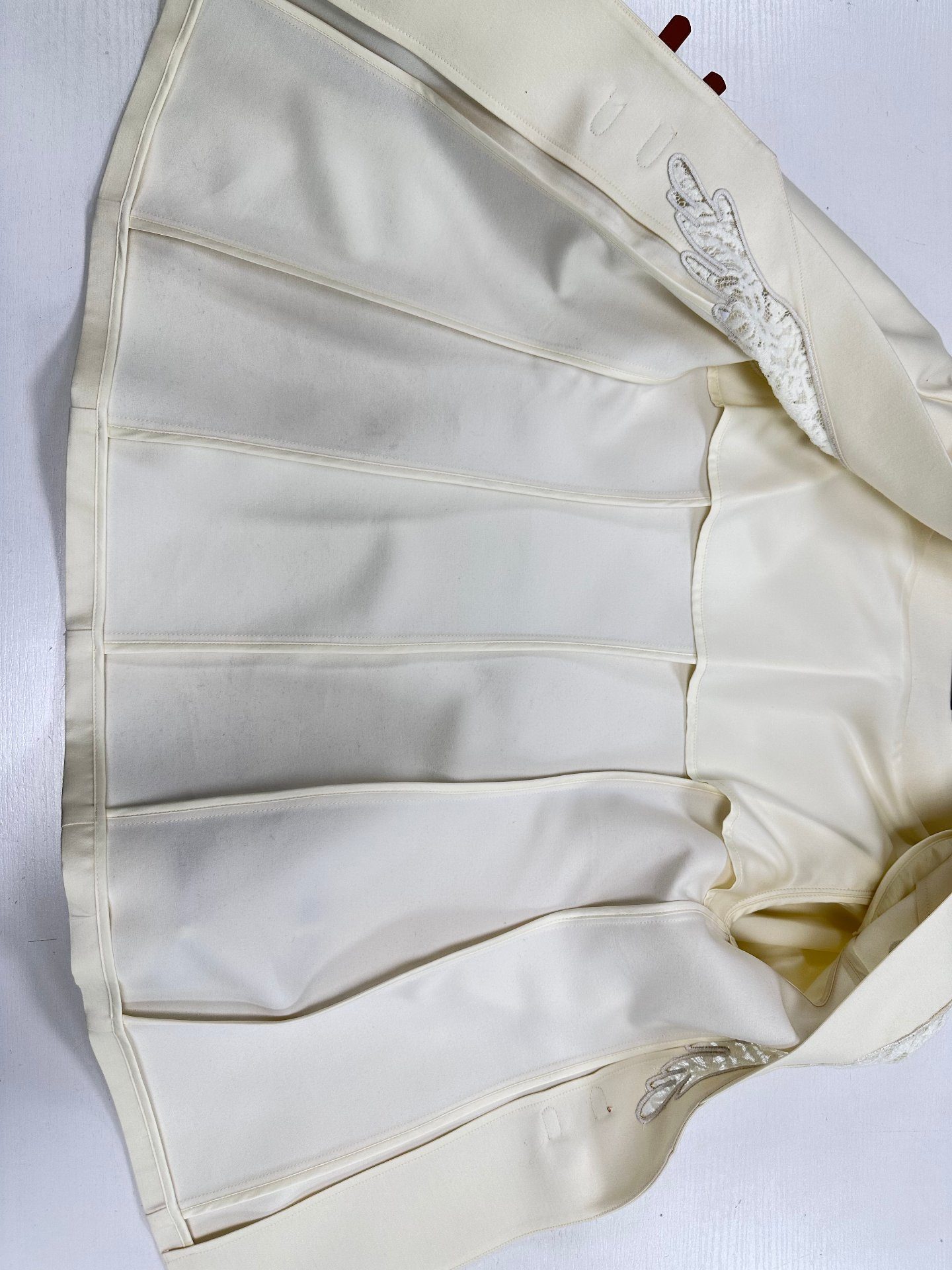
An unlined jacket has nowhere to hide. Every seam a lining would normally bury stays visible for the life of the garment, so each one is finished as if it sat on the outside. This ivory piece is from our spring series.

1.1  Every seam joint, finished

All joined seams in the body are enclosed and finished, so no raw allowance shows anywhere inside.

Open any seam on this piece and you find a clean, closed edge. On an unlined garment the inside ages faster than the outside, so the inside is built first.

Inside an unlined ivory blazer: every joined seam enclosed and finished, UP Fashion Guangzhou
The body of the jacket, opened: every joined seam enclosed and closed.

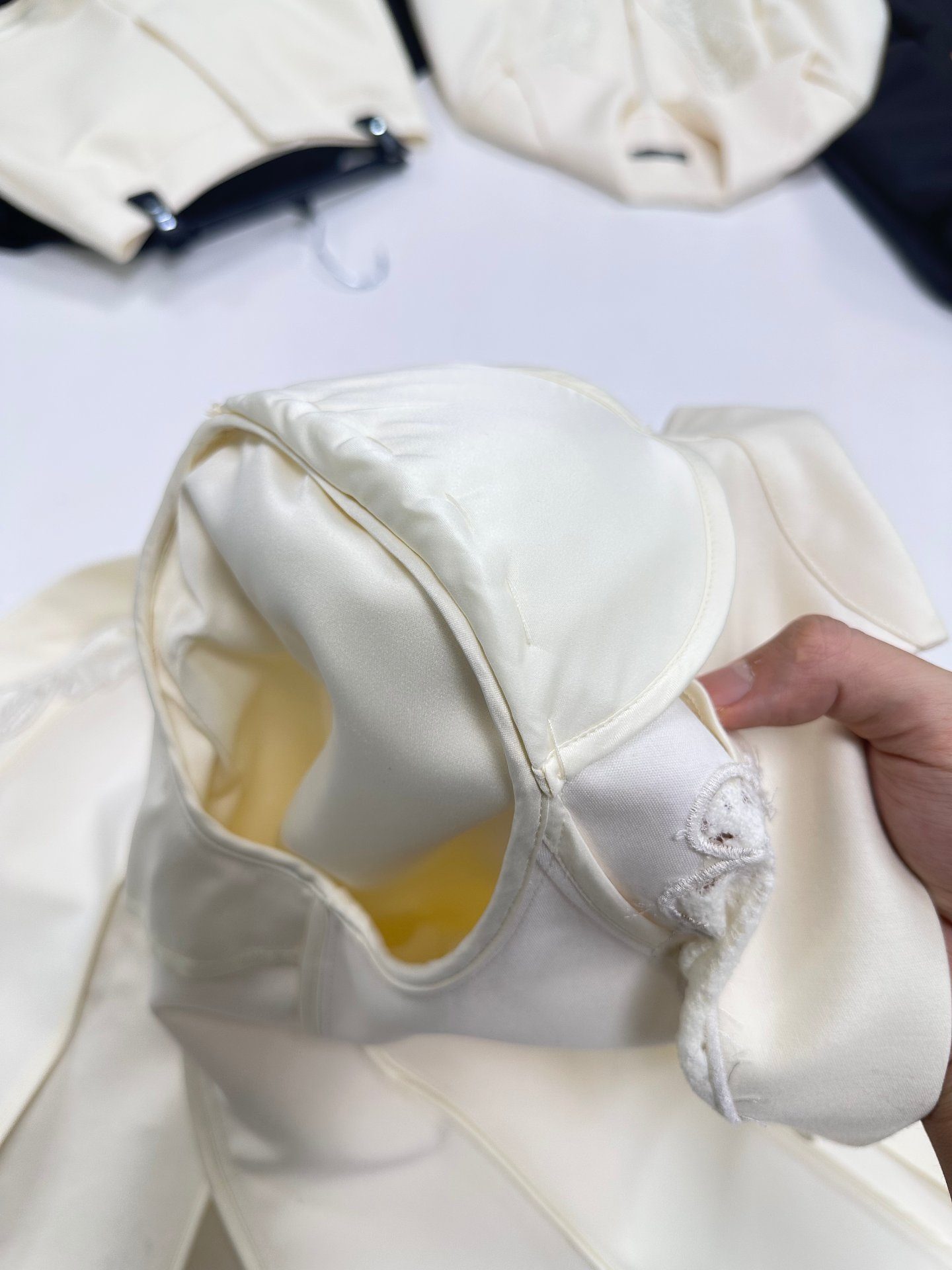
1.2  Shoulder pads, set clean

Where the design calls for a shoulder pad, the pad sits in its own channel between the shell seams.

It is stitched so it cannot shift, curl or show a line from the outside. A pad that moves is a jacket that deforms.

Shoulder pad set inside the shoulder of an unlined ivory blazer, UP Fashion Guangzhou
The shoulder pad, photographed in place inside the shoulder.

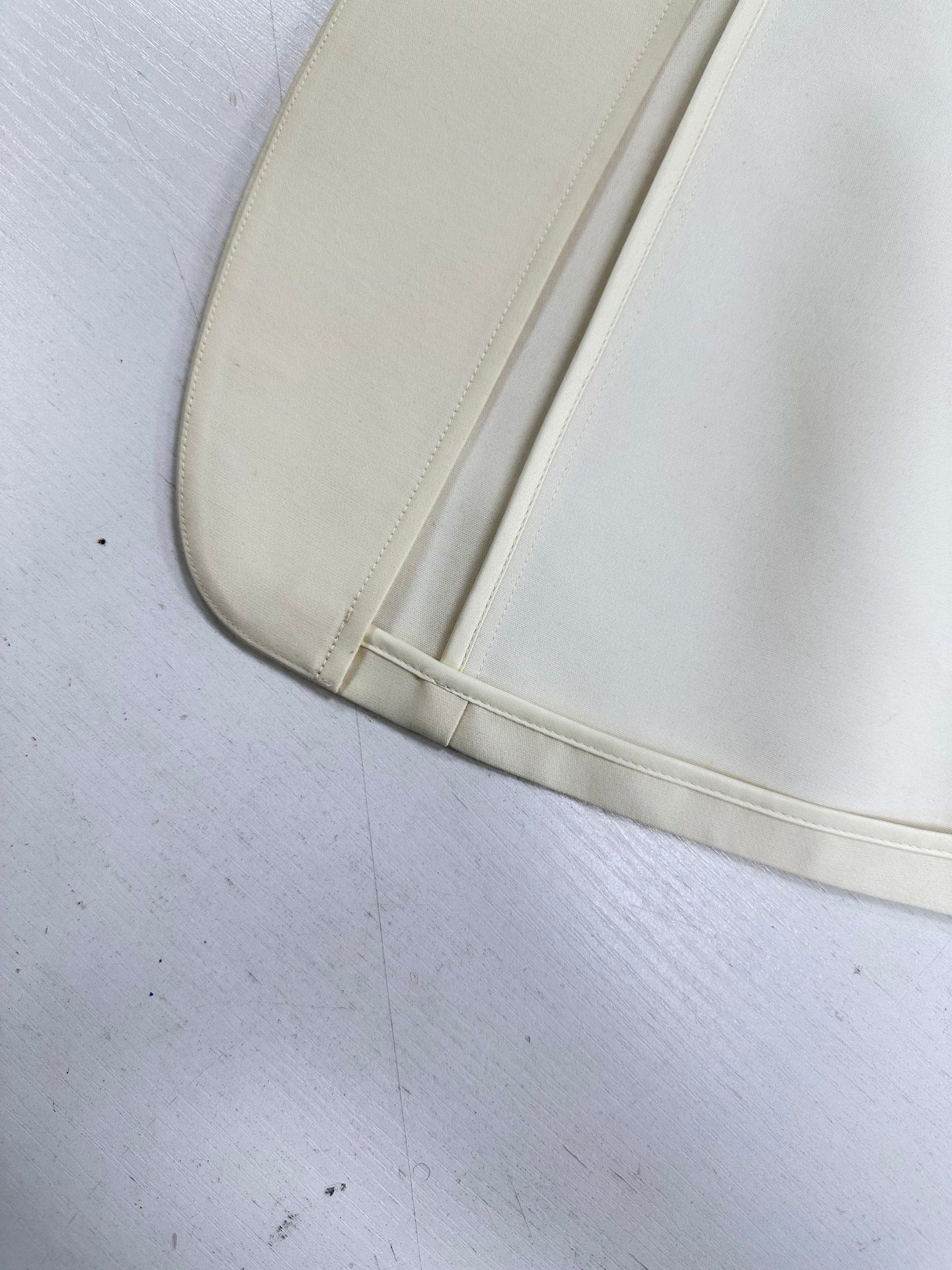
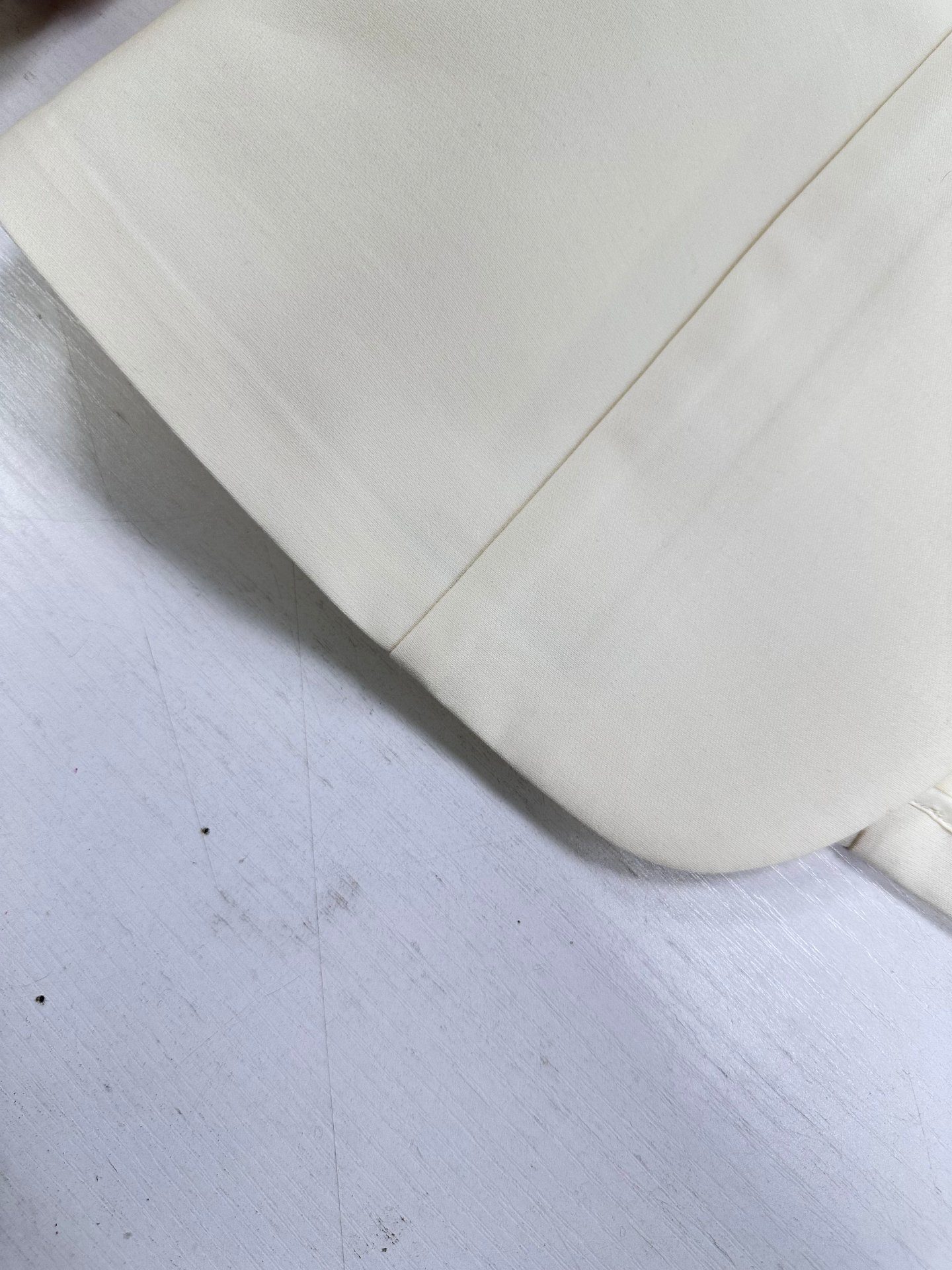
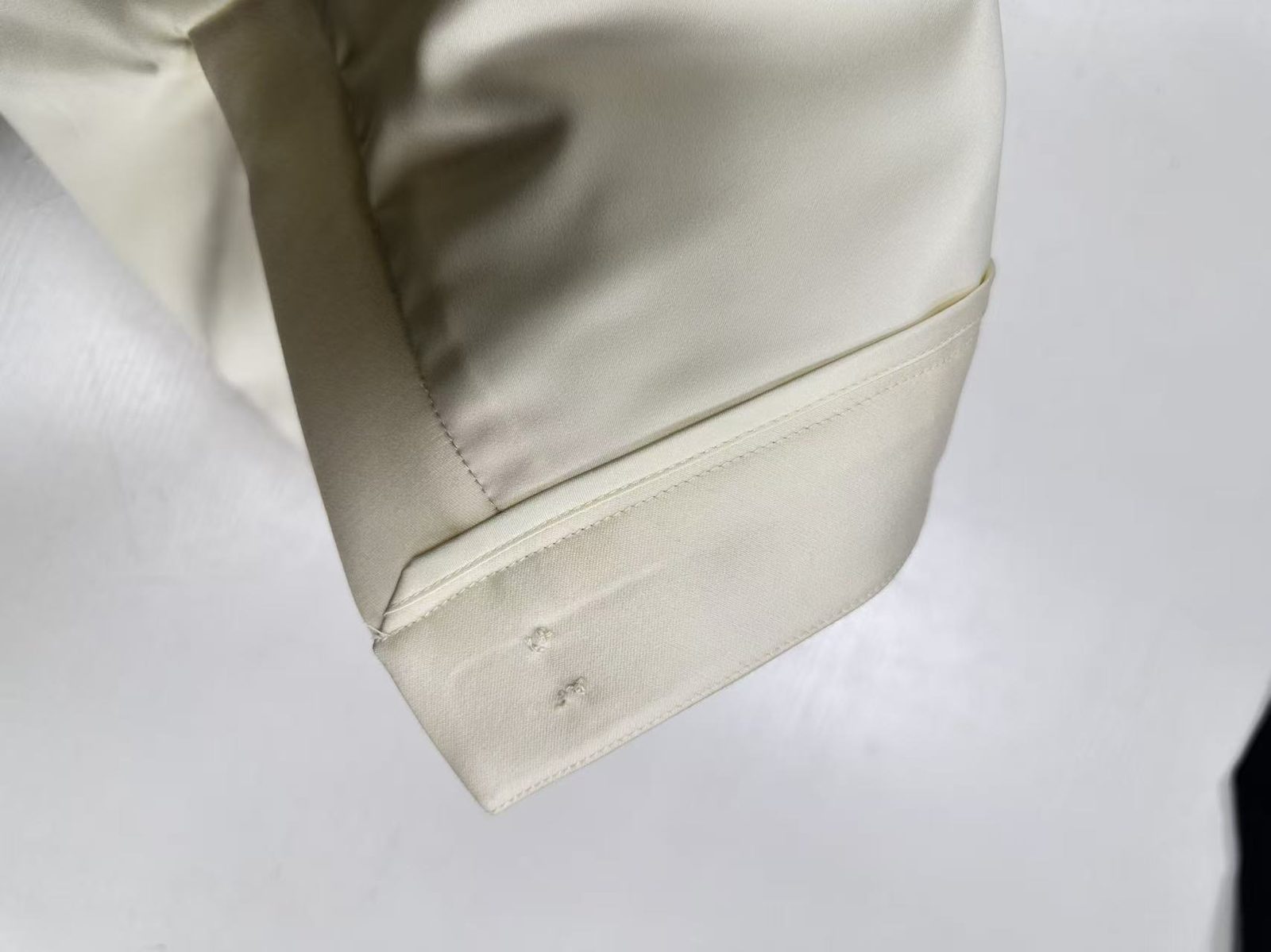
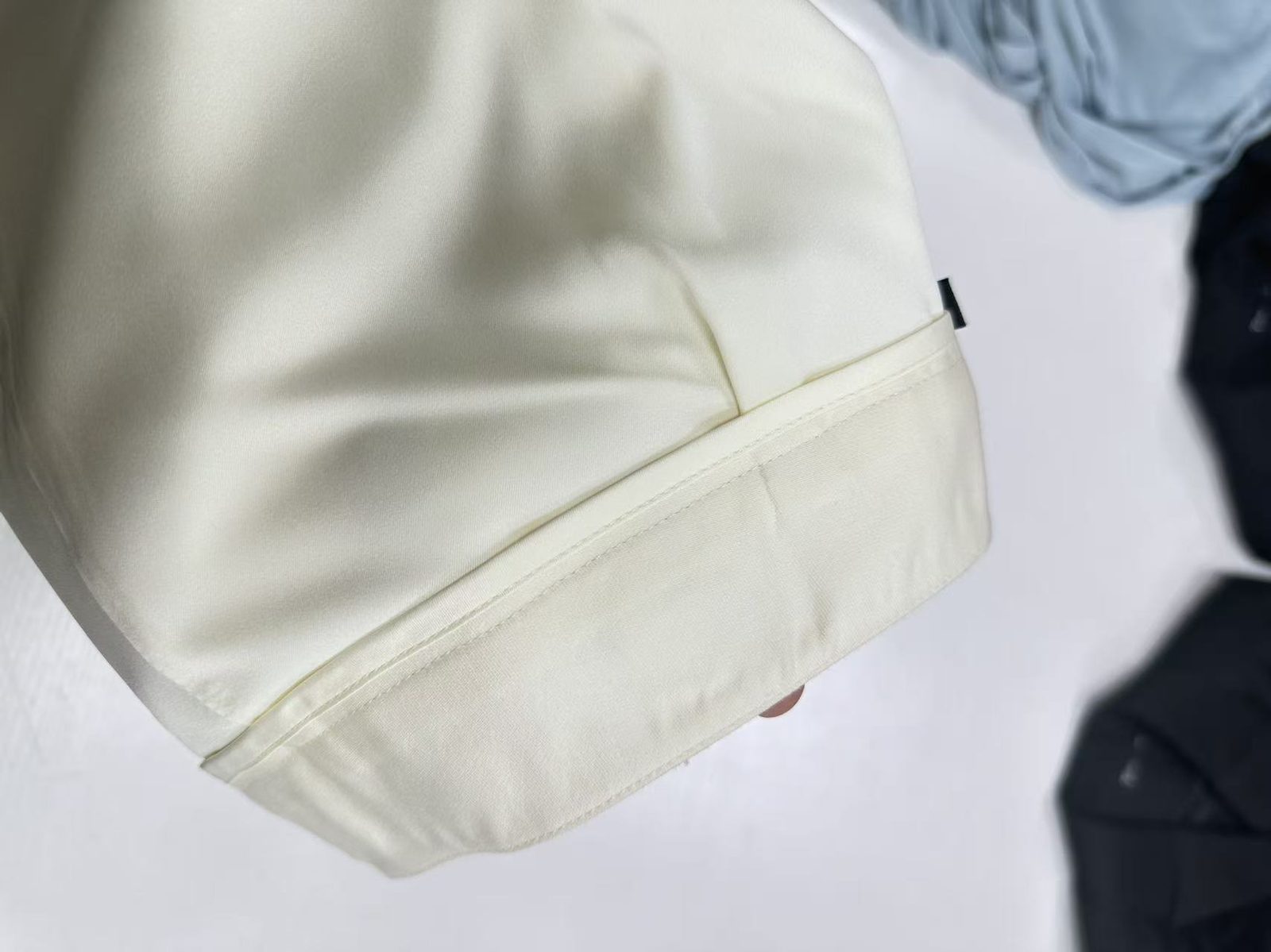
1.3  The pick-stitched hem

The hem is turned and secured with pick stitches worked from the inside.

The edge stays flat and the face of the garment carries no visible machine row. On an unlined jacket the hem is one of the first places wear shows, so it is built to survive it.

Pick-stitched hem inside an unlined blazer, UP Fashion Guangzhou
Pick stitches worked from the inside.
Finished hem edge of an unlined blazer, UP Fashion Guangzhou
The face of the hem: flat, no machine row.

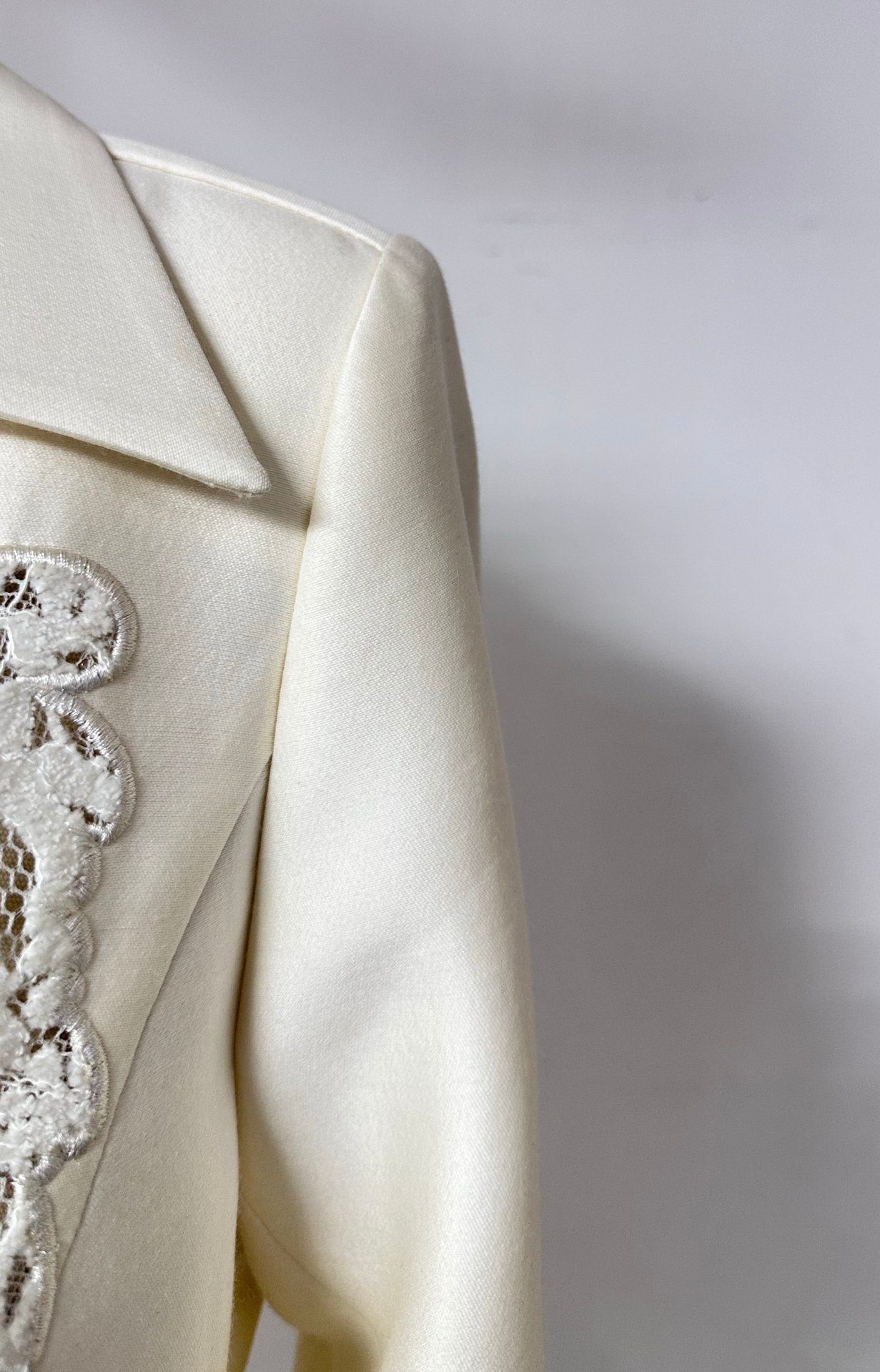
1.4  The sleeve test

For this category we hold one standard above the others: the sleeve.

It must sit smooth across the head and down the arm, with no puckers, breaks or ripples. The sleeve is where a blazer betrays the hands that made it, so it is one of the measurements we use to decide whether workmanship passes.

Smooth sleeve on an ivory blazer with lace applique, UP Fashion Guangzhou
The sleeve: smooth across the head, no breaks down the arm.
Pattern review, before a single piece is cut.

For this category the pattern is reviewed on four points: the waist line, the sleeve, comfort on a real body, and comfort in motion: walking, sitting, bending. A jacket that fails any of these goes back to the pattern table, not to the sewing line.
02
Lined tailored shorts
Spring / summer · fully lined and sealed

For lined tailored shorts we build the garment fully lined: the entire short is enclosed in lining and sewn closed, so no seam allowance is visible anywhere, inside or out. Three views of the same finished piece.

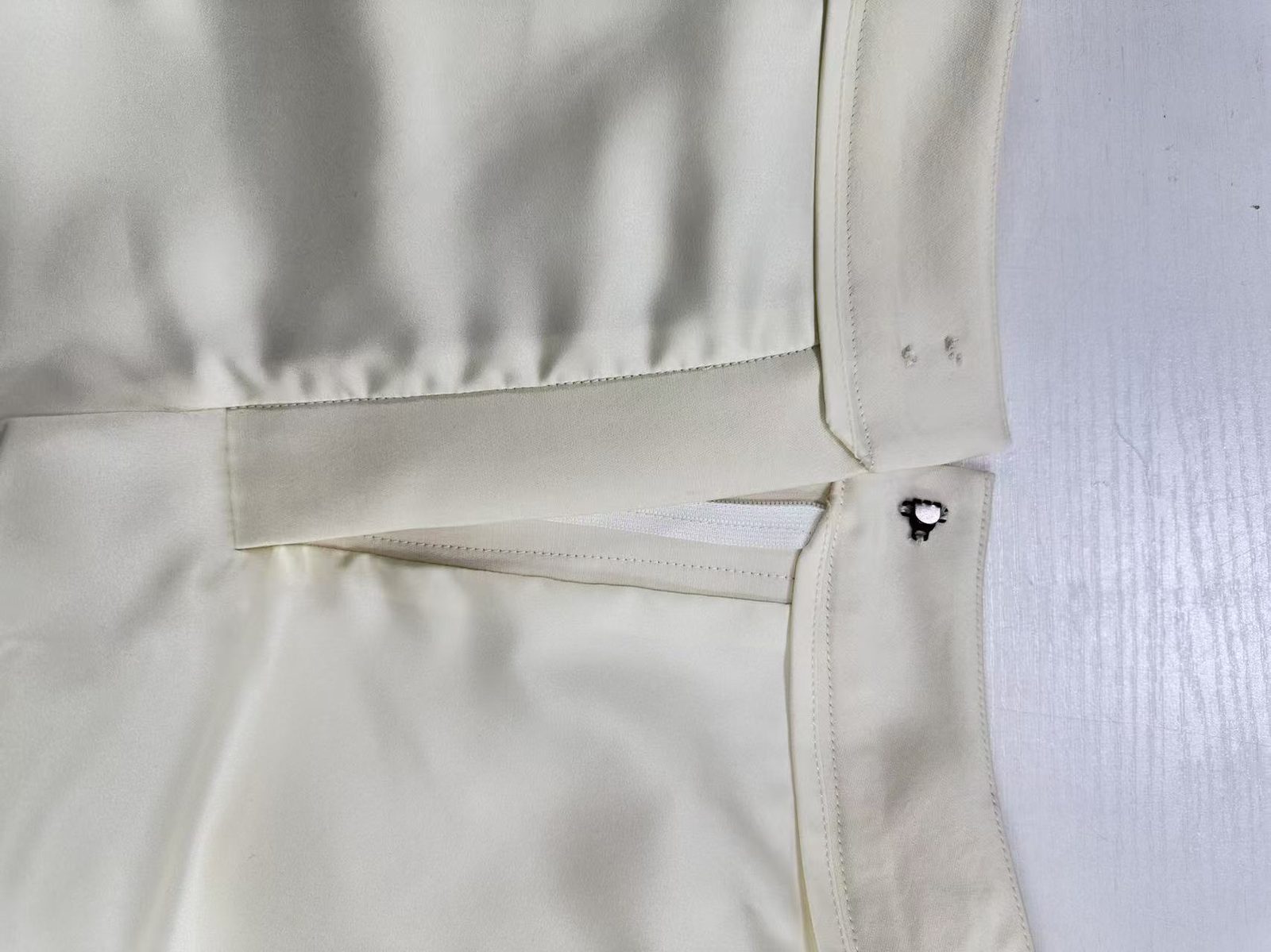
2.1  Waistband and fly, sealed

The waistband is set with the lining closed over it, the fly guarded, and the hook and bar finished so nothing catches.

No stitch rows or raw allowances appear on any internal edge.

Fully enclosed waistband and fly inside lined tailored shorts, UP Fashion Guangzhou
Waistband, fly and hook: everything enclosed.

2.2  The hem, finished inside the lining

The hem is turned and secured inside the lining so the edge reads clean from either side.

Depth stays even all the way round, with the stitch line parallel to the fold.

Hem finished inside the lining of tailored shorts, UP Fashion Guangzhou
The hem, secured inside the lining.

2.3  Open it anywhere

This is the whole point of a full lining: open the leg, the rise or the pocket bag and you find finished fabric, never a frayed allowance.

It takes more handling per piece, and it is the difference between a lining that works and a lining that is only there.

Lining and shell joined with no visible allowances, UP Fashion Guangzhou
Lining and shell, joined clean.
03
Sequin trousers
No elastic waistband · fully lined · the hardest fabric we finish

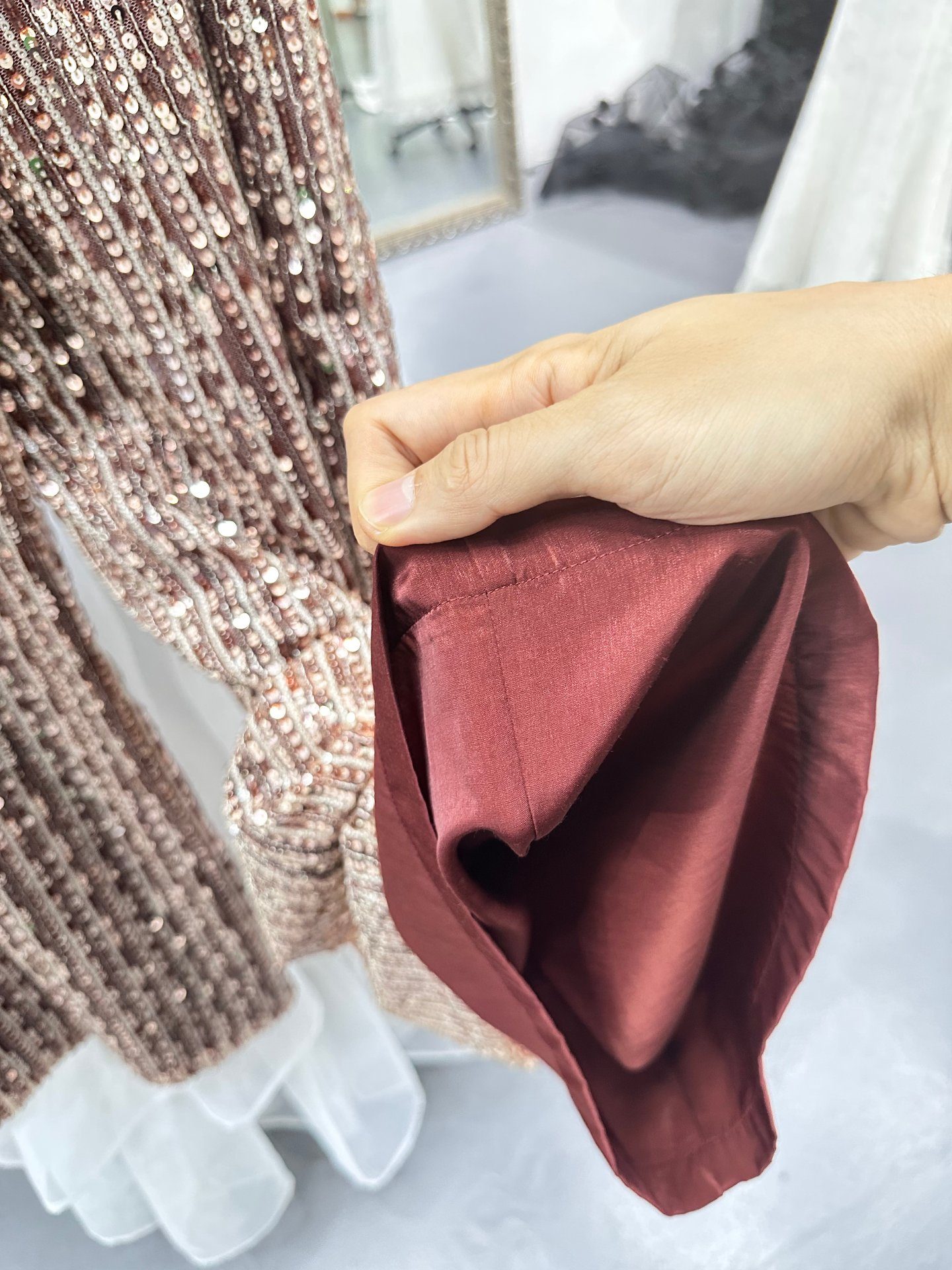
Sequin fabric is the hardest material to finish cleanly. Sequins fray every seam they touch and punish shortcuts. On this pair the sequin edges are bound and the lining is built with French seams.

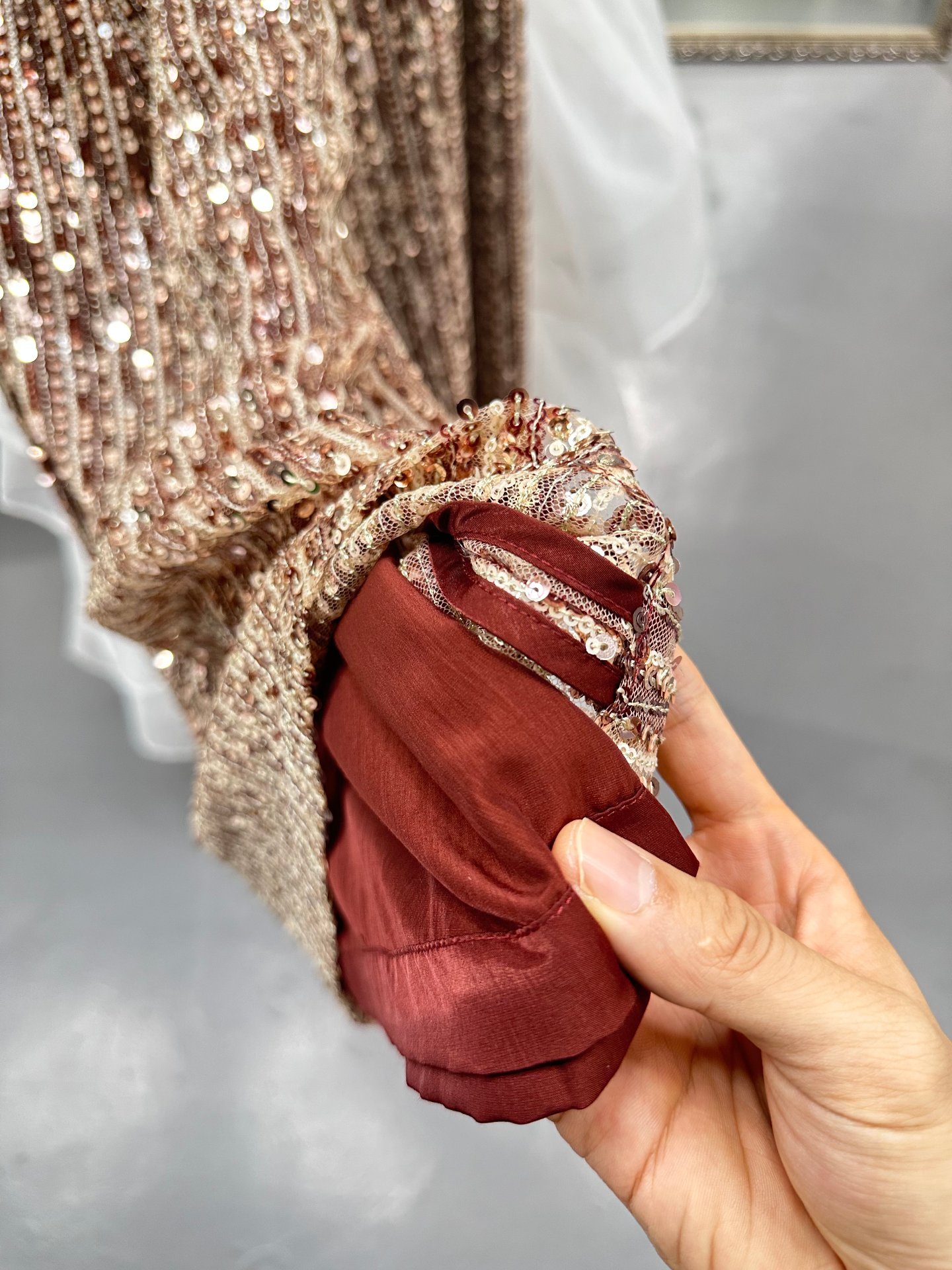
3.1  Sequin edges, bound in matching lining

Every sequin edge is wrapped in a binding cut from the same wine red lining, so no raw sequin edge, stitch line or shine break shows at the finish.

The binding also stops sequins from lifting and scratching, the first failure point on cheap sequin garments.

Sequin trouser edge bound with matching wine-red lining binding, UP Fashion Guangzhou
The sequin edge, bound in the same wine red lining.

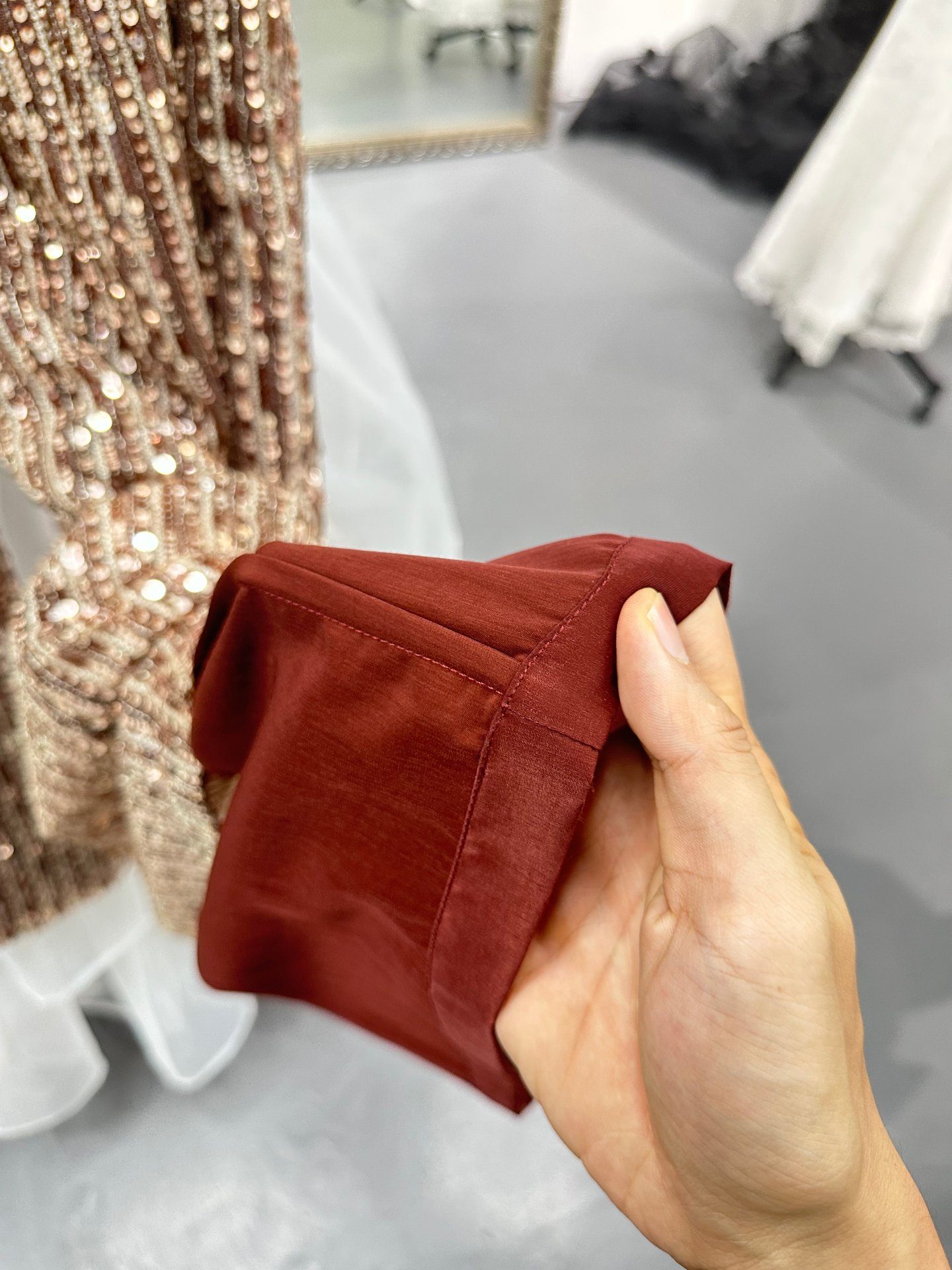
3.2  The lining, sewn with French seams

The lining is closed with French seams: the raw allowance is enclosed twice.

The seam feels like one clean ridge inside and nothing frays, even after wear and cleaning. On a fabric this delicate, an overlocked edge alone will not survive.

French seam on the wine-red lining of sequin trousers, UP Fashion Guangzhou
French seam, first view.
French seam detail on sequin trouser lining, second view, UP Fashion Guangzhou
French seam, second view.
04
Specified processes
Keeping bulk identical to the sample

Two of the most common failures between sample and bulk happen in washing, dyeing, embroidery and printing. Both come from the same root: the bulk is produced differently from the sample. Here is exactly how we run both, and what each choice costs.

4.1  Washing and dyeing

“How do you make sure the wash or dye effect on bulk is the same as on the sample?”

In most factories the sample is washed or dyed in a small vat, and the bulk runs in large vats. Colour and finish change with vat size, mostly because of how temperature behaves at scale, so the bulk never quite matches the sample. That is not a process mistake. It is an operational one.

Our approach: sample and bulk both run in small vats.

We wash and dye in small batches over several runs instead of one large run. This is how we hold the sample and bulk effects to the same result.

What it givesThe bulk matches the sample at 90 to 95 percent or better.
What it costsLonger time. Higher price.

4.2  Embroidery and printing

“How do you make sure bulk embroidery or printing matches the sample?”

There are two reasons bulk drifts in most factories.

First, the equipment. Samples are made on one to three dedicated machines, where precision and control are easier. Bulk runs on large multi-head linked machines: precision control, machine management and waste risk all go up. The upside is volume, several panels at the same time. It cuts both ways.

Second, the people. In most factories the master who makes the sample embroidery only makes samples. These masters usually have more than ten years of experience, and they do not handle the bulk run, so bulk drifts: thread density, machine settings, how each panel is placed.

Our approach: both the sample and the bulk run on the same machines, and the master who made your sample embroidery also runs the bulk embroidery.

What it givesHigher precision. Better effect. Lower waste.
What it costsLonger time. Higher price.
Both choices cost time and money. We make them anyway.

The sample is a promise. Bulk is where the promise is kept, or broken. These two choices are how we keep it.

Part two is in preparation.

Structured jackets, dresses and occasionwear, in the same format: part by part, photographed as produced. Until then, the standards these pieces were built to are published on our quality page, and the way a quotation is built from your design is explained on our quotation page.

When you have seen this report, send the styles and we start the quotation.

QUALITY CHECK8 checkpoints, real photosQUALITY SAMPLE PROCESS7 steps, who does whatSAMPLE