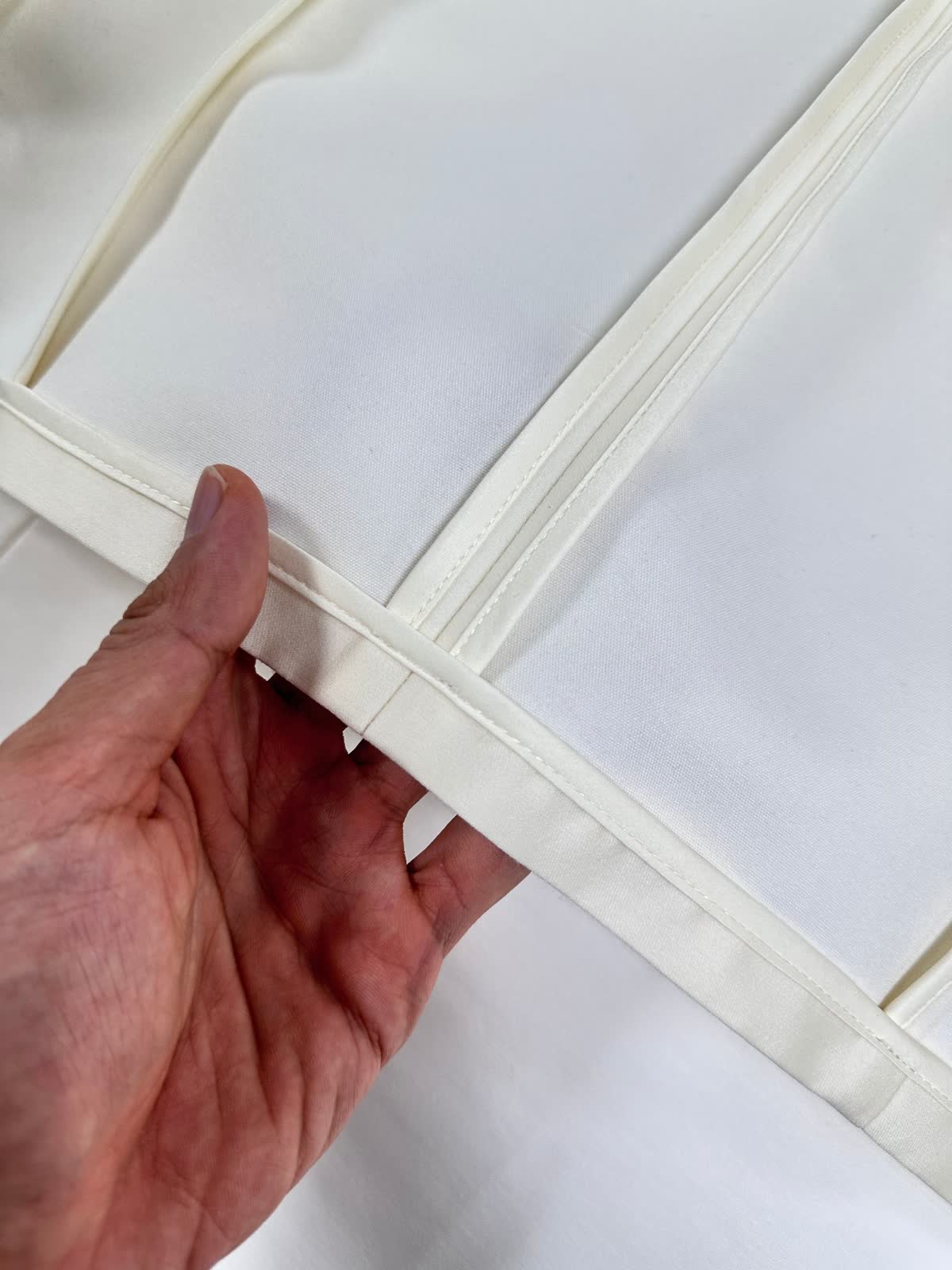
No lining is not an excuse. Turn an unlined spring jacket or trouser inside out: every seam allowance should be finished — bound, folded and stitched — so no raw edge shows anywhere. On this jacket, every internal seam is enclosed. If you can see fraying fabric inside a garment sold as premium and unlined, the factory stopped one step early.
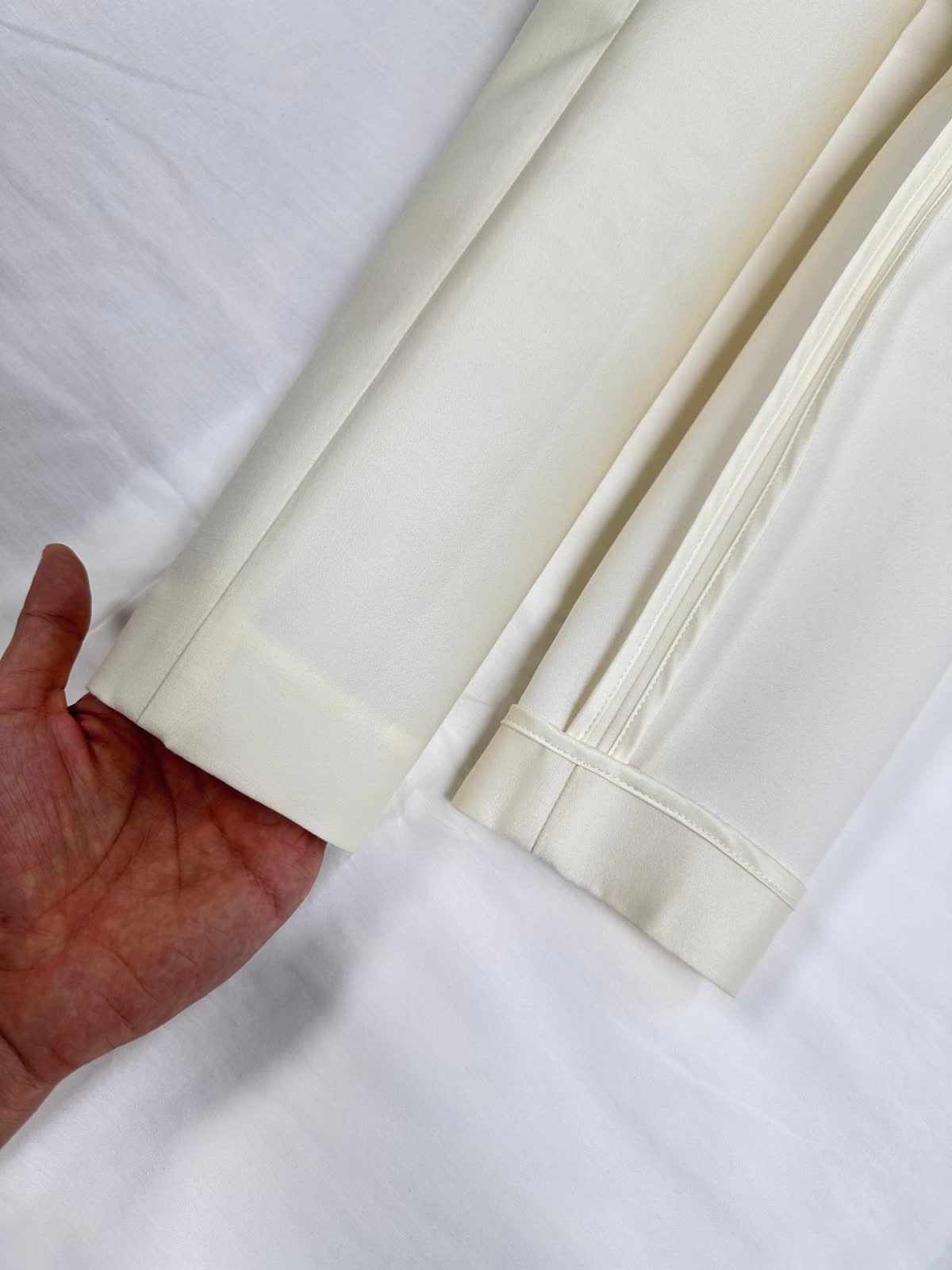
Fold the cuff back and look at the inside. The finish should be as neat as the outside — a clean turned edge, even stitching, no raw seam peeking out of the fold. Cuffs and collars take the most handling in production, which is why they show a factory’s habits first.
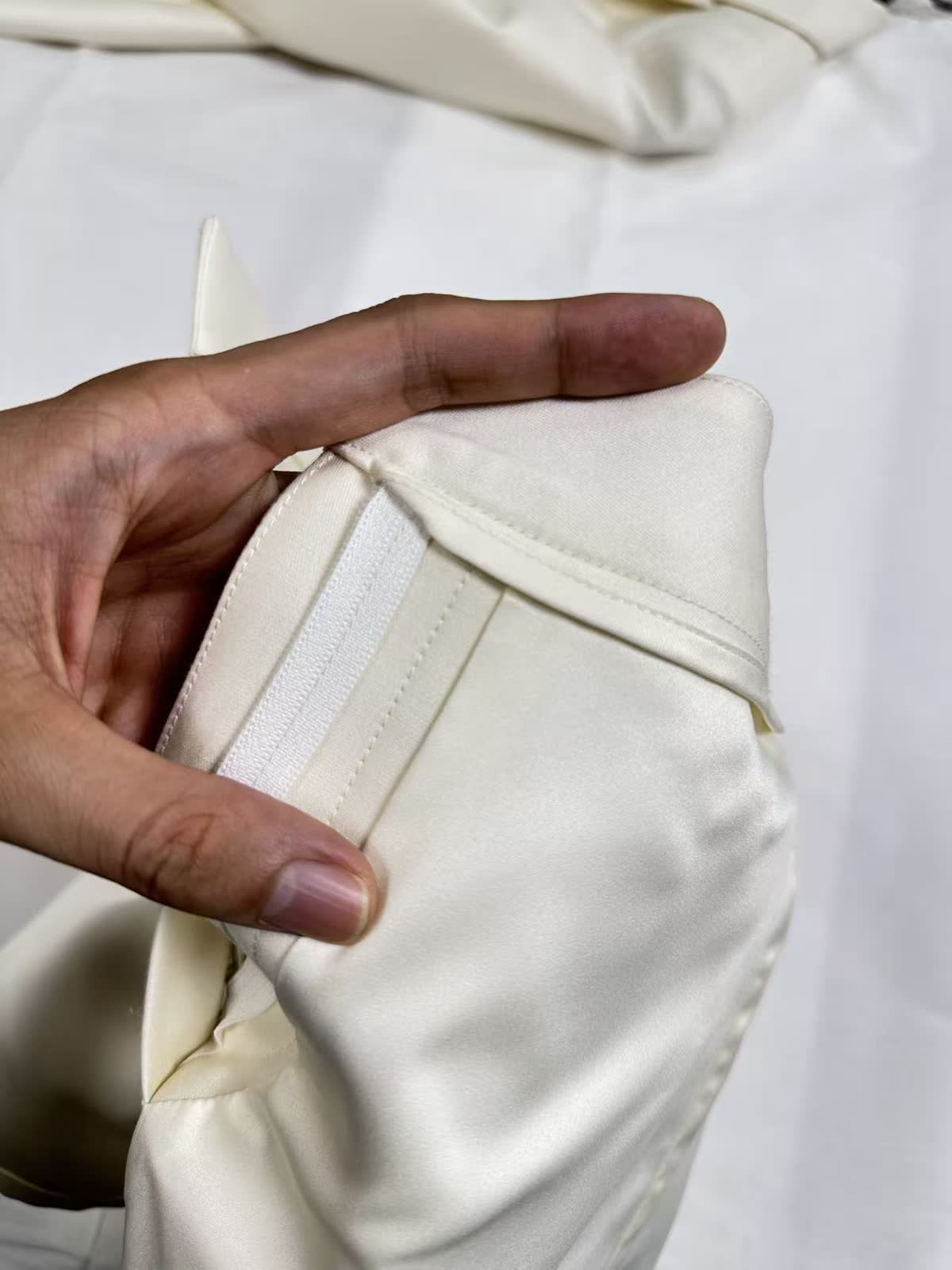
Lined trousers should hide every seam inside the lining sandwich. We sew them fully enclosed, so opening the leg reveals clean fabric, not raw allowances. Gently open any seam on a lined garment — visible frayed edges mean the line rushed.
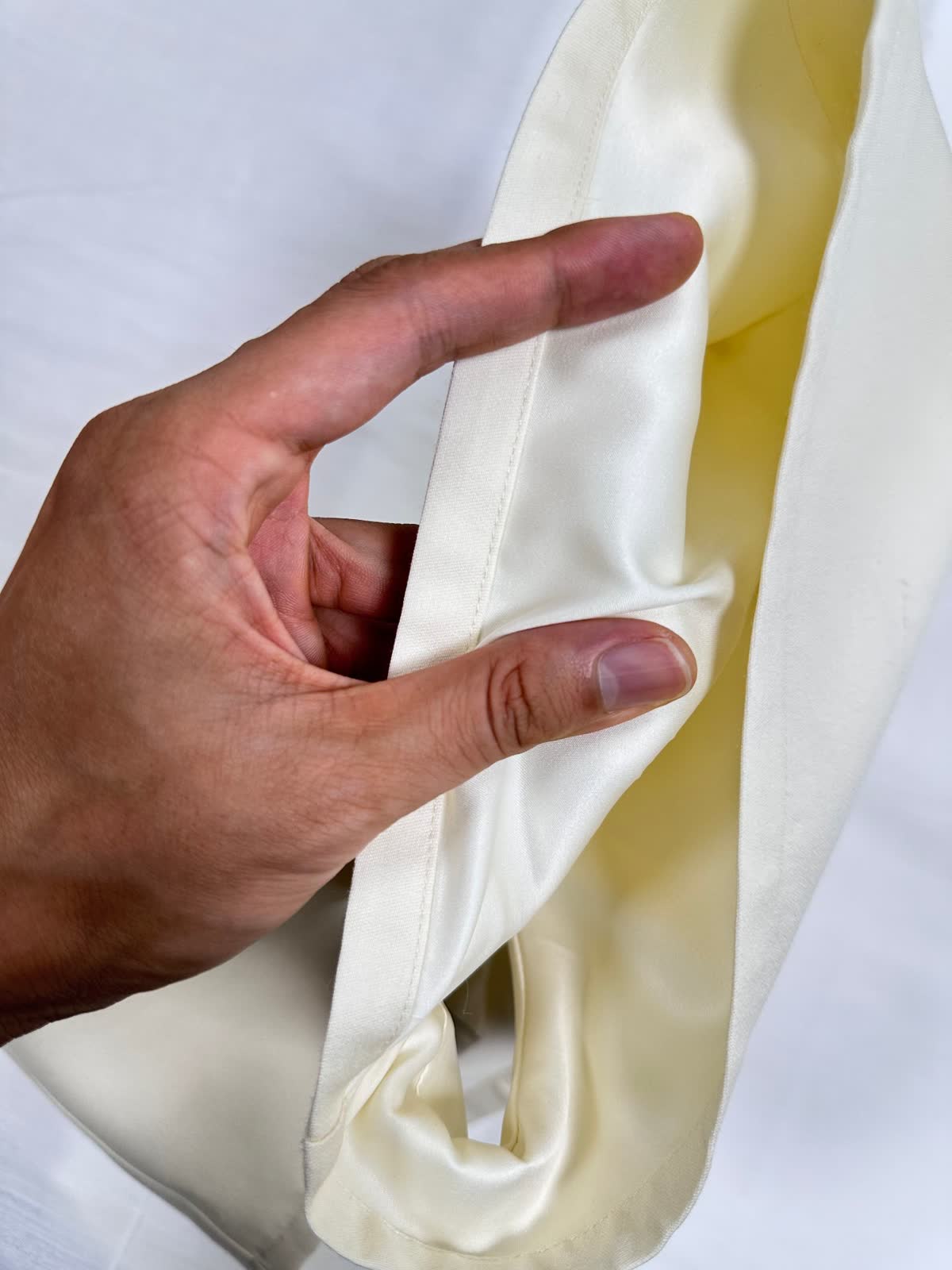
A hem tells you in five seconds. It should be the same depth all the way round, the stitch line parallel to the fold, no puckering where the hem meets the side seams. This is a finished trouser hem on a 30-piece run — the same as we would do on 300.
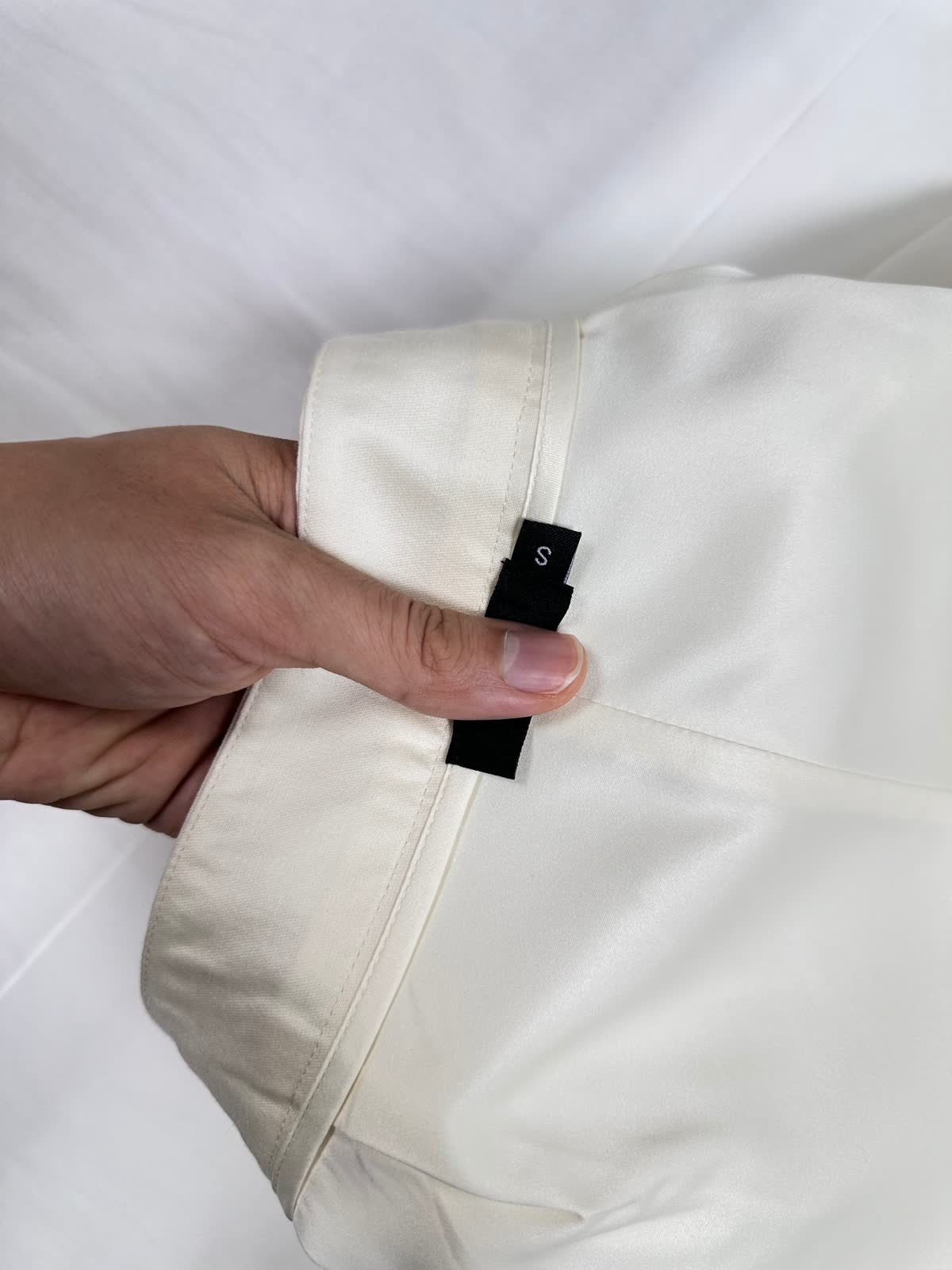
The waistband should lie flat — no ripples, no waves. Stitching rows run parallel, and the size label is set in cleanly between the layers, not stitched over. A rippled waistband usually means the band was eased on in a hurry, and it will never sit right after washing.
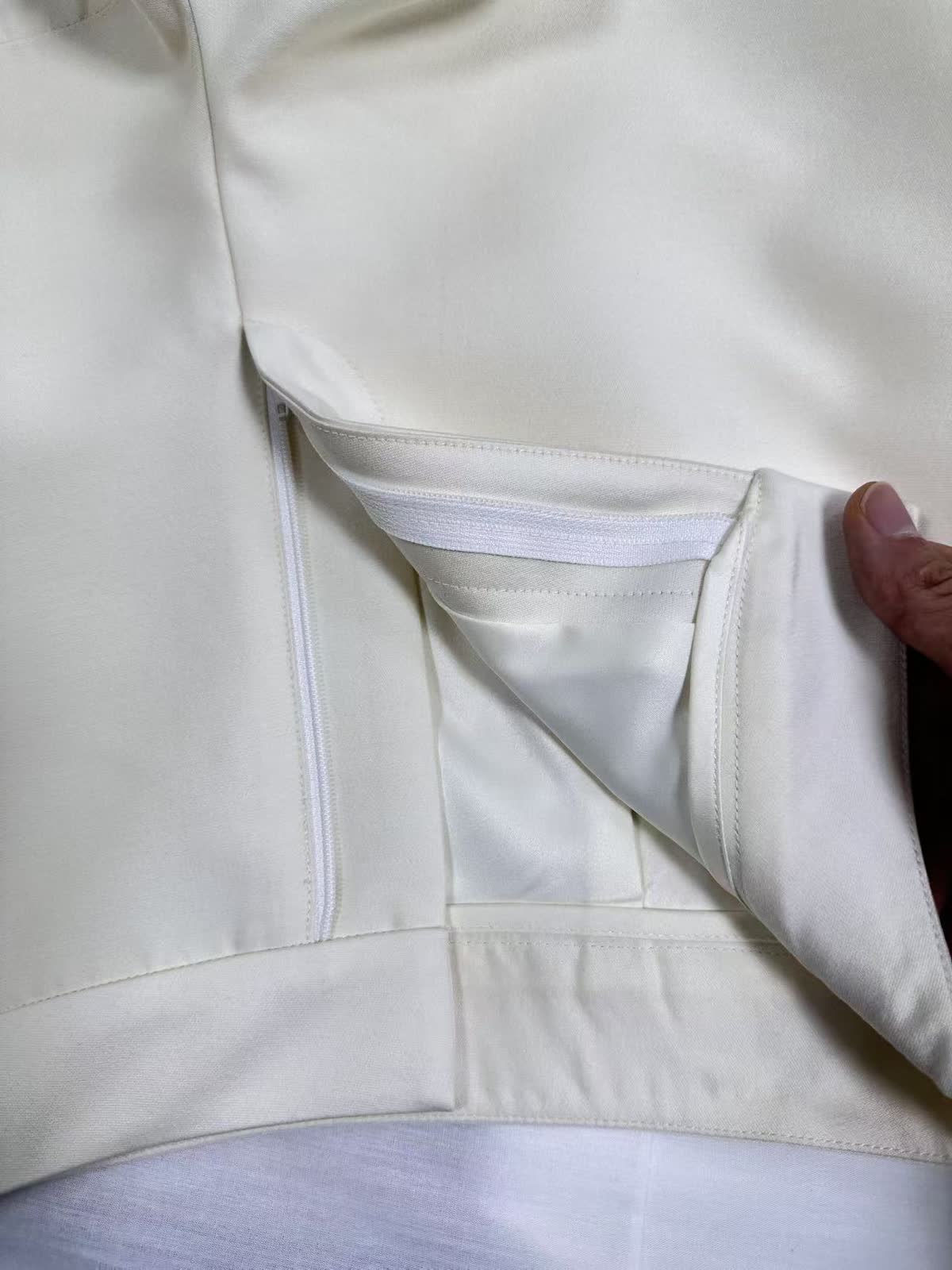
Zip and unzip five times. The teeth should run smooth, the fly shield lie flat without bubbles, the zip tape straight — never wavy — and no fabric caught in the zip seam. The fly is the most re-worked area in cheap production; here it is sewn in one pass.
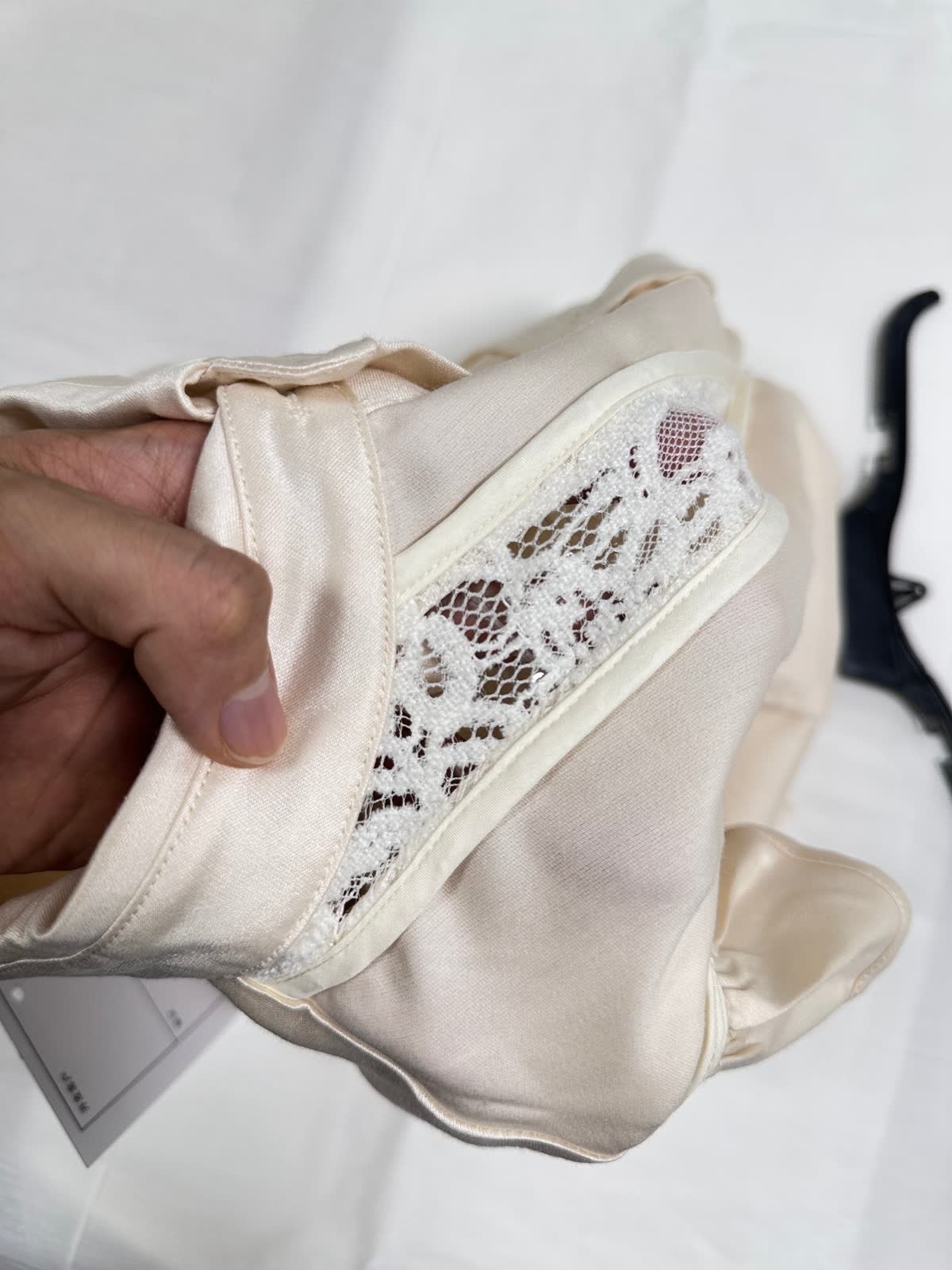
Where two fabrics meet — lace to satin, print to plain — the seam should sit flat and the design should continue cleanly across the join. This bodice joins lace to satin with an even transition. Matching across joins is slow, skilled work; it is also where “premium” is either proven or exposed.
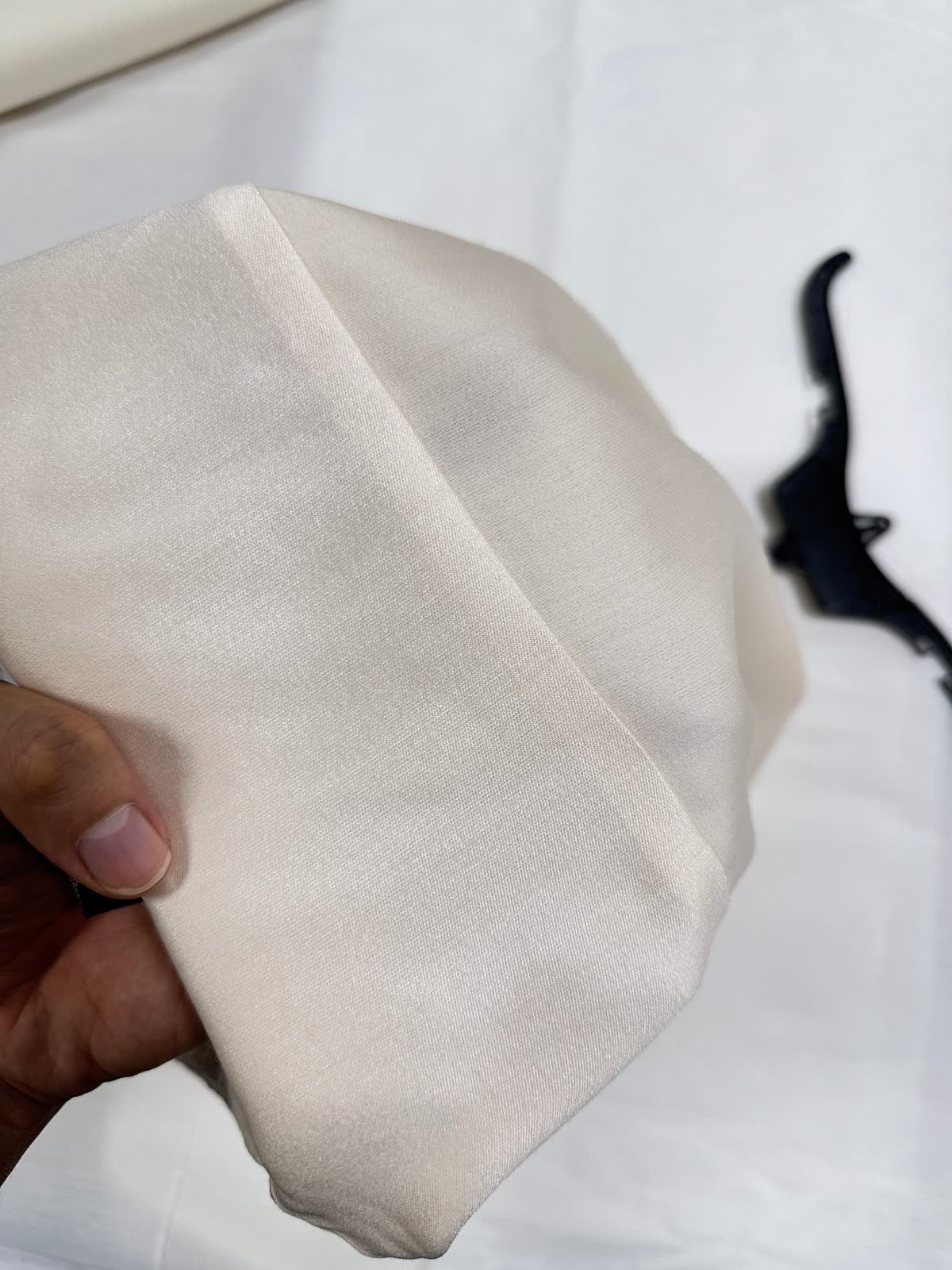
On sheer or delicate fabrics, ask for French seams: the raw allowance is enclosed twice, so nothing frays even after repeated washing. Run a finger inside — it should feel like one clean ridge, not a fuzzy edge. It costs a little more sewing time and saves the garment.
Before any detailed inspection, do this — it exposes most factories in under a minute:
— Turn the garment fully inside out. Judge the inside before the outside.
— Look at the seam allowances: finished and enclosed, or raw and fraying?
— Pull gently along the main seams: no gaping stitches, no seam grin.
— Check symmetry: pocket to pocket, cuff to cuff, hem depth side to side.
— Watch the four distortion zones: waistline, hip line, neckline, sleeve caps.
— On delicate fabrics: feel for French seams. Overlocked-only edges on sheers will not survive washing.
On our floor this is not advice — it is the job. Every garment passes three inspections (in-line, after-finish, final) to AQL 1.0–2.0, is tried on a mannequin piece by piece, and is video-documented before packing. If you would like to see it live, we run fittings and floor walks on a video call — and this is the fit standard the sewing serves.
(below our floor)
Fabric, pattern, detailing and construction methods — every element executed at the highest standard. Nothing is substituted to save cost.
The accessible version of luxury quality. You skip the ultra-luxury fabrics and move to high-grade alternatives — the look and hand-feel stay firmly high-end.
A clear tier above Zara-level fast fashion. The detailing is not as perfect as A or B — but it still outperforms international second-tier brands.
Whichever tier you choose — the fit is engineered to the same standard.
Fabric and finishing move with your budget. The pattern does not. Every style in every tier is drafted, mock-up tested and controlled to the same perfect fit and shape discipline — because a cheaper fabric should feel simpler, never fit worse. Read the fit standard →
A note on Zara — read this before you write to us.
If you are looking for Zara-equivalent quality at Zara prices, we are probably not the right factory for you. Customers making that comparison usually hold Zara quality in their mind as “acceptable” and measure the price by Zara too — without realizing that Zara orders many, many times more pieces per style. At 30–50 pieces per style, that economics simply has no comparison.
We would rather say this now than disappoint both of us later.
If your retail price sits at $250–1,000, your project most likely matches Tier A or B.
And in our experience, about 80% of such projects land within the target price range — we reverse-engineer the garment around your number.
Not a promise: fabric weight, trims and construction details all move the final figure. If your target cannot be met honestly, we tell you straight — before you spend a cent on sampling.
How do I check a garment factory's workmanship quality?
Turn the garment inside out and check five things: seam allowances finished (no raw edges), hems even, waistband flat, zipper smooth, pattern joins aligned. Then move in it — quality fit passes motion, not just a hanger. The 8 checkpoints above show each test on real garments from our floor.
What does 'enclosed seam' mean?
A seam whose raw allowances are hidden — bound, folded or sewn inside the garment — so no fraying edge is visible. On unlined garments we enclose every internal seam; on delicate fabrics we use French seams, which enclose the raw edge twice.
What is a French seam?
A seam sewn twice: first to enclose the raw allowance, then folded and stitched again so the edge is fully sealed inside. It is the standard finish for sheer and delicate fabrics — nothing frays, even after washing.
Can I request these finishes on my own styles?
Yes — enclosed seams, French seams and clean-finish cuffs and hems are default practice on our floor, not extras. Tell us the fabric and style; the finishes are specified in the quotation and verified in the three QC inspections. MOQ 30-50 pieces per style.