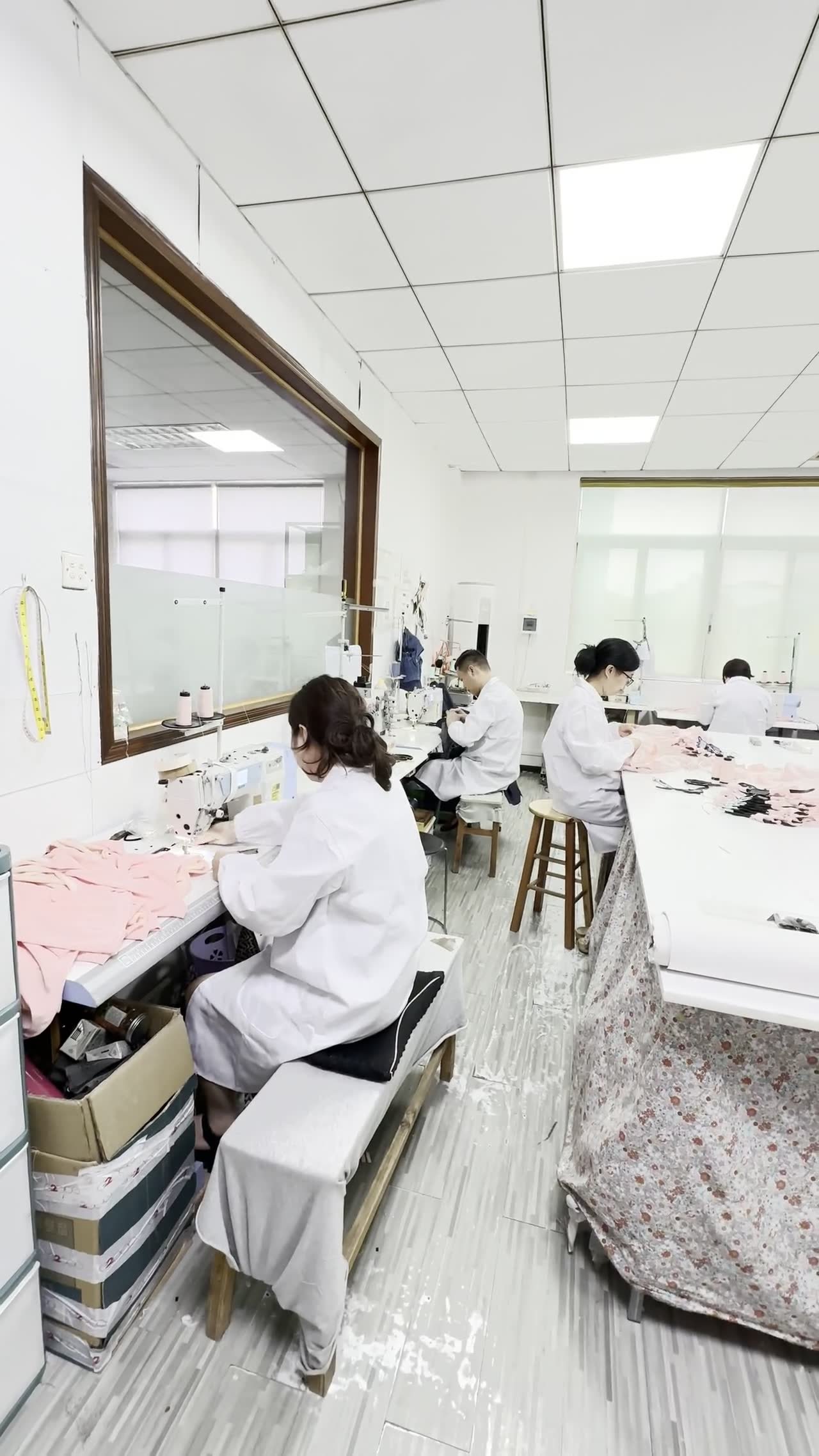
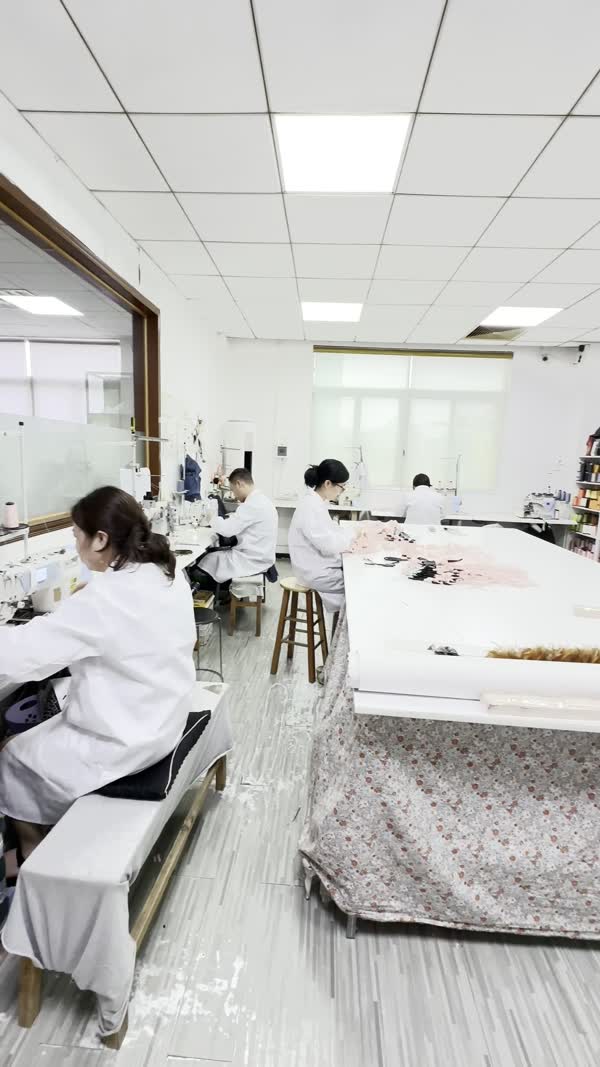
Here is something most factories never show you: the mannequins we actually work with. Seven of them, seven different sizes, photographed from the front, the side and the back, with every measurement written out.
Sample development starts from a base size. When a pattern is cut and a mock-up is sewn, the garment goes on the form closest to your target size. We check the silhouette, the balance and the proportions. When the form says yes, the sample moves on to a real fitting.
Why seven different sizes
One form cannot serve every brand. A dress drafted for a bust 78 cm body sits completely wrong on a bust 94 cm form. So the sample studio keeps seven mannequins, from our smallest base size at bust 78 cm up to our largest at bust 94 cm. When a client targets a niche size, the closest form becomes the reference body for that style.
Mannequin A is a full-body form with arms and legs. B and C are full-leg forms without arms, marked with red drafting lines. D has short legs for close-fitting checks. E, F and G are half-body forms for fast silhouette work on tops and skirts.
The seven forms, with measurements
Every number below was measured on the form itself, in centimetres with inches alongside.
Mannequin A
Full-body form with arms. Our largest base size. Used for dresses, coats and anything with set-in sleeves.
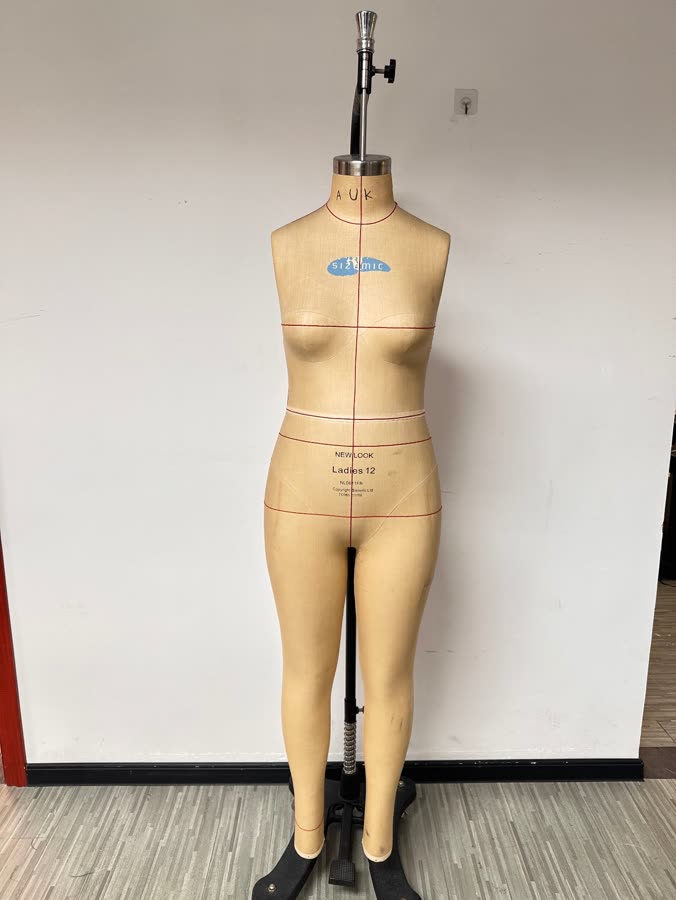
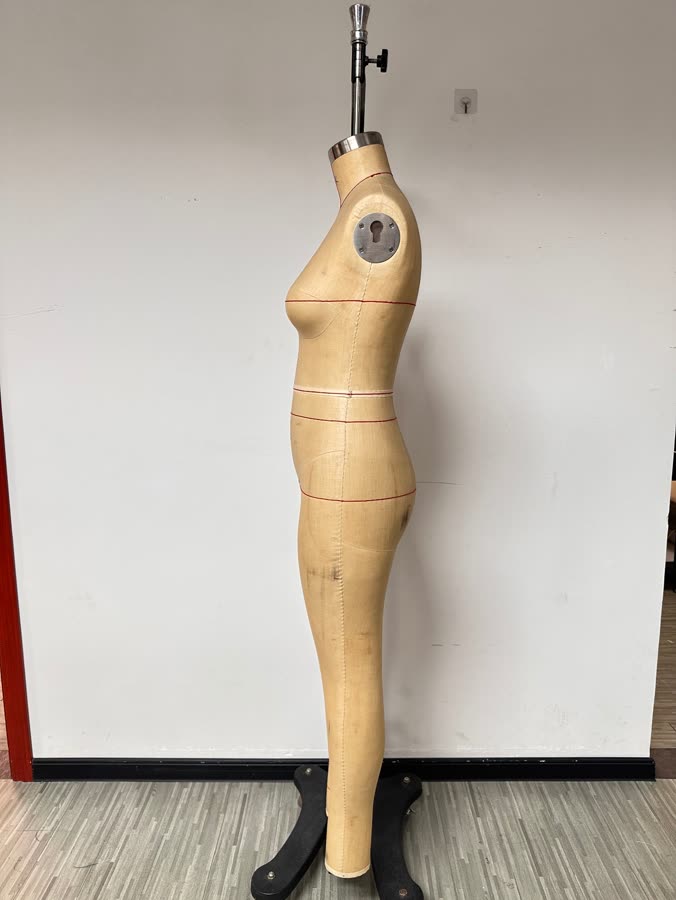
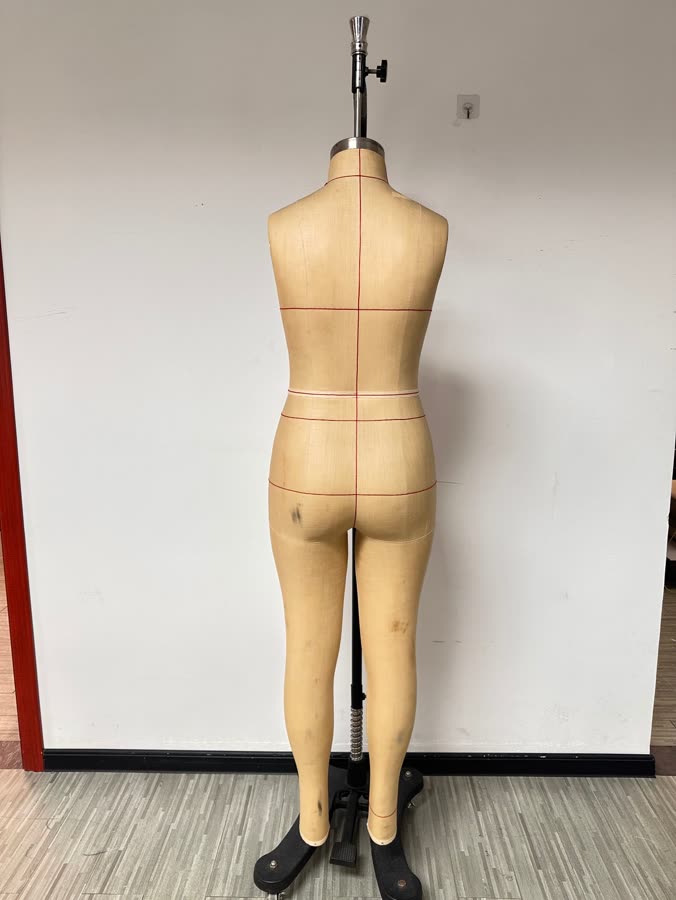
| Measurement | Mannequin A |
|---|---|
| Bust circumference | 94 cm / 37.0 in |
| Waist circumference | 75.5 cm / 29.7 in |
| Hips circumference | 99 cm / 39.0 in |
| Shoulder width | 38 cm / 15.0 in |
| Arm length | 55 cm / 21.7 in |
| Arm width | 27 cm / 10.6 in |
Mannequin B
Full-leg form without arms, marked with red drafting lines. Used for dresses and jumpsuits.
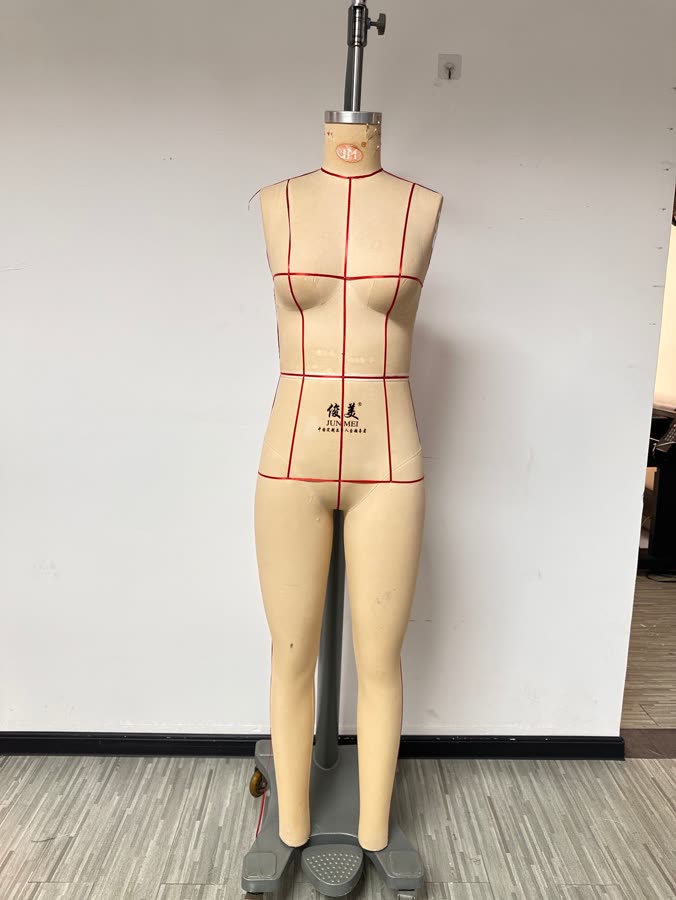
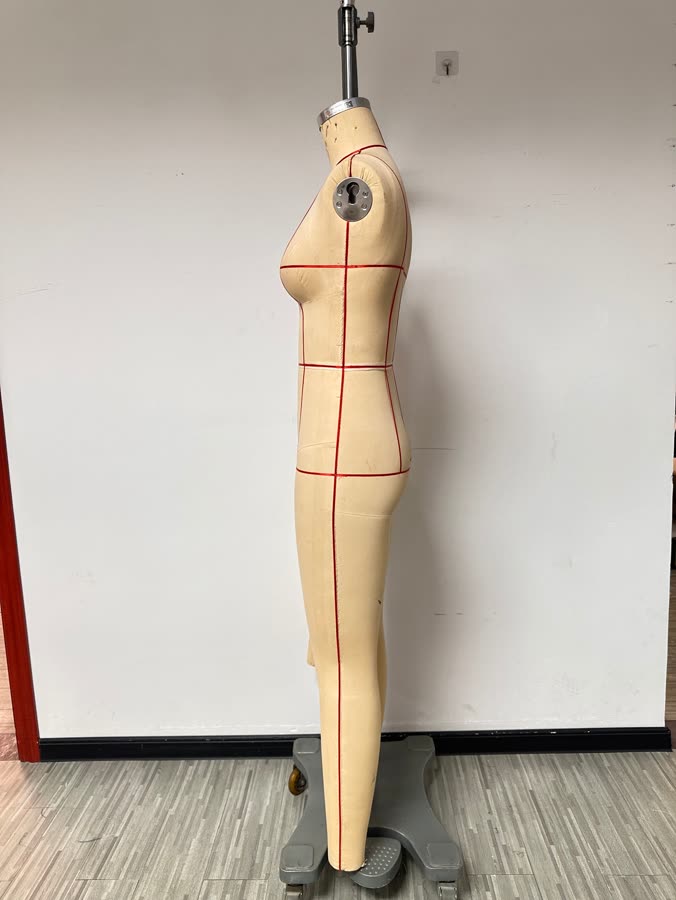
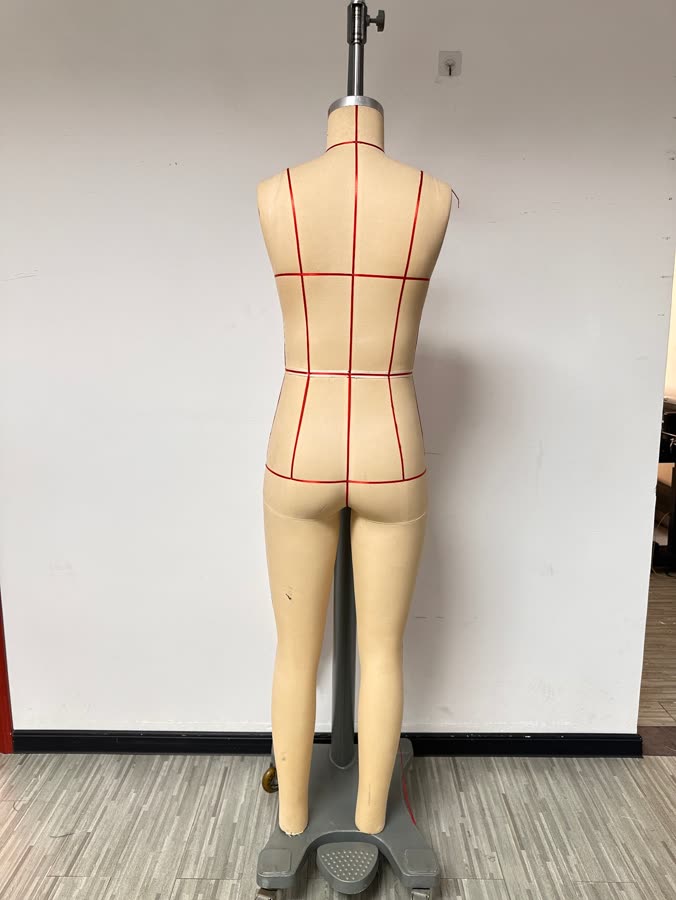
| Measurement | Mannequin B |
|---|---|
| Bust circumference | 92 cm / 36.2 in |
| Waist circumference | 72.5 cm / 28.5 in |
| Hips circumference | 97 cm / 38.2 in |
| Shoulder width | 37.5 cm / 14.8 in |
| Arm length | 58 cm / 22.8 in |
| Arm width | 27.5 cm / 10.8 in |
Mannequin C
Same form family as B, graded one size smaller. Measurements updated separately.
| Measurement | Mannequin C |
|---|---|
| Bust circumference | 91.5 cm / 36.0 in |
| Waist circumference | 71 cm / 28.0 in |
| Hips circumference | 95 cm / 37.4 in |
| Shoulder width | 38 cm / 15.0 in |
Mannequin D
Our smallest base size. Form with short legs, used for close-fitting checks.
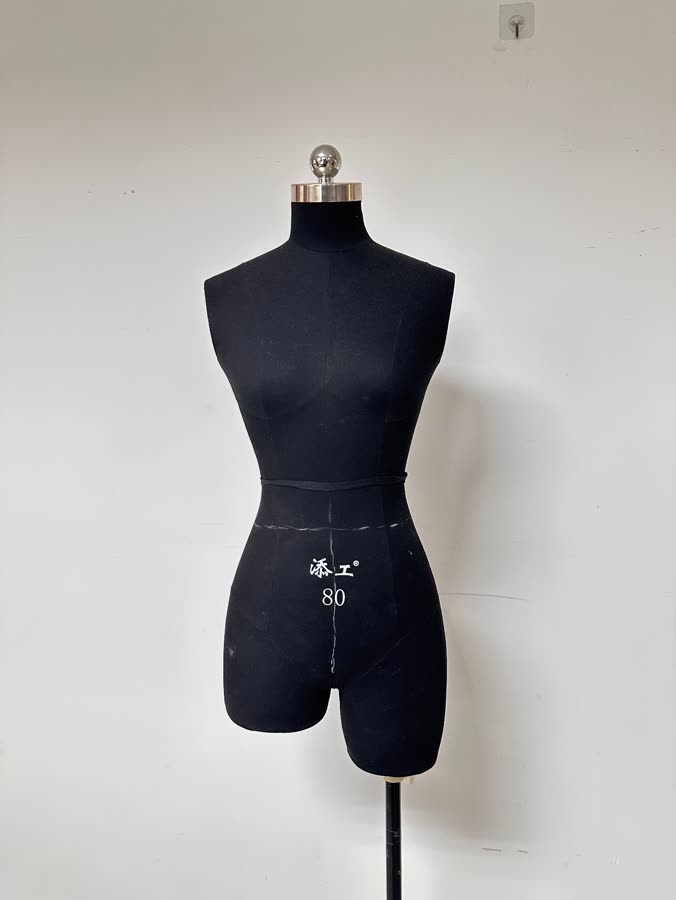
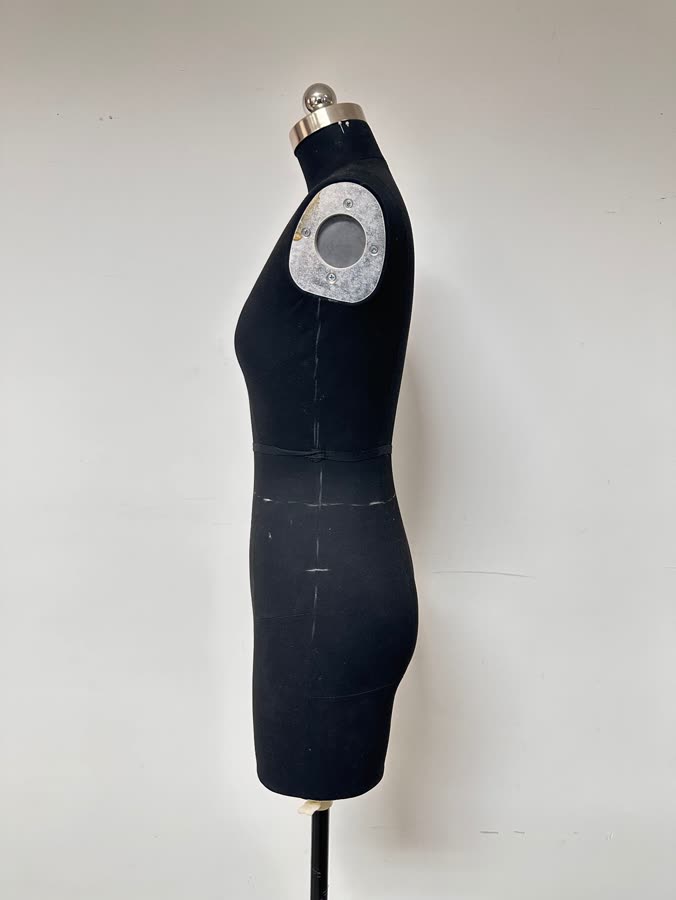
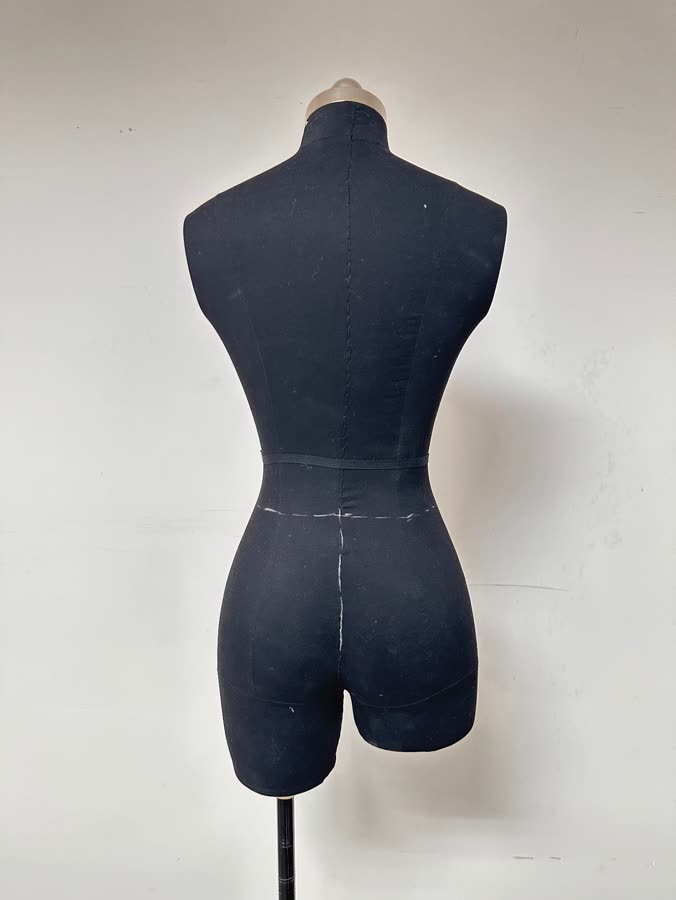
| Measurement | Mannequin D |
|---|---|
| Bust circumference | 78 cm / 30.7 in |
| Waist circumference | 59 cm / 23.2 in |
| Hips circumference | 84 cm / 33.1 in |
| Shoulder width | 37 cm / 14.6 in |
Mannequin E
Half-body form, one size above D. For tops, skirts and fast silhouette checks.
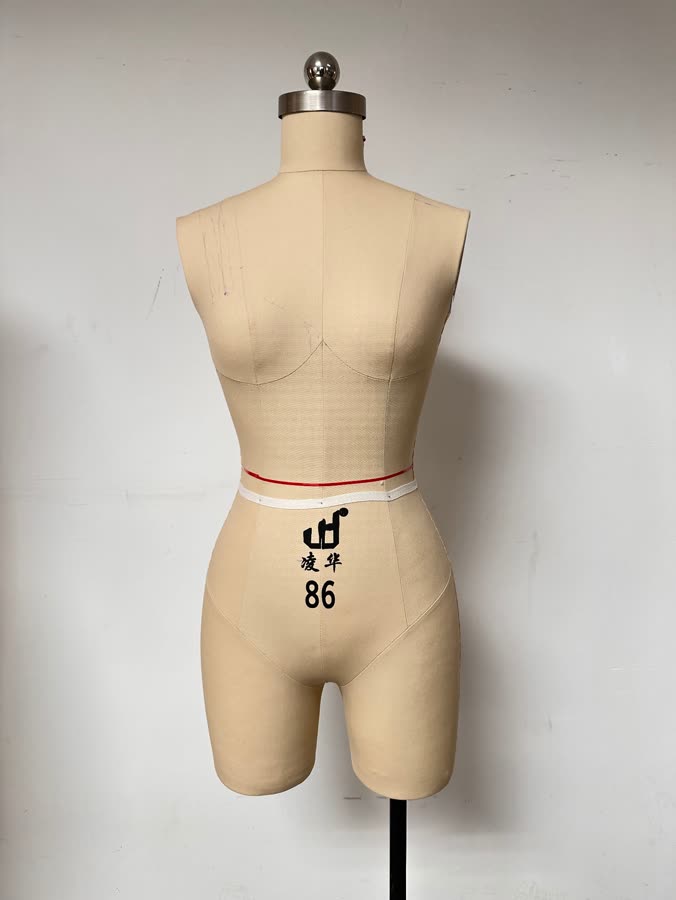
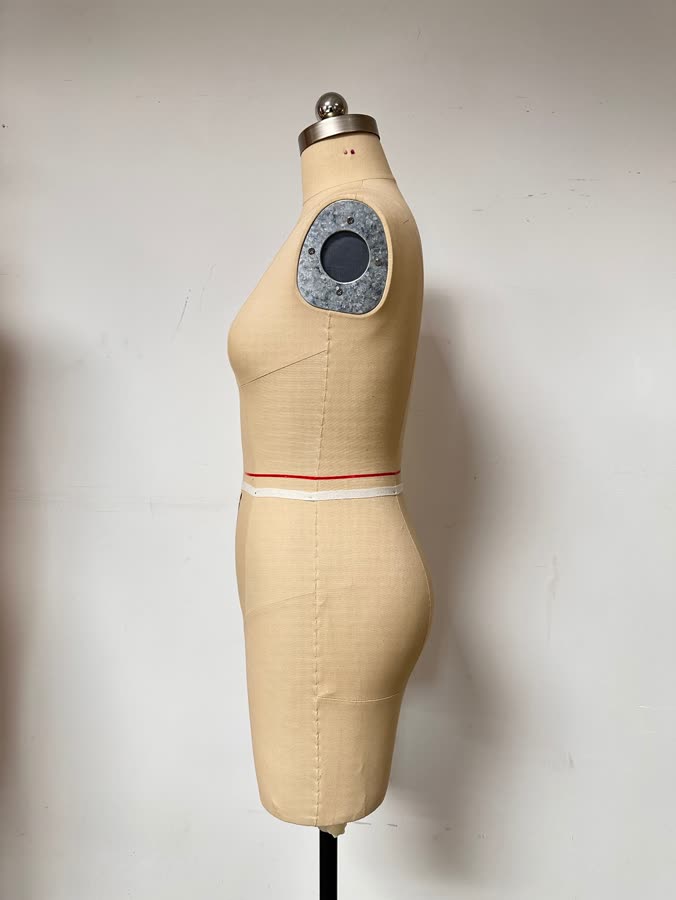
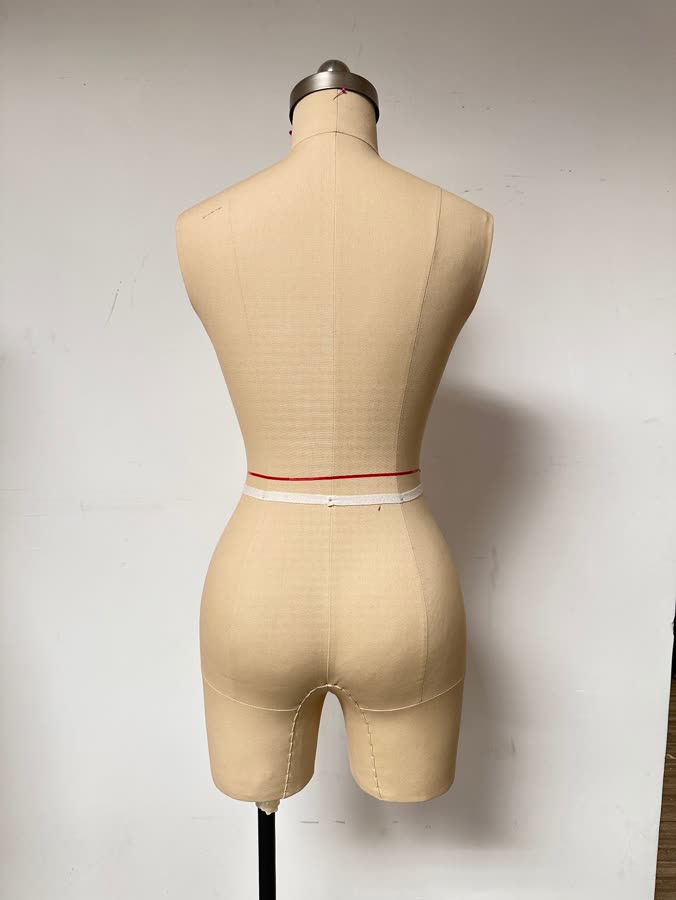
| Measurement | Mannequin E |
|---|---|
| Bust circumference | 86 cm / 33.9 in |
| Waist circumference | 66 cm / 26.0 in |
| Hips circumference | 92 cm / 36.2 in |
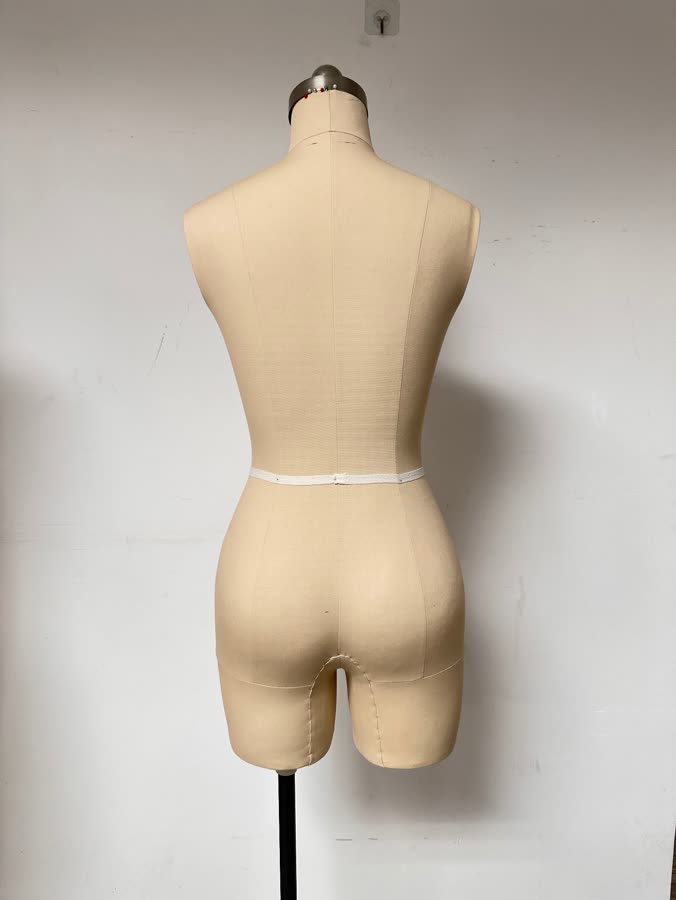
Mannequin F
Half-body form between E and G.
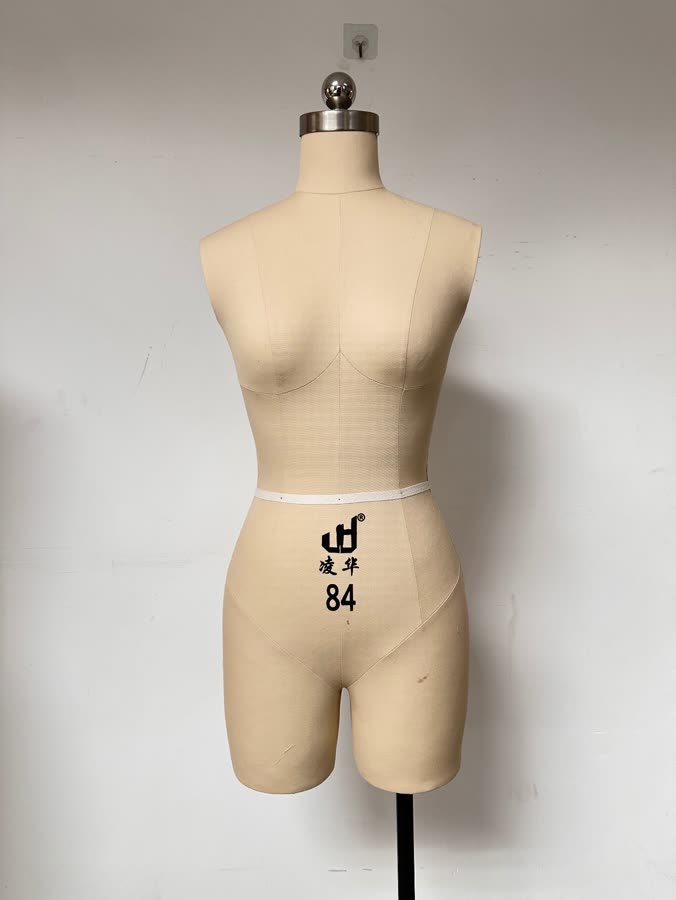
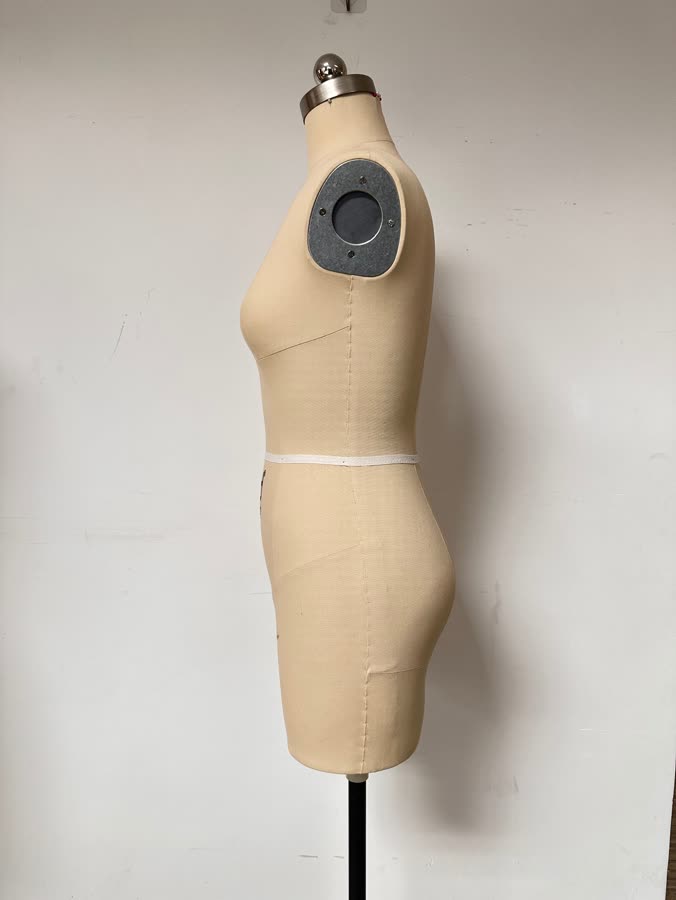
| Measurement | Mannequin F |
|---|---|
| Bust circumference | 84 cm / 33.1 in |
| Waist circumference | 64 cm / 25.2 in |
| Hips circumference | 90 cm / 35.4 in |
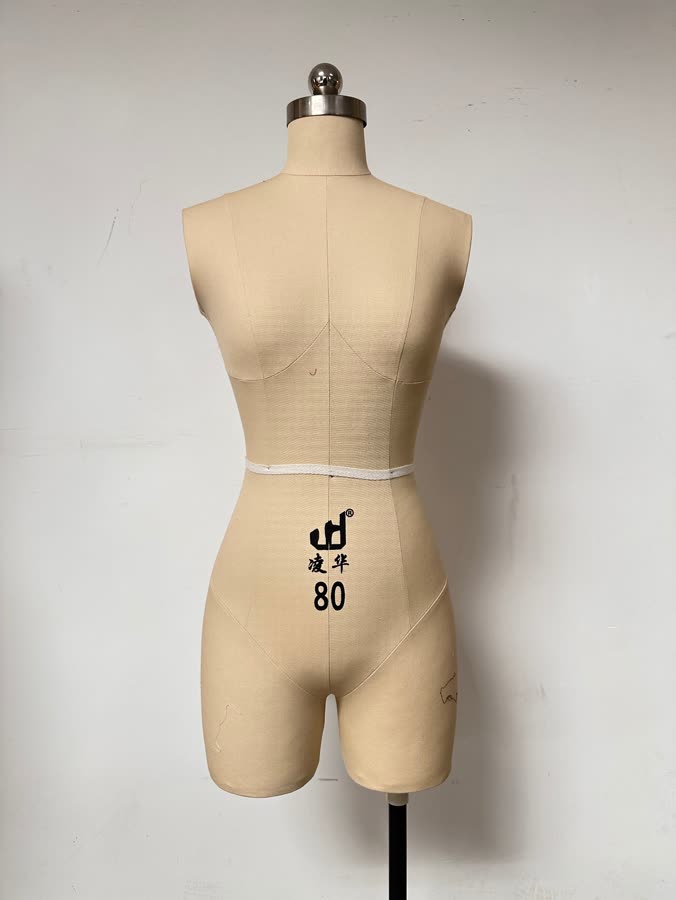
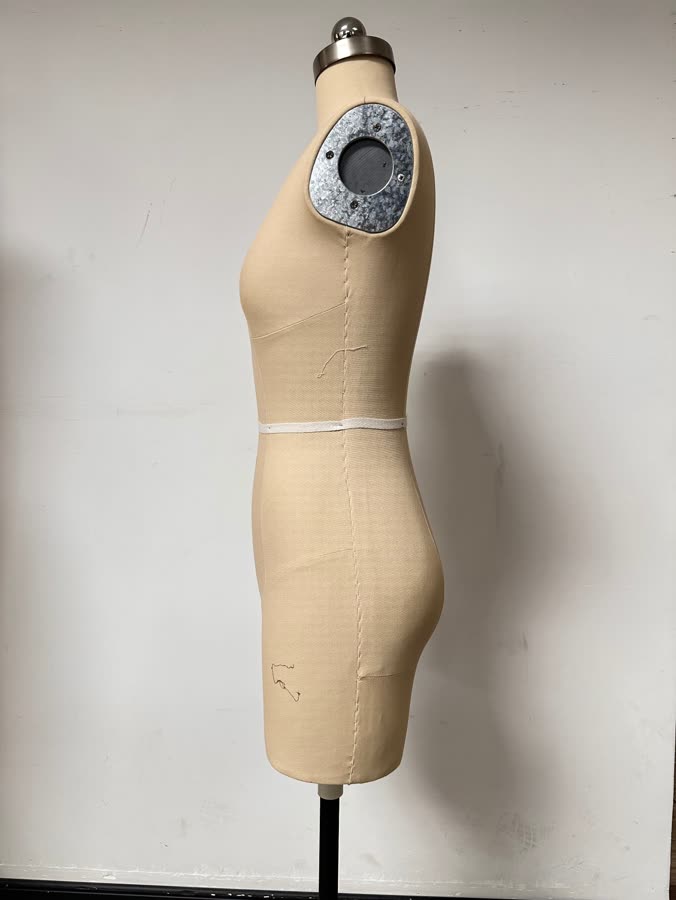
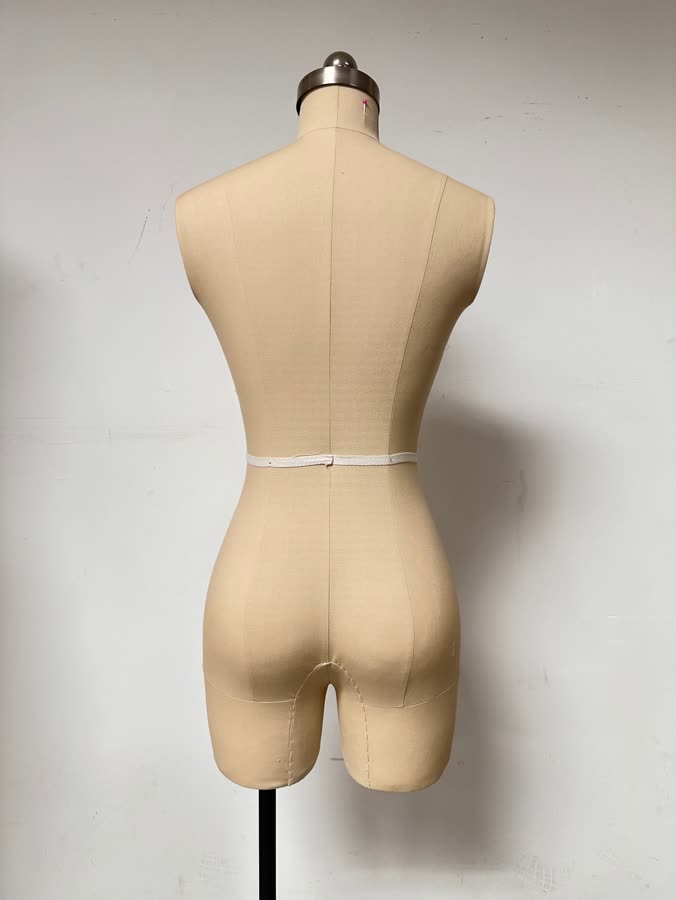
Mannequin G
Half-body form, our second smallest.
| Measurement | Mannequin G |
|---|---|
| Bust circumference | 80 cm / 31.5 in |
| Waist circumference | 60 cm / 23.6 in |
| Hips circumference | 86 cm / 33.9 in |
How the forms sit in our process
A mock-up is sewn in cheap cloth first. It goes on the form and we check the silhouette, the shoulder slope, the waist position and the fall of the skirt. Corrections go back into the pattern. The same check happens again with the real-fabric sample.
Only when the form check passes does the garment reach a real fitting. The forms do the early filtering, so the fitting can focus on the things only a body can show. The full sequence is described in our sample process page.
What a mannequin cannot tell you
A mannequin is hard. It has no muscle, no skin, no movement, and it never gets tired of an armhole that digs. It answers one question: does the silhouette, the balance and the proportion look right.
It cannot answer whether a garment feels good on a real body. Drape in motion, comfort against the skin, how a waistband behaves after ten minutes of walking, these need a real fitting. That is why our process ends with a real person wearing the sample, never with the mannequin.
Questions about our mannequins
Do you have different size mannequins for sample development?
Yes. Seven mannequins covering base sizes from bust 78 cm to bust 94 cm, each photographed from the front, side and back with full measurements on this page.
What sizes are your mannequins?
Bust from 78 to 94 cm, waist from 59 to 75.5 cm, hips from 84 to 99 cm. Mannequin A carries arms and full legs, B and C carry full legs, the rest are half-body forms for fast silhouette checks.
When does a garment go on the mannequin?
After the mock-up is sewn, and again after the real-fabric sample is finished. The form check looks at silhouette, balance and proportion before any real fitting.
Can a mannequin replace real fitting?
No. A mannequin is rigid, with no muscle, skin or movement. It shows overall effect only. Wearing comfort needs a real fitting on a real body, which is the final step of our sample process.