Every brand hits this wall eventually. You have a design you believe in, a factory that seems right, and then a number: 500 pieces minimum. Not 100. Not 50. Five hundred. Low MOQ production does exist — but very few factories will offer it, and fewer will do it well.
The number feels arbitrary. It isn't. And once you can see what it's made of, parts of it become negotiable — particularly if you are looking for a small MOQ garment manufacturer rather than a volume factory.
What a minimum is actually paying for
A factory doesn't set a minimum to be difficult. It sets one because certain costs don't shrink with the order.
Pattern and marker. Before anything is cut, someone makes the pattern and lays out a marker — the arrangement of pattern pieces on fabric that determines how much cloth you waste. That work is identical whether you're cutting 30 garments or 3,000.
Machine setup and changeover. A line is set up for a specific garment: thread, needle size, tension, presser foot, specialised attachments. Setting it up takes hours. Running it takes minutes per piece. Below a certain quantity, setup dominates everything.
Line balance. This is the one people forget. A sewing line isn't one person making a dress — it's a sequence of operators, each doing one operation. Balancing that sequence takes a run-up period. Too few garments and the line never reaches rhythm, so the per-piece cost of the first hundred is genuinely higher.
Fabric. Separate from garment MOQ entirely. See below, because this is where most confusion lives.
Garment MOQ and fabric MOQ are two different numbers
This is the single most common surprise for new brands, so it's worth separating clearly.
A factory's garment minimum — ours is 30–50 pieces per style per colour — is about the sewing line. A mill's fabric minimum — often 500 to 1,000 metres — is about the dye vat. They're set by two unrelated businesses with two unrelated cost structures.
You can find a factory that will sew 30 dresses. That does not mean the silk for 30 dresses can be dyed economically. Small fabric quantities usually carry a surcharge, or you buy from stock-supported colourways where the mill has already run the dye.
Which is why "low MOQ" sometimes still produces a quote higher than you expected. The garment side came down. The fabric side didn't.
Which parts you can actually negotiate
Not all of a minimum is fixed. Three levers, roughly in order of how often they work:
- Combine colourways. If the minimum is 50 per colour, ask what 50 across two colours looks like. Same cutting, same line setup, one extra thread change. Often acceptable.
- Accept stock fabric. If you can work with what the mill already has in greige or standard colours, the fabric minimum largely disappears. This is the biggest lever available to small brands and the one most people never ask about.
- Pay the setup explicitly. Sometimes the honest move is to pay the setup cost as a line item in exchange for a lower quantity. It doesn't reduce your total, but it converts a blocked order into a possible one.
What doesn't work: asking a factory to drop its minimum for free. The costs are real. A factory that agrees anyway is either absorbing a loss it will resent, or planning to make it up somewhere less visible.
What MOQ 30 means for us
We run 30–50 pieces per style per colour, with 50–150 as the sweet spot. Below 50 there's a per-unit premium, and we say so upfront rather than let you discover it on the invoice.
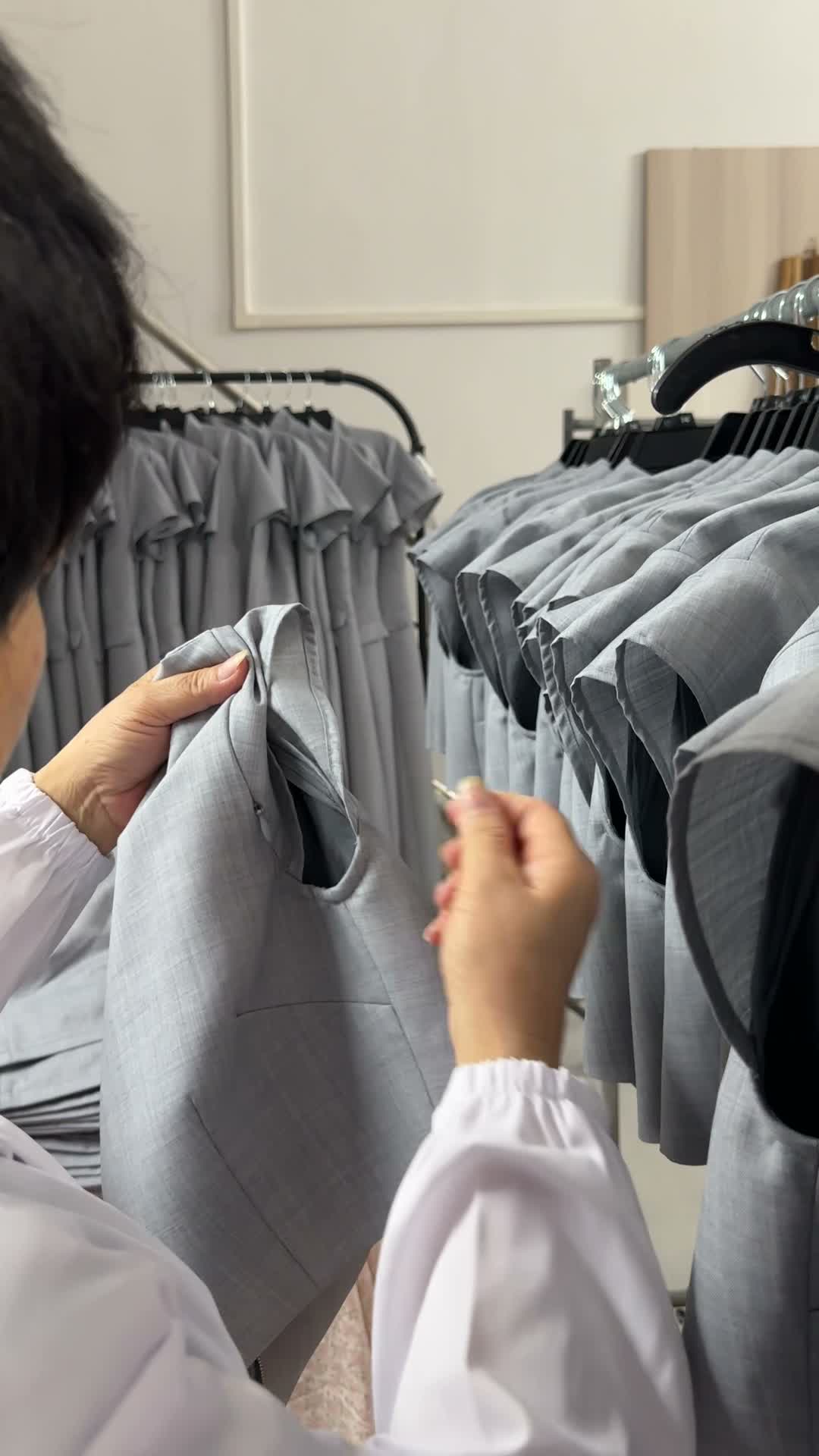
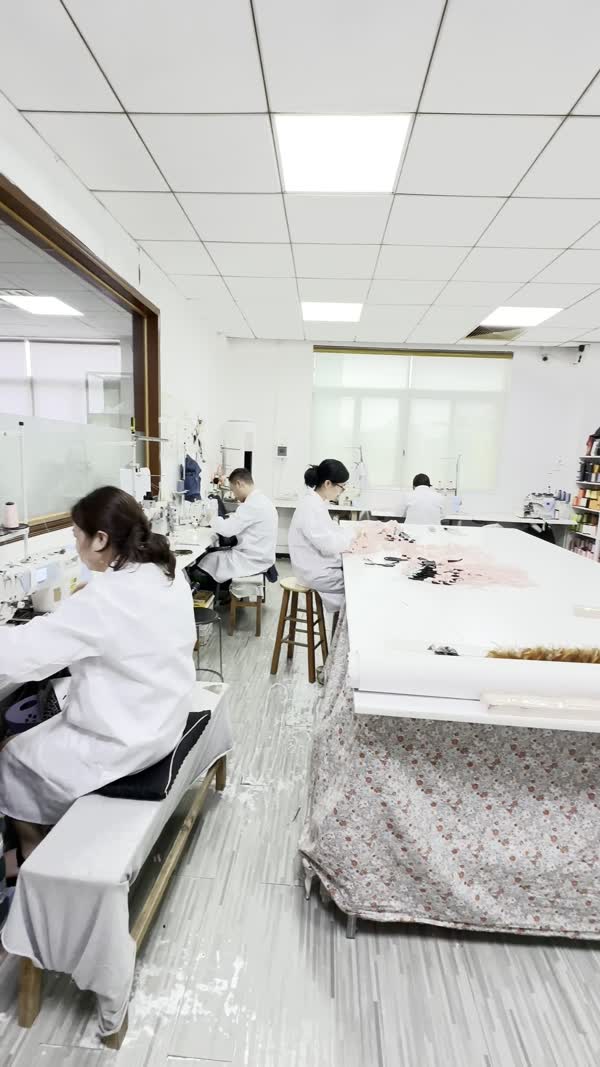
It works for us because of how the floor is organised — small dedicated cells rather than one long line built for volume. That's a structural choice, not generosity. It also means we're genuinely the wrong factory for a 5,000-piece order, and we'll tell you that too.
The same structure is what makes private label clothing at low MOQ work here — your woven labels, hangtags and branded packing are handled in-house from 30 pieces per style, so a young label launches with a real identity instead of a compromise.
Is a low minimum always the right call?
No, and this is worth saying plainly. If you have a proven style with steady reorder demand, 500 pieces will be meaningfully cheaper per unit and you should take it.
Low MOQ is for testing. For a debut collection, a new category, a colourway you're unsure about — the ability to make 30 and learn something is worth the premium, because the alternative is 470 units of inventory you can't move.
The mistake isn't choosing small. It's choosing small for a style you already know sells.
Quick answers
What does MOQ stand for?
Minimum order quantity — the smallest run a factory will produce per style per colour. Ours is 30–50 pieces, with 50–150 being the sweet spot.
Why is MOQ higher for custom fabric?
Garment MOQ is set by the sewing line; fabric MOQ is set by the dye vat. They're separate businesses with separate economics, usually 500–1,000 metres.
Can I negotiate a factory's minimum order?
Sometimes. The levers that work: combining colourways into one run, using stock-supported fabric instead of custom dye, or paying setup costs as an explicit line item.
Every number here comes from work we actually do — 30-piece runs, three inspections per garment, Guangzhou since 2016.
Request a quote from our Guangzhou garment factory