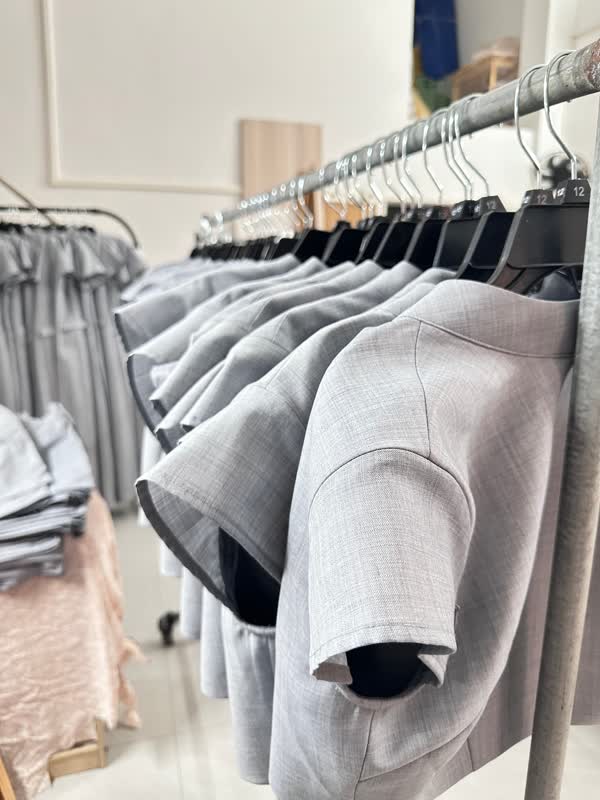
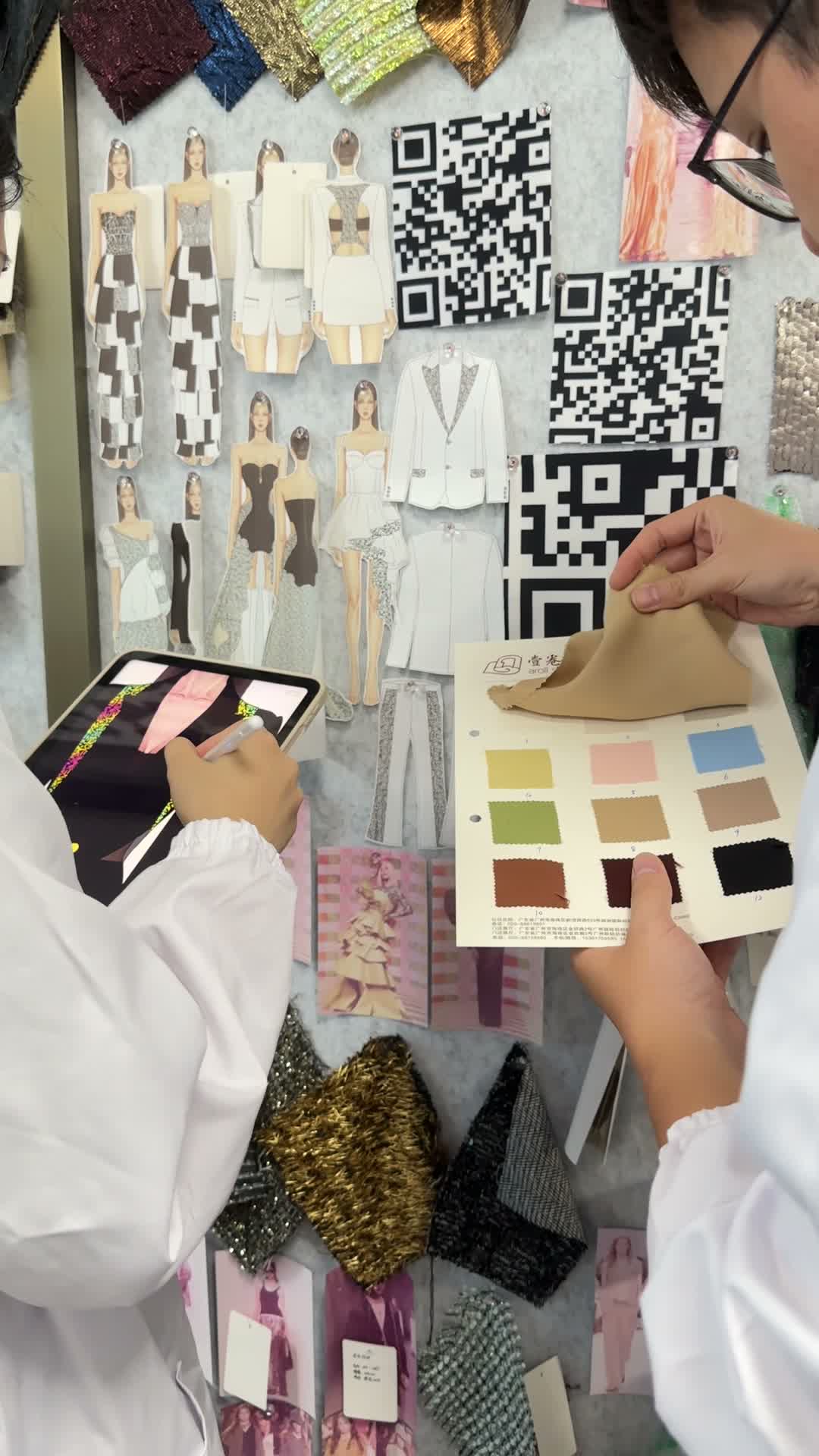
Almost every expensive production failure I've seen was decided in the first hour after fabric arrived at the garment factory. Not during sewing. At intake.
Once cloth is cut, every problem becomes a garment problem — and in small batch garment production, those problems cost ten times more to fix than fabric problems. So the intake check isn't bureaucracy. It's the cheapest insurance in the whole process.
The 4-point system, briefly
The industry standard for grading fabric defects assigns penalty points by defect size: 1 point for defects up to 3 inches, 2 for 3–6 inches, 3 for 6–9 inches, 4 for anything larger. You inspect a roll, total the points per 100 square yards, and the fabric passes or fails against an agreed threshold.
It's a reasonable system and it's widely used. It also only covers one of the four things that actually go wrong. Here's the fuller list.
1. Weight and composition
Weigh a sample and compare to spec. On silk this is momme; on most other fabrics it's grams per square metre. A fabric quoted at 19 momme that arrives at 16 will drape differently, wear differently, and usually photograph differently.
Composition matters just as much. A "wool blend" that's 30% wool rather than 70% behaves like a different material. If you can't test it in-house, send a swatch to a lab — it's inexpensive and it settles the question.
This is also where substitution shows up. Nobody announces it. The approved fabric ran out and something similar was available.
2. Usable width, not nominal width
A roll sold as 140cm can measure 114cm between usable selvedge edges once you exclude flaws along the edges. That difference changes your marker, your consumption, and your piece count.
Practical example: an order placed on the assumption of 220 finished pieces produces 180 once width and cutting waste are accounted for. Nothing went wrong. The arithmetic was just done on the wrong number.
Measure at three points along the roll — beginning, middle, end. Width drifts.
3. Shading, roll to roll and within the roll
Check every roll against the approved standard, and check the beginning of each roll against its own end. Dyeing is a continuous process with a head and a tail, and they differ.
Two failure modes here. Roll-to-roll variation, where different rolls don't match each other — this ruins garments where panels from different rolls sit side by side. And shading within a single roll, which is worse, because it produces garments that look fine flat and wrong on a body.
Use a spectrophotometer if you have one. If you don't, use a light box and a trained eye — but be consistent about the light source, because metamerism will make two fabrics match under store LED and diverge in daylight.
4. Shrinkage and fastness
Cut a swatch, wash it the way your customer will, measure again. A fabric that shrinks 4% will fit on day one and not fit after the first laundry cycle — and the customer blames the brand, not the mill.
Rub test too, particularly on saturated colours. If colour transfers onto a white cloth, it will transfer onto a customer's bag.
What to do when a roll fails
Three options, in order of preference: reject and re-source, negotiate a price adjustment and cut around the problem, or accept it and document it.
The third is sometimes genuinely correct — a small flaw in a low-visibility area on a 30-piece run might not be worth three weeks of delay. But make it a decision, not an accident. And write it down, because if the customer notices, you'll want to know which roll it came from.
We number every roll and record which garments came from which. It sounds like overkill until the first time you need to trace a complaint back six months.
The honest part
Intake inspection takes time and most factories skip it under deadline pressure. We've felt that pressure. The discipline isn't about being meticulous — it's that every hour spent at intake saves roughly ten hours downstream.
It carries straight into cutting and sewing: fabric rested 48 hours before it meets the blade, one-way markers on directional cloth, seams finished to match the sealed sample. That's the standard behind our cut and sew manufacturing, and it applies to a 30-piece run exactly as it does to a 500-piece one.
Quick answers
What is the 4-point fabric inspection system?
Defects are graded by size — 1 point up to 3 inches, 2 for 3–6, 3 for 6–9, 4 for larger — totalled per 100 square yards and compared against an agreed threshold.
Why did my fabric order make fewer pieces than planned?
Usually usable width. A roll sold as 140cm can measure 114cm between selvedge flaws, which changes the marker and the piece count. Add 3–5% for cutting waste.
Should I test fabric shrinkage before production?
Yes. Wash a swatch the way your customer will and re-measure. A 4% shrink means garments fit on day one and don't fit after the first wash.
Every number here comes from work we actually do — 30-piece runs, three inspections per garment, Guangzhou since 2016.
Request a quote from our Guangzhou garment factory