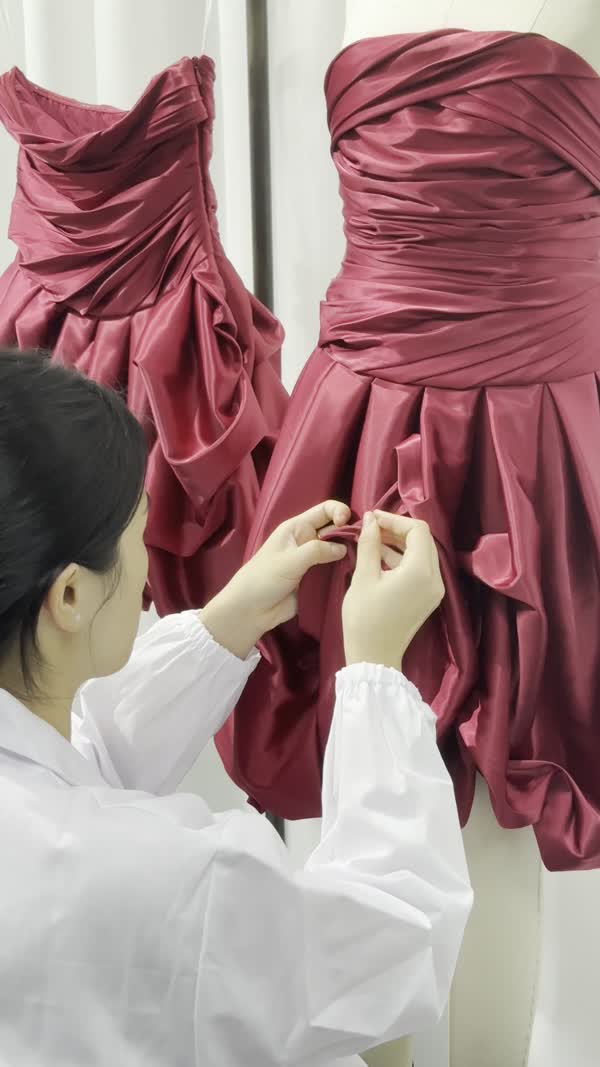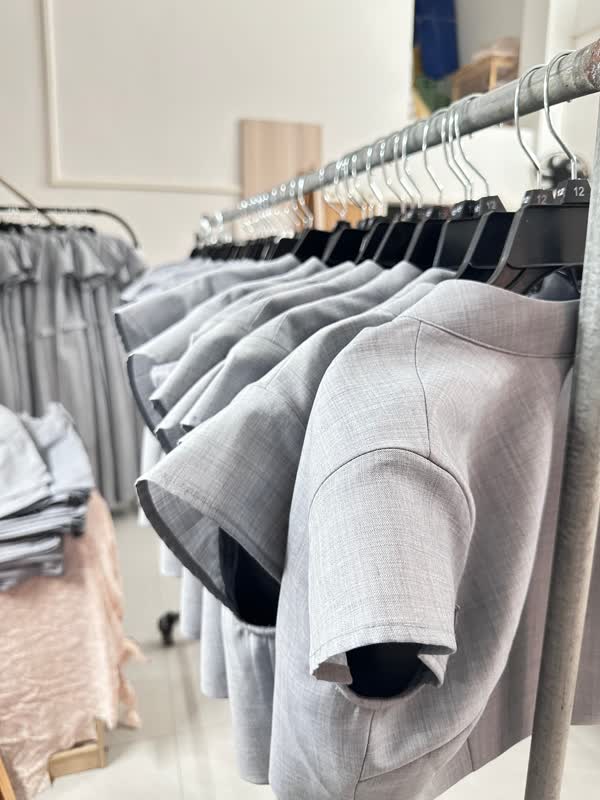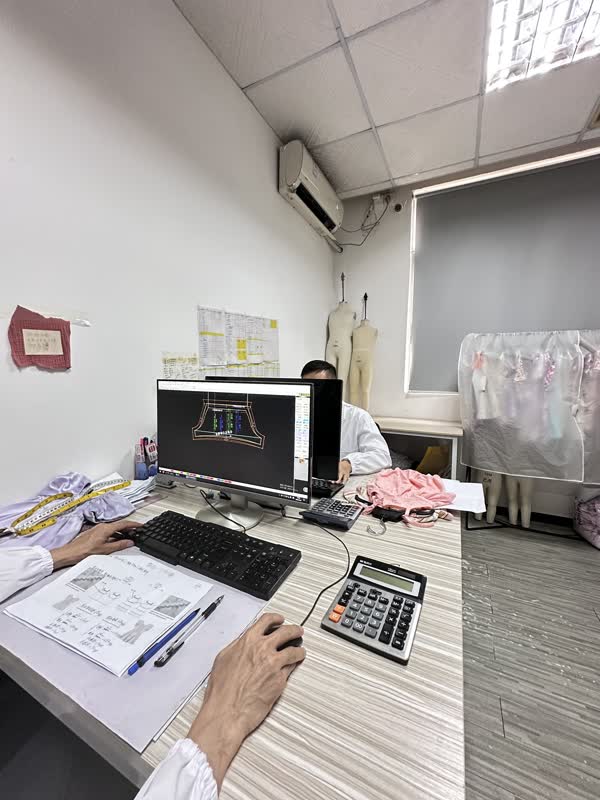
A small batch clothing manufacturer sees the same halter mistake on almost every first sample: the tie sits exactly where the sketch put it, and the bust line lands 2 cm too low.
A halter is not a neckline. It is a suspension system. Two straps carry the whole front panel, so where they attach decides whether the dress sits on the bust or drags at the neck.
Here is how we set a halter at 30 pieces, and the three places it still goes wrong.
Why a halter is a fitting problem before it is a sewing problem
On a sleeveless dress the shoulder seam carries the front. On a halter there is no shoulder seam, so the load moves to the back of the neck and to two attachment points.
That changes everything downstream: the front panel needs more support, the tie needs structure, and the back needs a closure that can take tension without gaping.
If the pattern is drafted like a sleeveless bodice with the shoulders cut away, it will fit a mannequin and fail a body.
The 2 cm that decides bust line and neck strain
Move the tie attachment 2 cm toward the neck and the bust line lifts. Move it 2 cm outward and the panel drops, the underbust seam drifts down and the neck starts taking weight.
Most first samples arrive 2 cm low, because a sketch is drawn flat and a bust is not.
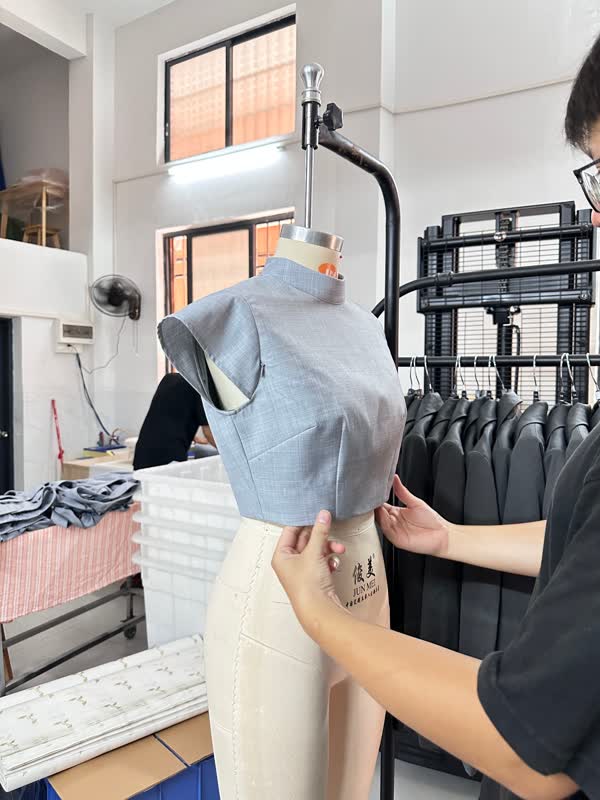
We pin the tie at three heights on the mannequin before we touch the pattern: sketch position, 1 cm up, 2 cm up. Then we photograph all three from the side, because the side view is where the difference shows.
Where the tie attaches: three positions and what each one does
High and narrow, at the base of the neck: the most flattering on a small bust, the least forgiving on a large one. It also needs a wider tie, or the knot rolls.
Wide and low, near the shoulder point: comfortable and easy to grade, but it reads casual. On a satin evening dress it looks like a top.
Mid, roughly 6 to 7 cm from the neck centre: where most of our orders land after the second fitting. It holds a bust line without choking, and it grades cleanly to a size L.
Tie width, knot slip and 1.4 metres of fabric
A midi halter uses about 1.4 m of tie per side once you allow for the knot and the tail. At 3 cm wide that is a ribbon. At 5 cm it holds.
Narrow ties slip because the knot has too little surface to lock against itself. Satin is the worst offender, viscose crepe the best of the fabrics we use.
We test the knot by hanging a 2 kg weight from the tie for ten minutes. If it creeps more than 5 mm, the tie goes wider or the fabric changes.
Interfacing the tie so it does not roll into a rope
An uninterfaced tie on soft fabric rolls along its length after two wears, and no press fixes it for good.
We use a light fusible on the tie for satin and crepe, and a sew-in strip for anything that cannot take heat. The strip goes in before the tie is turned, never after.
On a 30-piece run this is one extra operation, roughly 40 minutes total. It is also the difference between a dress that photographs well and one that survives a wedding.
Fabric choice: what holds a halter and what slides off a shoulder
Viscose crepe and TR suiting hold a halter. Satin holds the shape but slips at the knot. Cotton-linen holds beautifully and creases at the underbust seam within an hour of wear.
We will quote a halter in polyester crepe when a brand needs a $60 FOB and a colour that has to match a Pantone exactly. We will say plainly that it feels like polyester.
Weight matters more than fibre here. Below 110 gsm the front panel needs a lining to carry itself, and that lining changes the drape you approved.
Grading a halter from XS to XL: where the pattern breaks
Halters grade well to a size M and start fighting at L. The bust increases faster than the neck opening, so the tie angle has to change, not just the width.
If a pattern is graded by moving points outward, the size XL tie ends up pointing at the armpit instead of the neck. We re-draft the tie angle at L and above rather than grading it.
This is one of the reasons we cap a first halter order at 30 pieces across four sizes. It is enough to see the problem and not enough to be stuck with it.
The mannequin check we run before a fit model arrives
Before a fitting we pin the sample on a size-matched mannequin and check three things: does the underbust seam sit level, does the front panel hang without a diagonal pull, does the back gap when the tie is tightened.
Two of three failures are pattern problems. The third is usually the fabric, and it is cheaper to learn that on a mannequin than on a model's afternoon.
What we still get wrong on halters
We have cut halters where the tie was correct and the lining was wrong, and the dress pulled at the side seam by the third fitting. We have also shipped a run where the knot slipped because we changed interfacing supplier without re-testing.
Both were caught by a customer, not by us. That is why the 2 kg knot test is now written into our sample checklist rather than left to whoever is sewing.
Halter neck dress manufacturer: 4 numbers to send with an inquiry
If you are quoting a halter, four numbers decide most of the price and all of the fit.
- Tie width in centimetres, and whether it is self fabric or ribbon.
- Attachment height from the neck centre, even roughly.
- Bust cup size the sample will be fitted on.
- Whether the back closes with a zip, a tie or an elastic panel.
Send those and a tech pack, and a halter quote comes back in three to four days instead of a week of questions.
We quote halters from 30 pieces; the scope is on the small batch production page. Lead times and MOQ answers are in the FAQ, and a 40-piece womenswear run is written up on the cases page.
Our A1 assistant is in training and coming online later this year. The first thing we are teaching it is to flag a halter ticket where the tie width and the fabric weight do not agree.
Go deeper: why 30 straps sit at 30 angles · what bias cutting does to a slip dress · where underwire cups stop sitting the same
Questions we get about this
Can a halter work for a fuller bust?
Yes, up to a point, and the point is the tie width and the underbust seam. Past a D cup we add a 1.5 cm underbust band and widen the tie to 4 cm. Without both, the neck takes the weight and the customer feels it within an hour.
Do halters need a bra solution built in?
Most of our halter orders add one of three: a self-fabric modesty panel, soft cups sewn into the lining, or nothing at all with a note on the product page. Decide before the pattern is graded. Adding cups after grading means re-cutting the front panel.
Quick Take
2 cm. The tie shift that moves a bust line from sitting to sagging.
1.4 m. Of tie per side on a midi halter, and the reason the knot slips.
3 fittings. Before we cut a halter in bulk, one of them on a mannequin only.
About UP Fashion
UP Fashion is a Guangzhou garment manufacturer founded in 2016, run by a team with 20+ years of OEM experience in silk, viscose and tailoring. We quote from 30 pieces, show the rate we used, and inspect three times before shipping.