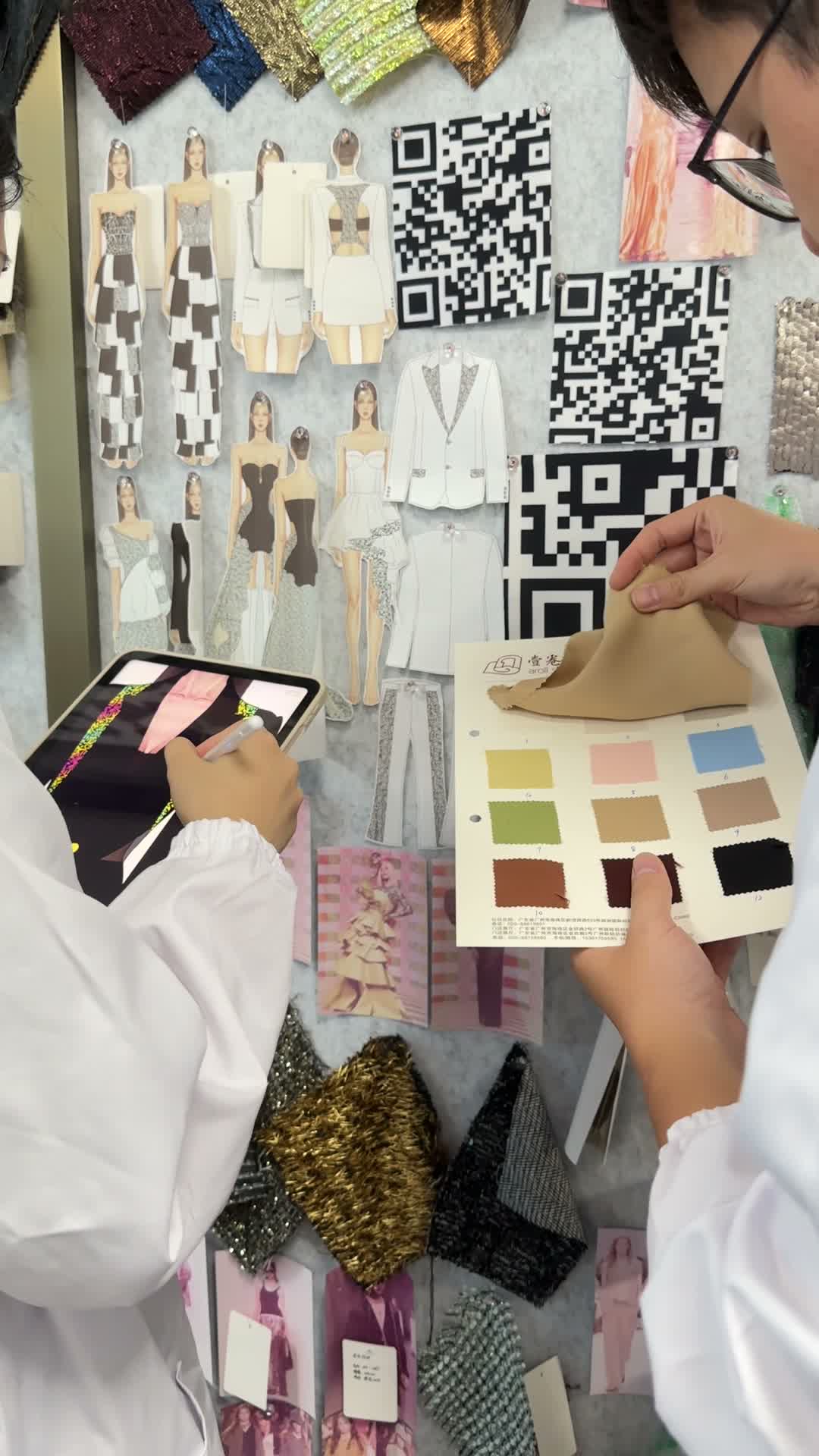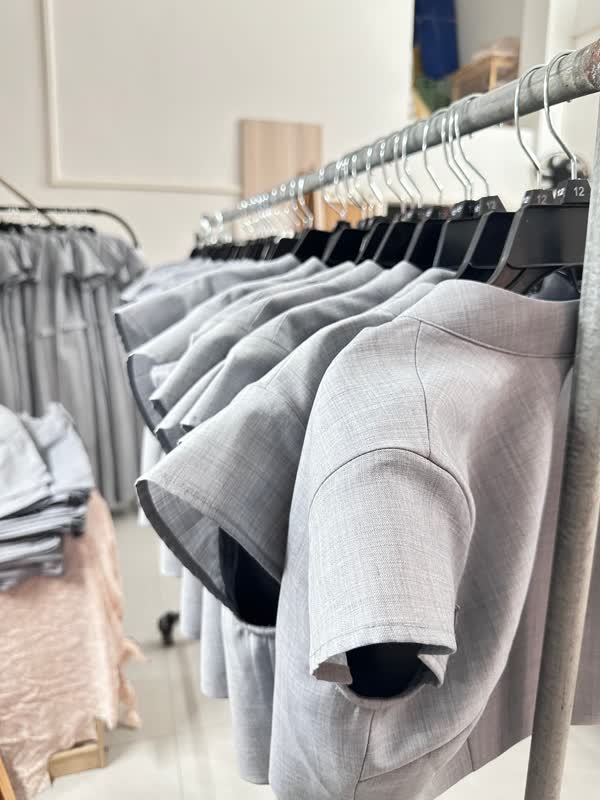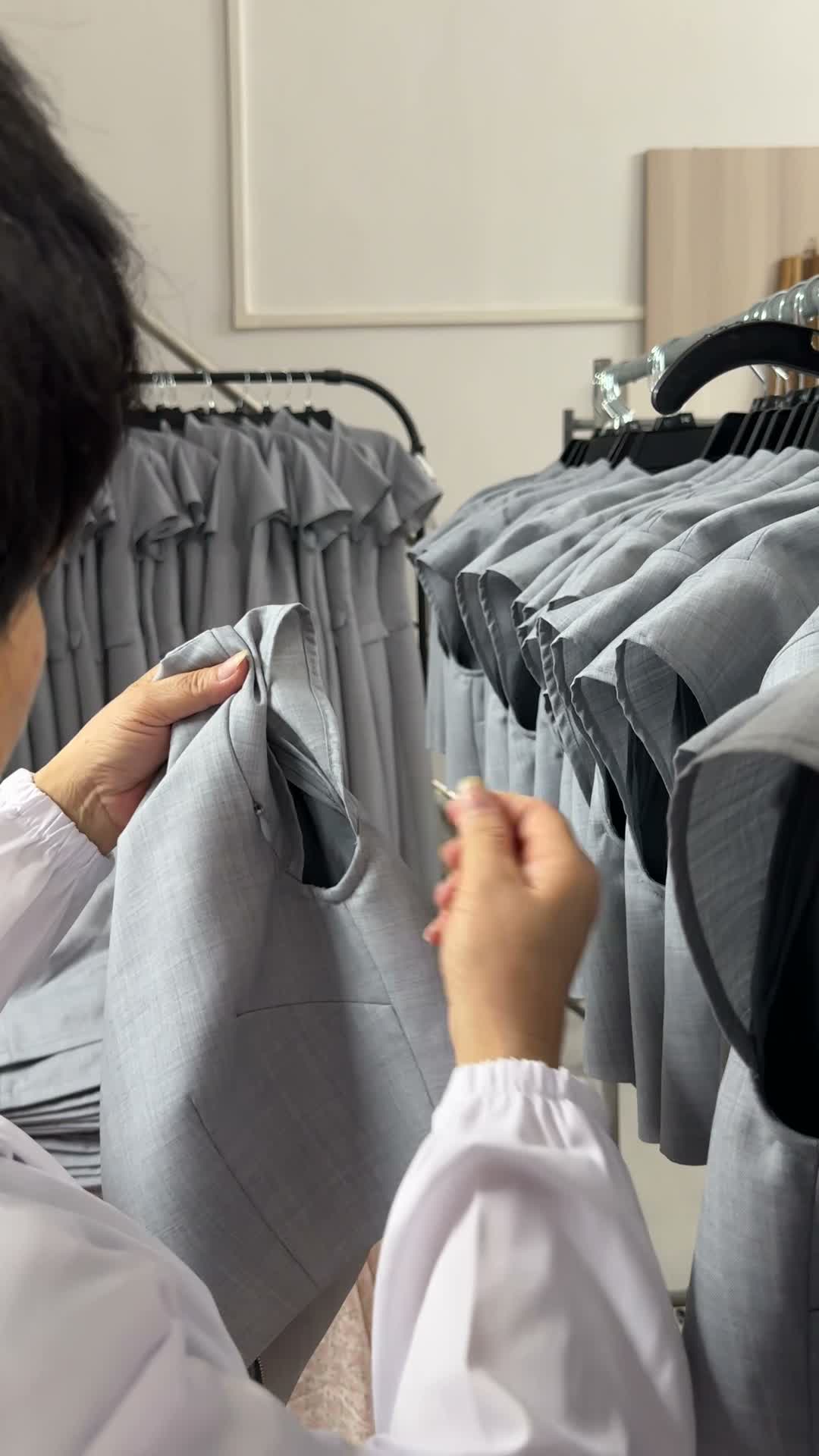
A high end clothing manufacturer is asked one satin question before any other: why does my mock-up look flatter than the swatch I approved? The short answer is that satin is a one-face weave, and the face remembers everything.
The needle, the iron, the direction you cut it, the light you photograph it in. At 30 pieces you get 30 chances to prove it, and one bad needle is enough.
Here is what we check before a satin run, and what cannot be fixed after cutting.
Why satin reads expensive or cheap in the first metre
Satin is a weave, not a fibre. The long floats that create the shine bounce light in one direction and swallow it in the other.
Turn the same dress 90 degrees and the colour moves. That is why a satin garment can look rich on a hanger and flat on a body: a hanger keeps the face even, a body curves it.
We photograph every satin mock-up under two lights, one front and one raking from the side. The raking light is the one that tells the truth.
The three satin faces, and what each does to a quote
Silk, polyester and acetate satin behave differently at the same weight. Silk keeps a needle mark. Polyester springs back and hides small pulls. Acetate holds a crease that steam will not lift.
The price gap from polyester to 19 momme silk is roughly three times per metre. On a dress using 1.6 m, that is about $12 against about $34 in fabric, per garment.
We quote the fabric we will actually cut. If a quote is built on silk and cut in polyester to hold a target price, the brand finds out in the first wash.
Needle marks: where 30 pieces pick up 200 pulls
A new needle can carry a burr you cannot see. On cotton it does nothing. On satin it lifts a float every few centimetres, and by the end of a side seam you have a visible line.
We change needles every 8 hours on satin, use a 9 or 11 sharp, and sew a 30 cm offcut before the first production seam.
Our worst satin run was 40 slips with pulls down the side seam, in 2023. We remade all 40. The cause was a batch of needles with a bad point, and nothing on the cutting ticket would have caught it.
Shade and direction: why one roll sews two colours
Satin takes dye differently on the face and the back. Cut one panel face up and the next face down and you have two garments from one roll.
We lay every panel the same way, nap one direction, and mark the roll end on each piece. On a narrow layout that costs about 6% more fabric.
That 6% is the cheapest insurance in the order. A shade difference is not a defect you can argue at delivery, because it shows in the first photograph the brand takes.
Weight: 16, 19 and 22 momme, and 120 gsm polyester
Momme measures silk weight. 16 momme is a slip, 19 is a dress, 22 holds a structured shape. Below 16 the seam allowances start showing through the face.
On polyester we work in gsm. 110 to 130 gsm drapes like 16 to 19 momme silk and feels about 30% heavier in the hand.
For a first run we usually suggest 19 momme silk or 120 gsm polyester. Both hold a seam, both press, both survive a courier.
Seams satin will not forgive
A plain overlocked seam on satin leaves a ridge you can see through the face. French seam or bound seam, no exceptions.
A French seam adds 12 to 15 minutes a garment at 30 pieces. On a $58 dress that is real money, and it is also the difference between a dress that reads $180 and one that reads $58.
Bias binding an armhole is worse than a French seam, because the binding edge is a second face catching light at a different angle.
Pressing: the 110 degree rule and the shine you cannot undo
Satin scorches below the temperature the fibre label implies. We press silk at 110 degrees and polyester at 130, always through a cloth, never directly.
A direct iron leaves a flat glassy patch that no amount of steam will lift. We replaced 6 panels in one run for exactly that, and the presser still remembers it.
Every presser in our sample room signs the ticket for the setting they used.
Lining and interlining at 30 pieces
A satin dress needs a lining that moves with it. Polyester lining against silk satin squeaks and clings, and no amount of anti-static spray fixes it for long.
We use 60 gsm viscose lining for silk and 70 gsm polyester lining for polyester satin.
Fusible interlining on satin is a mistake at any quantity. The adhesive reads as a texture change through the face within two wears, so we use a sew-in stay instead.
What we test before cutting a satin roll
Three tests, about 40 minutes. A needle test on an offcut, a shade check across the roll ends, a press test at the setting we plan to use.
We also look for join marks. A joined roll is not a defect, but a join in the middle of a front panel is.
The results go on the cutting ticket. If a brand changes fabric after approval, the tests run again.
When we tell a brand to use polyester instead
Two clear cases: a first run with no reorder budget, and a design with a lot of topstitching. Silk satin and topstitching do not coexist.
The third case is colour. If we cannot get the shade in silk inside 6 weeks, we say it on day one, not on day twenty.
None of this is a downgrade when it is said before the deposit. It only becomes one when it is discovered later.
Satin fabric for dresses: 3 numbers to confirm first
Weight, width and direction. 19 momme, 114 cm cuttable, one direction. Those three set the layout, the consumption and the price.
Ask for them in writing before the quote. A quote built on 140 cm width and cut on 114 cm is 18% short on fabric, and someone pays for that gap.
We cut satin from 30 pieces, and our 30-piece production program explains how a satin run is scheduled from mock-up to delivery.
The FAQ covers MOQ, lead time and payment terms, and the case studies include a satin slip run that shipped in 26 days.
Our A1 assistant, still in training and coming online later this year, is being taught to flag satin tickets that need a needle change before cutting.
Go deeper: Silk: the three numbers to quote first · what viscose does on the first wash · the 4-point fabric intake check
Questions we get about this
Why does my satin sample look duller than the swatch?
The swatch was cut from one position in the roll and pressed flat, so the face is even. A garment curves the fabric, and satin shows light differently on every curve. Ask the factory to photograph the mock-up under a raking light before you approve it.
Can you match satin to a Pantone number?
We can match to a lab dip, not to a screen. On silk, expect two dips and 7 to 10 days. On polyester, one dip is usually enough. We do not promise a match on a shade we have not dyed.
Quick Take
6%. Extra fabric we allow to lay every satin panel in one direction, and the cheapest fix for a shade difference.
8 hours. How often we change needles on satin, because a burr you cannot see lifts a float every few centimetres.
110 degrees. The press setting on silk. Above it the shine is permanent, and no steam brings the face back.
About UP Fashion
UP Fashion is a Guangzhou garment manufacturer founded in 2016, run by a team with 20+ years of OEM experience in silk, viscose and tailoring. We quote from 30 pieces, show the rate we used, and inspect three times before shipping.