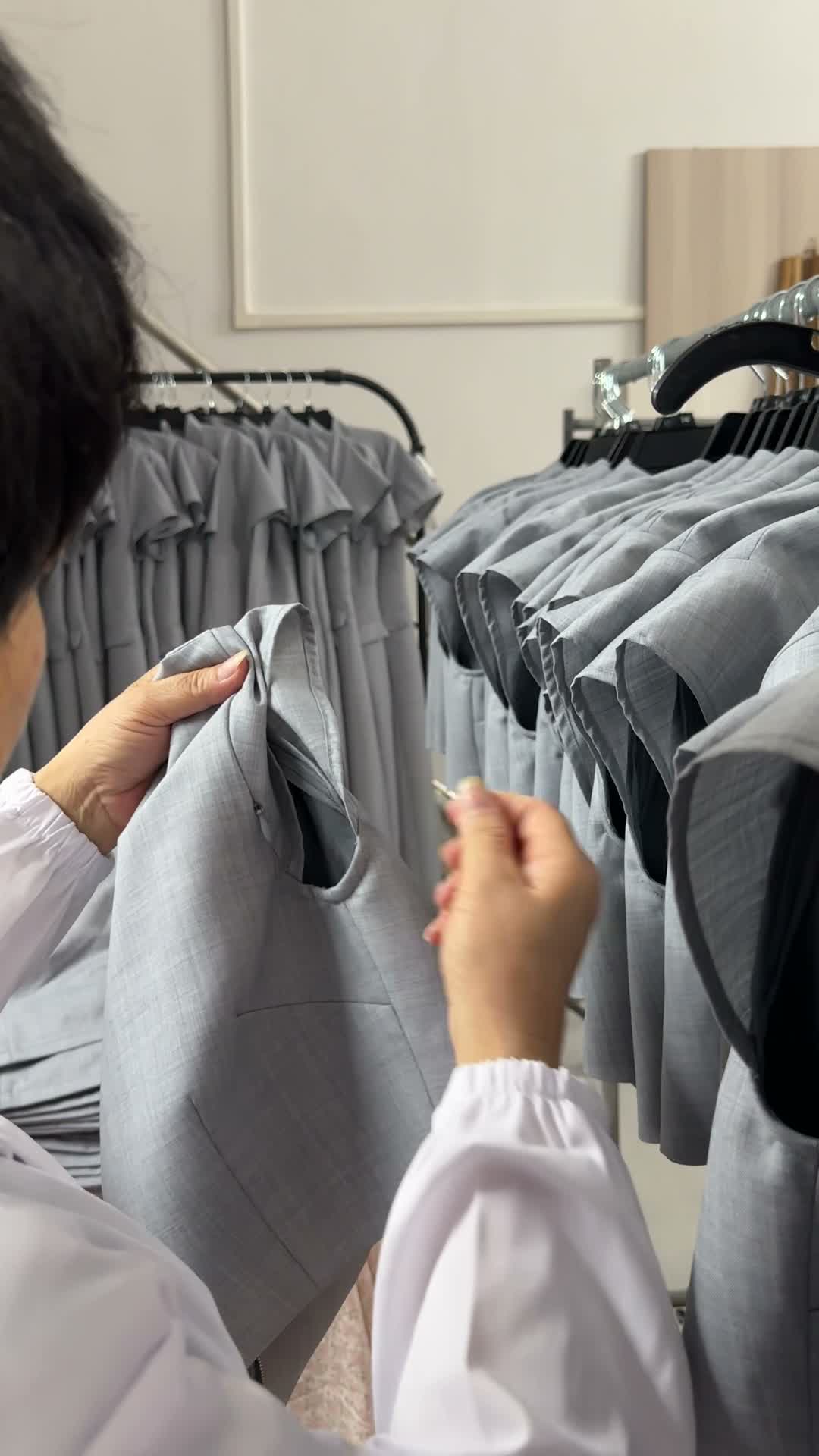
A cut and sew manufacturer should inspect your fabric before the spreader moves, not after the first bundle is sewn. We score every roll on the four-point system, and roughly one roll in twelve fails. Here is what the score means and where the line sits.
What is the four-point system, and why does a 30-piece order need it? It is a scoring method that turns "this roll looks fine" into a number you can argue with. On a small run one bad roll is not an inconvenience. It is a third of your order.
What the four-point system actually scores
An inspector walks the roll and scores each defect by its length. Up to three inches is one point, three to six inches is two, six to nine is three, and anything over nine inches is four.
No single linear metre can score more than four points, which stops one catastrophic flaw from sinking a whole roll. The total is then converted to points per 100 square yards.
First quality usually means 20 points or fewer per 100 square yards. Above that the roll is second quality, and the price you paid was a first-quality price.
What gets scored: slubs and thick places, missing picks, holes, oil and rust spots, shade bars, and skew. The inspector marks each one on the face of the fabric with tape so the cutter can see it later.
Where the rejection line sits for a small fabric order
We inspect 100 per cent of rolls on orders under 300 metres, because on a 30-piece run you cannot afford to find a bad roll in week three. Above 300 metres we move to a 10 per cent sample plus every roll that looks wrong at the end.
Our line is 20 points per 100 square yards, plus three hard stops regardless of score. Any hole stops the roll. Any shade bar longer than 15 centimetres stops it. Any width variation beyond two per cent stops it.
On a 120-metre order of viscose, that line rejects roughly one roll in twelve. That is not a high failure rate for the industry. It is a normal one that small orders rarely measure.
Four checks that happen before the four-point score
Width first, measured at three points along the roll. A 145-centimetre roll that measures 142 changes your marker and your yield before a single panel is cut.
Then weight, by cutting a square metre and weighing it. A 120 gsm fabric that arrives at 108 behaves differently on the body, and a dress that looked opaque on the sample can go sheer in daylight.
Then shade, by cutting a band from the head, middle and tail of each roll and comparing them in daylight. Two rolls from the same lot can still differ by one to two Delta E, which is visible on a solid colour and invisible on a print.
Then skew, by pulling a thread across the width and measuring how far it runs off square. Anything above two per cent on a plain fabric twists after washing, and no amount of pressing fixes it.
What happens when a roll fails inspection
Three outcomes, and all three are written into the fabric contract before the mill ships.
The roll goes back and is replaced, which costs two to three weeks. The roll is accepted with a credit, usually 10 to 30 per cent of its value, and the usable metres are marked. Or the order is short-shipped and you cut fewer pieces.
What we do not do is cut it and hope. A defective roll that gets spread becomes defective garments, and by then the argument is about who owns thirty dresses instead of one roll.
Why fabric inspection changes your cutting plan
Every rejected roll changes the marker. If you planned 70 metres for 30 dresses and 6 metres are marked out, you are cutting 27.
That is why we inspect before the spreader starts rather than alongside it. The cut plan is built from inspected metres, not ordered metres, and the difference goes into the quote as a note rather than a surprise.
On a 30-piece run a 5 per cent allowance for defects and end-of-roll waste is normal. On 300 pieces it drops to 2 per cent, because the loss spreads across more garments.
We stopped trusting mill reports in 2020. A 120-metre viscose order arrived with a passing inspection report, so we skipped our own. Roll three had nine defects in its last fourteen metres, we were six metres short on the cut plan, and four dresses were never made.
We replaced them from stock fabric two shades off and sold those four at cost. Every roll has been inspected here since, including the ones with a certificate in the carton.
Three numbers to put in your fabric contract
Put the acceptance score in writing: 20 points per 100 square yards, first quality. Put the short-ship tolerance in writing, usually 3 to 5 per cent. Put the claim window in writing, usually seven days from delivery.
Without those three lines, the mill's own report is the only record, and it will say the roll passed.
Our cut and sew service includes incoming fabric inspection as a standard step, the small batch program explains why 100 per cent inspection is affordable below 300 metres, the case studies page shows runs that survived it, and the FAQ page covers claims.
Go deeper: the six places a fabric order goes wrong · why your mock-up fabric can lie · what A, B and C quality actually mean
Questions we get about this
Do you inspect fabric I bought myself?
Yes, and we inspect it the same way. If it fails, the claim goes to your mill, and we send the defect photos and the score sheet with it.
What score is acceptable on a printed fabric?
Prints get a separate allowance for colour and registration, usually 25 points, because the print covers many small defects that would fail a solid.
Quick Take
Four points per defect, 20 points per 100 square yards. That is first quality, and it is the number to write into the contract.
One roll in twelve fails on a 120-metre order. On 30 pieces, one bad roll is a third of the run.
Inspect before the spreader moves. A defective roll that gets cut becomes defective garments.
About UP Fashion
UP Fashion is a Guangzhou garment manufacturer founded in 2016, run by a team with 20+ years of OEM experience in silk, viscose and embroidery. We quote from 30 pieces, show the rate we used, and inspect three times before shipping.




