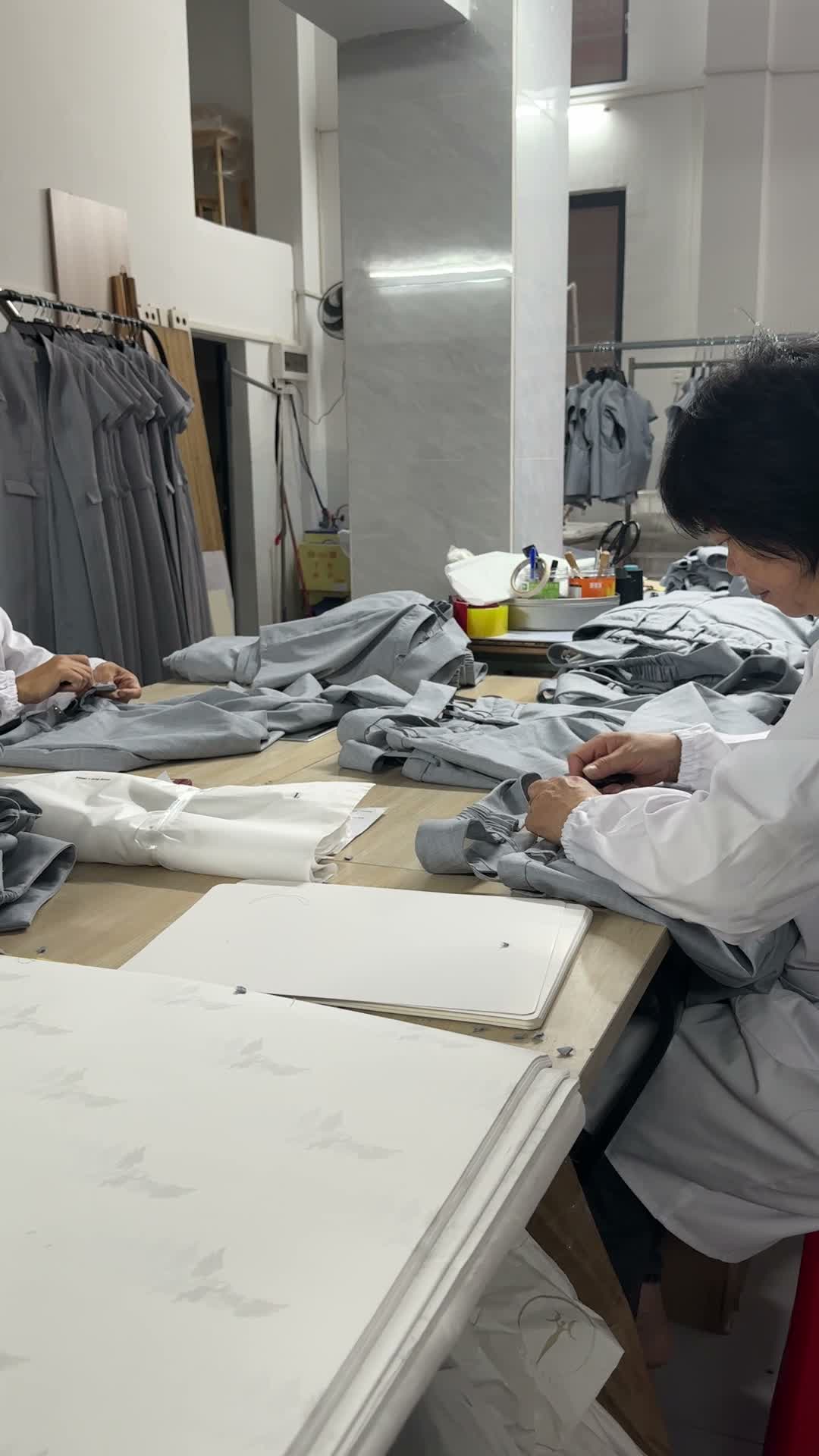
A broken needle ends a buyer relationship faster than a crooked seam. As a high end clothing manufacturer we pass every piece through a needle detector before packing, and we write down the needle count for every operator on every shift. Most first-time brands never ask about any of this until a compliance form lands in their inbox.
So what does a metal detector actually catch, and does a 30-piece order need one? It catches needle tips, blade fragments and pins above 1.0 mm in ferrous metal. It does not catch a plastic tag pin or a fragment folded inside a padded panel. Running 30 pieces through ours costs about $1.80 in labour, and one pin in a hem costs a season.
What a needle detector catches at 1.0 mm
The machine is a tunnel with a magnetic field across the aperture. Garments pass through one layer at a time on a conveyor, and anything ferrous above the threshold trips the alarm.
Three sensitivities matter, and they are not the same number. Ferrous 1.0 mm, non-ferrous 1.2 mm, and 2.0 mm for 304 stainless. A 0.7 mm needle tip sits under all three, which is why the machine is the second control and never the first.
We calibrate with nine test cards at the start of every shift, and again after any alarm. A detector nobody tested that morning is a metal box with a green light on it.
Why a metal zip makes the detector useless
Here is the part most suppliers leave out of the conversation. A style with metal zips, metal buttons or eyelets cannot pass a needle detector, because the hardware trips it every time.
On those styles we run the aperture bypassed and declare the exception in writing on the packing list. The control falls back to the needle log, a 100 per cent visual on every seam, and a hand magnet run along the hems and cuffs.
That is a weaker control than detection, and we say so rather than pretend otherwise. If your design carries a metal zip, what you are buying is needle discipline, not detection.
The needle log that settles a claim
Every operator draws ten needles at the start of a shift and hands ten back at the end. The numbers go on a sheet, by hand, and get signed.
When one breaks, the line stops. The operator finds every fragment, the garment under the needle is quarantined, and that whole bundle goes through detection twice. If a fragment cannot be found, the bundle is opened seam by seam until it can.
This is dull paperwork, and it is the only thing that answers a buyer who asks whether a pin could be in their carton. In 2017 we caught an 8 mm pin fragment in the hem of a satin dress, three pieces from the end of a 60-piece run. The log told us which operator and which shift inside four minutes.
What metal detection costs on a 30-piece run
The conveyor unit cost us $4,800 and the nine-card calibration set was $90. Neither is charged to your order.
What is charged is time. About six seconds a garment, one operator, so $1.80 across 30 pieces. That is the entire cost of the check on a small run.
Factories that skip it are usually not being dishonest. They run 500-piece orders where the buyer's own QA covers the gap, and a 30-piece brand never asks the question. Ask it.
Where detection sits in a 30-piece run
Detection happens after final pressing and before packing. Heat and steam can move a fragment, and a garment pressed after detection is a garment nobody checked.
On a 30-piece run the whole lot goes through in one pass, about three minutes for the batch. The signed slip goes into the carton with the packing list, and the carton is taped after the slip is signed.
If a piece alarms, it is quarantined and scanned three more times from different orientations. A second alarm means the seam gets opened. In four years we have opened eleven garments and found a fragment inside nine of them.
Three questions to ask before you trust a detector
First: what are your ferrous, non-ferrous and stainless sensitivities, in millimetres? A factory that answers "very sensitive" has no machine on site.
Second: when was it last calibrated, and can I see the card? Third: what happens on a style with metal hardware?
The third one separates a real answer from a brochure. There is no clean answer that avoids the exception, only a factory that has thought about it before you asked.
What this check does not cover
Metal detection is one line in a quality system, not the system. It will not catch a 6 mm seam allowance against a 10 mm spec, a shade that shifts under shop light, or a hem pressed flat.
It will not catch a fragment sealed inside a padded panel either, because the aperture reads the surface path. On quilted styles we add an X-ray check at a local lab for $40 a batch.
A final note on honesty. In 2020 we shipped a carton with no detection slip because a rush order went out on a Sunday. The buyer asked, we had no answer, and we air-freighted a re-inspection at our cost. The slip is now stapled to the packing list before the carton is taped, and whoever tapes it signs it.
The sourcing agent we are training will flag hardware styles on the tech pack automatically once it comes online. Until then it is a person with a checklist. If you want the wider list, our quality checkpoints cover the eight we run on every order, and the high end production standards show where detection sits in the sequence. Buyers who ask for a detection declaration usually ask their other questions from the FAQ first, and the case studies show what a shipped carton looks like when the paperwork is right.
Go deeper: who inspects before the container · hardware that survives a run · why a needle makes a seam pucker
Questions we get about this
Do all buyers require metal detection?
Retailers and most EU importers do, and they usually ask for a signed declaration rather than a certificate. Independent brands ask less often, which is exactly why asking is worth doing.
Can I get a detection report with my shipment?
Yes. We sign a slip per carton with the date, the sensitivities used and the operator. On styles with metal hardware the slip states the exception instead, and names the fallback control.
Quick Take
1.0 mm ferrous. Below that the machine stays quiet, so the log does the work.
$1.80 for 30 pieces. The cheapest check in the whole order.
Metal zips bypass it. Then it is the needle log or nothing, declared in writing.
About UP Fashion
UP Fashion is a Guangzhou garment manufacturer founded in 2016, run by a team with 20+ years of OEM experience in silk, viscose and embroidery. We quote from 30 pieces, show the rate we used, and inspect three times before shipping.





