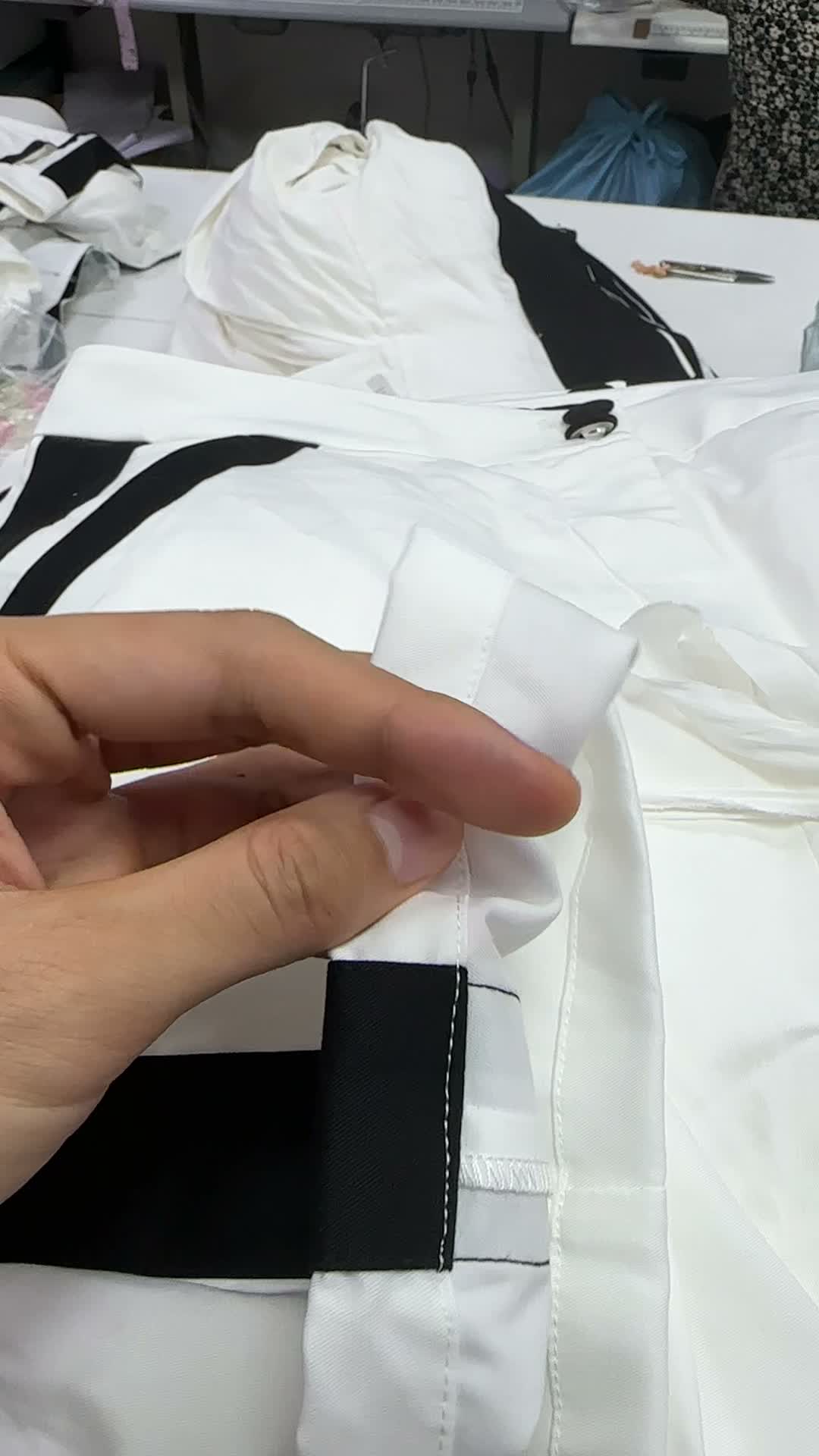
Every cut and sew manufacturer has a rework rate, and most will not tell you what it is. Ours runs three to eight per cent on a first run and one to three per cent on a reorder. Those numbers sound small until you price what a single remake actually costs at thirty pieces. Here is the honest arithmetic, and the four things that keep the rate down.
What is a rework rate? It is the share of pieces that fail a check and have to be fixed or remade before shipping. It is not the same as a defect rate, because a defect can sit inside tolerance while a rework always costs somebody money. Ask which number you are being shown.
Rework and remake are not the same thing
Rework means the original garment is fixed. A seam re-stitched, a button replaced, a hem re-pressed, a zipper swapped. The piece stays in the run and the cost is minutes.
A remake means the piece is cut again from new fabric. The original is scrapped, and you pay for cloth, trims, cutting and sewing a second time. A remake always costs more than the garment's own FOB.
Keeping those two words apart matters, because a factory that reports one number for both is hiding the expensive half.
What a single remake costs on a 30-piece run
Take a lined viscose dress at a $72 FOB. A remake consumes about 2.1 metres of fabric at $4.20, which is $8.80, plus lining at $1.60, plus trims at $2.10, plus cutting and sewing time at roughly $14. That is $26.50 before shipping, or 37 per cent of the piece's own value.
At 30 pieces, a five per cent remake rate is one and a half garments, so call it $40 in direct cost. That looks survivable until you add the days: a remake batch takes five to seven working days and lands in the middle of the shipping window.
So the real cost of rework is not the money. It is the week.
Why small runs carry a higher rework rate than bulk
A 30-piece order is a learning curve. Operators have never sewn this style before, and the first ten pieces teach the line where the tricky steps are. On a 500-piece order those ten pieces are two per cent of the run. On thirty they are a third of it.
The second reason is bundling. Small runs move in small bundles, so one operator handles several operations on the same garment. That flexibility is why we can take 30 pieces at all, and it is also why a mistake can travel further before anyone catches it.
The third is fabric behaviour. A new roll that shrinks differently or presses differently will show up in the first pieces, not the last.
Four checks that hold a rework rate down
First, a sealed pre-production sample with the spec sheet and the trim card beside it, so the line works from a physical reference rather than a photo. Second, in-line checks at the end of each operation, not only at the end of the line.
Third, a first-off piece from each size approved before the rest of that size is sewn. Fourth, a measurement table that names the five critical points and the tolerances at each one, so a check is a number rather than an opinion.
None of those four is expensive. They are all scheduling decisions made before cutting starts.
One number is worth tracking over time. If the same style comes back on a second run with the same fault, more checking is not the fix. The fix is a change to the sample, the spec sheet or a machine setting, and it goes into the file before the reorder starts.
Who pays for a remake, and when it is not our fault
If the fault is ours, meaning a sewing, cutting or trim error against the approved sample, we absorb it. That is not goodwill. It is the cost of our own mistake.
If the fault is a design change made after approval, the client pays, because the sample on file is the reference and it moved. If the fault is fabric the client supplied that behaves outside the stated spec, we flag it before cutting rather than after.
The one case worth arguing about is a tolerance nobody wrote down. In 2019 we had no written hem tolerance, so a two-centimetre difference became a negotiation instead of a check. We now write tolerances into the spec sheet for every style, and a rework is decided by a number.
The 2021 run where eight blazers went back on the line
In 2021 we ran 30 lined blazers. The sleeve pitch was slightly off, which only shows when the jacket is on a body rather than a hanger. Eight pieces had to have their sleeves re-set.
Re-setting took six working days and pushed the shipment back by a week. We caught it at the end-of-line check rather than at pre-shipment, which is the only reason it cost a week and not a month.
After that run we added a wear test on the first-off piece. The garment goes on a mannequin and gets worn for an hour before the size is released. It is a slow start and a fast finish.
Where rework sits in a small run
Rework is one number in a run, and it connects to sampling, cutting and inspection. Our cut and sew service page shows what we take on and what you supply, the case studies page shows finished runs, the FAQ page answers quality and timing questions, and the production process page maps the three checks that catch a fault before it ships.
Go deeper: what the A, B and C quality grades really mean · pre-shipment inspection and what to check before you pay · SMV and the minutes hiding inside your quote
Questions we get about this
What rework rate should I expect on a first order?
Three to eight per cent is normal on a new style at small volume. Anything above ten per cent on a first run is worth a conversation about the sample.
Do I pay for remakes?
Not when the fault is ours against the approved sample. You pay when the design changes after approval, because the reference moved.
Quick Take
Rework fixes a piece; a remake cuts a new one. Ask which number you are being shown.
A remake on a $72 dress costs about $26.50. That is 37 per cent of the piece's value.
The real cost is the week, not the money. Catch faults in-line, not at pre-shipment.
About UP Fashion
UP Fashion is a Guangzhou garment manufacturer founded in 2016, run by a team with 20+ years of OEM experience in silk, viscose and embroidery. We quote from 30 pieces, show the rate we used, and inspect three times before shipping.





