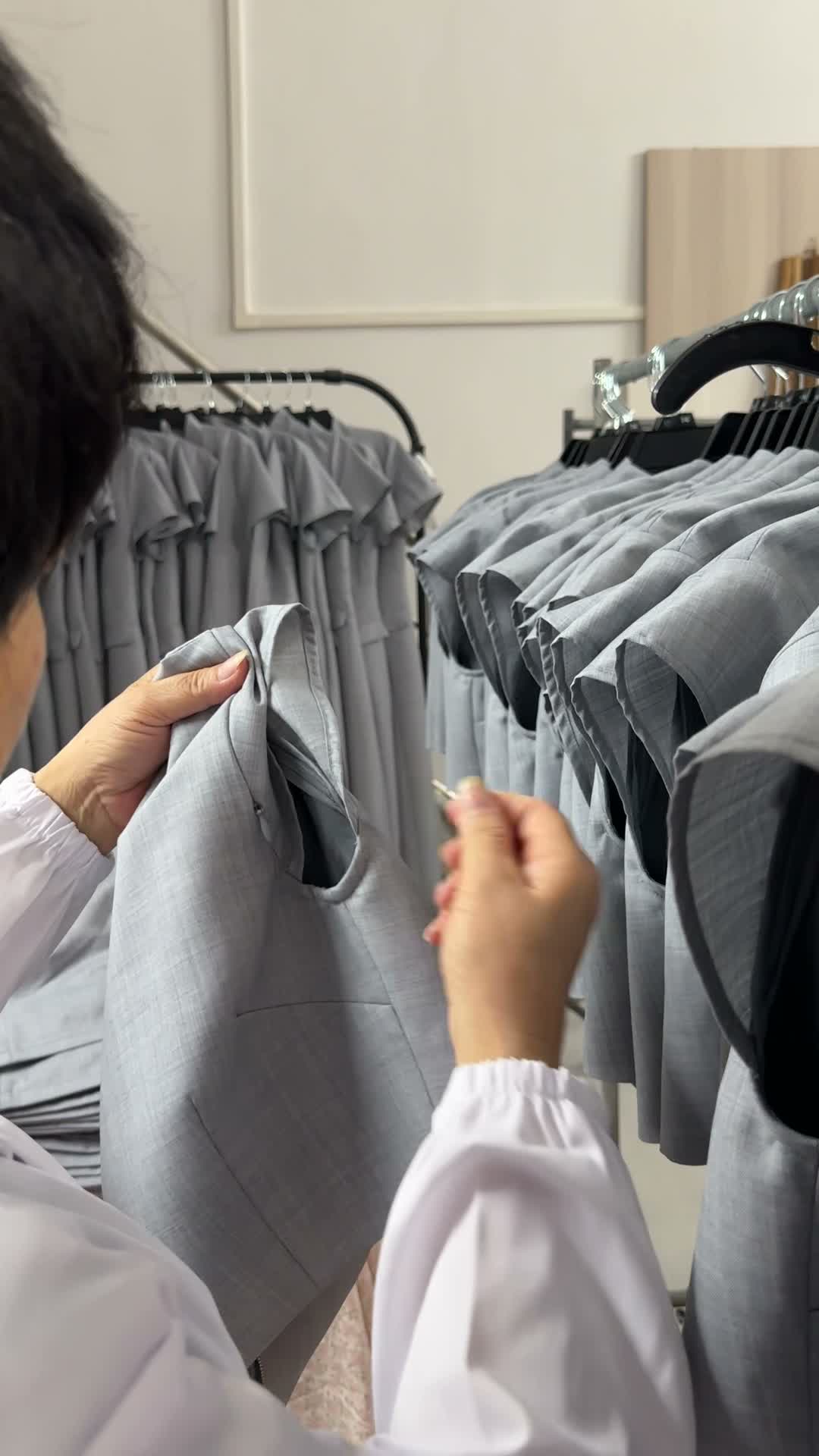
The final payment is the only leverage you have left. Once it's wired, a container is on a boat and your complaints become a negotiation instead of a checklist.
So what should actually be checked before that payment goes out? Not "quality" in the abstract. Specific, measurable things.
Seams: three failures that matter
Stitch density. Count stitches per inch. Too few and the seam pulls open under stress. Too many and you perforate the fabric, this is a real problem on silk and fine synthetics, where a dense needle line creates a tear line. Most dress manufacturers land at 8-12 SPI for woven. If a factory can't tell you their SPI, they're not controlling it.
Seam slippage. Pull the seam sideways. On loosely woven fabrics the yarns slide apart and you get a gap that no amount of re-stitching fixes. This is a fabric problem, not a sewing problem, and it should have been caught at incoming inspection, but check it again on finished garments, because stress points differ.
Puckering. A seam that looks fine flat but ripples when you run a hand along it. Usually feed tension, occasionally the wrong needle for the fabric weight. Looks cheap, feels cheap, and customers notice before they can name it.
Tests worth paying for
You don't need every test on every order. But on a first run with a new factory, or any order over a few hundred pieces, three are worth it:
- Wash test. Shrinkage and color fastness. Your customer will wash this garment. Find out now what happens.
- Rub test (crocking). Rub a white cloth on the fabric. If color transfers, it will transfer onto the customer's bag, their coat, the chair at the restaurant. Particularly relevant on saturated dyes and dark denim.
- Pull test. On buttons, snaps, and any attached trim. A button that comes off in week two generates the angriest kind of review, the kind that says the brand doesn't care.
Documents to have in hand before the final payment
Ask for these and read them. Don't file them.
- Measurement sheet, size by size, with tolerance noted
- Defect count by category (critical / major / minor)
- Packing list that matches your carton markings
- Fabric test results, if you ordered them
- Photos or video of the packed shipment
We video every shipment before it closes. Not as a marketing thing, because the alternative is arguing about what happened six weeks later, over email, in a different time zone, with no evidence.
One thing nobody warns you about
Check the cartons, not just the garments. We've taken over projects where the clothes were fine and the packing was a disaster, wrong size ratios per carton, mixed colorways, no polybags on silk. Your boutique receives ten boxes and has to sort all of it before they can put anything on a rail. That's not a quality defect. It's still a reason they don't reorder.
Go deeper: Fabric quality control: what to inspect before anything is cut
Questions we get about this
What should a pre-shipment inspection checklist include?
Stitch density, seam slippage, puckering, measurements size by size, and trim attachment. Plus documents: measurement sheet, defect counts by category, packing list, and photos of the packed shipment.
Should I pay the final 50% before or after inspection?
After. The final payment is your only remaining hold, once it's wired, complaints become a negotiation instead of a checklist.
How many stitches per inch should a dress have?
Most woven dresses run 8-12 stitches per inch. Fewer and the seam pulls open; more and you perforate delicate fabric like silk.





