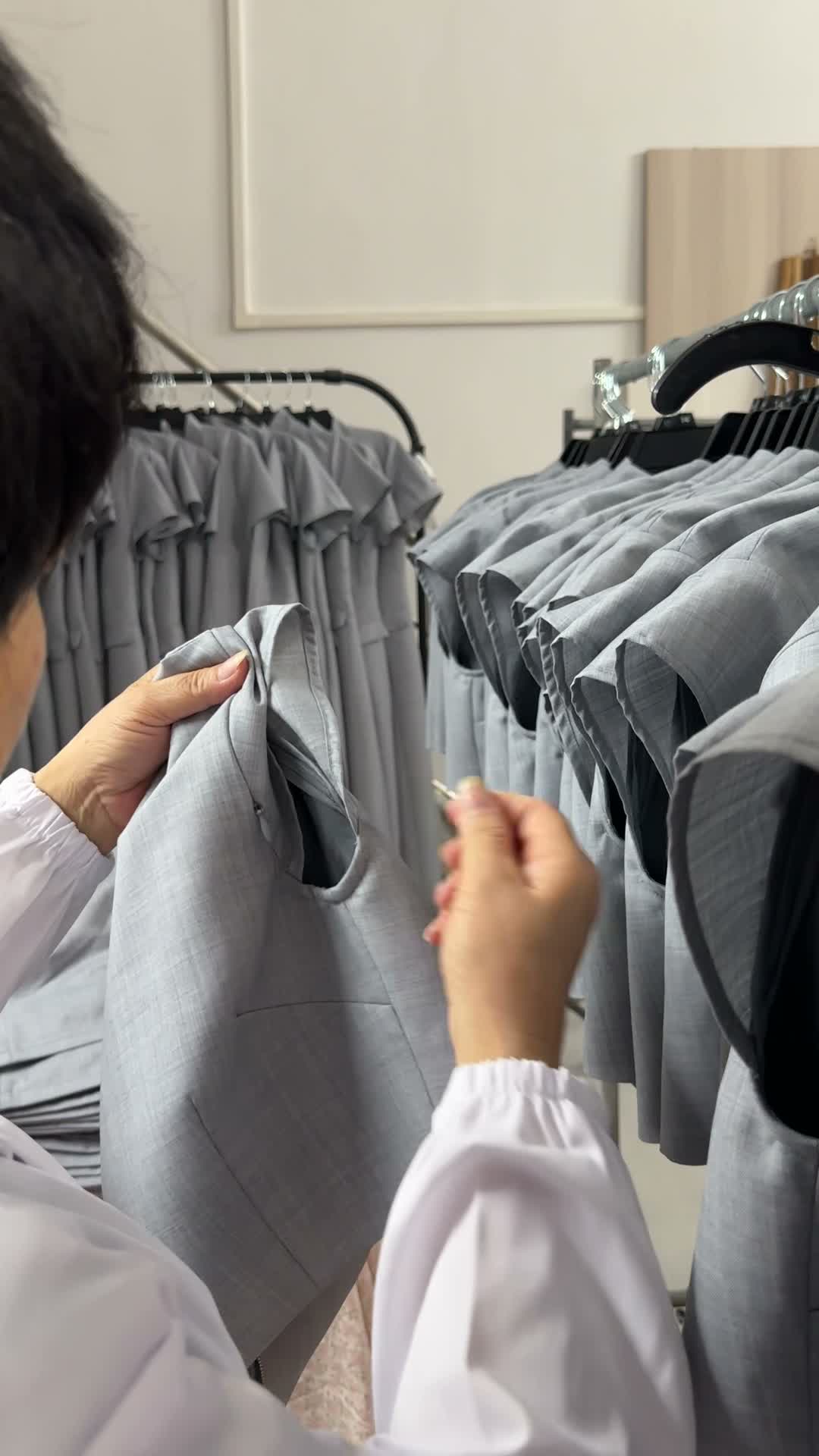
A 30-piece order that arrives as 28 is not a shipping accident. It is the most common quantity failure in small production, and as a cut and sew manufacturer we can tell you exactly where the two pieces go. They leave the building before the cartons are taped, not somewhere on the water.
How many spare pieces should a factory cut on a 30-piece run? Two to three per cent on body panels, five per cent on small parts, and a written line in the purchase order about what happens if the final count comes up short. Without that line, 28 out of 30 is inside the tolerance most contracts carry, and it is also commercially useless to you.
Why a 30-piece run loses two pieces
Three causes, in order of size. Fabric defects that only appear once the roll is spread. Sewing rejects at the last operation, usually the zip or the hem. And panels that were cut and then never made it into a bundle.
Numbers from a recent viscose dress run. We bought 72 metres for 30 pieces at 2.2 metres each, plus a 9 per cent allowance. Four metres had a slub running through the width, which cost us two bodies and one sleeve pair. The 4-point inspection caught it on the table, not on the roll.
That is the honest arithmetic of small runs. A 3 per cent fabric defect rate on 72 metres is 2.1 metres, which is most of one garment. At 300 pieces the same rate is 21 metres and it disappears inside the lay. At 30 it lands on your delivery date.
The 3 per cent tolerance in your purchase order
Most purchase orders carry an over and under delivery clause of plus or minus 3 per cent. On 30 pieces that is 29 to 31. The clause exists because cutting is not arithmetic, and every factory in Guangzhou uses it.
It becomes a problem when it is used as a surprise. We put the expected count on the proforma invoice and confirm the number by email 48 hours before the forwarder collects. If we know we are at 29, you hear it while you can still decide something, not when you open a carton in a stockroom.
If your stockist has ordered a fixed 30, ask for a firm quantity with no minus tolerance and accept a small premium. Someone has to pay for the spare panels, and it is cheaper than a short delivery.
Spare panels: the cheapest insurance on a small order
Cutting two extra bodies costs about $0.90 of fabric on a $38 dress, plus 11 minutes on the knife. That is the whole premium.
What it buys: a replacement when a panel is damaged at pressing, a piece to send a stockist who wants a sample, and a body to re-cut a sleeve from if a size runs wrong. We cut spares on every run under 100 pieces now. We did not always.
Spares are not saleable stock. They arrive unlabelled in a separate bag, marked as spares on the packing list, so nobody counts them into your inventory or your sell-through.
Credit note, remake or air freight: closing a shortage
Three ways to settle, and the right one depends on your shelf date rather than the money.
A credit note is fastest. Two missing pieces at $42 FOB is $84 off the balance, no freight, closed inside a week. It is the correct answer if you can sell 28.
A remake on the next run is cheapest for us and worst for you, because it moves the fix into a season you may not have. We offer it, and we say plainly that it only works if a second order exists.
Air freight for two pieces runs $65 to $90 door to door and takes four to six days. On a $1,260 invoice that is 7 per cent of the money to recover 7 per cent of the units. Worth it when a stockist delivery is at stake. Not otherwise.
The packing list is the document that decides
Count what is in the carton before you argue about what is missing. Our packing lists show cartons, pieces per carton, sizes per carton, gross weight and net weight.
Thirty dresses leave in two cartons, 14 and 16, at 11.2 kilos gross. If your carton weighs 10.4, something is not in it. A kitchen scale settles most short shipment claims in four minutes, before anyone writes an angry email.
Photograph the carton open, with the packing list in frame, before you unpack it. We photograph every carton closed with the list visible and send the images with the shipping documents. It is a two-minute habit that ends a lot of arguments.
The run where we shipped 27 and said nothing
2020, thirty satin dresses in black. Three bodies had needle marks near the waist seam from a machine that was out of timing. The line pulled them, the carton was packed at 27, and the invoice still said 30.
The brand found out on delivery day. We air-freighted three replacements at our cost, about $180 with the courier, and their stockist date slipped nine days. The money was not the damage. The silence was.
What changed: the final count is written on the carton in marker and photographed before the forwarder arrives, and any variance goes out by email the same hour. That is a policy we only wrote after it cost us a client.
Our A1 assistant is in training to do the boring part, reading the packing list against the invoice before the cartons leave. It is not online yet, so for now a person signs the sheet.
What to put in writing before you pay the deposit
Four lines. Firm quantity or tolerance, and which one applies. The spare panel arrangement, if any. Who pays freight on a replacement.
The fourth line is the one everybody forgets: the deadline for reporting a shortage. Seven days from delivery is fair. Thirty days is a clause written to make sure nobody can claim.
Quality defects are a separate conversation with a separate process. Our FAQ covers the deposit and inspection questions that come before it. If you want the line-by-line scope of a 30-piece run, the cut and sew scope page lists it, and the case studies show runs at this size.
Go deeper: when bulk arrives with defects · packing a 30-piece order for retail · ten questions a factory asks before it quotes
Questions we get about this
Is 28 pieces out of 30 acceptable?
It is common, and it sits inside the plus or minus 3 per cent clause most factories use. It is only acceptable if you were told before the cartons left and the shortage is credited or replaced. A surprise is not a tolerance.
Should I ask for extra pieces instead of a tolerance?
Yes on a first run. Two spare bodies cost under $1 on a mid-price dress and remove the whole argument. Ask for them unlabelled and bagged separately so they never enter your stock count.
Quick Take
29 to 31. The band a 30-piece order is allowed to land in under a 3 per cent clause.
Two spare bodies, $0.90. Cheaper than one air-freighted replacement at $65 to $90.
Weigh the carton. 11.2 kilos for 30 dresses. 10.4 means something is missing.
About UP Fashion
UP Fashion is a Guangzhou garment manufacturer founded in 2016, run by a team with 20+ years of OEM experience in silk, viscose and embroidery. We quote from 30 pieces, show the rate we used, and inspect three times before shipping.





