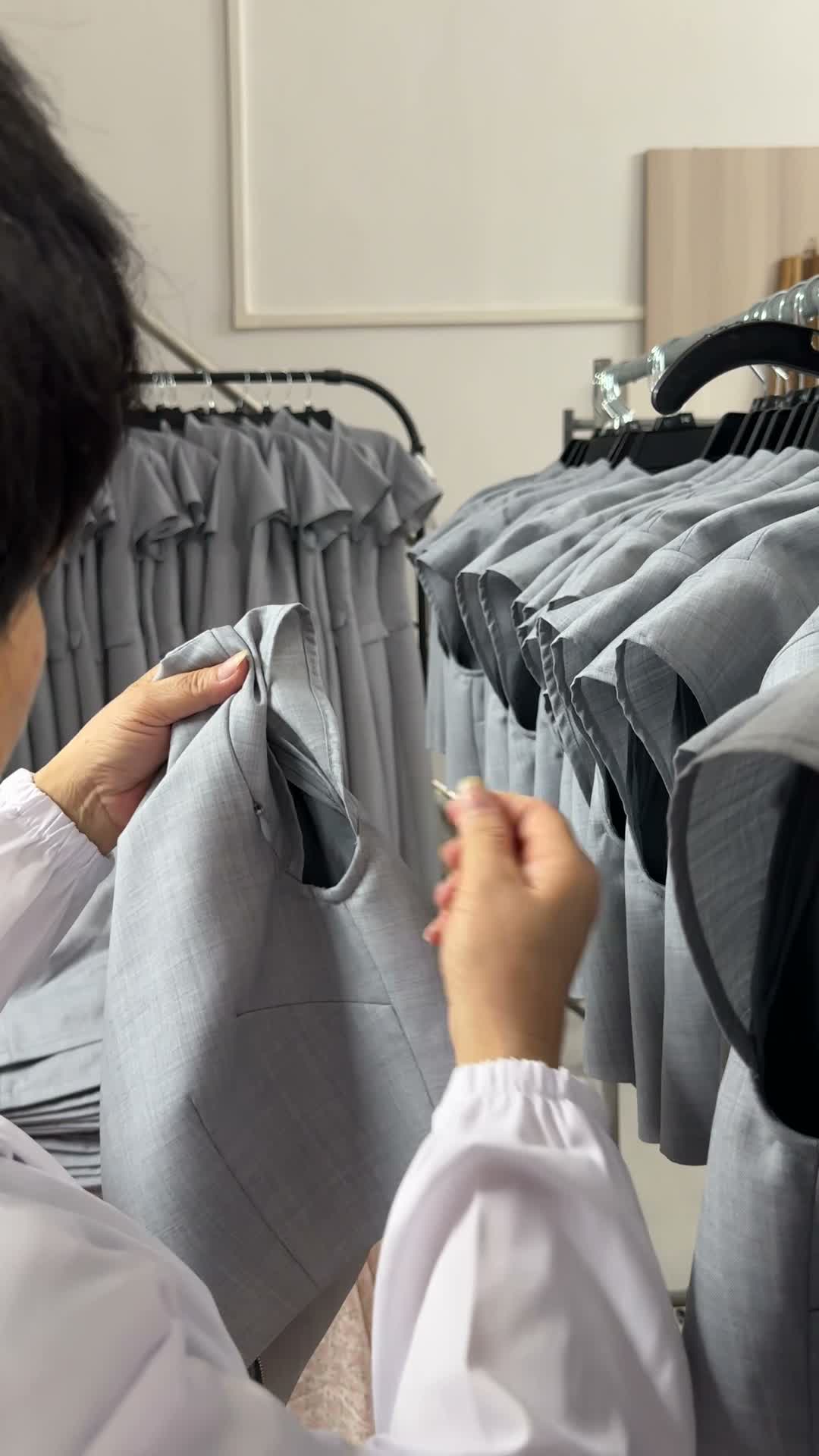
A high end clothing manufacturer should be able to name the grade of the goods it ships. Ask most factories and you get a shrug, because grading is a habit few shops ever build. We grade every run A, B or C, and we tell you which one you are buying before the deposit clears.
What separates the grades? Not the fabric and not the price. It is the number of defects we allow per hundred pieces, and where those defects are allowed to sit.
An A run tolerates almost nothing visible. A B run tolerates small things a shopper will never notice on a hanger. That is the whole idea, and it is worth settling before you order, not after the cartons land.
Here is how we draw the line, and what each grade means in practice.
What the three grades actually measure
A grade is not a feeling. We count two things: defects per hundred pieces, and how serious each one is. A skipped stitch inside a facing is not the same as a broken stitch across a front seam, even though both count as one defect on paper.
So we split defects into three levels. Critical means the garment cannot be sold or worn. Major means it is visible and a shopper would notice. Minor means it shows only under a light, to someone inspecting it on purpose.
Every grade starts with zero critical. That part is not negotiable at any price.
A grade
Zero critical, under two major per hundred pieces, and under three minor per hundred. On a thirty-piece run that usually means nobody finds anything on the rail. This is the grade we ship when a brand tells us their buyer inspects before placing the next order.
A grade costs more, because it wastes more. If we cut thirty and five do not meet the line, we remake five. On a small run that is a real number, and it shows up in the per-piece price.
B grade
Zero critical, under four major per hundred, minor defects up to eight per hundred. A B run is a solid commercial garment. What makes it B are the things you find only when you look: a slightly uneven topstitch, a small shade difference between two panels, a button a millimetre off centre.
C grade
Zero critical, major defects up to eight per hundred. C is the grade for test markets, sample sales and stock that sells on price. We will make it, but we will not call it A, and we will not let a client discover the difference on a customer's doorstep.
Why most factories never publish a grade
Because a grade is a promise, and a promise can be checked. If a factory writes "A grade" on a quote, you can hold it to a defect count. Most would rather leave the words out and settle disputes one at a time.
We put the grade on the quote for the same reason we write the deposit split. It removes an argument later, when the goods are already on a boat.
What to ask for in writing
Ask three things. The grade, the defect count per hundred that defines it, and what happens when a piece fails. A factory that can answer all three is measuring its own output. One that cannot is guessing.
Ask who pays for a remake, too. Our answer is simple: if the defect is ours, we absorb it. We inspect three times before shipping, so a defect that reaches you is a defect we should have caught.
How the grade changes your price
Grade is a lever, not a fixed cost. Moving a simple dress from A to B might save eight to twelve per cent, because we stop remaking pieces that only a light would expose.
On a structured blazer the gap is wider, because rework is slower. We have quoted the same style at $92 in A and $79 in B, and the client took A because their stockist checks every piece.
If you are testing a market, B is a fair choice. If you are pitching a stockist, do not gamble on B. One bad piece in a showroom costs more than the difference.
A grade mistake we made
In 2021 we shipped a forty-piece run we called A without ever writing down what A meant. The client counted four minor defects and asked for a discount. They were right, because we had never defined the word.
We now write the count on every quote. It cost us a hard week, and it taught us that a grade without a number is just a word.
Where grading sits in your order
Grading is not a separate step. It happens during the bulk run, where we inspect inline, at end of line, and again before shipment. The production process page shows all three checkpoints.
If you want to see grades on real orders, the case studies page lists runs by size and fabric. The FAQ page answers the questions clients ask most.
Our high end manufacturing program is where the A grade lives, and it is where most first orders start. We are also building a Fashion Pains Solver so brands can log a defect and see how we resolved it; it is still in training, so for now that log runs through your account manager.
Go deeper: what "high quality" means on a quote · when bulk arrives with defects · AQL 1.0 versus 2.5, and what your factory is not saying
Questions we get about this
Can I choose B grade to save money on a first run?
Yes, and plenty of clients do for a test market. We just write "B" on the quote so nobody is surprised later. If you later pitch a stockist, move back to A for the reorder.
Who decides which defects count as major?
We agree it with you before production, in writing. If a defect type is not on the list, it does not count against the grade, which is why the list matters more than the letter.
Quick Take
A grade is a defect count, not a compliment. Zero critical, then two, four or eight major per hundred, depending on the tier.
Ask for the number in writing. A grade with no count behind it means nothing when the goods arrive.
Grade is a price lever. Dropping from A to B on a simple style can save eight to twelve per cent.
About UP Fashion
UP Fashion is a Guangzhou garment manufacturer founded in 2016, run by a team with 20+ years of OEM experience in silk, viscose and embroidery. We grade every run, quote from 30 pieces, and inspect three times before shipping.




