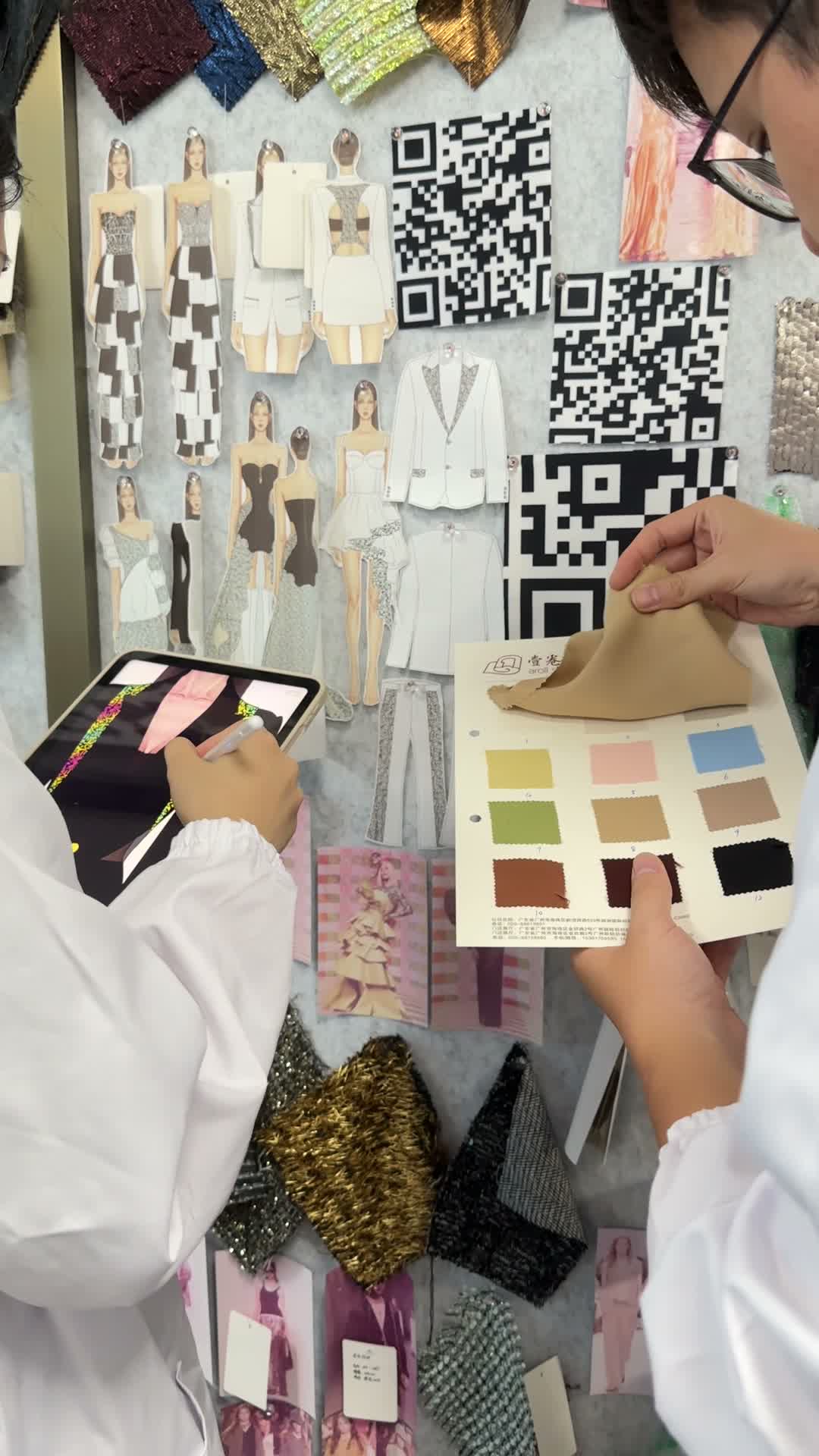
Most production disasters are decided before a single garment is cut. They're decided at the fabric stage, by someone who didn't know there were six separate places to lose money.
1. Mill minimums don't care about your MOQ
You found a factory that will make 30 pieces. Congratulations. The mill still wants 1,000 metres.
This is the single most common surprise for new brands. Garment MOQ and fabric MOQ are two different numbers set by two different businesses. Fabric mills run dye vats; a small vat is uneconomical, so minimums sit high regardless of how few garments you're making.
Three ways out: buy stock-supported colourways (mills keep greige and neutrals), combine with another brand's run, or accept a surcharge for a small dye lot. The third is usually cheapest at 30-50 pieces, and it's why a low MOQ clothing manufacturer quotes a higher per-metre price than you expected.
2. Lead time starts when the mill confirms, not when you order
Fabric takes 2-4 weeks on top of production. If your factory promises a delivery date before the mill has confirmed your order, they're guessing, and you'll absorb the miss.
Sequence it properly: approve lab dip, confirm bulk, receive and inspect fabric, then book production. A factory that books the line before fabric lands is betting with your launch date.
3. Substitution is the quiet one
You approve a 19-momme silk charmeuse. What arrives is 16-momme and feels thinner in the hand. Nobody swapped it maliciously. They ran out, and something similar was available, and the deadline was close.
Catch it at intake, not at cutting. We weigh and measure every incoming roll against the approved spec: weight per square metre, width, composition. On one order a wool "Super 120s" came in as a blend, real wool, wrong grade, and invisible until tested.
4. Width eats your piece count
You ordered 200 metres. You get 180 pieces, not 220.
W usable width, not nominal width, determines consumption. A fabric sold as 140cm that measures 114cm between selvedge flaws changes your marker entirely. Add shrinkage, a 4% shrink means your cut pieces are smaller than the pattern assumed, and the gap widens again.
Ask for usable width in writing. Then add 3-5% for cutting waste on top of that.
5. Origin certificates are easy to fake
"Biella wool" is a marketing phrase as often as a fact. Mills can and do supply documentation for cloth they didn't weave.
If origin matters to your brand story, and for luxury positioning it usually does, verify at intake and ask for mill documentation that traces the lot. We source wool from Biella, silk from Suzhou, and cupro from Osaka through relationships built over years, precisely because traceability can't be established after the fact.
6. Deadstock and "sustainable" need the same scrutiny
Deadstock is genuinely better for the planet and genuinely harder to work with. You get one shot at the quantity available. There is no re-order, no second dye lot, and often no composition documentation.
And "sustainable" on a fabric label means nothing without a certificate, GOTS, Oeko-Tex, GRS. Ask for the certificate number and check it with the issuing body. We've seen stock sold as certified with no valid certificate behind it.
The part where we're honest
We'd rather you supply your own fabric than fight about ours. Many clients nominate their own mills, and we handle receipt, inspection, dye-lot matching, and inventory. If your supplier fails, we switch to our Guangzhou network, but that fallback has a cost, in time if not in money.
Either way: inspect before cutting. Every time.
Go deeper: Fabric quality control: the 4-point intake check for incoming rolls
Questions we get about this
Why is fabric MOQ so much higher than garment MOQ?
Mills run dye vats, and a small vat is uneconomical. Fabric minimums sit high regardless of how few garments you order, usually 500-1,000 metres.
How long does fabric take before production starts?
2-4 weeks on top of production. A factory that promises a delivery date before the mill confirms your order is guessing.
How do I check if fabric was substituted?
Weigh and measure every incoming roll against the approved spec: weight per square metre, usable width, composition. Do it before cutting, not after.





