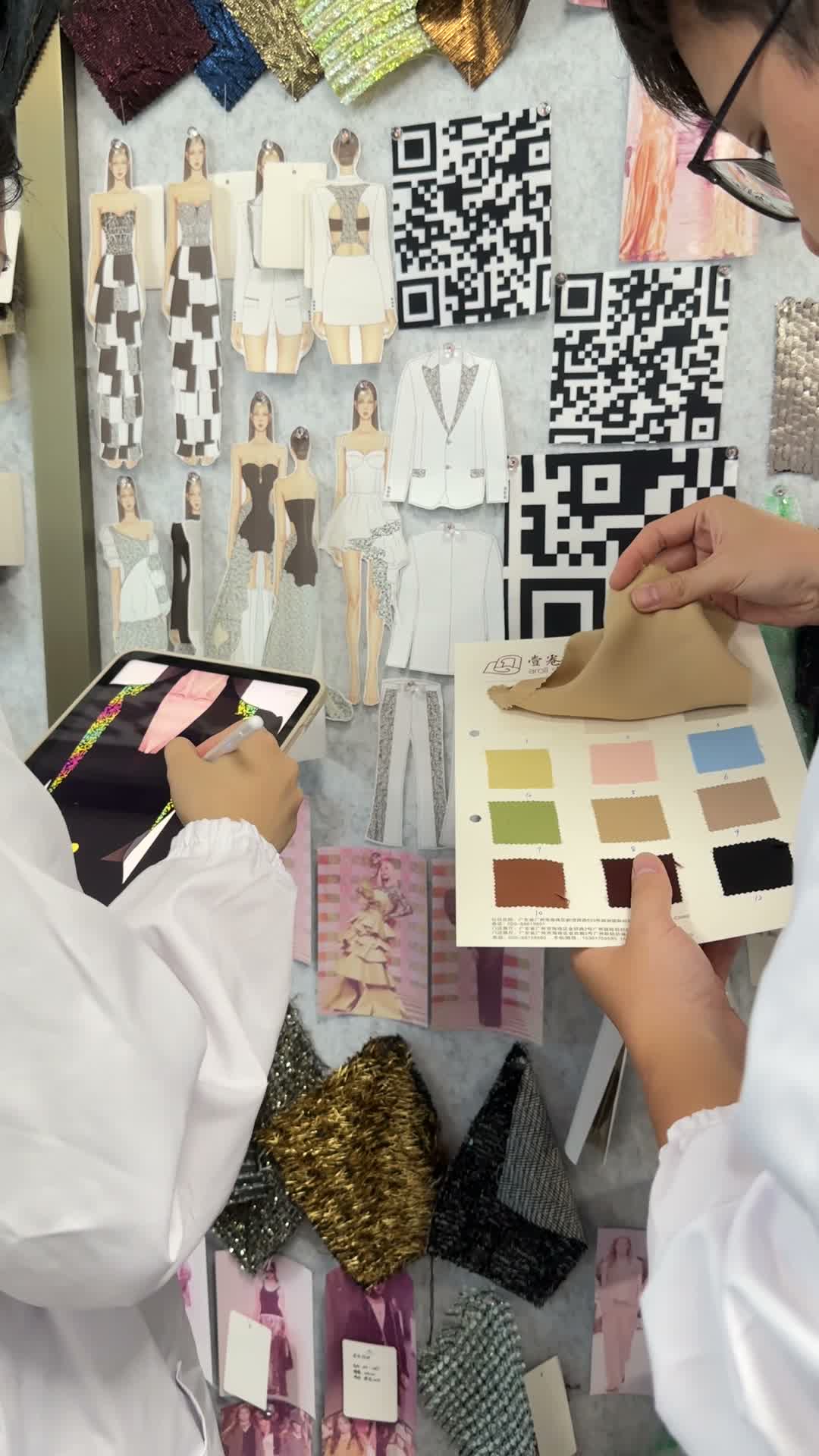
A small batch clothing manufacturer quotes fabric by the metre, but the number that decides how a garment hangs on the body is grams per square metre. Pick the wrong weight and thirty perfectly sewn pieces still feel wrong on the rail.
So how do you choose a weight before you order? Work backwards from the silhouette.
A fluid slip dress wants 90 to 130 GSM viscose. A structured midi wants 180 to 260 GSM. Suiting sits at 240 to 280 GSM. Put the number on the tech pack, because "medium weight" means nothing to a mill.
Weight is the cheapest thing to fix before cutting and the most expensive thing to fix after. This is how we think about it on every quote.
What GSM measures, and what it does not
GSM is grams per square metre: the mass of one square metre of fabric. It tells you how dense and heavy a cloth is, which is a fair proxy for how it will drape and how opaque it will be.
It does not tell you everything. Two fabrics at the same GSM can behave nothing alike. A loose 140 GSM linen and a tight 140 GSM TR suiting weigh the same and fall completely differently, because weave and yarn count matter as much as weight.
Where weight beats every other spec
On a first order, weight is the fastest way to predict the two failures clients hate most: a garment that is see-through, and a garment that will not hold a line.
Fabric weight by garment type: our working ranges
These are the ranges we quote most often for the categories we actually make.
- Slip dresses and bias-cut skirts in viscose or satin: 90 to 130 GSM.
- Shirts and blouses in cotton or cotton-linen: 110 to 160 GSM.
- Structured dresses and pencil skirts in TR suiting: 180 to 260 GSM.
- Trousers and suiting in TR or poly-viscose: 240 to 280 GSM.
- Summer linens: 160 to 220 GSM, and they soften with every wash.
If you are between two ranges, ask for both swatches in the same colourway. The difference is obvious in the hand and invisible on a spec sheet.
Why weight and drape are not the same thing
A heavier fabric is not automatically a better one. On a bias-cut dress, extra weight can pull the hem out of shape and make a size 14 hang longer than a size 8. On a pleated skirt, too little weight means the pleats open as the wearer walks.
Drape also depends on the finish. A 130 GSM viscose with a soft finish and a 130 GSM viscose with a stiff finish are two different garments, and only one of them is the one you sketched.
The see-through test you can do yourself
Hold a swatch against a window in daylight and look for your hand. If you can read its outline through a white dress fabric, it is too light for that style, or it needs a lining.
What changing weight does to your cost per piece
Weight moves price more than most people expect, because mills sell by weight as often as by metre. Moving a dress from 110 to 150 GSM can add 15 to 25 per cent to the fabric line before you change anything else.
On a thirty-piece run that is real money. A heavier cloth also uses slightly more metres, because it is thicker and the marker lays a touch deeper.
Where it is worth paying
Pay for weight where the client will feel it: a trouser that holds a crease, a dress that skips the lining. Save on weight where nobody touches it, like the back panel of a top worn under something else.
Three weight mistakes we have made
In 2019 we quoted a 110 GSM viscose for a white slip dress because the client loved the colour on the swatch. The first mock-up was see-through under studio light. We re-sourced to 135 GSM, added a cupro lining, and the dress cost nine dollars more per piece than the original quote.
The lesson was not "buy heavier". It was "test the fabric for the garment, not on the table". We now run a light test on every white and pale fabric before it enters a quote.
A second one: we once approved a linen trouser at 150 GSM that creased into a mess after one wash, because the finish was not pre-shrunk. The weight was fine. The finish was wrong.
How to specify weight so a mill cannot guess
Write three things on the tech pack: the GSM, the tolerance, and the composition. A mill can hit 200 GSM in a dozen different blends, and each one drapes differently.
Ask for a shrinkage test before the bulk fabric is cut, and a lab dip for the colour. Weight and colour are separate problems, and solving one does not solve the other.
What "GSM plus or minus" should say
We quote a tolerance of plus or minus five per cent on weight. Anything wider and the garment you approve is not the garment you receive.
What we put in writing
Every quote from us lists the fabric with its GSM, composition and tolerance as its own line, so you can see what the weight is costing you.
Our small batch program covers runs from thirty pieces, and our FAQ page answers fabric and minimum questions. The case studies page lists delivered runs by fabric, and the production process page shows where fabric testing sits before cutting.
Go deeper: the six places a fabric order goes wrong · how a small brand buys 100 metres · the three numbers to quote before you order silk
Questions we get about this
Can you source a fabric at a GSM that is not in these ranges?
Yes, if the mill offers it and the style suits it. We will tell you when a weight you asked for is a poor match for the silhouette, before you pay for a swatch run.
Does a heavier fabric always look more expensive?
No. Weight reads as quality only when it matches the style. A heavy slip dress looks stiff, and a light trouser looks cheap. Match the weight to the garment and let the finish do the rest.
Quick Take
Weight follows the silhouette. Slip dresses 90 to 130 GSM, structured dresses 180 to 260, suiting 240 to 280. Decide before you quote.
Test it, do not trust the swatch. A window light test and a shrinkage test catch the two failures that cost the most.
Write GSM, tolerance and composition. "Medium weight" is not a spec a mill can hit, and plus or minus five per cent is what we quote.
About UP Fashion
UP Fashion is a Guangzhou garment manufacturer founded in 2016, run by a team with 20+ years of OEM experience in silk, viscose and embroidery. We quote orders from 30 pieces, publish our fabric specs, and inspect three times before shipping.





