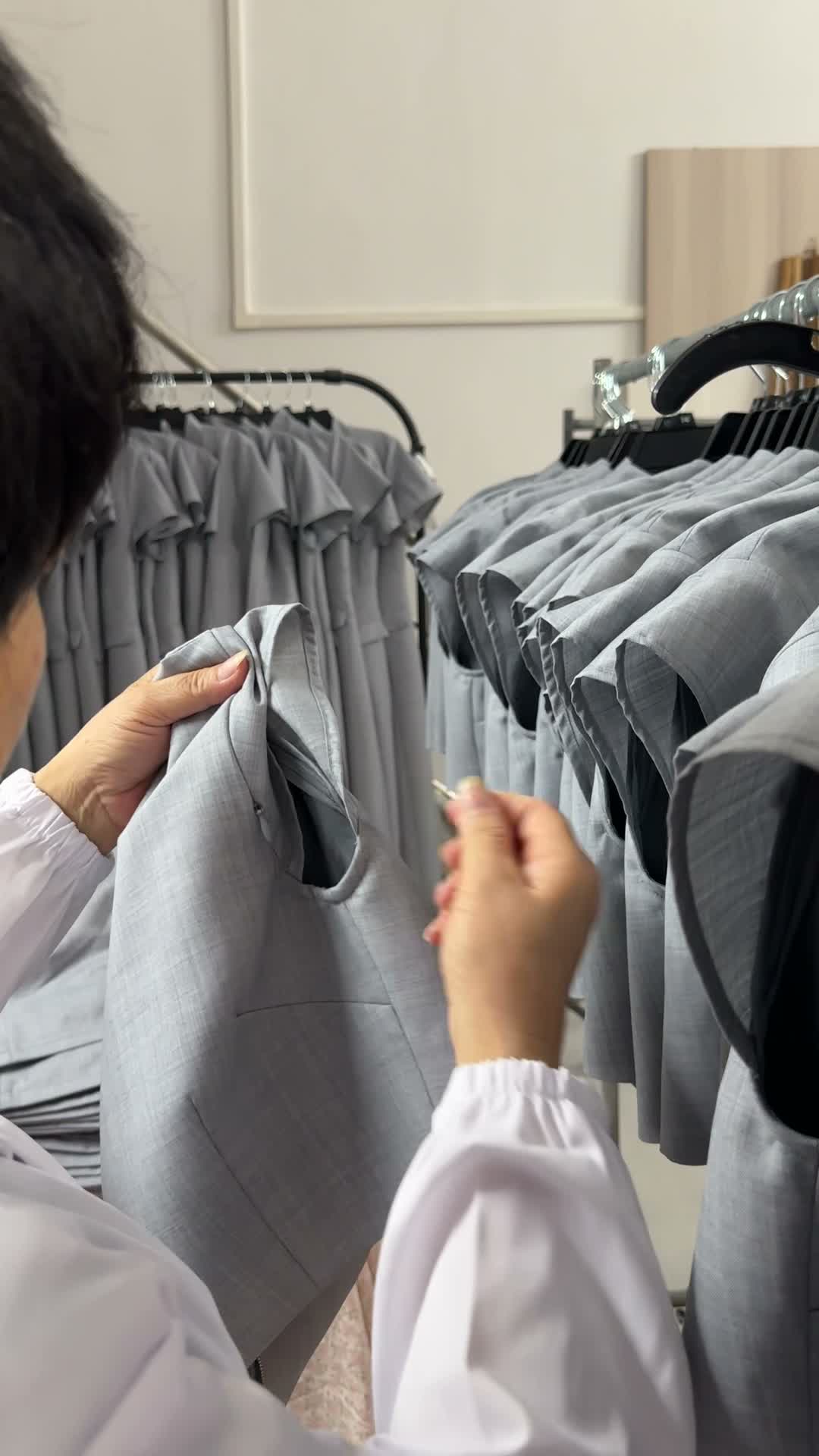
A cut and sew manufacturer packs what you approved, and if four styles finish in four different weeks you pay for freight four times. Consolidating is the cheapest money in a first order. It is decided in week one, not week ten.
Four styles at 30 pieces is about 120 garments, or 1.2 to 1.8 cubic metres in cartons. That sits under the 3 cubic metre line where LCL pricing starts to behave, and far under a 20-foot container's 28 cubic metres.
So the question is not LCL or FCL. It is whether four styles can be finished inside one seven-day window, and what forcing that costs you in air freight, storage or a rushed inspection.
What one shipment of four styles actually saves
Every shipment carries a fixed cost: export declaration, documentation, a minimum charge, and a forwarder's handling fee. Four shipments means four of each, and none of them care that your cartons are small.
LCL is priced per cubic metre with a minimum. At 1.5 cubic metres you are often paying the minimum anyway, so the second and third shipment add full minimums for a third of the volume.
One consolidated booking at 1.5 cubic metres, with four styles in it, is usually 40% to 55% cheaper than four separate bookings of the same total volume. The exact number belongs to your forwarder, not to us.
The 3 cubic metre line: LCL, air, or a shared container
Below about 3 cubic metres, LCL wins on cost and loses on time, because your cartons wait for the container to fill. Above 12 cubic metres, a 20-foot container starts to compete.
Air is priced on chargeable weight, and garments are bulky but light. 120 dresses at 0.6 kg each is 72 kg, but the volumetric weight of 1.5 cubic metres is 250 kg, so you pay for 250.
Air makes sense for a launch date, a photoshoot, or 40 pieces that must reach a stockist. It does not make sense for a first order that could have shipped three weeks earlier.
Carton marks: the 6 fields a forwarder will ask for
Carton number and total, style number, colour, size ratio, quantity, and the destination mark. Miss the size ratio and the warehouse opens every carton to find out what is inside.
Mixed cartons are allowed and often cheaper, but each one needs a packing list line. A carton holding three styles is fine. A carton holding three styles with no list is a delay at destination.
We print marks from your packing list, not from memory, and we photograph every carton face before the container is sealed.
Mixed packing lists and the customs value question
One shipment with four styles still needs a value per style. Declaring a single blended unit price is faster and it creates a problem the day a customs officer asks for the invoice behind it.
Keep the commercial invoice aligned with the styles you actually shipped, at the price you actually charged. If a style was discounted for a rework, say so on the invoice rather than averaging it into the others.
This is also where a US or EU importer's duty calculation lands. Four styles can sit in four different duty brackets, and a blended declaration is how brands discover that after arrival.
When consolidating four styles costs you money
When one style is not approved. Holding three finished styles in a warehouse for 12 days to wait for the fourth costs storage, and it costs the fabric its shape if the cartons are stacked badly.
When the fourth style is the one that pays for the trip. Shipping three now and one later is sometimes right, and it is right when the fourth style is a test rather than a launch.
We have held a consolidation for 19 days once, for a brand that wanted one bill of lading. The storage and the demurrage cost more than the second booking would have. We now say so at the packing meeting, in writing.
The packing week: 4 styles, 3 inspections, 1 booking
Inspection one is in-line, at the first 10 pieces of each style. Inspection two is at 100% completion, before pressing. Inspection three is pre-shipment, on the packed cartons.
Three inspections across four styles means twelve checkpoints, and they do not compress into two days. Budget five working days for packing, marking and the final check.
The booking needs to exist before packing starts. A forwarder's cut-off is a fixed wall, and a carton marked on the morning of cut-off is a carton that ships next week.
What we need two weeks before the ship date
The consignee name and address, the HS code you are using, the value per style, and whether the cartons ship as one booking or four. That is four answers, and they take ten minutes.
If you have a forwarder, send the contact and we will book against their instructions. If you do not, we will quote two options with the transit time attached, and you pick.
Our cut and sew service packs to a single booking when the styles allow it, and we tell you at the packing meeting when they do not. The FAQ covers shipping terms and who books what. The case studies show a four-style debut that left as one shipment and a three-style order that should not have.
Go deeper: sea, air or express for a small order · packing for retail at 30 pieces · carton board and container rain
Questions we get about this
Is LCL cheaper than air for 120 garments?
Almost always, and it is three to five weeks slower. 1.5 cubic metres of garments is about 250 kg chargeable by air, and air is priced per kilo. LCL is priced per cubic metre with a minimum, so at this volume you are paying that minimum. Choose air only when a date is worth more than the difference.
Can four styles share one carton?
Yes, and it is often cheaper on freight. Each mixed carton needs its own packing list line naming style, colour, size ratio and quantity, or the destination warehouse opens it to find out. We print the marks from your list and photograph every carton face before sealing.
Quick Take
1.2 to 1.8 cbm. Four styles at 30 pieces. Small enough that you pay LCL minimums either way.
40% to 55%. What one booking saves over four, because fixed fees do not split.
5 days. Real packing, marking and inspection time for four styles. Book the forwarder first.
About UP Fashion
UP Fashion is a Guangzhou garment manufacturer founded in 2016, run by a team with 20+ years of OEM experience in silk, viscose and embroidery. We quote from 30 pieces, show the rate we used, and inspect three times before shipping.





