Finding an evening wear manufacturer for the Gulf is easier than finding one that understands the market. Abayas, kaftans and gowns sold in Kuwait, Saudi Arabia and the UAE are judged by rules that don't exist in London or New York.
We make 30 to 150 pieces per style from our workshop in Guangzhou, and a growing share of those orders ship to the Gulf. This is the checklist we use with clients from Kuwait City, Riyadh and Dubai before they commit a deposit, the things that decide whether the season works or the rack sits.
Before picking a clothing manufacturer Middle East: what to verify
Start with the wrong question and every answer after it is wasted. Most labels ask about price first. The useful first question is different.
Ask what the factory has actually shipped to the Gulf, and what it learned there. Shipment history is worth more than any certificate. A factory that has dressed a Dubai bridal season knows the fabric weight that survives Emirates heat, the embellishment density that sells, and the freight lane that clears customs.
Then check the small MOQ. Gulf labels rarely need 500 pieces. They need 30 to 60 pieces that are right. A factory built around 500-piece runs will quote 30 badly or refuse it.
Abaya and kaftan construction: three details that decide the garment
Kaftan and abaya construction looks simple and is not. The shape is generous, which means the fabric does the work.
Check the fall. A 12-ounce silk twill kaftan hangs differently from a 9-ounce one, and the difference shows at the hemline. We spec fabric weight in ounces per yard and confirm it on a sealed sample before bulk cutting.
Check the finish on the edge. Hand-rolled hems at 3mm are the standard we hold for silk evening pieces; a machine-rolled edge looks different at arm's length.
Check how the garment is lined. Gulf seasons run long and warm, and a lined bodice changes how a kaftan sits on the shoulder.
Embellishment that survives a Gulf season
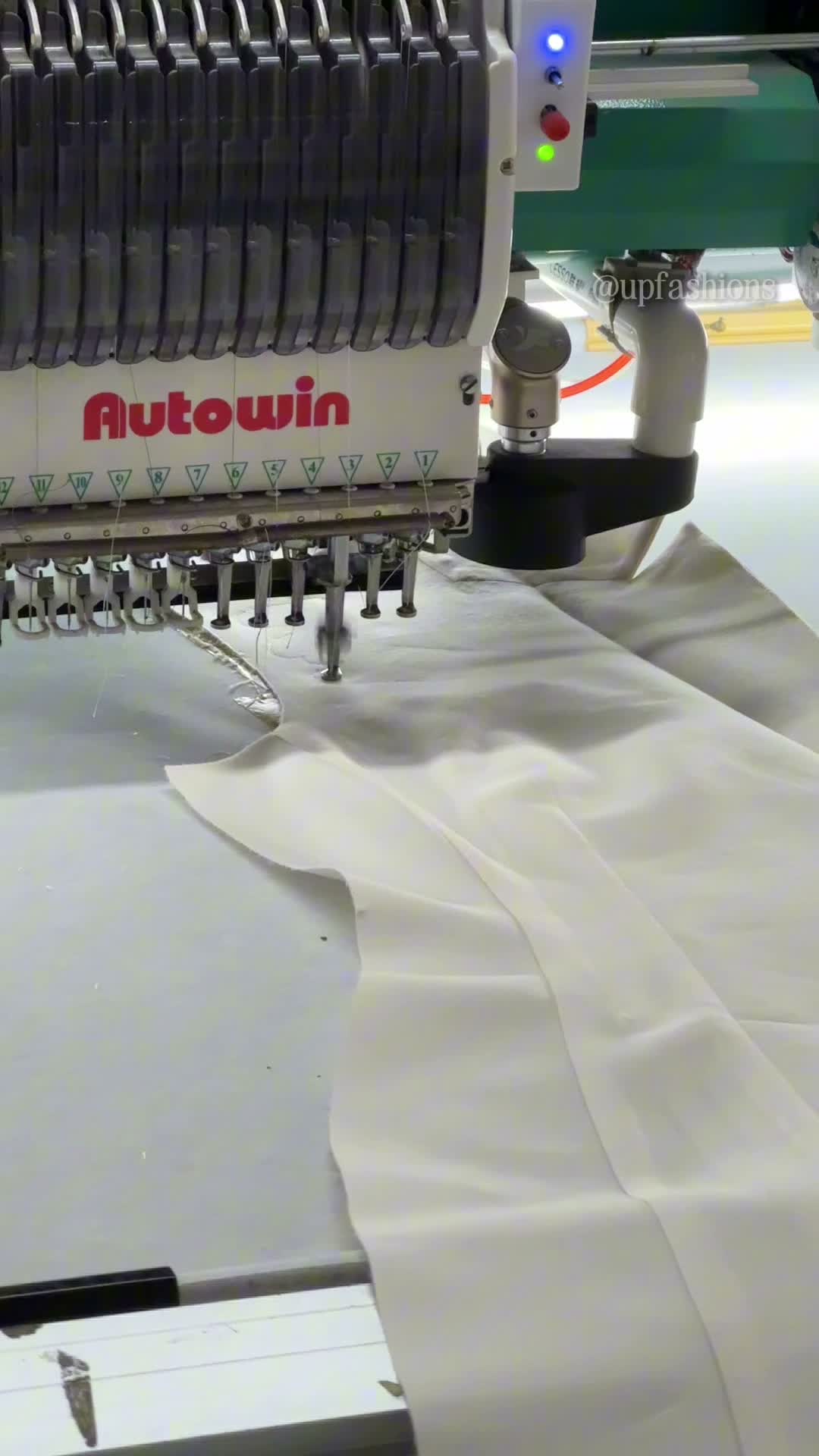
Gulf evening wear leans on embroidery, beading and stonework. This is where small MOQ factories in Guangzhou either excel or quietly fail.
Two things matter: density and anchor. Beading density should be specified per square inch, we work at 120 to 160 beads per square inch on bodices, and every bead should be double-anchored so a single thread break doesn't shed a line of stones.
We pull-test anchors at 8N on 10% of a run. That sounds technical; it just means we try to pull a bead off before you wear it, not after.
Embroidery thread should be colour-fast to sweat and heat. A white thread that yellows by the third wear is a Gulf-specific failure we've seen too many times.
Modest fit is a specification, not a style
For Gulf clients, coverage is part of the tech pack, not an afterthought. Write it down or it will be guessed.
Neckline depth, sleeve length, hemline and layering ease all need numbers. We grade for these like any other measurement, and we fit on a live model plus a mannequin at each size.
The honest part: we have delivered a first mock-up with the neckline a centimetre deeper than the client intended. We caught it in review, corrected the pattern, and re-cut. Anyone who tells you this never happens is not looking hard enough.
Colour: the Gulf standard is not the European one
Gulf orders lean on deep jewel tones, golds and blacks, colours where dye lots drift most visibly. This is why we hold every incoming roll to Delta E under 1.0 against an approved standard, checked under three light sources: daylight, shop light and warm light.
Two rolls from the same dye lot can still differ. We test every roll before cutting and reject anything that fails. One bad roll is a phone call; forty is a write-off.
Metallics are their own problem. Gold thread and gold beads shade differently across suppliers, so we seal the actual thread and beads, not a description of them.
Timing: Eid, wedding season and the calendar that matters
Gulf retail has two hard windows: Ramadan and Eid, and the bridal season. Both move every year, and both punish late delivery harder than any market we know.
Work backwards from the window, not from the quote. Sampling runs two to three mock-up rounds in 14 to 21 days, then a final sample in 28 to 42 days. Bulk production is 6 to 10 weeks after fabric confirmation, plus 2 to 4 weeks if we are sourcing the fabric.
For a 30 to 60 piece order, air freight at 5 to 8 days is usually worth the cost. We handle export documents and packing lists for Gulf customs.
Small MOQ factory UAE and the region: what 30 pieces buys you
Gulf labels search for a small MOQ factory in the UAE or a Guangzhou manufacturer that ships there. The region itself has limited small-batch production; most serious evening wear runs still come from China.
Thirty pieces per style per colour buys you three things. First, a real test of the market before you commit to volume. Second, cash that stays in your account instead of in a warehouse. Third, the right to be wrong cheaply, a fit or colour fault costs one roll to fix, not forty.
We add a per-piece premium below 50 units and print it as its own line, so you can see exactly what the flexibility costs.
How we work with Gulf labels
Send reference photos, your measurements, and your target retail price. We build the tech pack if you don't have one, quote line by line within 24 hours, and keep your patterns on file so reorders don't restart.
For series planning, we are also training our first design tool, an AI agent we call A1, coming online soon. You describe your brand positioning, the styles you need, and a colour theme, and it drafts design images to start the conversation. It is still in training, so treat early output as a sketch, not a final line.
If you are sourcing evening wear for Kuwait, Saudi Arabia or the UAE and want a factory that has been through the Gulf season more than once, start the conversation and see how we answer your first three questions.
Go deeper: Case studies: small MOQ runs for Dubai, Doha and Riyadh labels
Questions we get about this
Can you make abayas and kaftans at MOQ 30?
Yes. Abayas, kaftans and gowns are regular work for us at 30 to 150 pieces per style. The keys are fabric weight confirmed on a sealed sample, embellishment density specified per square inch, and modest-fit measurements written into the tech pack rather than guessed.
How long does a Gulf evening wear order take?
Two to three mock-up rounds in 14 to 21 days, a final sample in 28 to 42 days, then bulk production in 6 to 10 weeks after fabric confirmation. Add 2 to 4 weeks if we source the fabric, and plan 5 to 8 days for air freight to Kuwait, Saudi or the UAE.
Do you ship to Kuwait and Saudi Arabia?
Yes. Kuwait, Saudi Arabia, the UAE, Israel and Jordan are regular destinations. We handle export documents, packing lists and certificates of origin so the shipment clears Gulf customs without surprises.





