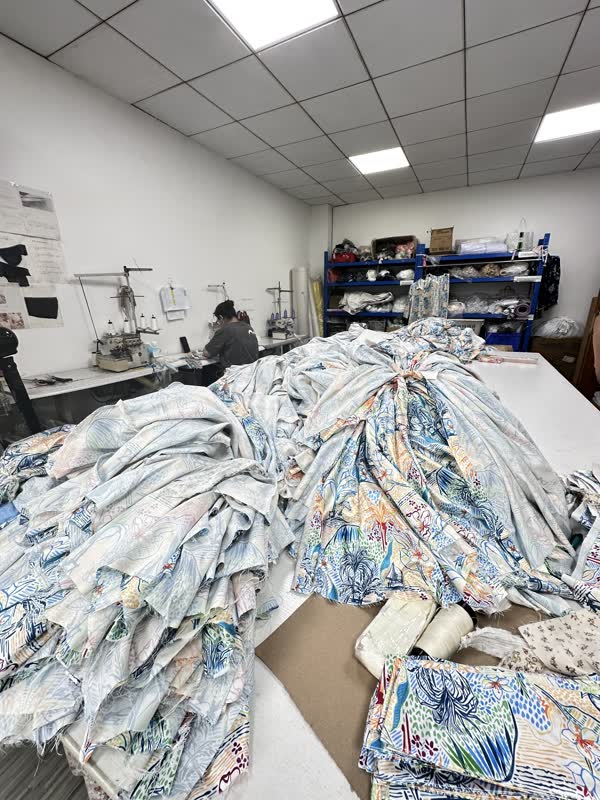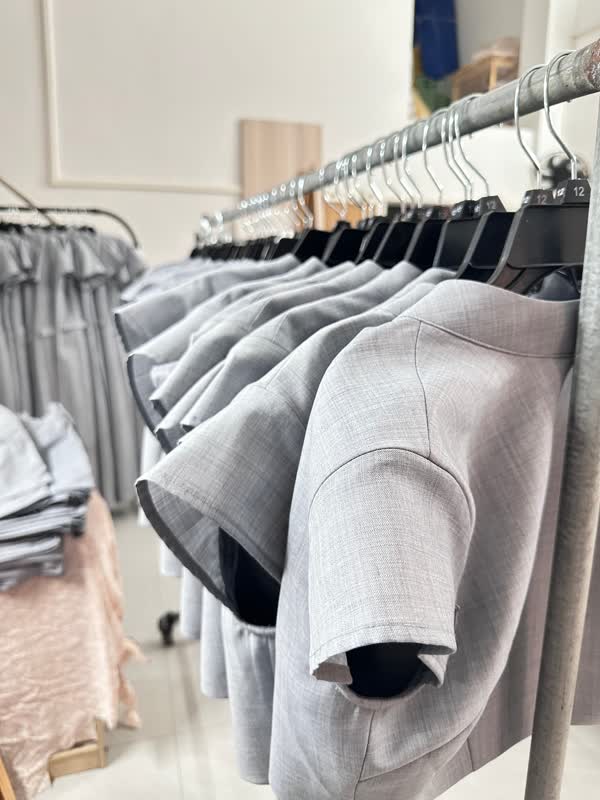
The first reply most new brands get is from a sourcing agent, not a cut and sew manufacturer. The agent asks for 5 to 12 percent and says the fee buys you a factory. Sometimes it does. At 30 pieces it usually buys you a phone number and a minimum fee.
The short version: with one style and a finished tech pack, go direct. With six styles, three fabrics and no Mandarin, an agent can cost less than your own mistakes. The fee is rarely the problem. Paying it twice is.
We quote both kinds of buyers, direct and agent-introduced. Here is what the fee covers, how to spot a trader wearing an agent's title, and the two questions that settle it.
What a sourcing agent charges on a 30-piece order
Commission typically runs 5 to 12 percent of FOB, with a minimum of $300 to $500 per order. Some add 2 percent for sample coordination and $50 per inspection.
On a $38 dress at 30 pieces the order is $1,140. Eight percent is $91. The $350 minimum is 31 percent of that order, so the percentage is not the number you actually pay.
Ask for the minimum before you ask for the rate. At 30 pieces the minimum is the whole conversation.
Why the percentage hides a minimum fee
A minimum exists because coordination cost does not scale down. One agent, one email thread, one factory contact, whether the order is 30 pieces or 3,000.
That is fair. What is not fair is a rate quoted as a percentage with the minimum buried in a footnote.
We have seen a $2,400 first order carry $480 in agent fees across three styles. That is 20 percent of the order and it never appeared on a single line of the quote.
How to tell a sourcing agent from a trading company
A trader buys from the factory and resells to you. The invoice you receive is theirs, the margin sits inside the price, and the factory never learns your name.
An agent invoices commission separately and the factory invoices the goods. One question separates them: "Will the factory invoice me directly?"
If the answer is no, you are buying from a trader. There is nothing wrong with traders. There is something wrong with calling one an agent and charging a visible fee on top of a hidden margin.
The double dip nobody puts in the contract
Some agents take commission from you and a 3 to 5 percent rebate from the factory. The factory prices the rebate in, so you fund both sides.
The test is simple. Ask for the factory's own quote sheet with fabric, making and trim broken out separately. A clean agent forwards it within a day.
We have refused a rebate twice. Both times the agent stopped sending orders, which answered a question we had not asked.
When 8 percent is worth paying at 30 pieces
Pay it when you need fabric sourced, three factories compared and someone standing in a sample room on your behalf. That is real work and it is hard to do across eight time zones.
Do not pay it when you already have a factory, a tech pack and one fabric. At that point the agent is forwarding emails you could forward yourself.
The break-even sits around four styles. Below that, the minimum fee eats the value of the service.
What an agent cannot do that a factory can
An agent cannot move a needle. It cannot re-cut a panel, approve a fit, or hold a dye lot number across two rolls.
When a fit problem appears, it travels back through the agent and arrives as a summary. Two inboxes between you and the cutting table is where detail dies.
This is why we ask for the buyer's email at quotation even on agent orders, and why our cut and sew program quotes the making cost line by line instead of as a lump.
How to run a direct relationship from another country
Four things replace a plane ticket: a dated video call at the cutting table, a photo of the bundle ticket with your style number, an inspection you did not schedule, and one named contact who answers inside a day.
We do all four above 100 pieces and three of them at 30.
If a factory resists a dated photo, that is an answer to a different question than the one you asked.
What we get wrong on agent referrals
We used to quote agent-introduced orders without asking who the end buyer was. Twice the spec arrived in two versions and we cut the wrong one.
Now we ask for the buyer's email at quotation and copy them on the spec approval. It has slowed two orders and saved three.
Two of the cases we publish came in through agents, including the one where the spec conflict cost us a week.
The five questions to ask before you sign
One: what is the minimum fee per order. Two: will the factory invoice me directly. Three: do you take a rebate from the factory.
Four: which operations will be subcontracted. Five: who approves a fit comment, you or the brand.
Hesitation on question three is your answer. The other four are logistics.
Our FAQ lists what we need before a first quote, whether it reaches us through an agent or straight from the brand.
Our A1 assistant is in training and coming online later this year. It will read an agent quote and flag the lines that are commission rather than cost.
Go deeper: where a 30-piece order breaks on a marketplace · the five checks before a deposit · who buys the fabric, and why it decides the price
Questions we get about this
Is an agent always more expensive than going direct?
No. Below four styles the minimum fee makes an agent expensive. Above six styles with mixed fabrics, an agent who knows the mills can beat a factory's fabric price by enough to cover the commission.
Can I ask a factory to work with my agent?
Yes, and we do it often. The order still needs one named owner for fit approval. When the agent approves a fit on the brand's behalf, we ask for that in writing before the mock-up is cut.
Quick Take
$350. Typical minimum agent fee, which is 31 percent of a $1,140 order at 30 pieces.
One question. "Will the factory invoice me directly?" Yes means agent. No means trader.
Four styles. The order size where a percentage fee starts to cost less than the minimum.
About UP Fashion
UP Fashion is a Guangzhou garment manufacturer founded in 2016, run by a team with 20+ years of OEM experience in silk, viscose and tailoring. We quote from 30 pieces, show the rate we used, and inspect three times before shipping.