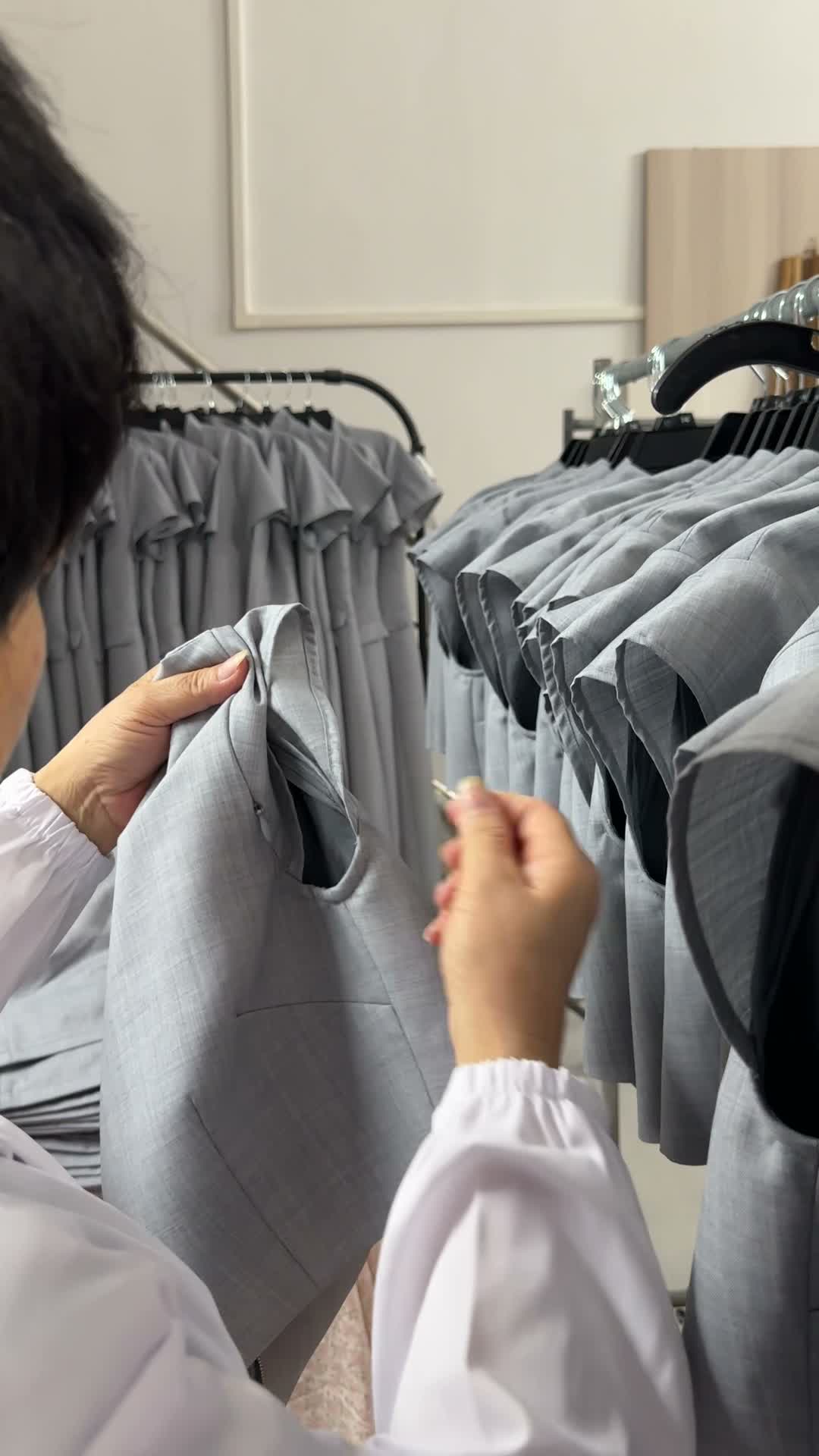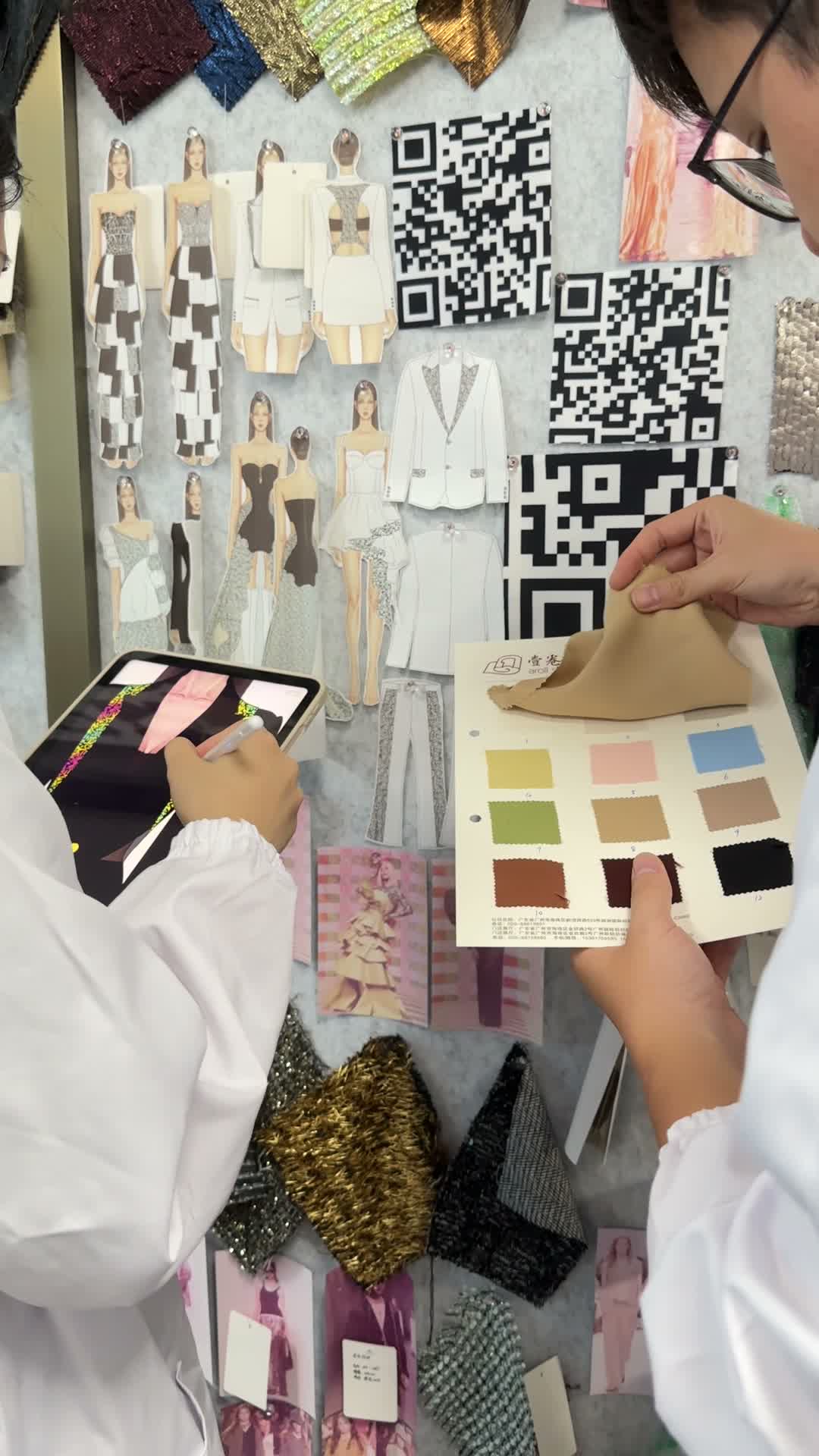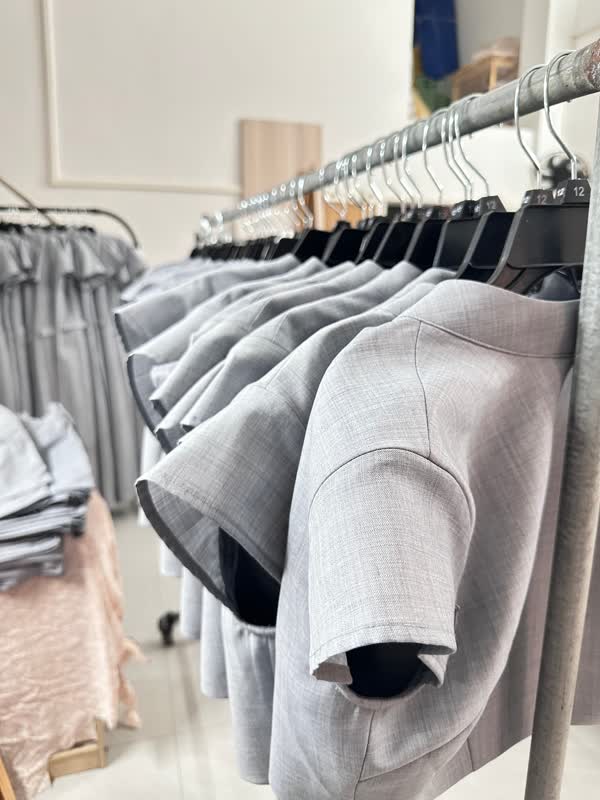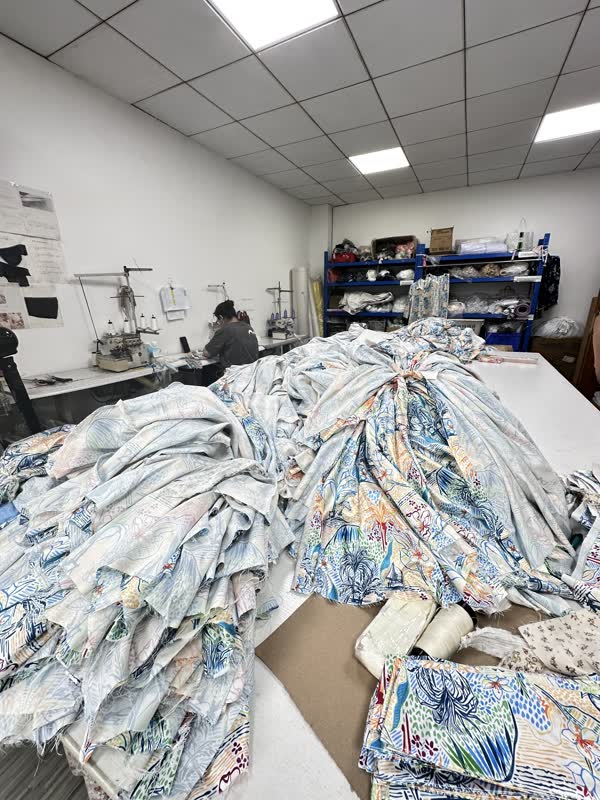
Every high end clothing manufacturer now gets asked for traceability papers, and most brands ask a season too late. At 30 pieces traceability is four documents, not a certificate. Two you can have this week. Two depend on whether the mill answers.
The honest position first. We can prove which mill a roll came from, which lot it was dyed in, and when. We cannot prove what happened to the fibre before that mill. Any factory claiming otherwise is selling you a logo.
Here are the four papers, what each one proves, and what to do when a mill will not share a lot number.
What traceability means at 30 pieces
It means the fabric in your garment can be tied to a named mill and a named dye lot on paper, and that the paper matches the roll label.
Small orders are easier to trace than large ones. Thirty pieces is one or two rolls, usually a single lot, so there is nothing to reconcile across shipments.
The hard part is not the volume. It is that most mills have never been asked for it.
The mill invoice and the lot number that matters
A mill invoice should carry the mill name, article number, lot or batch number, metres delivered and the date. That is paper one.
The lot number has to appear in three places to mean anything: the invoice, the roll label, and your cutting record. If it stops at the invoice, the paper is decoration.
Ask for one photo with the roll label and the invoice in the same frame. It takes the mill two minutes and settles the question.
Why a test report without a sample date proves nothing
A test report is evidence for the lot it was cut from, not for the article number. Ours carry the lab name, report number, sample received date, method and result.
A report from 2022 on the same article number is not your fabric. We have been sent that report more than once, usually by a mill trying to be helpful.
At 30 pieces we test shrinkage, colourfastness and pH as standard, and add AZO and formaldehyde when the destination is the EU. That runs $80 to $200 per panel and takes five to seven days.
What a transaction certificate covers and what it does not
If you claim recycled polyester or organic cotton, you need a transaction certificate from a certification body, plus a scope certificate from the mill that handled the fibre.
The certificate ties a shipment to a certified supply chain. It does not cover your garment, and it does not travel into a factory that has no scope certificate of its own.
This is where most claims break. The mill is certified, the sewing floor is not, and the claim dies at the door.
What a buyer will ask for in 2027
Mill name, country of fibre origin, dyeing facility and a chemical list. That is the short version of what EU digital product passport rules will push down the chain.
At 30 pieces, buyers ask for the mill name and the lot number. Nobody is asking a small brand for a full life cycle assessment yet.
Build the four papers now and you can answer that email in an afternoon instead of a quarter.
What we cannot prove, honestly
We cannot name the farm. We cannot give a blend ratio to half a percent on a recycled blend. We cannot prove water treatment at a dyehouse we do not own.
What we can say is mill-verified, with the lot number to check. That is a smaller claim than fully traceable, and it is the one that survives an audit.
Brands that need farm-level proof should buy certified fibre and accept the price. At 30 pieces that price is usually 15 to 25 percent on the fabric.
How much asking costs on a $1,140 order
Mill letter and lot record: free to $50. One test panel: $80 to $200. A transaction certificate through the mill: usually free, two weeks. A third-party social audit: not viable at 30 pieces.
Added up, documentation runs $150 to $400. On a $1,140 order that is 13 to 35 percent of the value, which is why brands do it on one hero style rather than six.
We quote documentation as a separate line so it can be dropped without renegotiating the garment.
What to do when a mill will not share a lot number
Three options. Change mill for that fabric, drop the claim, or ask for the dyer's name and the dye date instead of the lot number.
We have dropped two mills for refusing the first request. Both were 8 percent cheaper, which is roughly what an unverifiable claim costs you at the buyer's desk.
If you are buying through an agent, the mill invoice is the first thing to request. Our high-end production page lists the four papers we hand over with every bulk order.
What we get wrong on traceability
We once sent a test report from a previous lot with the same article number. The buyer checked the sample date and asked for a re-test.
Now we re-test per lot above 100 pieces and per colourway below that. It adds $120 to a 30-piece order and removes the argument.
Two of the case studies show the document pack we sent, including the lot that failed shrinkage.
Our FAQ covers what we need before a first quote and which tests we run by default.
Our A1 assistant is in training and coming online later this year. It will check a document pack against the lot numbers on the cutting record.
Go deeper: the four-point system and what a score means · which fabric tests a small order actually needs · buying from a mill instead of a trader
Questions we get about this
Do I need traceability papers for a 30-piece order?
Only if a stockist or a marketplace asks. Most do not at 30 pieces. The ones that do will ask for the mill name and the lot number, not a full audit. Get the mill invoice and the roll label photo at minimum.
Can a factory certify that fabric is organic?
No. Only a certification body can, through a transaction certificate tied to a certified supply chain. A factory can pass on the certificate it received, and it can tell you honestly when it does not have one.
Quick Take
4 papers. Mill invoice with lot number, roll label, dated test report, transaction certificate.
$150-400. Documentation cost on a $1,140 order, or 13 to 35 percent of the value.
Mill-verified. The claim that survives an audit. Fully traceable is not a claim a factory can make.
About UP Fashion
UP Fashion is a Guangzhou garment manufacturer founded in 2016, run by a team with 20+ years of OEM experience in silk, viscose and tailoring. We quote from 30 pieces, show the rate we used, and inspect three times before shipping.