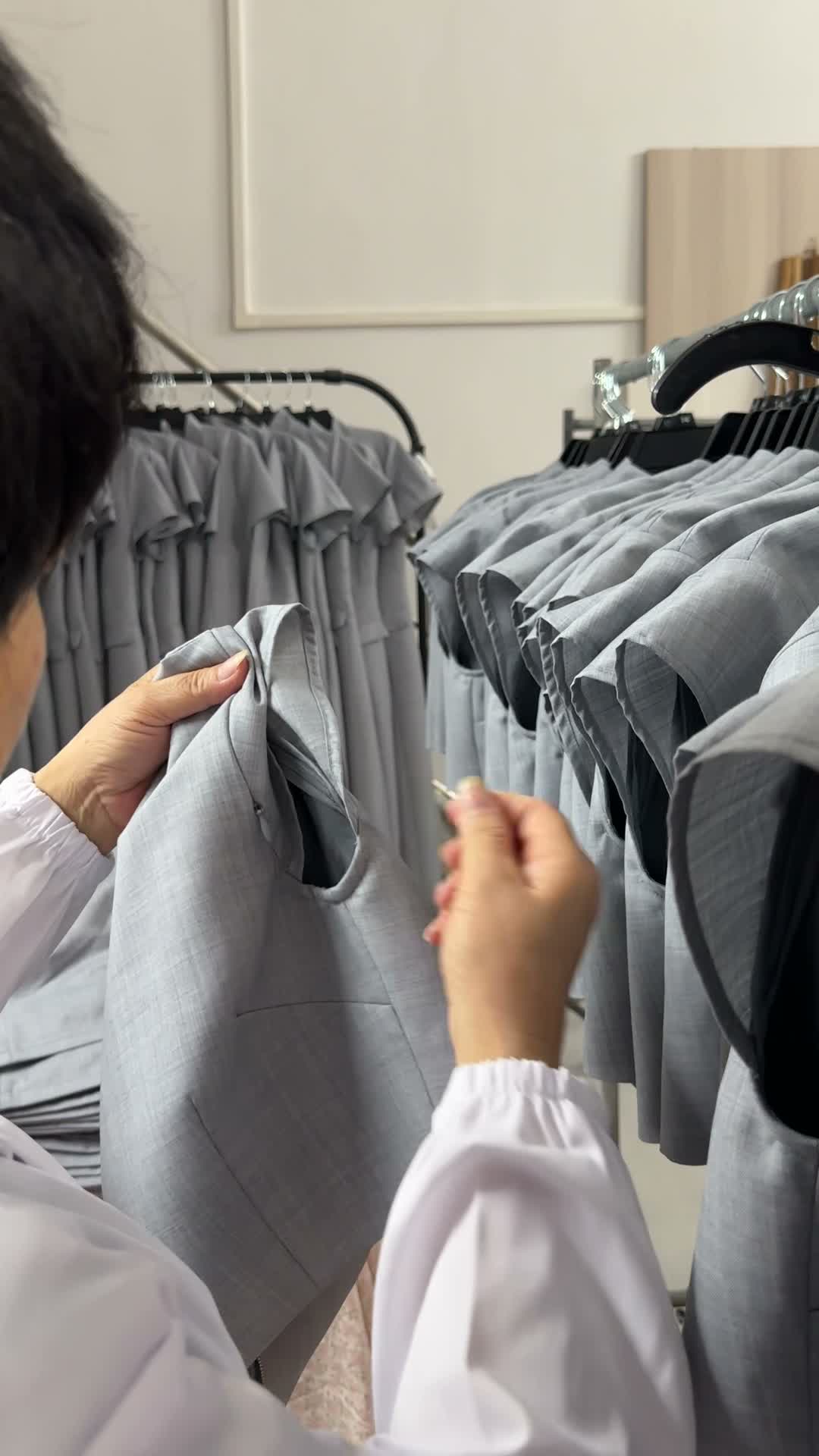
A small batch clothing manufacturer can cut thirty pieces and still lose the whole run to one roll of fabric that behaves differently. We test fabric before we cut for exactly that reason, and the tests cost very little next to remaking an order.
So what should you test before production? Three things: shrinkage, colourfastness, and pilling. Shrinkage decides final size, colourfastness decides whether the colour survives a wash and a rub, and pilling decides whether the surface still looks new after a week of wear.
If a supplier will not share those three results, you are buying a guess.
Here is what each test measures, the numbers we work to, and how to ask for the paperwork without sounding difficult.
Shrinkage and colourfastness: why three tests decide a run
Fabric moves. Viscose can shrink 4 to 6 per cent on the first wash, linen can lose 2 to 3, and a stable polyester blend may lose under 1.
None of that is a defect; it is a property you plan for.
If you cut to final size and the fabric then shrinks, the garment arrives short. On a thirty-piece run there is no spare to absorb it, so every piece is affected, not a few.
The fix is simple: wash a sample length first, measure it, and cut with the shrinkage built into the pattern.
Test one: shrinkage after a home wash
We cut a 50cm by 50cm square, wash it at 30 degrees, dry it flat, and measure again. The change tells us how much to add to the pattern before the marker is made.
A fabric that shrinks 5 per cent needs roughly 5 per cent added to length and width. Skip it and a 100cm dress quietly becomes 95cm, which is a whole size at the hem.
We ask for a shrinkage figure on the fabric spec, with a tolerance. If it is missing, we test it ourselves and tell you the number before we cut.
Test two: colourfastness to washing and rubbing
Colourfastness is graded 1 to 5, where 5 means no change. We want 4 or better for washing, and 4 for rubbing, both dry and wet.
A dark viscose that grades 3 will bleed onto a pale lining in the first wash. On a dress with a contrasting panel, that shows up immediately.
If your style mixes a deep colour with a light one, ask for the rubbing grade specifically. That is the one that ruins a two-tone garment, and it is often the one nobody checks.
Light fastness matters too if the garment will sit in a shop window. We ask for a grade 4 for light when a style is likely to be displayed for weeks.
Test three: pilling and surface wear
Pilling is the small balls of fibre that form where the fabric rubs. It is graded 1 to 5 as well, and we want 4 or better for anything worn against a bag strap, a seat or a coat.
Blends pill more than tight weaves. A soft viscose-cotton blend can pill at 3 while the same weight in a tighter weave holds at 4.
Pilling is not a make defect. It is a fabric choice, and it is far cheaper to change fabric than to argue about it after delivery.
The pass numbers we hold a fabric to
Our working minimums: shrinkage within 3 per cent for woven fabric, colourfastness 4 for wash and 4 for rub, pilling 4 for any outer surface. Anything below that we flag before the order is confirmed.
Those numbers are not universal. Swimwear, workwear and childrenswear carry stricter standards, and we say so when a brief falls into those groups rather than pretend one number fits everything.
If your fabric fails one test, we do not bury it. We send the number and the two options: change the fabric, or accept the result and adjust the pattern to compensate.
We keep the results with the order file. If a question comes up two years later, we can show what the fabric tested at when we bought it, not what we remember.
How to ask a factory for fabric test reports
Ask for three things: the shrinkage figure after one wash, the colourfastness grades for wash and rub, and the pilling grade. Ask for the mill's report number and date, so the result can be traced to a lot.
A report without a date is not useful. Fabric from a new dye lot gets tested again, because the same code from a different lot can behave differently even when the composition matches.
If the only report is more than a year old, ask whether the mill has changed its finishing line since. Finishing is what usually moves the shrinkage number.
If the supplier only has a generic sheet for the fabric family, treat it as a starting point, not a guarantee for your roll.
The test we once skipped
In 2019 we took a client's own white viscose and cut a thirty-piece run without a wash test. The fabric shrank 6 per cent and the dresses came out short at the hem.
We remade the order at our cost. Since then no fabric is cut before a wash square is measured, even when the client supplies it and even when they say it is pre-shrunk.
If you are weighing up fabric options, the small batch program shows how we buy and test for short runs. The case studies page lists real orders and dates, and the FAQ page answers the common fabric questions.
The production process page shows where fabric testing sits, before cutting begins.
Go deeper: how fabric weight in GSM decides drape · how a small brand buys 100 metres · the six places a fabric order goes wrong
Questions we get about this
Should I test fabric before or after I approve the sample?
Before. Test the roll you will actually cut, not the swatch from the sample room. A sample can pass and a different dye lot of the same code can still shrink 6 per cent.
What shrinkage percentage is acceptable?
For woven fabric we work to within 3 per cent after one home wash. Viscose and linen often sit higher, so we build that into the pattern rather than reject the fabric.
Quick Take
Three tests decide a run. Shrinkage, colourfastness and pilling, in that order of risk.
Test the roll, not the swatch. A new dye lot can behave differently from the sample.
Ask for dated reports. A grade without a date and a lot number cannot be traced.
About UP Fashion
UP Fashion is a Guangzhou garment manufacturer founded in 2016, run by a team with 20+ years of OEM experience in silk, viscose and embroidery. We quote from 30 pieces, test fabric before cutting, and inspect three times before shipping.




