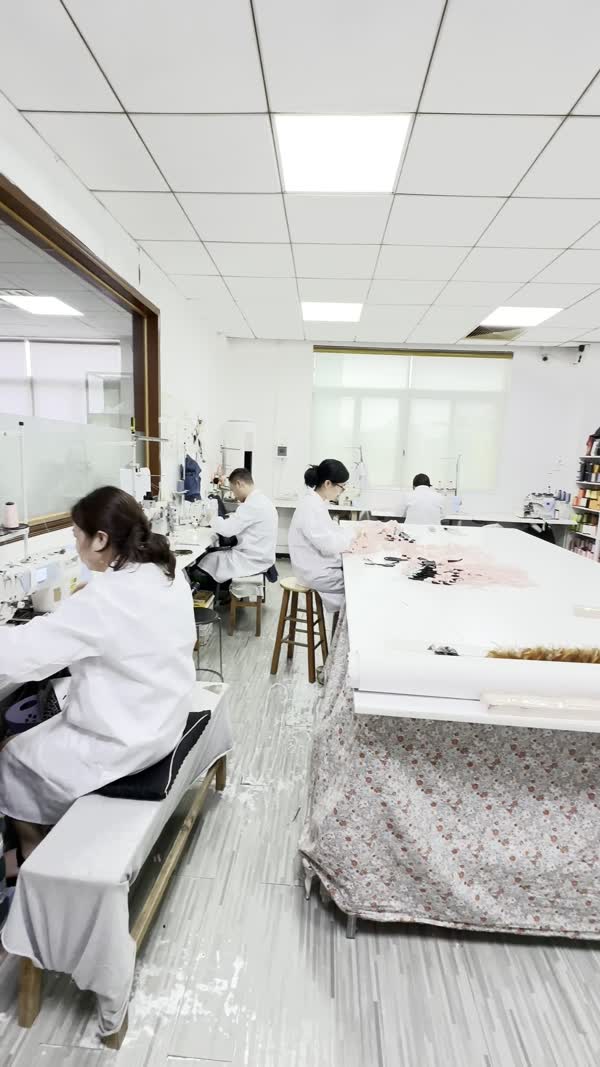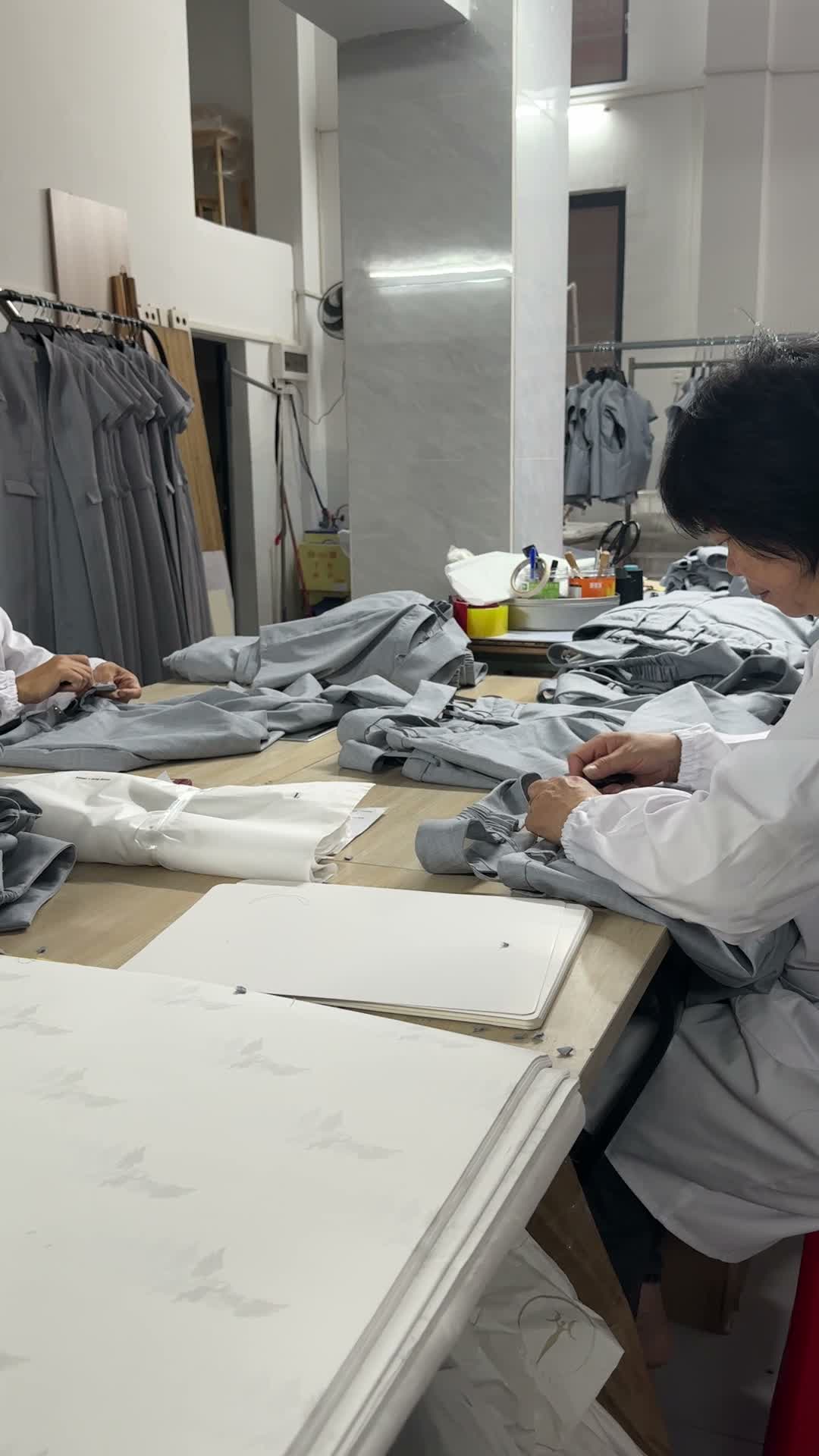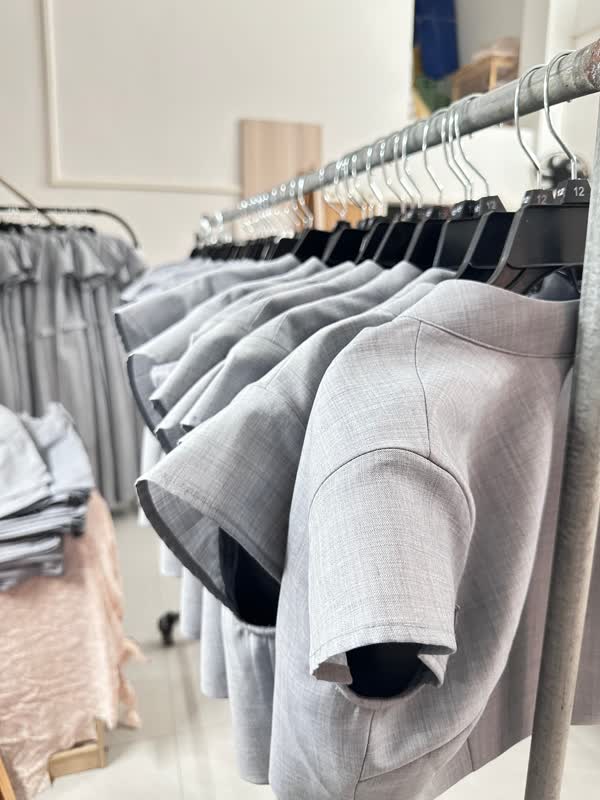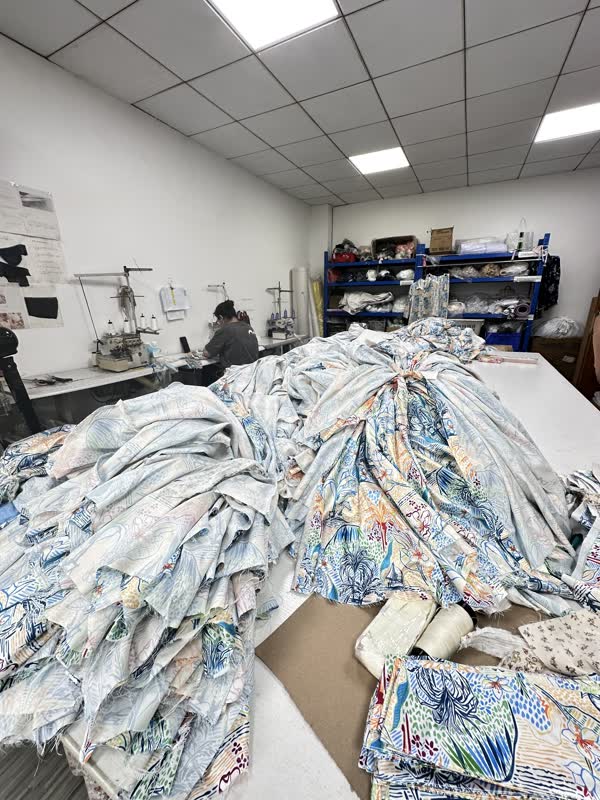
A small batch clothing manufacturer almost never buys cloth from a mill. On a 30-piece order you need 40 to 70 metres. A mill in Shaoxing quotes from 1,000 metres, so the cloth reaches you through someone who buys a lot and breaks the roll.
That middle step is not a trick. It is the reason a 30-piece order can exist. What matters is who that someone is and what they add per metre. In our buying it runs 5 to 15 percent, which on a $6 fabric is $0.30 to $0.90 a metre.
We buy fabric every week for orders between 30 and 300 pieces. Here is the chain as we run it, with the numbers we actually see on paper.
Why a fabric mill minimum order starts at 500 metres
A mill dyes in lots. One lot on a jigger is 500 to 1,500 metres depending on the machine and the fabric weight. Setting up for 40 metres uses the same water, the same dye drum and the same two hours of a technician's day.
So the mill rarely says no. It quotes a price that makes 40 metres feel like a mistake, often two to three times the bulk rate.
That is why a viscose selling at $5 wholesale comes back at $14 a metre when you ask for 40. Nobody is cheating you. You are being priced out politely.
What a fabric agent commission adds per metre
An agent or converter holds stock, or buys a whole lot and resells it in pieces. They carry the risk that the last 200 metres never move.
For that risk they take 5 to 10 percent, or a flat markup of 1 to 3 RMB a metre. On a $6 fabric that is not the line that kills your margin.
What you buy with it is a roll cut from one dye lot at 40 metres, plus a lab dip you can approve before bulk arrives. That is worth more than the markup.
The three prices for the same viscose
Price one is the mill's bulk rate at 1,000 metres: 32 RMB a metre.
Price two is the converter's price at 60 metres: 38 RMB.
Price three is what lands in our cutting room: 40 RMB, after a 4 percent shrinkage allowance, an inspection pass and the 3 percent we write off to defects.
Three prices, one fabric. If a quote shows a fabric cost below the mill's own bulk rate, someone is quoting a different fabric.
Fabric cost per garment: where a 30-piece marker loses money
The marker is the quiet one. A 30-piece order across four sizes lays 8 to 12 layers, and waste runs 15 to 18 percent against 6 to 8 percent on a 300-piece cut.
That gap is 1.5 to 2 metres per garment. On a $9 fabric it is $13 to $18 a piece, sitting inside a line nobody questions.
We have never seen a brand challenge it, because it does not appear as a line item. It appears as a slightly high fabric total.
Stock lot or dye lot: the choice that decides your second run
A stock lot is cheap, sometimes 30 percent cheaper, and it is finite. Buy it and your March reorder cannot match it.
A dye lot costs more and can be repeated, if the mill still holds the yarn. On a first collection we push brands toward a dye lot for the hero style and a stock lot for the test style.
Mixing the two without knowing which is which is how a range ends up with three navies in one rail.
When mill direct actually makes sense
Above 300 metres per colour, mill direct starts to win. You can hold a lot, repeat it, and cut the agent out of the price.
Below 150 metres it usually loses, because you pay for metres you will not sew. We have seen brands sit on 700 metres of a print they used once.
The break-even in our buying is roughly 250 to 400 metres, depending on whether the mill will hold the balance for you.
What we get wrong
We have bought stock lots that photographed well and arrived with 4 percent shrinkage we never tested for. The garments came back one size short after the first wash.
We have also approved a lab dip off a phone screen, which is not approval at all.
Every roll now gets a 20 cm shrink test and a light-box check before it reaches cutting. It costs two days and has saved more than one run.
What to ask before you accept a fabric price
Five questions turn a number into something you can hold someone to.
- Which mill, and which lot number.
- Whether the price includes a shrinkage allowance, and how much.
- Whether the roll is one dye lot or a blend of two.
- What the reorder price and lead time would be.
- Whether a lab dip is included or charged separately.
Ask those and the answer is either a price with a paper trail or an honest admission that there is none.
How fabric shows up in a 30-piece quote
On a viscose dress, fabric is 40 to 55 percent of our FOB. Trim is 6 to 9 percent. Labour is the rest.
So a fabric decision moves your price further than any negotiation over sewing minutes ever will.
When a brand asks us to cut 15 percent, we look at fabric first. The honest answer is usually a cheaper quality, not a cheaper factory.
Our scope at 30 pieces per style is written out on the small batch program page. Minimums and lead times are in the FAQ, and a 40-piece viscose run with its fabric lots is documented on the cases page.
Our A1 assistant is in training and coming online later this year. One of its first jobs is to flag a quoted fabric price that sits below the mill's own bulk rate.
Go deeper: the six places a fabric order goes wrong · how a small brand buys 100 metres · shrinkage and colourfastness tests before you cut
Questions we get about this
Can I buy 30 metres directly from a mill?
You can ask, and a few mills will sell you a sample length or a stock remnant. What you will not get is a repeatable dye lot at 30 metres. Below about 250 metres the agent price is usually cheaper than the mill's small-lot price, not more expensive.
How much does an agent add to a fabric price?
Five to ten percent, or one to three RMB a metre as a flat markup. On a 30-piece order that is $18 to $55 across the whole run, which is small next to the 15 to 18 percent fabric waste a small marker creates.
Quick Take
40-70. Metres of fabric a 30-piece order actually consumes, before waste.
15-18%. Fabric waste on a small marker, against 6 to 8 percent at 300 pieces.
250-400. Metres per colour where mill direct starts to beat an agent.
About UP Fashion
UP Fashion is a Guangzhou garment manufacturer founded in 2016, run by a team with 20+ years of OEM experience in silk, viscose and tailoring. We quote from 30 pieces, show the rate we used, and inspect three times before shipping.