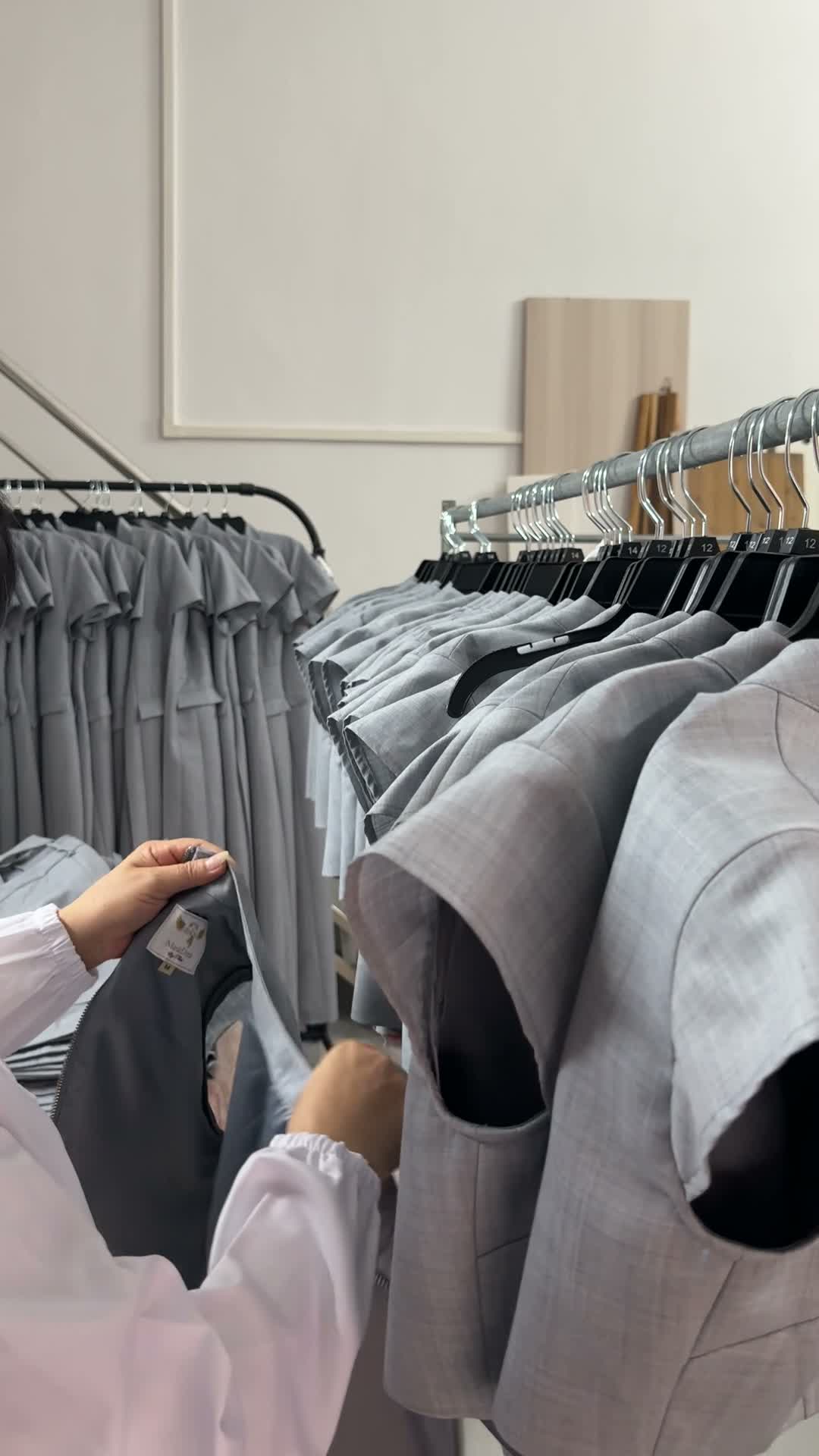
As a small batch clothing manufacturer we get one question more than any other: why does 30 pieces take three weeks when the sewing is a day and a half? The answer is that the line does not run your order alone, and changing it over costs more than the work inside it.
Where do the days go? A 22-minute dress at 30 pieces is 660 sewing minutes, about 11 operator-hours. Setup, balancing, first-piece approval and finishing take another day and a half, and the remaining 18 days are queue, inspection and the window you were given.
What SMV means, and why your 30 pieces is 11 hours
SMV is standard minute value: the minutes a competent operator needs at 100 per cent performance. A lined viscose dress runs 22 to 26, a slip dress 14 to 17, a blazer 95 to 130.
Thirty dresses at 22 minutes is 660 minutes. Spread across 18 operators on a line balanced for a 400-piece run, that is not one person's shift, it is a slice of everyone's day. Which is exactly why it cannot be scheduled the way a 3,000-piece order is scheduled.
Changeover: the five hours nobody quotes
Twelve stations, thread in three colours, attachments for the hem and the facing, and a first-piece board. Our changeover on a dress line is four to six hours, and it is four to six hours whether the run is 30 pieces or 3,000.
That single sentence is the economics of small batch. Setup is fixed, work is variable, and at 30 pieces the fixed part is roughly 60 per cent of the line time. It is also why a factory quoting 300 pieces minimum is not being difficult; it is protecting a line.
How we slot 30 pieces between two bulk orders
We hold a three-day window each week for small runs, usually Monday to Wednesday, and we place them on the line already running the same fabric family so thread and attachments do not change twice.
A 30-piece order gets a 1.5-day occupancy: half a day to balance, 90 minutes for first-piece approval, one day of sewing, half a day of finishing and pressing. The rest of the window absorbs the overrun that always happens on a first run.
The cutting room is the first queue
Before the line there is the table. A 30-piece dress run is four lays of eight pieces at 1.9 m, and the marker takes about 90 minutes on a 12 m table. That table is shared, and in a busy week it is booked two days out.
If your fabric arrives on a Thursday, the earliest lay is Monday. That is where five of the nineteen days go without anyone noticing, because nothing looks late until the sewing date is already behind you.
Finishing and the three inspections
Finishing is half a day for 30 pieces: thread trimming, pressing, hanging, and the mannequin check where each garment goes on a form to see whether the front hangs the way the approved sample did.
The three inspections sit around it, one on the cut panels, one in line at about 60 per cent, one before packing. On a small run each is 45 minutes rather than a day, and the 45 minutes are the cheapest part of the whole schedule.
The 19 days are queue, not work
Two levers actually move the date. Book the window before the fabric arrives, because a slot is a promise and a late fabric booking puts you behind whoever was ready.
And cut the number of styles in the first order. Three styles at 30 pieces is three changeovers, about 15 hours of setup, against one style at 90 pieces at five. Same total pieces, less than half the setup.
The third lever is honesty about the calendar. August and September are full, and a small run booked in July for a September drop will be the order that moves when a bulk client slips.
The fourth is fabric you already own. Cloth sitting in our store is cloth we can cut on Monday, and a brand that keeps 70 m of its core fabric with us buys itself a week on every reorder.
Where our scheduling failed
In 2021 we double-booked a small-run window in September because two salespeople each held a verbal slot. The 30-piece order left 11 days late and went by air at $210, which was 16 per cent of the order value.
The fix was dull: one calendar, one owner, and no slot confirmed without the 30 per cent deposit. We also log actual occupancy per run, and the average has come down from 2.4 days to 1.6 in four years.
What this means for your first order date
Count backwards. Three weeks for queue and line time, five to seven days for fabric if it is in stock, two mock-up rounds at 12 to 16 days, and a week for trim and label approval.
That lands a first 30-piece run at 9 to 11 weeks from approved tech pack to delivery, and a reorder at 4 to 5 weeks because the pattern, the fabric and the slot are already known. A scheduling agent we are building, still in training, will flag slot collisions before they happen; today a person does it with a whiteboard.
If you are planning a first run, our FAQ answers the timing questions we get most, and the small batch program page shows the three stages and what each one costs. The case studies include the late September run above.
Go deeper: how SMV turns into a price · what a factory can actually finish in a day · why samples queue behind other brands
Questions we get about this
Can I pay more to jump the queue?
Sometimes, and it is usually 10 to 15 per cent on the sewing cost rather than the whole order. It only works if a window is genuinely open, and a factory that says yes to every rush request is not protecting anything.
Does a bigger order get a better slot?
Yes, and pretending otherwise wastes your time. What a small brand can do is be predictable: same fabric family, one style, deposit on time. Predictable small orders get better slots than chaotic medium ones.
Quick Take
660 minutes. 30 dresses at 22 SMV. The sewing is not the delay.
Four to six hours of changeover. Fixed whether you order 30 or 3,000. That is the small batch premium.
One style, not three. Three styles at 30 pieces is 15 hours of setup you did not need to pay for.
About UP Fashion
UP Fashion is a Guangzhou garment manufacturer founded in 2016, run by a team with 20+ years of OEM experience in silk, viscose and embroidery. We quote from 30 pieces, show the rate we used, and inspect three times before shipping.





