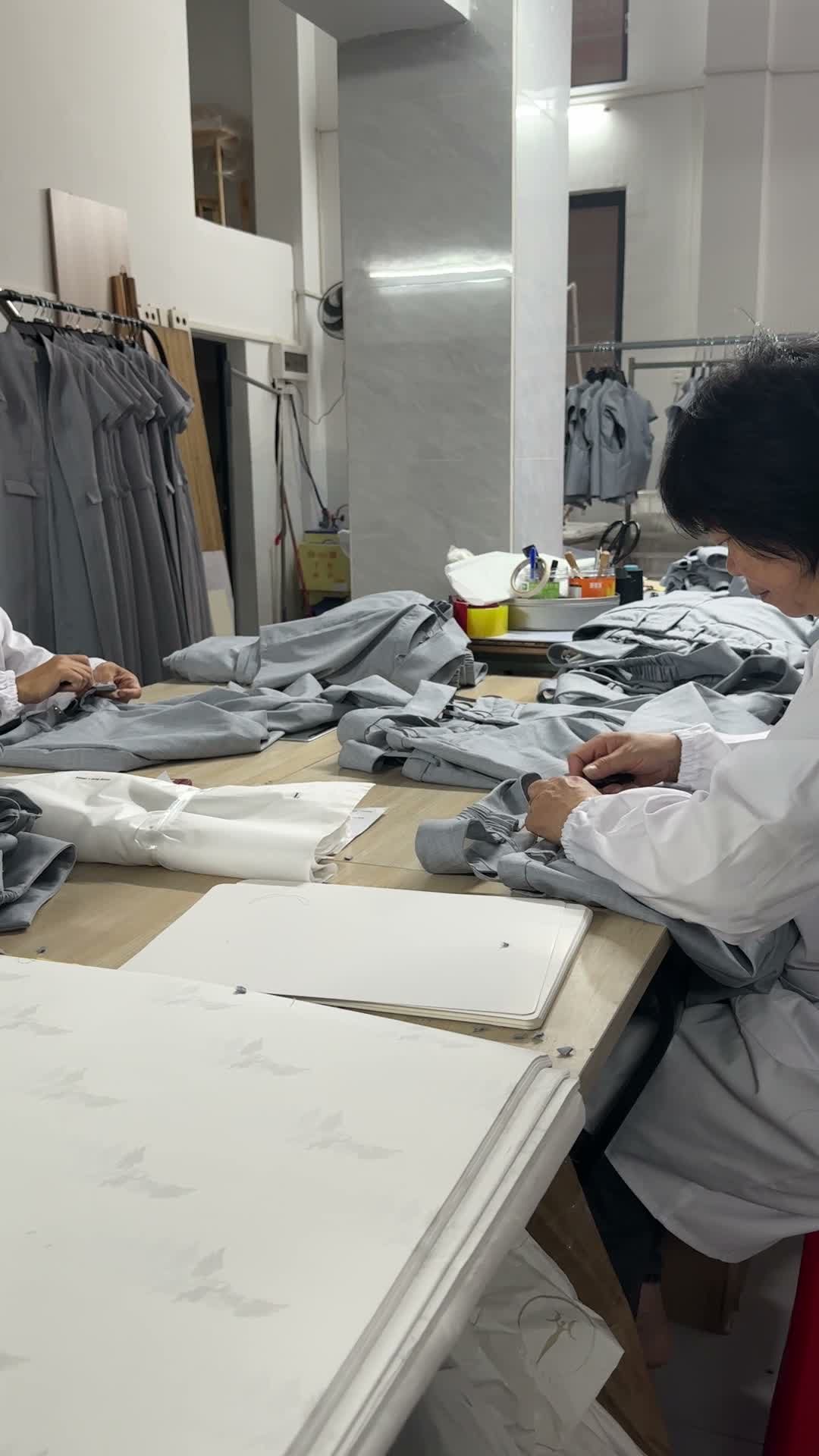
A cut and sew manufacturer will usually tell you the minimum, then go quiet on how many pieces it can make in a day. That second number matters more, because it decides your delivery date. A factory that says yes to fifty pieces and runs one slow line will still be late.
So how many pieces does a line sew in a day? For a simple dress with six to eight operations, a six-person line makes 40 to 70 pieces a day. A lined blazer with thirty parts on the same line makes 12 to 20. The order size rarely changes those numbers; the style does.
Here is how we work out daily output, and how to read a factory's capacity claim without getting fooled.
What actually decides daily output
Three things set the pace: how many operations the garment needs, how many people work the line, and how long the slowest operation takes. A line moves as fast as its slowest station, not its fastest.
If one person sets sleeves and each set takes four minutes, that station makes fifteen pieces an hour at best. No amount of people downstream changes it.
So we plan around the bottleneck station, and we tell clients which one it is.
Real numbers by garment type
On a six-person line, a simple slip dress or top runs 40 to 70 pieces a day. A structured skirt with a zip and lining runs 30 to 45. A lined blazer runs 12 to 20, because the canvas, the collar and the sleeves are hand-guided.
Those are working numbers, not marketing ones. They assume the fabric is on site, the sample is approved, and nobody is waiting on a trim.
If a factory quotes you a blazer at 60 a day on one small line, ask how many people work it. The answer will explain the number.
Why order size is not the bottleneck
Clients often think a bigger order gets made faster. It does not, up to a point. Fifty pieces and two hundred pieces both run at the same daily rate; the bigger order simply takes more days.
What a bigger order can do is justify a second line or a longer shift. That is a scheduling choice, and it is worth asking about.
For a first run, the calendar matters more than the count. We slot small orders between larger ones, so a fifty-piece run can move quickly if it lands in an open window.
How we schedule a 50-piece run
Fifty pieces on a six-person line is roughly one to two days of sewing, depending on the style. But sewing is not the whole run. Cutting, bundling, pressing, inspecting and packing each take their own slice.
In practice, a fifty-piece order spends about four to five working days on the floor after the fabric is cut. The rest of the twelve-week timeline is quoting, fabric, samples and shipping.
We give clients the floor days separately, so they can see where the time really goes.
Reading a factory's capacity claim
A factory that claims ten thousand pieces a month is telling you its ceiling, not its normal speed. Ask instead how many lines it runs, how many people per line, and how many orders are open right now.
A shop with three lines and eight open orders may be slower for you than a smaller shop with one open order. Capacity is not a number; it is a number minus what is already booked.
Ask what they would refuse in order to take yours. A factory that never says no is a factory that will delay someone, and it might be you.
The capacity mistake we made
In 2020 we accepted two fifty-piece orders in the same week and put both on one line. The changeover between styles cost us most of a day, and the second order shipped four days late.
Now we hold one style per line and stagger small runs. It looks less efficient on paper and it ships on time, which is the only efficiency that matters.
What to ask before you book a slot
Ask four things: daily output for your style, the bottleneck operation, the floor days after cutting, and the window you are being slotted into. If the answers are vague, the delivery date will be too.
If you are deciding between models, the cut and sew program explains what we take on and what you supply. The case studies page shows real run sizes and dates, and the FAQ page covers scheduling questions.
The production process page shows where cutting, sewing and inspection sit in the timeline.
Go deeper: what adds weeks to a small run · what a cut and sew service includes · why August is the worst month to order
Questions we get about this
Does a bigger order ship faster?
No, not on its own. A line runs at the same daily rate whatever the count, so a bigger order takes more days. It can only go faster if the factory adds a second line or a longer shift.
How long do 50 pieces actually take on the floor?
About four to five working days after the fabric is cut, including pressing, inspection and packing. The sewing itself is one to two days; the rest of the twelve-week timeline is fabric, samples and shipping.
Quick Take
A line runs at its slowest station. Find the bottleneck before you trust a daily number.
Style sets the speed, not size. A simple dress runs 40 to 70 a day; a lined blazer, 12 to 20.
Ask about open orders. Capacity is what is left after the work already booked.
About UP Fashion
UP Fashion is a Guangzhou garment manufacturer founded in 2016, run by a team with 20+ years of OEM experience in silk, viscose and embroidery. We quote from 30 pieces, share our floor days, and inspect three times before shipping.





