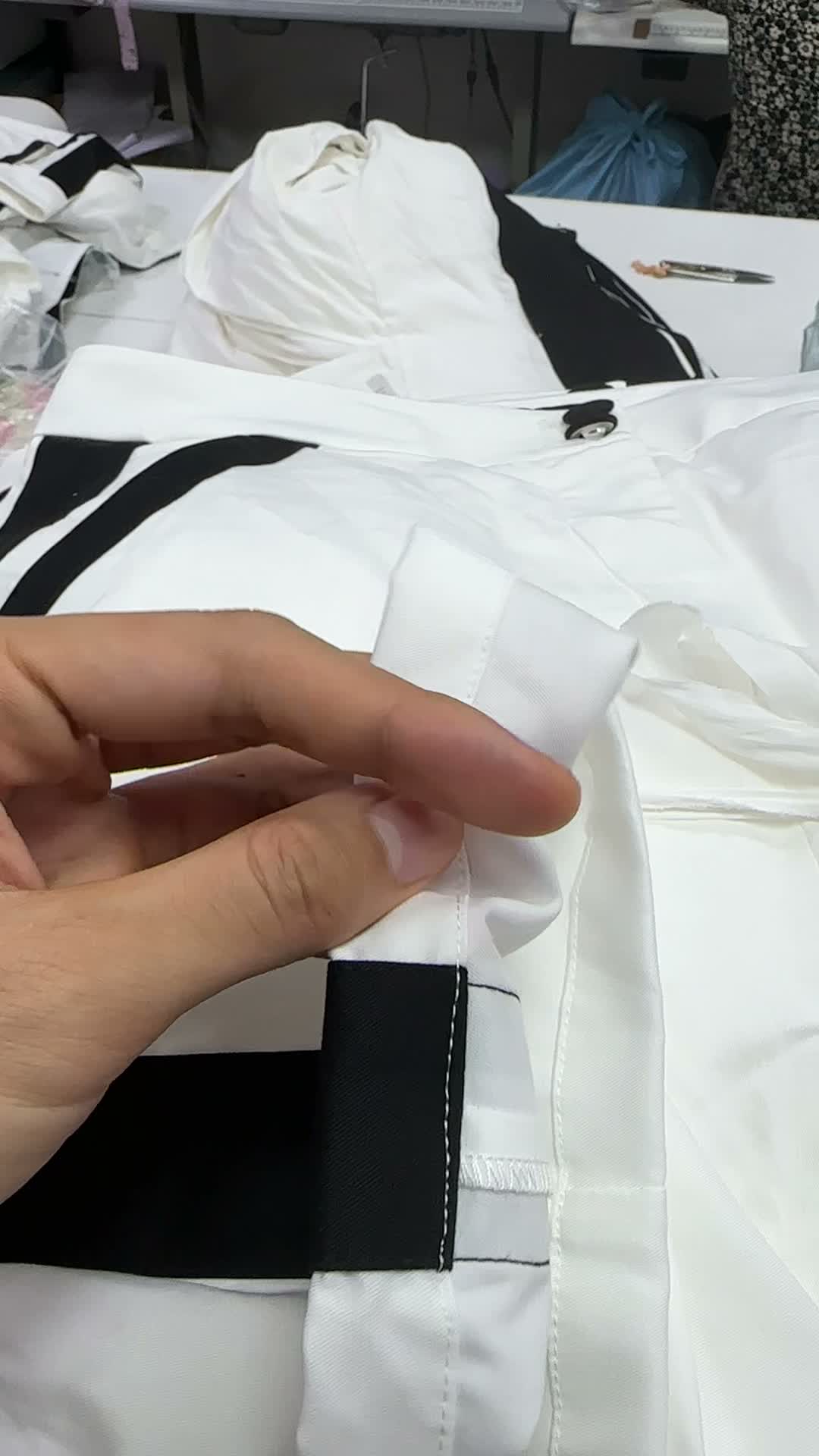
Most garment manufacturer search results are trading agents with a desk, a phone and somebody else's factory photos. Before you compare a single price, work out which of the four models you are actually emailing: an agent, a CMT workshop, a full-package factory, or a volume mill. The model decides who owns your pattern, who buys the fabric, and who answers when the sample drifts.
For an independent brand ordering 30 to 150 pieces with real design input, a full-package factory with its own sewing floor is usually the right fit. It is the only model where one party owns pattern, fabric, trims and quality control from the first sketch to the sealed carton.
The four models hiding behind the phrase garment manufacturer
A trading agent owns nothing. It forwards your files to a factory it may never have visited, adds 15 to 30 percent, and steps out of the way when something goes wrong. Some agents are excellent operators; the risk is that you cannot verify which kind you have.
A CMT workshop cuts, makes and trims, and expects you to supply the fabric. You hold the mill minimums, the dye-lot risk and the shipping, control is high, but so is the workload, which suits brands that already buy cloth.
Read the CMT quote carefully, because labour is only the visible line. A lined silk blouse might read USD 12 to 30 a piece for sewing alone, with the fabric bill separate and yours. If the mill minimum is 600 metres and your capsule uses 120, you now own five seasons of cloth, planned, that is an asset; discovered late, it is a warehouse bill.
A full-package factory sources fabric and trims, grades and samples, and runs the sewing on its own floor. One quote, one owner, one inspection standard, this is the model most of our clients work with, and the one built for a 30 to 150-piece order.
A volume mill lives at 300 to 1,000 pieces and up. The unit price is low and the minimum is the catch: 40 pieces is not a production run to a floor that ships 100,000 pieces a month.
What changes when the model is wrong
Think full package and discover CMT, and the fabric bill lands on you, including the 600 to 1,500-metre minimums we describe in our small MOQ production guide. Think agent and find a forwarding desk, and your factory can substitute cloth or miss a season with nobody accountable.
The quiet cost is quality control. A volume mill defaults to AQL 2.5 because it cannot afford to slow the line, and the difference matters most on decorated work, that is why our AQL guide exists.
We have rebuilt projects where the model was wrong twice over: an agent who routed the sewing to a third-country mill, and a CMT arrangement where the client-supplied fabric arrived a different shade. Each rebuild started by naming who owned what, then fixing the process around it.
How a small brand should choose
If you already buy fabric, own the colour story and know the mill minimums, CMT can save money. If you are designing from a sketch and need one accountable partner, choose full package, you trade a little control for a lot of line-of-sight.
Four questions reveal the model in one call. Who owns the patterns? Where is the sample sewn, can we see the floor on video? Who issues the fabric invoice? Who holds the trims? An agent answers all four vaguely; a factory answers with documents.
The deposit checks in our find a manufacturer guide still apply on top: licence, a line-by-line quote, QC on paper, sampling terms and a written calendar.
A worked example: the same 40-piece blazer under two models
Take a lined wool blazer at 40 pieces. Under full package the quote arrives as one page: fabric at a set price per metre with the quantity stated, pattern and grading, two mock-up rounds, trims, sewing, pressing and packing, plus sampling credited at confirmation. You can see the whole cost of the style before you commit.
Under CMT the same blazer looks cheaper at first, sewing only, until you add pattern and grading at USD 300 to 900 per style, a sampling charge with no credit unless you negotiate one, your own fabric purchase against mill minimums, and a freight booking you arrange and insure yourself. Add a 10 to 15 percent buffer for the things that shift, and the two models often land within touching distance.
Neither is universally cheaper. Full package costs more per line but fewer surprises; CMT rewards brands that already run a supply chain. The mistake is comparing the CMT labour line with the full-package total and concluding one factory is greedy.
What we run, and what we tell you straight
We are a full-package clothing manufacturer with our own Guangzhou floor, about 40 people, running since 2016, at 30 to 150 pieces per style in silk, wool and embroidery. When a client genuinely needs CMT because they already hold the fabric, we say so and quote it honestly.
Garment manufacturer types do not decide quality; accountability does. We would rather lose a job to the right model than win it with the wrong one, our process page shows the full sequence, common factory-model questions are answered on the FAQ page, and runs under each model are documented on our case studies page.
Go deeper: finding a clothing manufacturer: 5 checks · cost per garment: lines your quote won't show · AQL 1.0 vs 2.5: what your factory isn't telling you · Case studies: full-package runs
Questions we get about this
Should a small brand start with a CMT or a full-package factory?
Start full package unless you already buy fabric yourself. You get one accountable partner for pattern, cloth, trims and QC, which matters most on a first order. CMT only saves money when you hold the fabric risk and the mill minimums yourself.
How do I check that the factory I emailed owns the floor it shows me?
Ask for a live video walk of the cutting and sewing floor on a working day, and ask who issues the fabric invoice. A factory shows you its own line, its own machines and its own paperwork; an agent cannot. We offer the video walk to any client before a deposit.
Quick Take
Know the model before comparing prices. Agent, CMT, full package and volume mill change who owns your pattern, fabric and quality, the price means nothing until that is clear.
Small design-led orders fit full package best. One accountable partner from sketch to carton beats a 15 to 30 percent agent markup and an invisible factory.
Four questions expose the model. Who owns the patterns, where is the sample sewn, who invoices the fabric, who holds the trims.
About UP Fashion
UP Fashion is a full-package garment manufacturer in Guangzhou, founded in 2016 and run by a team with 20+ years of OEM experience in silk, wool and embroidery. We produce 30 to 150 pieces per style on our own floor, roughly 40 people, and inspect every piece three times. This guide is how we explain factory models to brands before the first email becomes an order.





