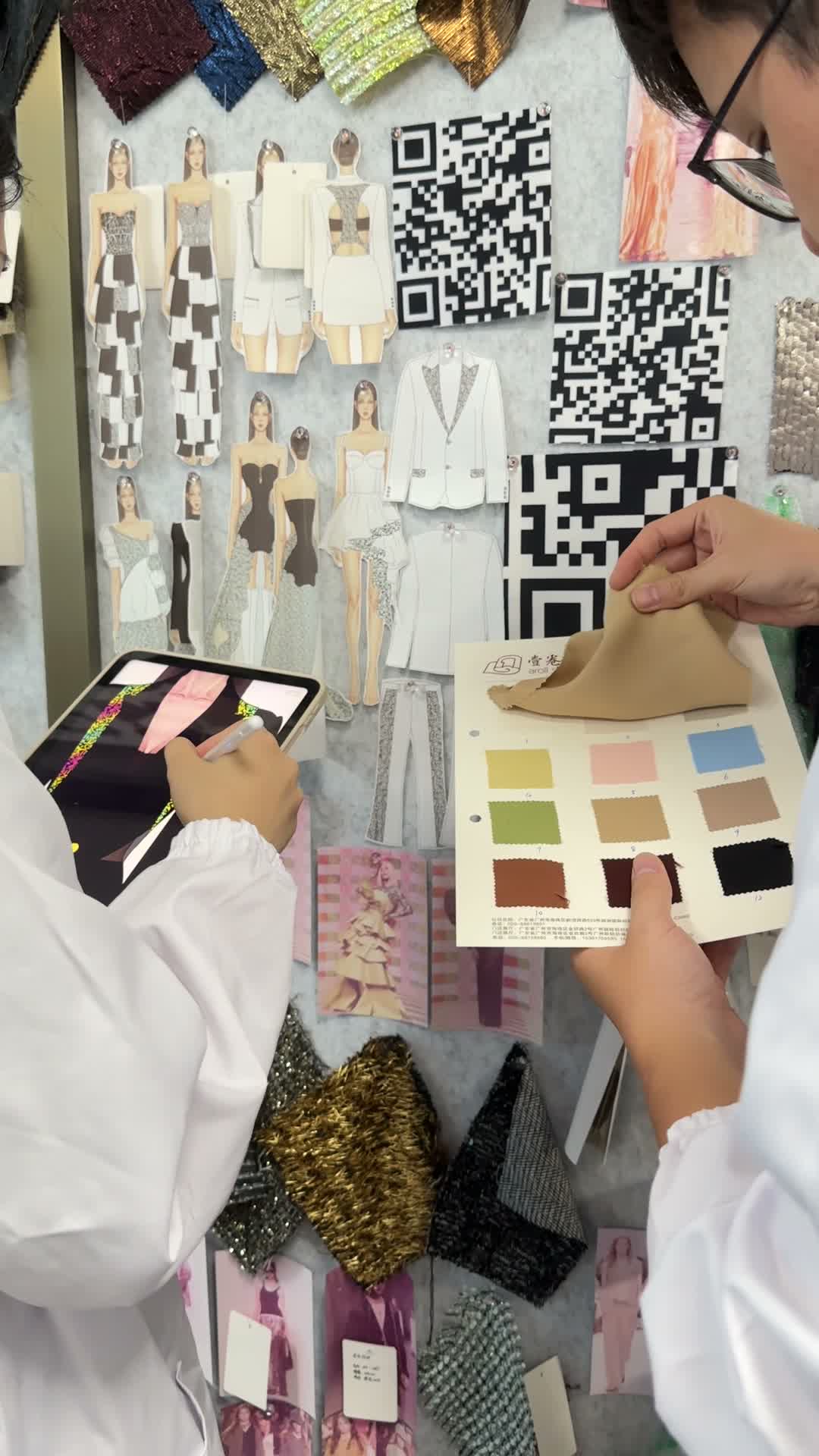
"Cut and sew" is the most misread term in garment sourcing. A cut and sew manufacturer takes your fabric, cuts it to your pattern and sews the garment. Everything upstream, the pattern, the cloth, the zips, the care label, is yours to supply. That split is why the price looks low and your own to-do list looks long.
So what do you actually hand over, and what comes back? You hand over fabric, trims and an approved pattern, and you get back finished garments that are inspected and packed. The boundary between "your side" and "our side" is where most first orders go wrong, because nobody writes that boundary down until someone writes it down.
What the cut and sew service covers on the factory floor
Four stations do the work: spreading and cutting, sewing, finishing, and inspection. Spreading means relaxing the roll for 24 hours, laying it flat in layers and cutting with a marker that decides your fabric yield. Sewing is where operators who each own a set of operations, not a whole garment, assemble it. Finishing is trimming, pressing and attaching labels, and inspection is the part buyers forget to specify.
Fabric yield is the number to watch. A marker that nests a 30-piece lay badly can eat 8 to 12 percent more cloth than a tight one. On 200 metres of viscose at $4.20 a metre, that gap is $67 to $100, which is real money on a first order. We photograph the marker and the cut lay and send both with the production report.
We also keep the cut lay small on purpose. Thirty pieces spread across two lays rather than one lets us stop if the second roll shades differently from the first. Finding that after thirty garments are sewn is a far more expensive conversation than finding it after fifteen.
What you supply on your side of the order
On a typical 30-piece order you supply fabric, lining, interlining, zips, buttons, thread, main label, care label and hangtags. If you are sourcing those yourself, expect two to four weeks of lead time and a minimum order at every supplier. Trim suppliers rarely sell twelve zips, so you buy fifty and shelve the rest.
If that sounds like a second job, it is. Our clients usually keep the fabric decision and let us buy trims against their label. We quote trims as a separate line so the cost is visible, and we ship the leftover labels with the order instead of keeping them.
We get things wrong too. On a 40-piece linen run last year our marker was nested for the wrong fabric width, and we ate the extra 11 metres rather than pass the cost on. We showed the client the corrected marker with the next production report, because a factory that hides its mistakes makes you audit everything afterwards.
CMT, cut and sew and full package: what actually changes
Full package means the factory sources fabric and trims, develops the pattern, makes the samples and delivers a finished product. In the cut and sew model you bring the cloth and the specification while the factory brings the machines and the hands. CMT is the same idea under a different name, cut, make and trim, and "trim" there means the small components, not the finishing work.
A first collection usually starts here if you already have fabric relationships, and full package if you do not. The cost difference is not the sewing. It is who carries the risk of a fabric that arrives late, wrong or short, and our guide to CMT and full package models walks through how to choose between them.
How to brief a factory without a tech pack
You do not need a formal tech pack to start the conversation. You need a reference garment or clear photos, a fabric with a name and a weight, a size you can wear, and the measurements that matter to you. We build the digital pattern, the size grading and the spec sheet from those four things.
What we cannot work from is a mood board and a hope. Send the reference and we will tell you within 48 hours whether the shape is achievable in your fabric at your quantity. If it is not, we say so before sampling rather than after.
Grading is worth agreeing on early. If your sizes run XS to XL, we need to know whether you want the same silhouette scaled up or a shape adjusted for a fuller frame. The second option costs a little more in pattern time and saves a lot of returns.
Three questions to ask before you send fabric to any factory
Ask what the marker yield was on the last similar style. Ask who pays for fabric damaged in cutting. Ask what happens to your leftover cloth, labels and zips. A factory that answers all three in writing is one you can hand 200 metres of viscose to without losing sleep.
We answer those three inside the quotation itself, and our FAQ page carries the fuller checklist. To see the sequence end to end, our production process page runs from tech pack to delivery, and the case studies page shows delivered orders at this scale.
If you already know you want the service and not the sourcing, our cut and sew program sets out what we take on from 30 pieces per style. One note on scope: we do not hand-bead, and we do not run wool coats or knitwear. Saying that on the first call saves us both a month, and our Fashion Pains Solver, in training and coming online soon, exists to name that kind of mismatch before anyone pays for samples.
Go deeper: CMT or full package for small brands · how to find a manufacturer: 5 checks before the deposit · what a tech pack must contain
Questions we get about this
Does cut and sew include the fabric?
No. Cut and sew is the cutting and sewing only, you supply the fabric, lining, trims and labels, and we supply the pattern work, the marker, the machines, the operators and the inspection. If you would rather we bought the cloth and the trims, that is a full package order instead, and we quote the fabric as its own line so you can see the cost.
What is the minimum for a cut and sew order?
Thirty pieces per style per colour. Below 50 pieces we add a per-piece premium because pattern, grading, mock-ups and line setup cost the same at 30 as at 500. We print that premium as its own line rather than averaging it into the unit price.
Quick Take
The service covers cutting and sewing only. You bring fabric, trims and a pattern. The factory brings machines, operators, finishing and inspection.
The hidden cost is your own time. Sourcing trims for 30 pieces means buying 50 and storing the rest, we quote trims separately so the number is visible.
Ask three questions before sending cloth. Last marker yield, who pays for cutting damage, and what happens to your leftovers.
About UP Fashion
UP Fashion is a Guangzhou garment manufacturer founded in 2016, run by a team with 20+ years of OEM experience in silk, wool and embroidery. We run small MOQ production from 30 pieces per style, quote every order line by line, inspect each garment three times and publish the honest maths behind cut and sew pricing, including the marker we nested wrong. This guide is how we explain the split of work before a brand sends us its first roll of fabric.





