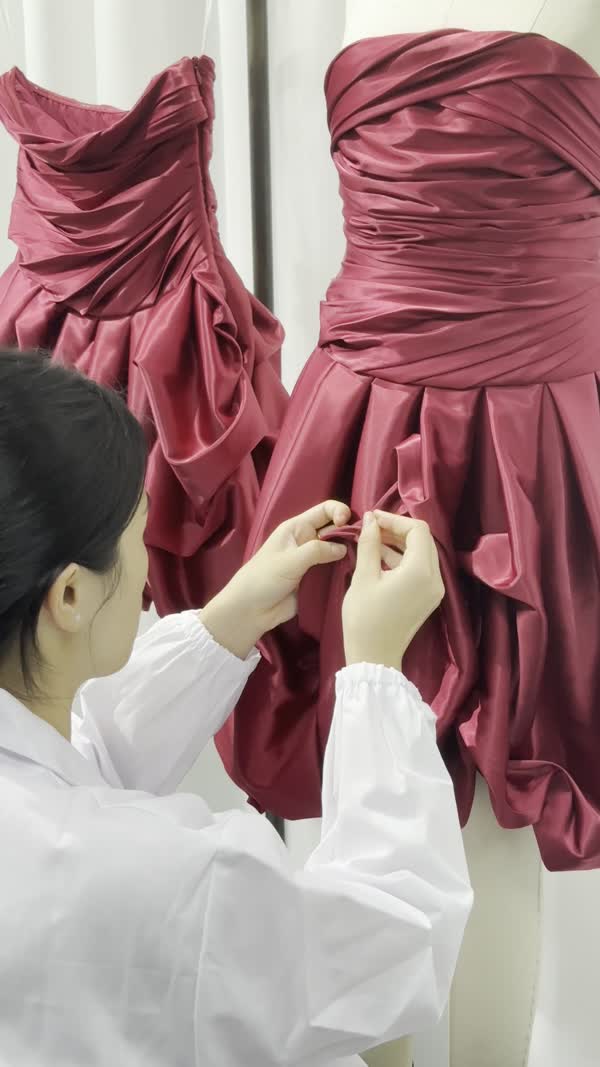
A high end clothing manufacturer keeps your approved sample after the order ships, and most brands never ask why. That one garment is the only thing that can settle a dispute about hem length, shoulder width or colour, because it is the version both sides agreed to. Without it, a bulk argument becomes two people comparing memories.
So what should a factory keep, and for how long? We hold seven items per style for two years, and we can tell you what goes wrong when one of them is missing. Ask any factory on your shortlist for its retention period and where the archive physically sits.
What we keep in the sample archive for each style
The centre of the archive is the signed approved sample, dated and photographed on the day it was approved. Everything else exists to explain it.
Next is the spec sheet with per-point tolerances: half a centimetre at the five key points, one centimetre elsewhere, and three millimetres on symmetry. Then the trim card, holding the actual zip, buttons, labels and thread tex that went into the approved piece.
Two fabric records follow. One is the fabric card with the dye lot number and a shade band cut from the roll. The other is the approved lab dips for every colour in the style.
The last two are the fit notes from the mock-up rounds and the marker record. Fit notes say what changed and why, which matters when a new pattern maker picks the style up a year later.
Storage is the unglamorous part of all this. Bins are labelled by style and season, the room is kept dry and out of direct sun, and the fabric cards live in a dark drawer because a swatch pinned to a wall fades inside a year. A faded reference card is worse than no card, because it argues for the wrong colour.
Pre-production, sealed and salesman samples are not the same thing
A pre-production sample is the last garment made before bulk, and it is the one that gets approved. The sealed sample is the signed copy of that pre-production piece, and it is what the archive holds.
A salesman sample is for selling and is not a production reference. Brands occasionally send one to a factory and ask for that fit, which is how a reorder starts drifting before it begins.
Ask which of the three you are looking at. It takes one question and prevents most of the confusion around approvals.
Why the approved sample beats a spec sheet in a dispute
A spec sheet gives you numbers. The approved sample gives you the version those numbers were measured on. When a hem is questioned, both sides measure the same garment instead of two different ones.
We photograph the approved sample with a tape measure at each of the five key points, and the PDF goes to the brand. A brand in New York can then check a shipment against the approved version without booking a flight.
Our Fashion Pains Solver, still in training, is being built for this exact step. The plan is that a brand uploads its five-point measurements and a photo, and gets a gap report against the approved sample before bulk ships.
The same file settles a colour question. The fabric card and the lab dip are the reference, and a photograph under a daylight lamp beats a description over email.
What it costs to skip all of this is easy to price. A third mock-up round runs $80 to $160 and five to ten working days. If the difference cannot be resolved by comparing samples, the remedy is a remake, and on 30 pieces at a five per cent rate that is roughly $40 in direct cost plus another week of schedule.
The 2019 run with no agreed hem tolerance
In 2019 we shipped a 30-piece crepe dress run with no written hem tolerance in the approval email. The brand measured the bulk hems 1.5 centimetres shorter than the sample they had approved.
We had measured to the same number, from a different starting point. Both readings were defensible, because nothing had been agreed about where the hem was measured from.
With no baseline, we settled it as goodwill: a credit and a re-hem at our own cost. Every approval email since then carries the five-point measurement table, and the brand signs the table rather than the sample alone.
What a reorder looks like when the archive exists
A reorder from a live archive starts from the approved garment and the paid-for pattern. There is no second pattern fee, no grading fee and no mock-up round, which is where most of the roughly 18 per cent saving on a second run comes from.
Without the archive, six months later the new sample drifts three to five millimetres and nobody can prove which version is right. That drift is usually invisible until the second run sits next to the first in a shop.
We ship a brand copy of the approved sample with the bulk and keep the archive copy here. Two copies, one set of numbers, and no argument about which one is the reference.
Four questions to ask any factory about samples
Ask whether the approved sample is kept, and for how long. Ask who signs off, and whether it happens in writing.
Ask whether the factory will photograph the five measurement points with a tape measure. Ask what happens when a bulk piece measures outside the tolerance, and who pays for the remake.
Ask for the retention period in writing on the order confirmation as well. A verbal promise to keep a sample is worth nothing once the person who made it has moved on.
A factory that cannot answer all four is not being careless. It simply has no archive, and every future order will be negotiated from scratch. Our high end production page lists the standards we hold, the case studies page shows completed runs, the FAQ page covers sampling questions, and the production process page shows where the sealed sample gets signed.
Go deeper: why a mock-up fabric can lie to you · the eight production standards we hold · who owns your pattern and your artwork
Questions we get about this
Do I get my approved sample back?
Yes. We keep one archive copy and ship a brand copy with the bulk, so both sides hold the same reference garment.
How long should a factory keep samples?
Two years is our standard, longer when a reorder is expected. Ask the retention period before the first order, because a sample discarded after shipment is worth nothing.
Quick Take
Seven items per style, two years. Signed sample, spec sheet, trim card, fabric card, lab dips, fit notes, marker record.
A dispute is settled by a garment, not a memory. Photograph the five points with a tape measure on approval day.
A live archive is worth about 18 per cent on a reorder. No second pattern fee, no grading fee, no mock-up round.
About UP Fashion
UP Fashion is a Guangzhou garment manufacturer founded in 2016, run by a team with 20+ years of OEM experience in silk, viscose and embroidery. We quote from 30 pieces, show the rate we used, and inspect three times before shipping.





