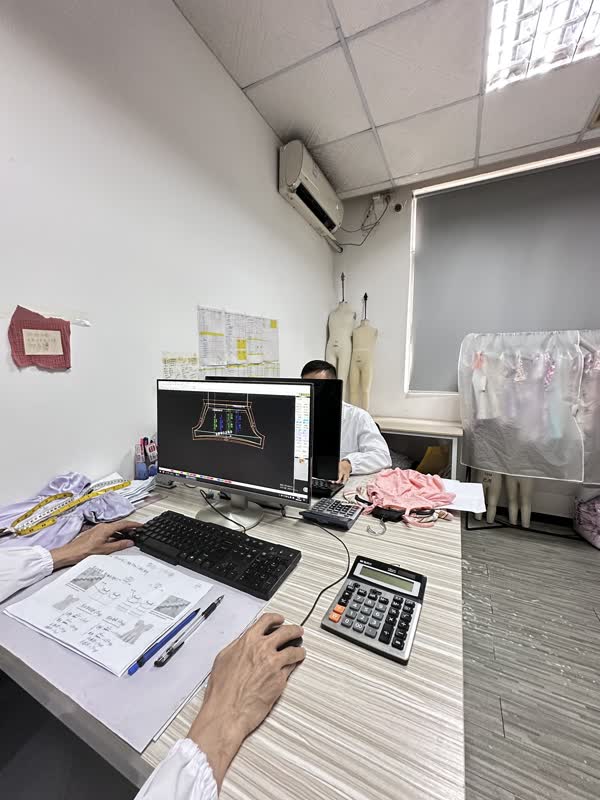
A blazer and a dress can share the same MOQ, the same factory and a similar fabric bill, and the blazer will still quote 30 to 60 percent higher. That gap is not a markup; it is construction. Tailoring asks a sewing floor to do work a dress never needs, and the difference shows up in almost every line of the cost, pattern, cutting, sewing minutes and pressing.
Brands ask us this every week when a capsule contains both. The short answer: a simple dress is cut from six to ten pattern pieces, a tailored blazer from twenty-five to thirty-five, and every extra piece carries sewing, pressing and inspection time that a 30-piece run cannot spread thin. Here is where the money actually goes.
Pattern pieces and cutting: why the blazer starts behind
A sheath dress can be six to ten pattern pieces; a structured blazer with a two-piece sleeve, an under-collar and welt pockets runs twenty-five to thirty-five. Each piece must be cut, matched, sewn and pressed, and at 30 pieces that work lands on a short run, which pushes the per-piece cost up before a single seam is sewn.
Cutting tells the same story. A blazer consumes more cloth per garment than a dress of the same length because the pieces do not nest as tightly, and the marker plan has to respect the nap or the check on a matched fabric. Fabric utilisation on tailored wovens runs several points lower than on dress silks, and that difference is paid in metres, not pennies.
Interlining, canvas and fusing: the hidden cost of structure
A dress hangs; a blazer stands. To make it stand, the front needs structure, fusible interlining at minimum, and for a better garment a floating canvas at the chest and lapels. Fusing every panel is time on the press; sewing in a canvas adds hand steps that a dress never carries.
Cheap tailoring skips this and the garment shows it: the lapel rolls flat, the chest wrinkles and the shoulder line sags after two wears. When we quote a blazer honestly, structure is a named line, and it is usually the difference between a USD 95 blazer and a USD 135 one on the same wool.
Sleeve setting and collar work: where the sewing minutes go
Setting a sleeve into a tailored armhole is one of the slowest operations in any garment. The cap has to be eased by hand so it rolls over the shoulder without puckering, and the sleeve head needs a pad or a hand-felled finish to hold its shape. A dress sleeve, a simple set-in or a dropped shoulder, is minutes of work by comparison.
The collar is the second slow spot. A notched lapel requires the collar and the lapel to meet at a point that stays sharp after pressing, which means under-collar work, pad-stitching in a canvassed garment, and a facing that is felled by hand or matched invisibly. Our luxury craft guide covers why this step decides whether a blazer looks bespoke or borrowed.
Lining, pockets and pressing: the finishing lines that add up
A fully lined blazer carries more lining than a lined dress: the body, both sleeves to the wrist, and the vent if there is one. Add a jetted or welt chest pocket, two front pockets and an inside pocket, and the trims and the labour multiply. Dresses rarely carry a single pocket, and an unlined dress carries no lining at all.
Pressing is the line brands never see. Tailoring is pressed in stages, every seam, every dart, the lapel roll, the sleeve head, often twenty or more pressings per garment, against six to ten for a dress. Each pressing is a step on the floor and a risk of shine on wool, which is why our pressing and finishing checklist exists.
What that means at MOQ 30: a worked comparison
Put a silk crepe dress and a wool-blend blazer on the same 30-piece order sheet and the numbers line up like this. The dress, fully lined, lands around USD 55 to 75 ex-works; the blazer, half-canvas and fully lined, lands around USD 95 to 135, roughly 30 to 60 percent higher on fabric of similar cost per metre, because the blazer uses more cloth, more interlining and two to three times the sewing minutes.
None of that changes with the MOQ. At 30 pieces both garments carry the same pattern and grading spread; the blazer simply starts with more minutes in it. That is why comparing the two on price alone misleads, the honest comparison is against other tailored garments from the same floor.
How small brands keep blazers affordable without cheapening them
Four switches save the most while the tailoring stays honest: a half-canvas front instead of a full canvas, a cupro or viscose lining instead of silk, a good horn-look button, and restrained extras. Skip the second inside pocket and the bespoke label, those are details nobody misses.
Run a blazer and its matching trouser together and the savings compound, because both share the same cloth order and one cutting session; suit-set brands can also mix jacket and trouser sizes within the run, which we cover in our fit grading guide. Past tailored runs at MOQ 30 are documented on our case studies page, the sampling sequence is on our production process page, and the questions buyers ask before the first blazer order are on our FAQ page, including whether a low MOQ really fits tailoring, which our low MOQ landing page answers in full.
Go deeper: cost per garment: the lines your quote won't show · what a luxury clothing manufacturer does differently · mock-up rounds: why yours keep coming back wrong · what 30 pieces can and can't do
Questions we get about this
Why is my blazer quote so much higher than my dress quote from the same factory?
Because the blazer carries twenty-five to thirty-five pattern pieces, a structured front, a set sleeve with hand easing, a full lining and twenty or more pressing stages, work a dress never needs. At 30 pieces that extra time cannot be spread thin, so expect a tailored blazer to quote 30 to 60 percent above a dress of similar fabric cost.
Can a blazer at MOQ 30 still look properly tailored?
Yes, if the structure decisions are made up front. Half-canvas, a shaped sleeve head and a full lining keep the silhouette honest, while the savings come from lining choice and trim limits, not from flattening the lapel. Seal those choices in the mock-up on the real wool and the bulk will hold them.
Quick Take
Construction, not markup, drives the gap. A tailored blazer carries 25 to 35 pattern pieces and two to three times the sewing minutes of a dress, and a 30-piece run cannot spread that thin.
Expect 30 to 60 percent more than a dress on similar fabric. Roughly USD 95 to 135 ex-works for a half-canvas wool-blend blazer at MOQ 30, against USD 55 to 75 for a lined silk crepe dress.
Four switches protect the budget without cheapening the look. Half-canvas, cupro lining, restrained trims and fewer hidden extras.
About UP Fashion
UP Fashion is a Guangzhou garment manufacturer founded in 2016, run by a team with 20+ years of OEM experience in silk, wool and embroidery. We produce 30 to 150 pieces per style on our own floor, inspect every piece three times, and hold colour to Delta E under 1.0. Tailored blazers, suit sets and dresses are our daily work, this guide is how we explain the price difference to brands.





