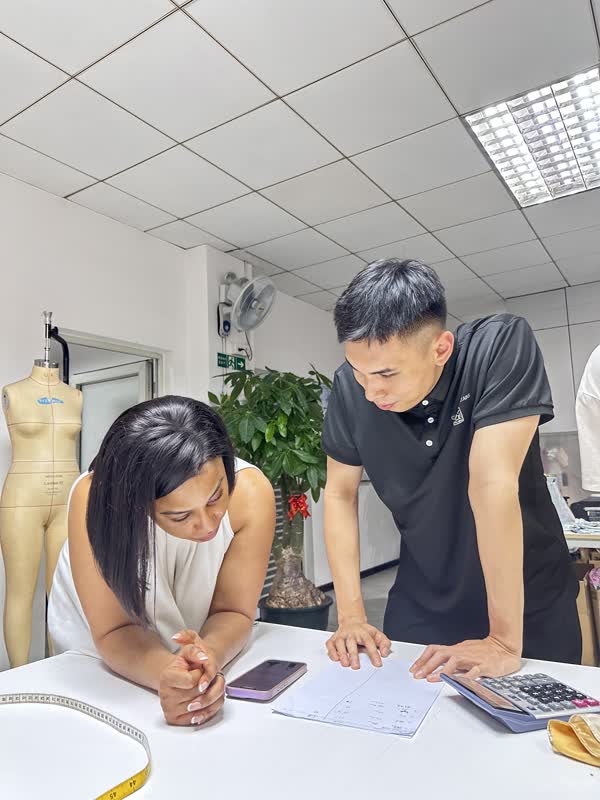
Three rounds in and the fit still isn't right. Everyone's frustrated, the calendar's shot, and nobody can say exactly what went wrong.
We've been on both sides of this. Here's where it usually breaks.
1. The fit block was never settled
This is the big one. A fit block is your base pattern, the sloper everything else is built from. If it isn't locked, every style inherits its problems, and each round is compensating for a foundation issue instead of refining a design.
Signs your block isn't settled: the same fit complaint appears across unrelated styles. Shoulders too narrow on a dress, a blazer, and a coat. That's not three problems. That's one block problem showing up three times.
Fix the block first. It feels like it's slowing you down. It's the opposite.
2. Fit comments arrive as screenshots
"Slightly tight here" with an arrow drawn on a phone photo. Then a separate email about the hem. Then a call about the sleeve.
By round three nobody has the full list in one place, and two of the comments contradict each other. One round says take in the waist; the next says the waist is fine but the hip needs room. Both get applied. Now it's worse.
Put every comment on one numbered sheet, per round, with measurements attached. "Waist -1cm" is actionable. "Feels a bit tight" is not.
3. Sign-off happens on the wrong sample
The single most expensive mistake in sampling: approving on a single-size mock-up in a substitute fabric.
Substitute fabric behaves differently. It drapes differently, it shrinks differently, and it hides or exaggerates fit issues that the real fabric will reveal. Approve a garment in charmeuse, cut it in crepe, and you've approved something that doesn't exist.
Then there's single-size sign-off. You approved a size 8. Bulk runs 8 through 14. Nobody checked the extremes. See the grading article for how that ends.
What a good round sequence looks like
Two to three mock-ups in similar fabric, refining fit and construction. Progress photos at each stage so you're not guessing. Then one final sample in the correct fabric, with a size set if the run spans more than three sizes.
Mock-ups take 14-21 days. The final sample 28-42 days. Our first-sample approval rate is 98%, not because we're geniuses, but because the process forces the decisions to happen in the right order.
Sealed samples and first-piece checks
Before bulk starts, seal the approved sample. Both sides sign it, both sides keep one. This is your reference if there's a dispute.
Then, when the line starts, pull the first piece off and check it against the sealed sample before running the rest. Most factories skip this. It's the cheapest quality gate in existence, one garment checked instead of four hundred made wrong.
The bit nobody likes hearing
Sometimes the design can't be produced the way it's drawn, at the volume you want, at the price you need. Better to hear that in round two than round five. We say it early, because the alternative is a sample that sort of works and a bulk order that doesn't.
Go deeper: 5 production mistakes: signing off on the wrong sample
Questions we get about this
How many mock-up rounds should a small brand plan for?
Two to three in similar fabric, then one final sample in the correct fabric. Mock-ups take 14-21 days, the final sample 28-42 days.
Why does the same fit problem keep appearing on different styles?
Your fit block isn't settled. Every style built from that base inherits the problem. Fix the block before refining individual designs.
What is a sealed sample and why does it matter?
The approved sample, signed and dated by both sides, kept as the reference for bulk. Without it, disputes about what was approved have no evidence.





