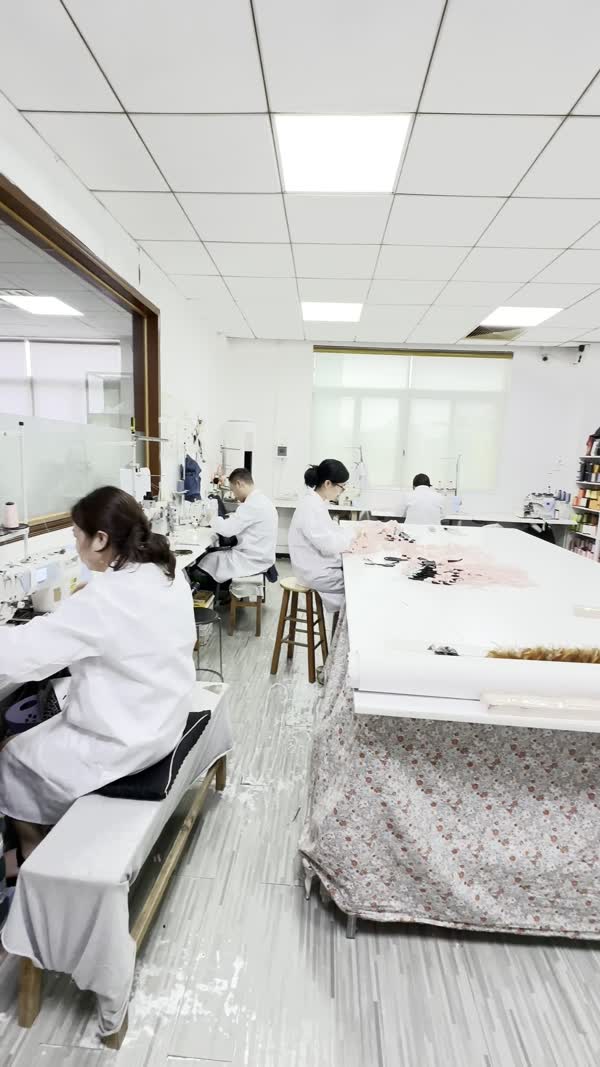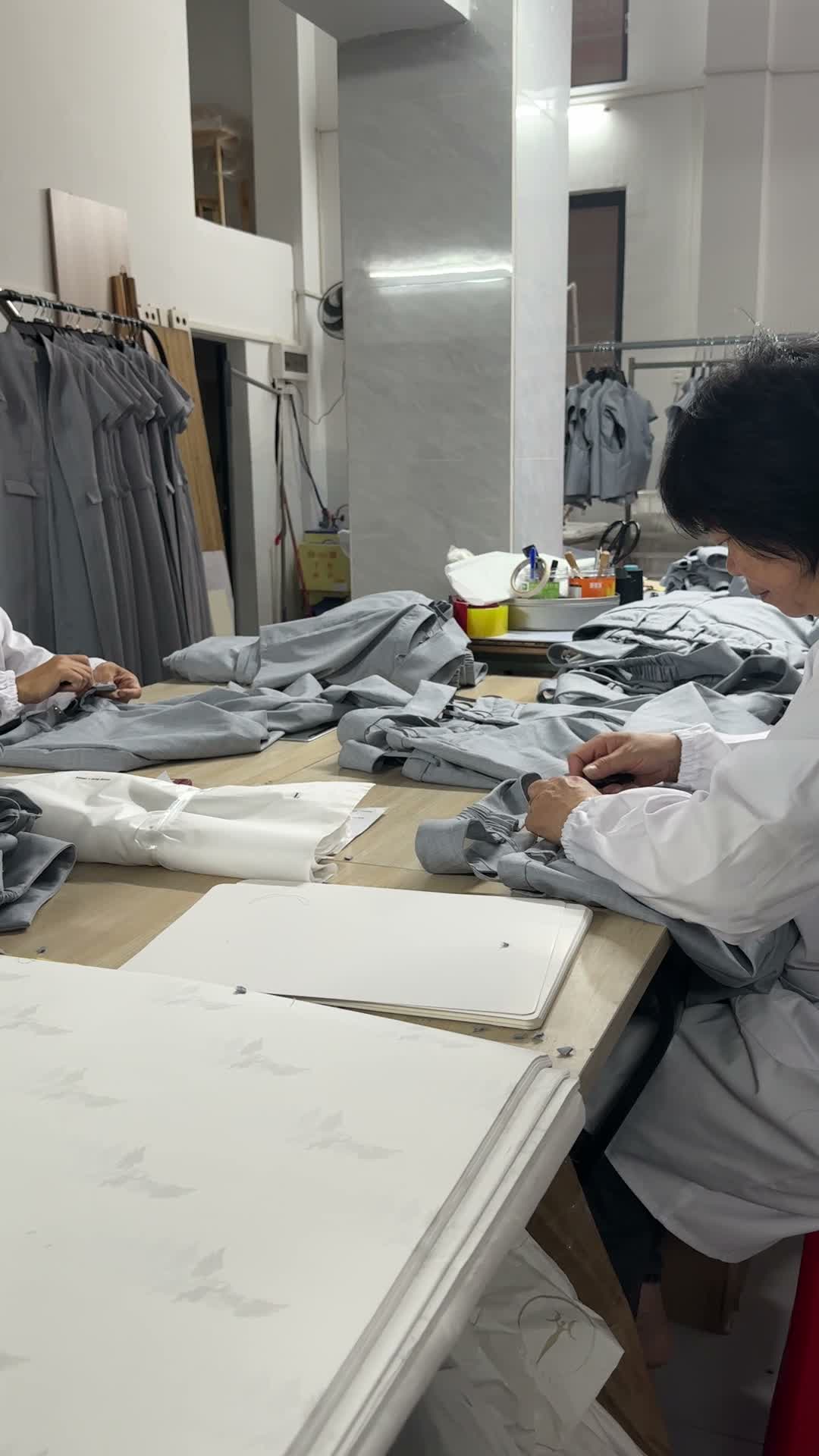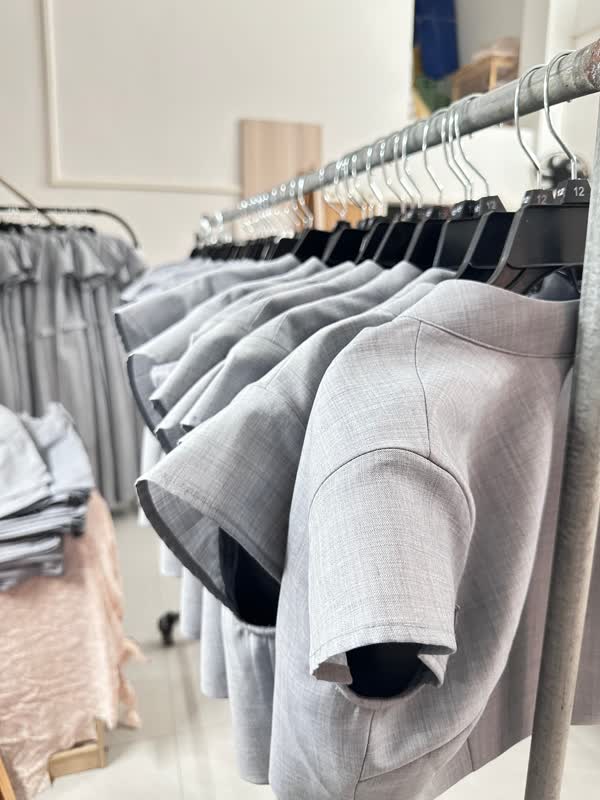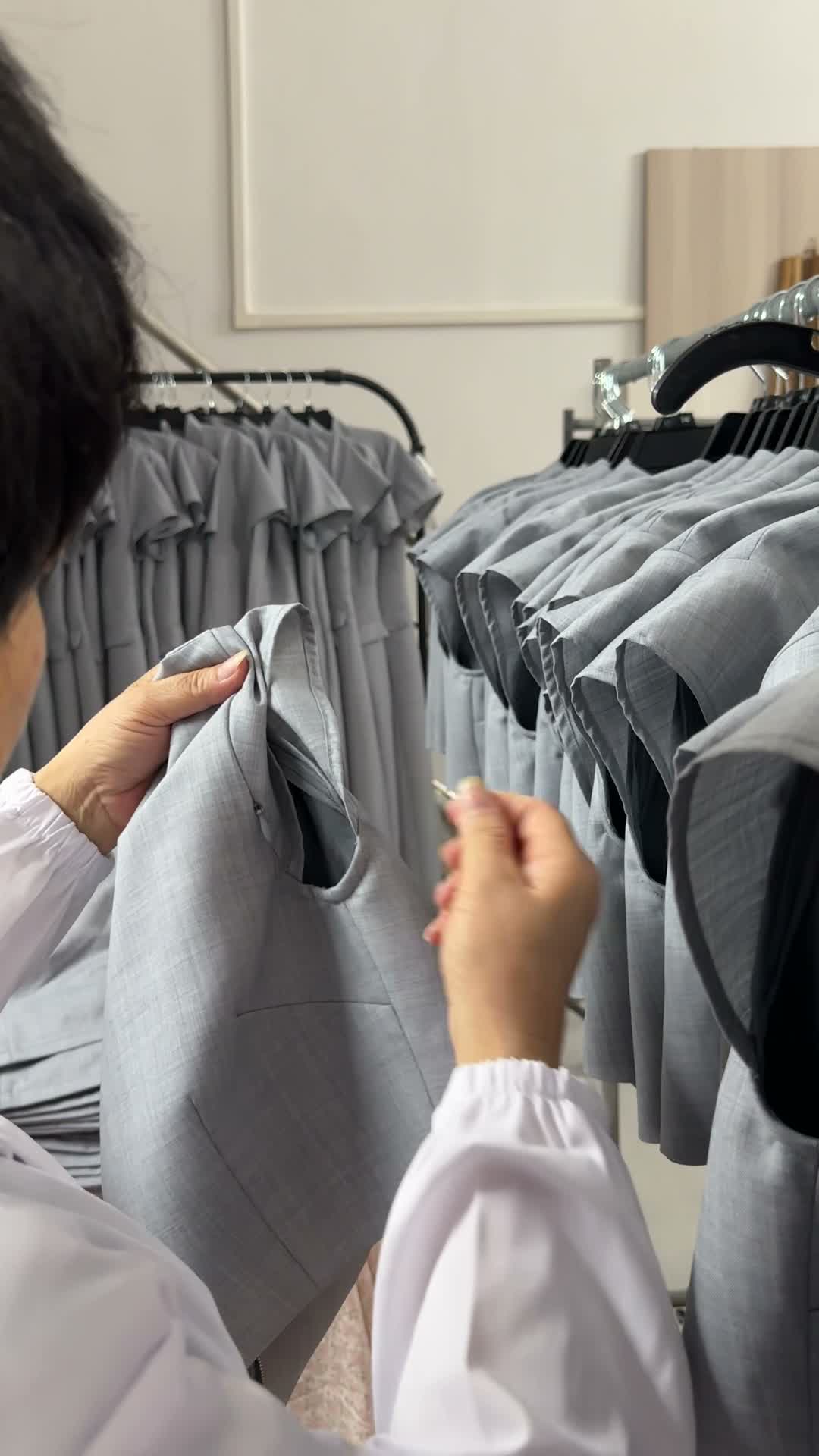
A high end clothing manufacturer is asked for test reports before it is asked for a price. AZO dyes and formaldehyde are the two a European or US buyer names first, and both are decided by the fabric, not by the sewing.
Neither can be fixed after cutting. A basic set costs 300 to 800 RMB per fabric, takes five to seven working days, and covers one fabric in one colour. Not one style, not one collection.
We keep a report for every fabric that enters the building. Here is what each test covers, what it costs, and where a small order usually gets caught.
What AZO and formaldehyde actually test
AZO tests for azo colourants that can break down into aromatic amines on the skin. The EU limit under REACH is 30 mg/kg, and the test is run on the dyed fabric, not the yarn.
Formaldehyde tests for free formaldehyde in resin finishes and in some prints. For garments against the skin the usual limit is 75 mg/kg, and 20 mg/kg for anything a baby wears.
Both are chemistry decisions made at the mill, months before your order arrives. A factory cannot wash either out.
Which test reports a 30-piece order needs
For the EU and UK, the basic set is AZO, formaldehyde and pH. pH matters because a fabric outside 4.0 to 7.5 irritates skin, and it is the cheapest of the three to fix at the mill.
For the US, buyers usually ask for the same three plus a fibre content verification, because the label has to be accurate by law.
Add colourfastness to washing and to rubbing if the fabric is dark or saturated. Navy and black fail rubbing more often than brands expect.
Fabric test report cost and turnaround, per fabric
AZO alone runs 200 to 400 RMB. Formaldehyde alone runs 150 to 300 RMB. The three-test basic set runs 300 to 800 RMB depending on the lab and the fabric.
Turnaround is five to seven working days. Rush is 48 hours at roughly 1.5 times the fee.
On a 30-piece order across three fabrics that is 900 to 2,400 RMB, which is real money but under 2 percent of a typical FOB.
Why the test is per fabric and per colour, not per style
Dye is what carries the risk. A white and a black in the same quality are two different chemistry events, and a lab will treat them as two samples.
So a collection of six styles in four fabrics and five colours can need up to twenty test samples. That is why the report set costs more than the sampling.
If a brand sends one report for a whole range, ask which fabric and which colour it covers. The answer is usually one.
What happens when a fabric fails
A fail on formaldehyde is usually fixable: the mill re-washes and re-tests, and you lose five days.
A fail on AZO is not fixable. The dye has to change, which means a new lab dip, a new approval, and a new lot. On a 30-piece order that is two to three weeks.
This is why we ask for reports before a deposit, not after. A fabric that cannot pass is not a fabric you can plan around.
Why we test at the mill and again on arrival
The mill's report covers the lot they dyed. It does not prove the roll that arrived is the same lot.
So we re-test on arrival for anything above 100 metres, and spot-test below that. Two rolls from one order have arrived from two different lots more than once.
We pay for the second test ourselves. It is 300 to 800 RMB against the cost of a recall.
Where we got it wrong
We once cut a 60-piece run while a formaldehyde report was still pending, because the delivery date was tight and the mill had never failed us.
The report came back at 68 mg/kg. Under the 75 limit, and we were lucky. Under the 20 limit for childrenswear it would have been a total loss.
No roll is cut before the report is in hand now. That rule costs us days and has cost us one client who wanted to skip it.
Who pays when a test fails
If the fabric fails on our choice of mill, we pay for the retest and we carry the delay. If it fails on a fabric you nominated, the retest is yours and so is the lost week.
Either way the cutting room stops. We do not cut into fabric that has no report, because there is no way to un-cut it.
Write that split into the order before the deposit. It is two lines, and it decides who is calm in week five.
What to send with your tech pack
Four things let us quote testing instead of guessing.
- The destination market, because EU, UK and US limits differ.
- Whether the garment touches skin directly, and whether it is childrenswear.
- The fabric and colour list, with the mill's name if you have one.
- Whether your buyer accepts a mill report or wants an independent lab.
Send those and the testing line on your quote is a number, not a range.
What your buyer will ask for next
Digital product passports are moving from pilot to requirement in the EU, and they will carry fabric origin and chemistry records.
We already keep lot cards and test reports per roll for that reason. It is cheaper to keep them than to reconstruct them.
Our production standard is written out on the high end production page. Testing costs and lead times sit in the FAQ, and a silk-viscose run with its report set is on the cases page.
Our A1 assistant is in training and coming online later this year. It will check a fabric's report set against the destination market before we quote.
Go deeper: the five green claims you can actually test · the records a product passport needs from a factory · fibre content, care and Prop 65 on a US label
Questions we get about this
Can I use the mill's own test report?
Often yes, if your buyer accepts it and the report names the same lot you are buying. What a mill report cannot prove is that the roll on the truck is the roll they tested, which is why we re-test above 100 metres.
How much does testing add to a 30-piece order?
300 to 800 RMB per fabric for the basic set of AZO, formaldehyde and pH. Across three fabrics that is 900 to 2,400 RMB, usually under 2 percent of FOB, and it is the cheapest insurance on the quote.
Quick Take
30 mg/kg. The EU limit for azo colourants, tested on dyed fabric not yarn.
75 mg/kg. Free formaldehyde limit for garments against the skin. 20 for childrenswear.
5-7 days. Turnaround on a basic test set. 48 hours at about 1.5 times the fee.
About UP Fashion
UP Fashion is a Guangzhou garment manufacturer founded in 2016, run by a team with 20+ years of OEM experience in silk, viscose and tailoring. We quote from 30 pieces, show the rate we used, and inspect three times before shipping.