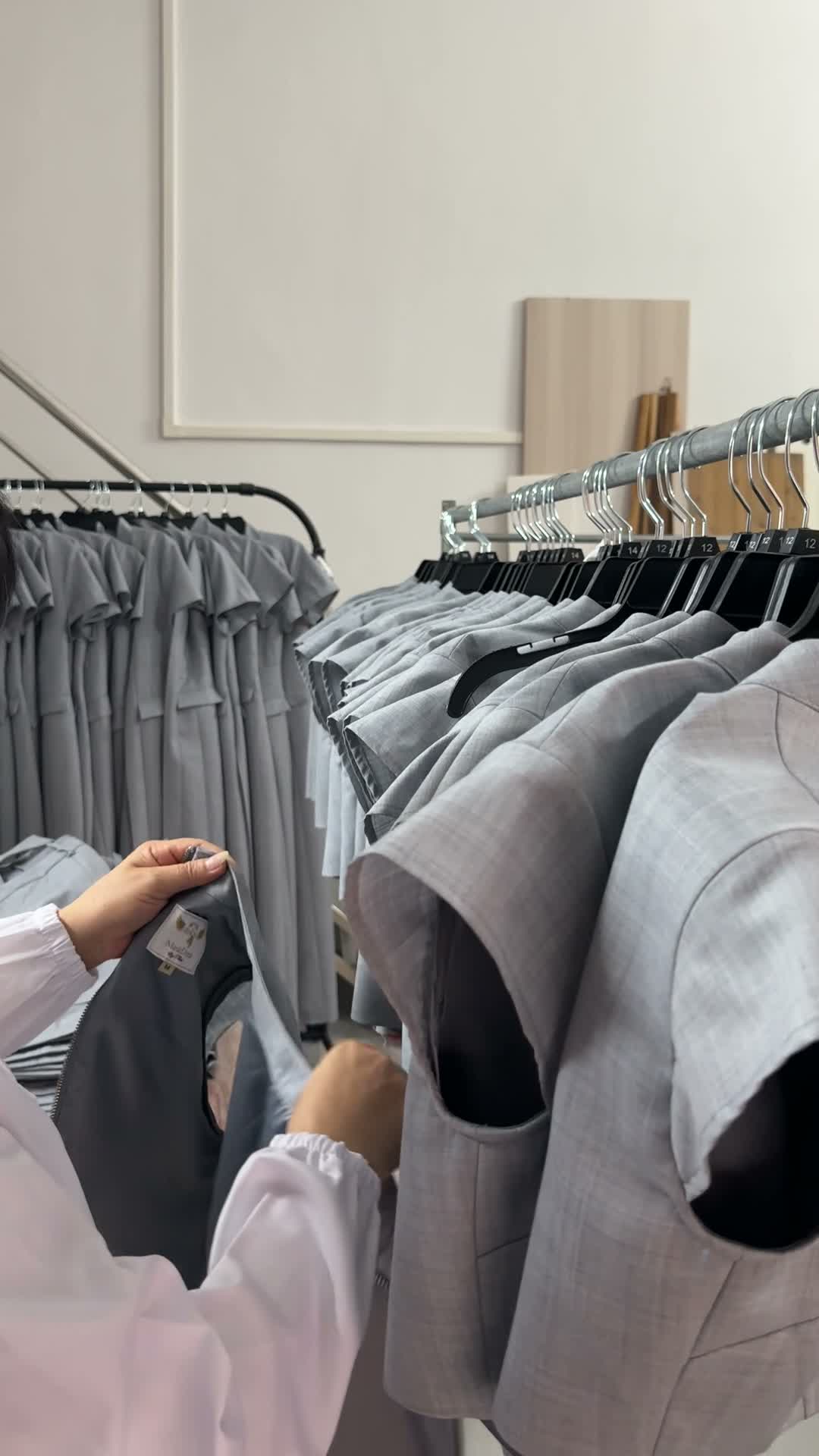
Ninety minutes on a factory floor tells you more than three sample rounds, if you walk the four rooms that matter and ask one question in each. As a high end clothing manufacturer we host these visits most weeks, and by minute twenty we can usually tell whether the brand is looking or touring.
What should you check on a factory visit? Cutting, sewing, pressing and QC, plus five documents: the cut ticket, the needle log, the measurement table, the first-piece board and last week's rejection sheet. Skip the showroom. It is the only room built for you rather than for the work.
A factory visit checklist for small batch orders
Start in cutting. Ask how many plies are on the table and how the marker was made. On 30 pieces you should see a short lay, two to four plies, and a marker wasting under 15 per cent.
Then look at the cut ticket stapled to the bundle. It should carry the style, the size, the quantity, the fabric lot and the cutter's initials. If it carries three of those, the floor is filling in the rest from memory.
Ask what happens to the panels after the knife. Bundled by size, numbered, tied in order. Panels loose in a trolley mean someone will eventually sew a size 10 sleeve onto a size 12 body, and nobody will notice until the fitting.
What the sewing line should look like at 30 pieces
Count the stations. A lined dress runs 12 to 16 operations, a blazer 30 or more. Six machines and a pile of work in progress means the line is squeezing your garment in, not set up for it.
Watch one operator for two minutes. The question is not speed. It is whether the piece is lifted, positioned, sewn and checked without her leaving the machine.
Ask a sewer how many minutes her operation takes. Forty seconds for a side seam on a viscose slip is credible. If she cannot answer, the standard time was never posted and nobody is measuring the line.
Pressing and finishing: where a $400 dress is decided
Look for a vacuum table and a steam generator, not an iron on a folded cloth. Pressing is a separate skill and a separate room in any workshop that takes luxury work seriously.
Ask how a hem is pressed. The answer should mention a press cloth, a temperature in degrees and a time in seconds. Ours is 110°C, eight seconds of steam and six seconds of vacuum, about three minutes per garment.
Then look at the rail. Pieces waiting for QC should be hung, spaced and facing the same way. If they are stacked, they will arrive creased, and you will pay for that in a showroom you cannot attend.
Quality control: five documents to ask for
The needle log, signed by each operator each shift. The measurement table with your tolerance column filled in. The first-piece board, which should still be on the wall from your run.
Then two more: a D65 light box for colour, and last week's rejection sheet. That last one is the only honest document in the building.
Ask what they rejected last week and why. A factory that cannot answer is not inspecting. A factory that says nothing is either very good or not looking, and after 20 years we can tell you which is more likely.
Three things a visit cannot tell you
Whether they will hit a November date, because the sample room and the line run on different calendars. How they behave when something goes wrong, because nothing goes wrong during a visit. And what 300 pieces will cost, which is the number that decides whether this is a test or a business.
You can cover the first two cheaply. Ask for the last three shipment dates and one client who will take a call. Most factories give you both. The ones that will not have already told you something.
The visit where we cleaned the floor
2019. A brand flew in from London and we cleared the production floor that morning, moved the trolleys into the corridor and swept. It looked like a showroom and told them nothing about how we work.
They placed 40 pieces anyway. The run was fine, but the visit had been theatre and we knew it while we were doing it. Since then visits happen on a working day with the line running, and we say at the door that the floor is untidy because it is working.
If you cannot fly to Guangzhou
Ask for a 12-minute walk-through on a phone, one continuous take, no edits. Name the four rooms and ask the camera to stop at the cut ticket and the measurement table. A factory that refuses a continuous take is editing something.
Then book a third-party inspection for the first bulk run, roughly $300 for one man-day. It is not a substitute for a visit. It is a substitute for trusting a video.
What the trip actually costs, and when it pays
A three-day trip from London or New York runs $1,200 to $1,800 with flights and hotel. On a 30-piece first order at $1,300 FOB, that is more than the order.
So the visit pays on the second or third order, or when you are placing four styles at once. Before that, the video and the third-party inspection carry most of the value for a fraction of the money.
Our FAQ answers what buyers ask before a deposit, and the high end production standards page lists the eight things we hold ourselves to. The case studies show the runs behind them.
Go deeper: why best-manufacturer searches fail · six things to verify about a small factory · what a factory asks before it quotes
Questions we get about this
Do I need to visit before placing a first order?
No, and on a 30-piece order the trip often costs more than the order. A continuous video walk-through plus a third-party inspection on the bulk run covers most of the risk for under $400.
Can I visit during production instead of before?
That is the better visit. Mid-run you see the actual garment on the actual line, the WIP count against the plan, and whether the first-piece board is still being used.
Quick Take
Four rooms, five documents. Cutting, sewing, pressing, QC. Skip the showroom.
Ask a sewer her minutes. A number means the line is measured. A shrug means it is not.
$1,500 to fly, $300 to inspect. Visit on the second order, not the first.
About UP Fashion
UP Fashion is a Guangzhou garment manufacturer founded in 2016, run by a team with 20+ years of OEM experience in silk, viscose and embroidery. We quote from 30 pieces, show the rate we used, and inspect three times before shipping.





