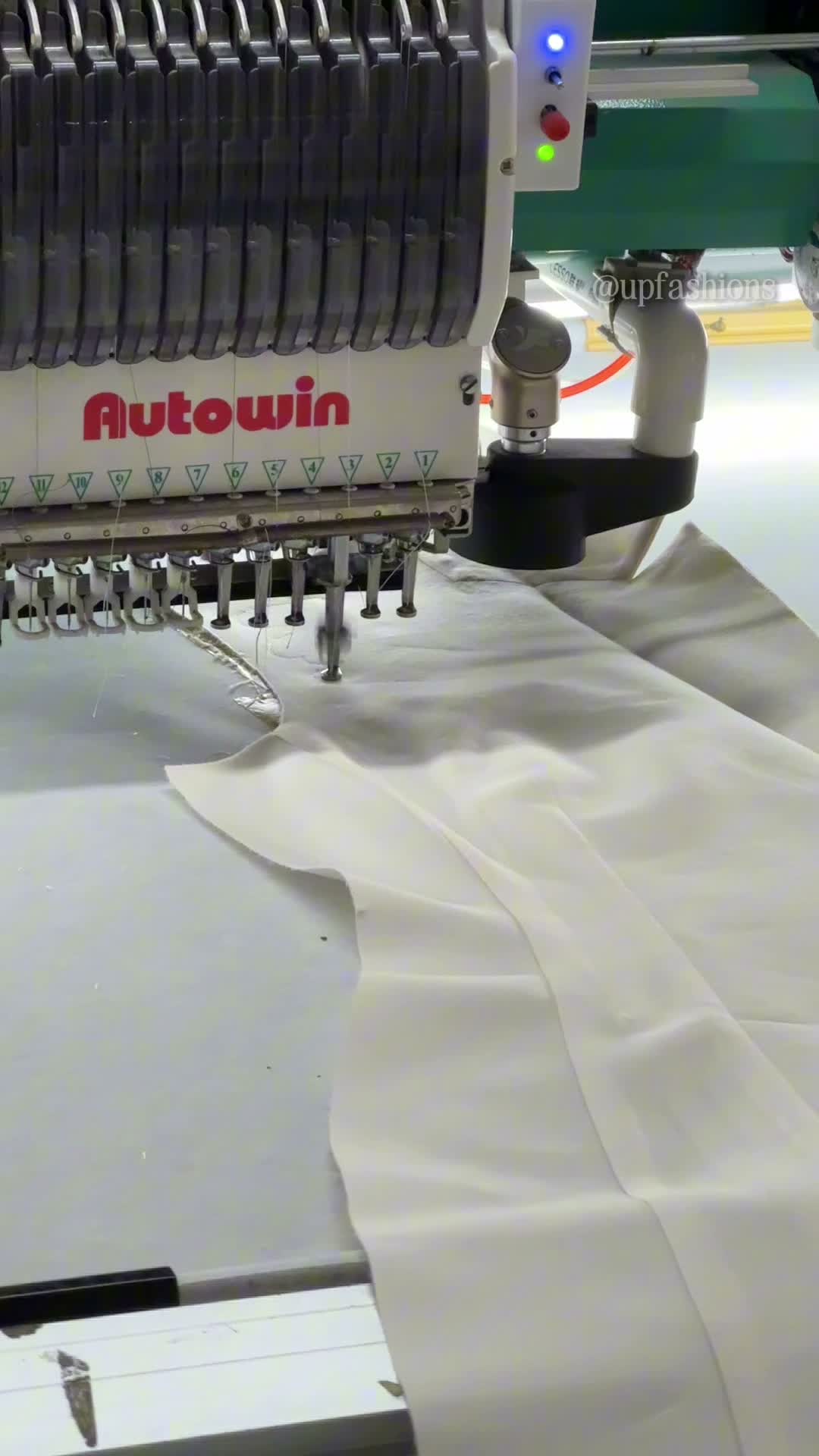
Bubbles in a fused front panel come from one of three things: heat, pressure, or a shrinkage mismatch between the shell and the interfacing. As a high end clothing manufacturer, we test the bond before a structured garment is cut, because a bubble does not show on the fitting table. It shows after two washes, in your customer's hands.
So what actually causes it? The interfacing is a base cloth coated with heat-activated resin dots, and when those dots melt they have to flow into the weave of the shell fabric and set. If the shell then moves differently from the interfacing, whether in a wash or under a steam iron, the two layers separate in small patches. That patch is the bubble.
There is no way to repair a bubble after the garment is made. It has to be prevented at the fusing stage, and that stage happens before a single seam is sewn.
Fusible interfacing shrinkage: the mismatch that starts the bubble
Every fabric moves when it gets wet. Viscose can shrink four to six per cent, linen two to three, polyester under one. A fusible base cloth is usually woven or knitted to be stable, so its figure sits closer to one per cent.
Put a four per cent shell over a one per cent interfacing and the shell contracts while the glue layer does not. The difference has nowhere to go, so it puckers. That is why we bond a test square and wash it before a structured order is cut.
The test takes ten minutes. Bond a ten by ten centimetre square at production settings, wash it at thirty degrees, dry it flat, then look at the corner lift and try to peel the layers apart by hand. If they separate, the pairing is wrong.
Heat, pressure and dwell time: three settings a press operator owns
A fusing press has three dials and all three matter. Polyamide-coated fusibles on viscose and TR suiting generally want around 150 degrees Celsius, three to four bar of pressure, and ten to fifteen seconds of dwell.
Too hot and the resin strikes through to the face of the fabric, which reads as a shiny patch under raking light. Too cool and the dots never fully flow, so the bond is weak from day one and fails on the third wear.
Too little pressure and the fabric lifts before the resin sets. Too much and the weave is flattened, which is visible on a satin or a fine suiting blend. We keep a fusing log per style, so the settings are a record rather than somebody's memory.
One setting that gets forgotten is moisture. Damp shell fabric traps steam under the resin, and trapped steam is the most common cause of a blister that appears three weeks later.
A second press, sometimes called curing, is worth the extra minute. It re-heats the bonded panel without pressure, which lets any trapped moisture escape and lets the resin finish setting. Panels that travel straight from the fusing machine to the sewing line are the ones that come back.
What to ask before a structured jacket is cut
Ask for the interfacing specification in writing: base cloth, resin type, weight in grams, and the recommended fusing temperature. A quote that says fused front tells you nothing about whether the piece survives a season.
Ask whether the interfacing was tested against your shell fabric, not against a standard swatch in a mill catalogue. The two have to be a pair, and the pair has to be washed together.
Ask what happens if the bond fails. We cover a failed bond as a remake, because it is our setting or our pairing, not your design decision.
Fusible or sew-in canvas: the tailoring choice behind the price
On a lined blazer you have two ways to build the front. A fusible is glued in by machine and takes minutes. A floating canvas is attached by hand and takes twenty-five to forty minutes per jacket.
At a Guangzhou minute rate of roughly fifteen to twenty-one US cents, that hand work adds four to eight dollars per jacket. On a thirty-piece run it is one hundred and twenty to two hundred and forty dollars across the order.
A canvas front rolls with the body and recovers from pressing. A fusible is flatter, faster and cheaper. Neither is wrong, but the difference is a decision worth making before sampling rather than after.
The lapel run where twelve fronts had to be re-cut
In 2022 we ran thirty lined blazers for a European label. The shell was a viscose and linen blend. The interfacing was a standard weight we had used many times on TR suiting.
We skipped the washed test square, because we had bonded that interfacing before. We had, but never over that blend ratio. Twelve lapels bubbled at the first steam press, and all twelve fronts had to be re-cut.
Re-cutting cost six working days and about four hundred and eighty US dollars in fabric and time. The fix was a lighter knitted-base interfacing and a fusing temperature about ten degrees lower. That pairing now sits in the style file, and the test square is mandatory on every new blend.
Where interfacing sits in your production schedule
Fusing happens after cutting and before sewing, which means a pairing error is discovered at the worst possible moment. Our high end production page sets out the standards we hold, the case studies page shows finished runs, the FAQ page answers construction questions, and the production process page maps where sampling and approval sit ahead of bulk.
Go deeper: the seven specs that turn quality into a number · the eight production standards we hold · what changes on a blazer run below fifty pieces
Questions we get about this
Why did my jacket front bubble after one wash?
Almost always a shrinkage mismatch between the shell and the interfacing, or steam trapped in the fabric at fusing. Both are caught by a washed test square before cutting.
Is fused interfacing cheaper than a sewn canvas?
Yes, by four to eight dollars a jacket at thirty pieces. It is also flatter and less forgiving in the wash, so the choice depends on how the piece is worn and cleaned.
Quick Take
A bubble is a shrinkage mismatch, not a pressing fault. Bond and wash a test square before cutting.
Fusing runs at about 150 degrees, 3-4 bar, 10-15 seconds. Log the settings per style instead of trusting memory.
Canvas adds $4-8 per jacket at thirty pieces. Decide before sampling, not after the first press.
About UP Fashion
UP Fashion is a Guangzhou garment manufacturer founded in 2016, run by a team with 20+ years of OEM experience in silk, viscose and embroidery. We quote from 30 pieces, show the rate we used, and inspect three times before shipping.





