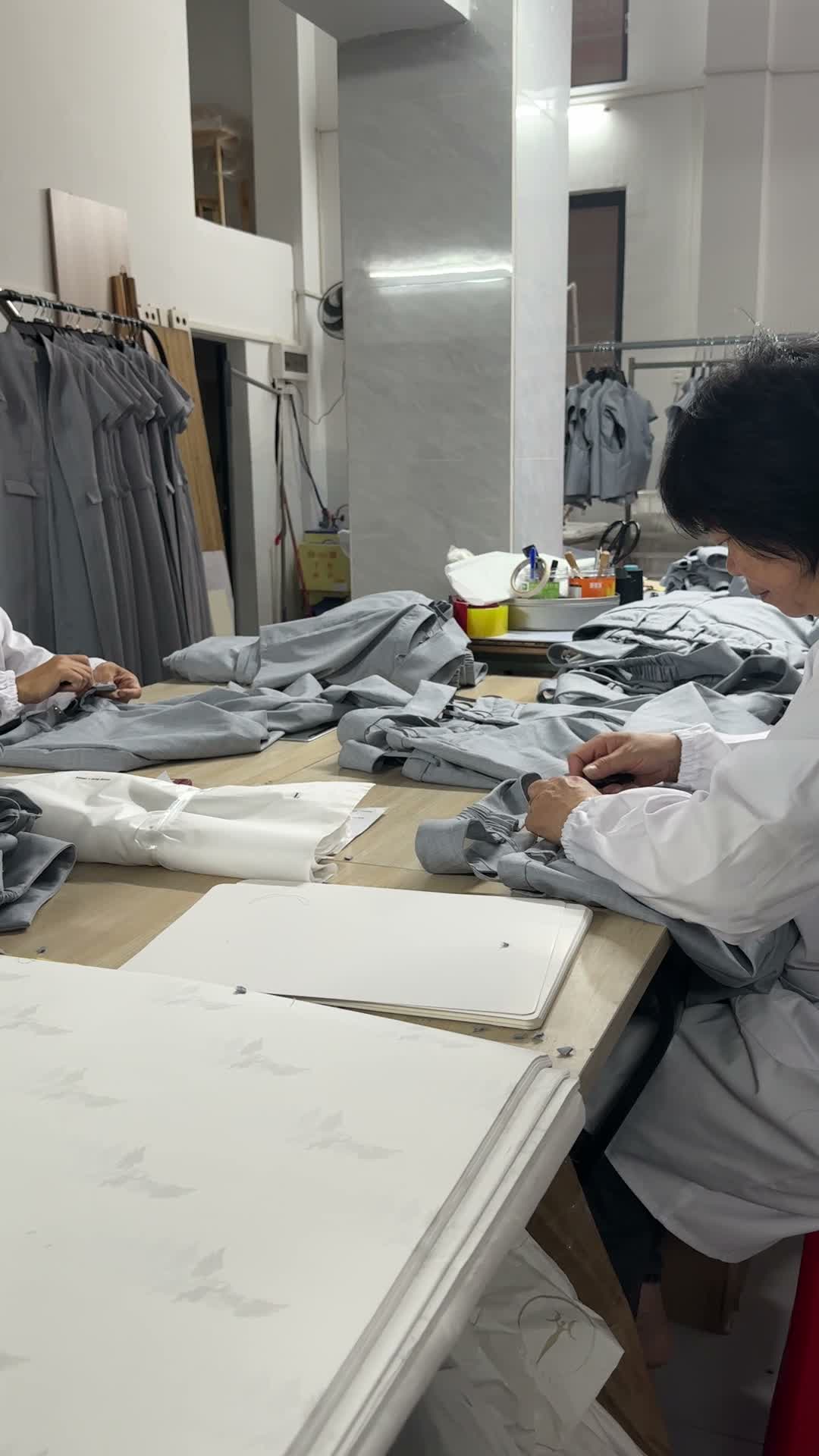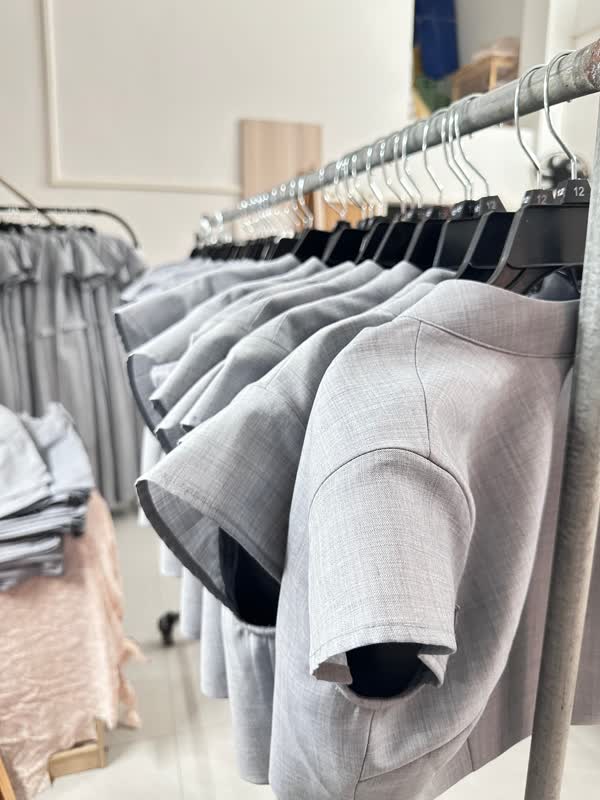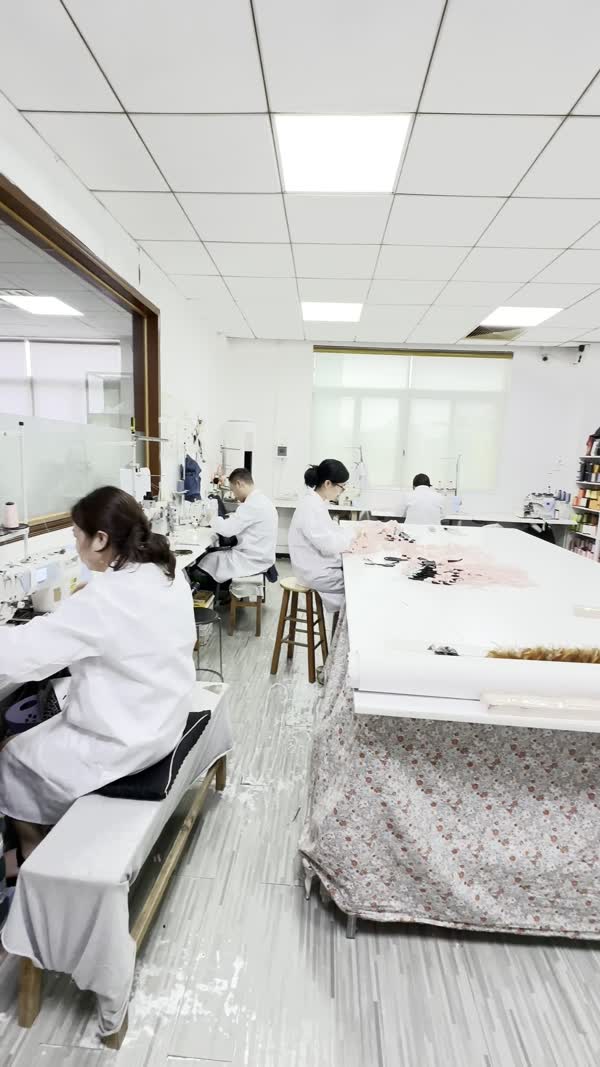
A cut and sew manufacturer is usually asked for a piece rate, and the number is the least useful part of the answer. What a brand needs to know is who will sew the garment, and in which building.
In Guangzhou a 30-piece order can be cut in one place and sewn in three. Sometimes that is normal and fine. Sometimes it is the reason your delivery date moved twice and nobody could explain why.
This is what a piece rate prices, how work leaves a building, and the four signs that it already has.
What a piece rate actually prices, and what it leaves out
A piece rate is money per garment for one operation or for the whole sew. It usually covers labour and machine time, and it usually excludes thread, trims, pressing and inspection.
That is why two factories can quote the same style at $8 and $14 and both be honest. One is pricing sewing. The other is pricing sewing plus the four things a brand assumes are included.
Ask what the rate excludes before you compare it to anything.
Why we quote minutes before we quote money
Every style we quote gets a minute book: cutting, sewing by operation, pressing, trimming, inspection. On a simple viscose dress at 30 pieces that lands between 45 and 60 minutes of sewing.
The rate per minute depends on the line, the operator grade and the month. It is the number that moves, not the minutes.
When a brand asks us to cut 20% off a quote, we show which minutes would have to disappear. Usually the answer is pressing and trimming, which is exactly where the cheap quotes are thin.
The four ways an order leaves a factory
First, a sister workshop. Common, usually disclosed, and the quality depends entirely on whether the same supervisor runs both floors.
Second, a specialist subcontractor. Embroidery, hotfix, pleating, garment dye. Almost unavoidable and rarely a problem, because the work is narrow and easy to inspect.
Third, a piece-rate household or small unit. Cheapest per minute, hardest to inspect, and the most common reason a 30-piece run comes back with uneven seam allowances.
Fourth, a trading company that never had a floor to begin with. The quote is real, the building on the invoice is not.
Sign one: the sample and the bulk do not share a machine
Ask which machine sewed the sample, then ask which will sew the bulk. If the answer changes, ask why.
On a 30-piece run the sample and the bulk should come off the same line, ideally the same operator. Changing machines changes tension, and tension is where a satin or a fine viscose shows first.
Sign two: your delivery date moves in a straight line
Real production dates move in steps, because a factory runs several orders and one slips into another. A date that slides by exactly one week, twice, in the same direction, usually means your order is queuing somewhere else.
We are late sometimes. When we are, we can name the order that pushed ours and the day it cleared. A factory that cannot name the reason is guessing.
Sign three: nobody can tell you the line number
Every bundle in our building carries a line number and an operator code. It is how we trace a defect back to a person and a machine.
If your supplier cannot say which line your order is on, and cannot send a photo of the bundle ticket, the work may still be in-house. It is just not being tracked, which is nearly as bad.
Sign four: the same defect appears on all 30 pieces
Thirty pieces sewn by one line produce small variations: a 2 mm difference in hem depth, a collar that sits slightly differently on piece 12.
Thirty pieces with an identical defect on every unit were not made by thirty people improvising. They were made to one instruction that was wrong, often at a subcontractor working from a photo instead of a spec sheet.
Identical defects are the cheapest thing to spot and the most expensive thing to fix, because the whole run is wrong in the same way.
What outsourcing costs you in quality control, in numbers
We inspect three times: on the cut panels, in line, and before packing. On work that leaves the building, the in-line inspection disappears, because nobody from our floor is standing there.
That leaves two inspections for work we did not see made. In our experience the defect rate on uninspected subcontracted sewing runs two to three times higher than on our own line, and the rework has to happen after the garment is finished.
Rework at that stage costs more than the piece rate saved. It also arrives late, which costs the thing brands actually sell.
Why we keep cutting and sewing in our own building
Cutting and sewing stay here. That is the part of the job where a 1 mm decision changes the fit, and it is the part we are paid to control.
Hotfix and embroidery go to two workshops we have used for years. We name them on the quote, we visit them, and we do not pretend the work happens here.
We also do not take CMT work, where the brand supplies everything and we only sew. That model puts the fabric risk on you and the fit risk on us, with no way to price either.
How to ask the question without insulting anyone
Do not ask "do you outsource". Every factory does, in some form, and the question sounds like an accusation.
Ask instead: which parts of this order happen in your building, and which parts do not? Then ask who does the rest, and whether you can see it.
A good factory answers that in two sentences. A bad one answers with a brochure.
Piece rate for a small run: what to put in the inquiry
Four things get you a rate you can compare instead of a number you have to trust.
- The operations you expect the rate to cover, listed.
- Whether trims, thread and pressing are inside or outside.
- The size run, because grading changes minutes.
- Whether you want the rate for 30 pieces or for a reorder of 100.
Send those and the answer is a rate with a minute book behind it, which you can argue with.
Our own scope at 30 pieces is written out on the cut and sew production page. The deposit and lead-time answers are in the FAQ, and a 30-piece blazer run is documented on the cases page.
Our A1 assistant is still in training and coming online later this year. We are teaching it to compare a quoted rate against our minute book and flag the gap before a brand signs.
Go deeper: what each factory tier actually costs you · what switching factories mid-run really costs · the rework rate nobody puts in a quote
Questions we get about this
Is outsourcing always a red flag?
No. Every factory sends something out, usually embroidery, hotfix, pleating or a specialist wash. The red flag is work leaving without anyone telling you, because that is where the inspection stops and the excuses start.
How do I check whether a piece rate is real?
Ask for the minutes, not the money. A rate with no minutes behind it is a guess. On a simple viscose dress we book 45 to 60 minutes of sewing; if a quote implies 15, the work is going somewhere cheaper than the building you visited.
Quick Take
45-60. Minutes of sewing we book for a simple viscose dress at 30 pieces.
4. Trim suppliers on a typical 30-piece order, and the easiest place to hide a swap.
2. Workshops we send hotfix and embroidery to, both named on the quote.
About UP Fashion
UP Fashion is a Guangzhou garment manufacturer founded in 2016, run by a team with 20+ years of OEM experience in silk, viscose and tailoring. We quote from 30 pieces, show the rate we used, and inspect three times before shipping.