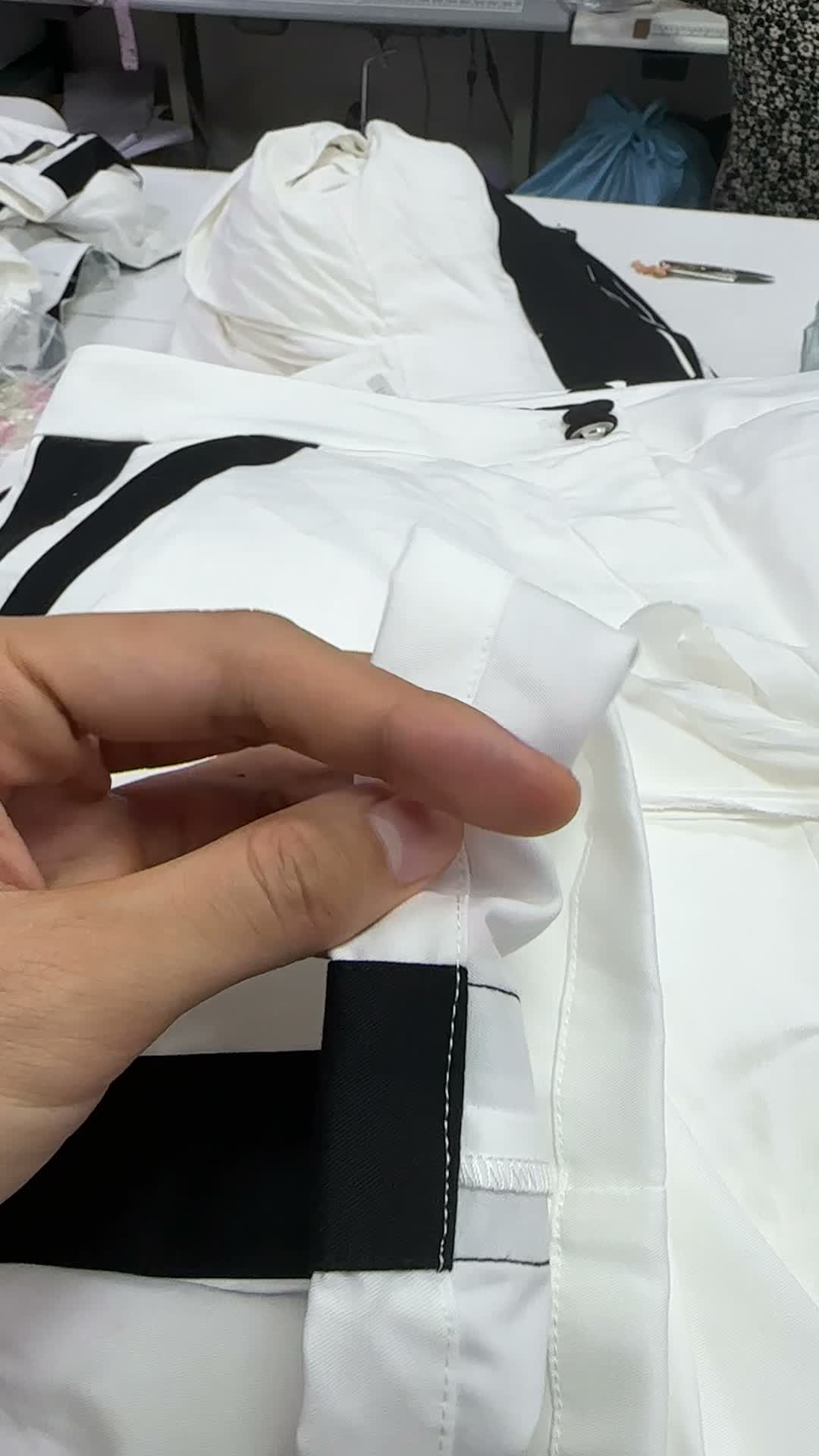
Can you move production to another factory after the deposit? Sometimes, and roughly 40 per cent of what you paid for comes with you. A small batch clothing manufacturer taking over a run needs five files before it can quote honestly.
What transfers? The pattern, the tech pack, the approved sample, and the fabric if it is still in rolls. What does not transfer is time, and time is the part you already spent.
What transfers: pattern, tech pack and approved sample
A CAD pattern transfers cleanly if the factory will release the file. Ask before you leave, not after the argument starts.
A paper pattern transfers too, but someone has to digitise it, which runs $60 to $120 a style.
The approved sample is the most valuable thing you own at this point. Without it the new factory is guessing at your standard.
Photographs do not replace the physical sample. We have tried, twice.
What does not transfer: fabric already in the cutter's hands
If the fabric is already cut, you are not moving an order. You are moving a pile of panels and hoping the seam allowances match.
Panels from a different marker will not line up, and no amount of skill fixes a 3 mm difference across 30 pieces.
If the fabric is still in rolls, it transfers. Count it, weigh it and photograph the rolls before they leave the building.
We will not take over a cut order. We will take over an uncut one.
The five files we ask for before quoting a takeover
Pattern in CAD or paper, tech pack at the current revision, the approved sample, the fabric and trim inventory, and the original purchase order with quantities per size.
With those five we quote in two days. Without the approved sample we quote a sample first and the timeline doubles.
We also ask what went wrong. The answer changes how we schedule the run.
A brand that says "quality was bad" gets a different plan from one that says "they were three weeks late".
Re-cutting, re-sampling and the 15 per cent premium
A takeover is not a reorder. It carries a premium of 15 to 25 per cent over our normal price, because we rebuild the file before we sew.
Budget 8 to 12 days before the first stitch: pattern check, fabric inspection, and one mock-up if the fit is uncertain.
On a 30-piece order that is real money. It is still cheaper than a season lost.
We quote it as a separate line so you can see what the move costs before you decide.
What a takeover costs, line by line
Digitising a paper pattern runs $60 to $120 a style. A fresh mock-up is $180 to $260, and we usually need one.
Fabric inspection on arrival is $90 for a 100-metre order, because we will not cut cloth we have not measured.
File setup is a day of pattern-room time, about $120. The total lands between $300 and $500 on a 30-piece run.
That is $10 to $17 a garment, and it is the number to weigh against staying put and paying a rush fee.
None of it is profit. It is the cost of learning a garment somebody else already knew, and we show it on its own line so it does not hide inside the unit price.
Contracts: what you need in writing before you leave
Three clauses matter: who owns the pattern, what happens to the deposit, and whether the current factory must hand over the marker.
Most factories here will release a pattern the client paid for. Most will not release a marker they developed themselves.
Put the handover list into the original agreement, before there is a dispute to negotiate.
One page at the start costs less than a lawyer at the end.
The takeover we should have refused
In 2020 we took over 60 cut panels of a viscose dress from a factory that had closed its line.
The original marker had been laid on a narrower fabric, so the panels were 1.5 cm short at the side seam. We sewed 60 and 22 came back.
We lost about $900 and four weeks. The client lost her stockist order.
Now we measure a panel before accepting any cut goods, and we say no when the numbers do not work.
How to move without losing a season
Move at the style boundary, not mid-run. Finish the current style, then transfer the next one.
If you must move mid-run, move before cutting. That single rule saves most of the money.
Keep the old factory's contact for 30 days after delivery, because pattern questions arrive later than you expect.
Tell the new factory the truth about the deadline. A compressed schedule is a separate decision from the price.
When staying is the better answer
If the problem is communication, a takeover will not fix it. A new factory has the same time zones and a steeper learning curve.
If the problem is capacity, book a slot instead of moving. Two styles at one factory beat two factories and one file.
We turn down takeovers where the only real issue is a missed date and the pattern is fine.
The honest answer is sometimes that you should not switch at all.
Our small batch program takes over uncut runs from 30 pieces, the cut and sew page lists what we need from your side, the case studies include the 60-panel takeover we got wrong, and the FAQ covers deposit recovery.
Go deeper: who owns your pattern and artwork · checks before you send fabric · 9 clauses before the deposit
Questions we get about this
Can I get my deposit back from the first factory?
Sometimes, if the fabric was never bought. Once fabric is cut or dyed, the deposit is usually spent, and the argument moves to what is owed for work already done.
Will a new factory copy the old one's fit exactly?
Close, not identical. Every factory's seam allowance and pressing differ by a few millimetres. Expect one mock-up before you accept the bulk.
Quick Take
Move before cutting. Cut panels almost never survive a factory change.
Five files, two days. Pattern, tech pack, approved sample, inventory, original PO.
15 to 25 per cent premium. A takeover rebuilds the file, so it costs more than a reorder.
About UP Fashion
UP Fashion is a Guangzhou garment manufacturer founded in 2016, run by a team with 20+ years of OEM experience in silk, viscose and embroidery. We quote from 30 pieces, show the rate we used, and inspect three times before shipping.





