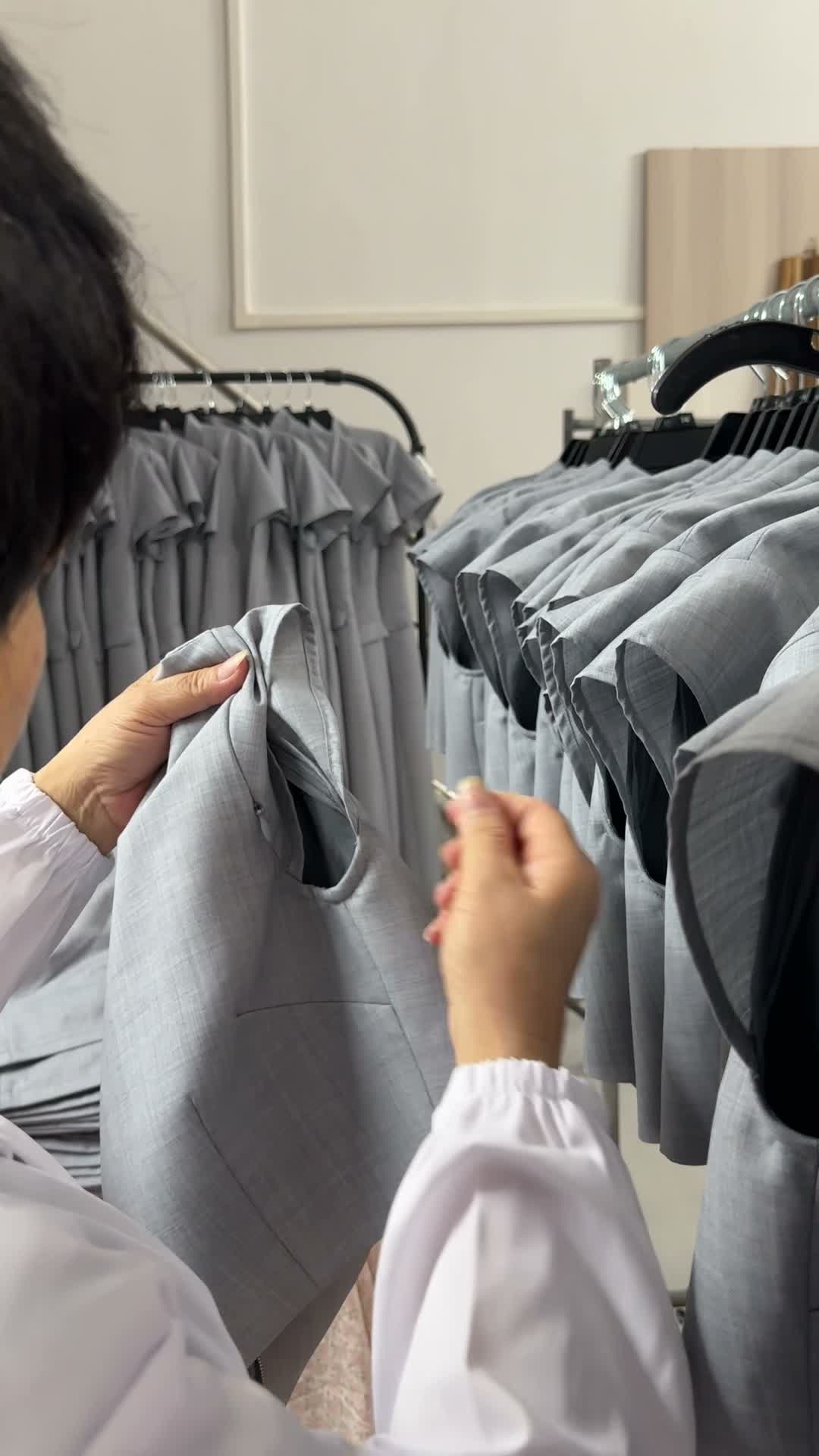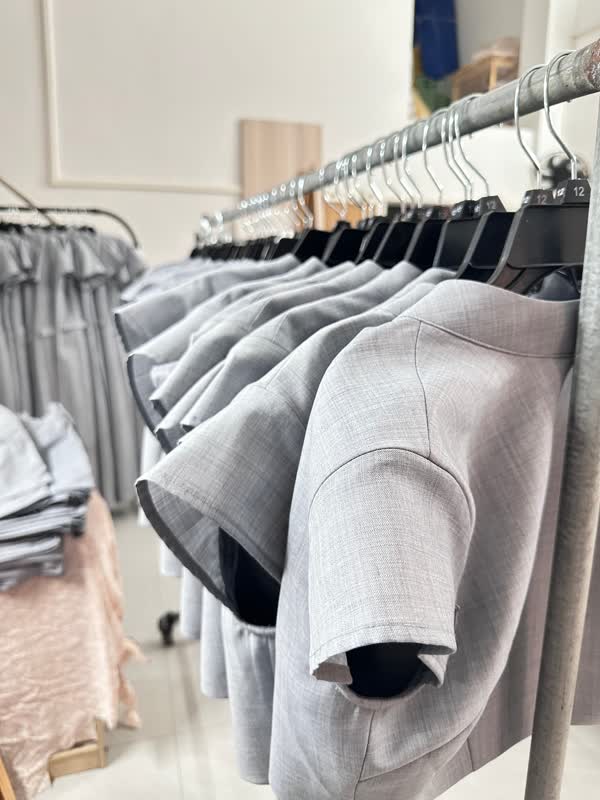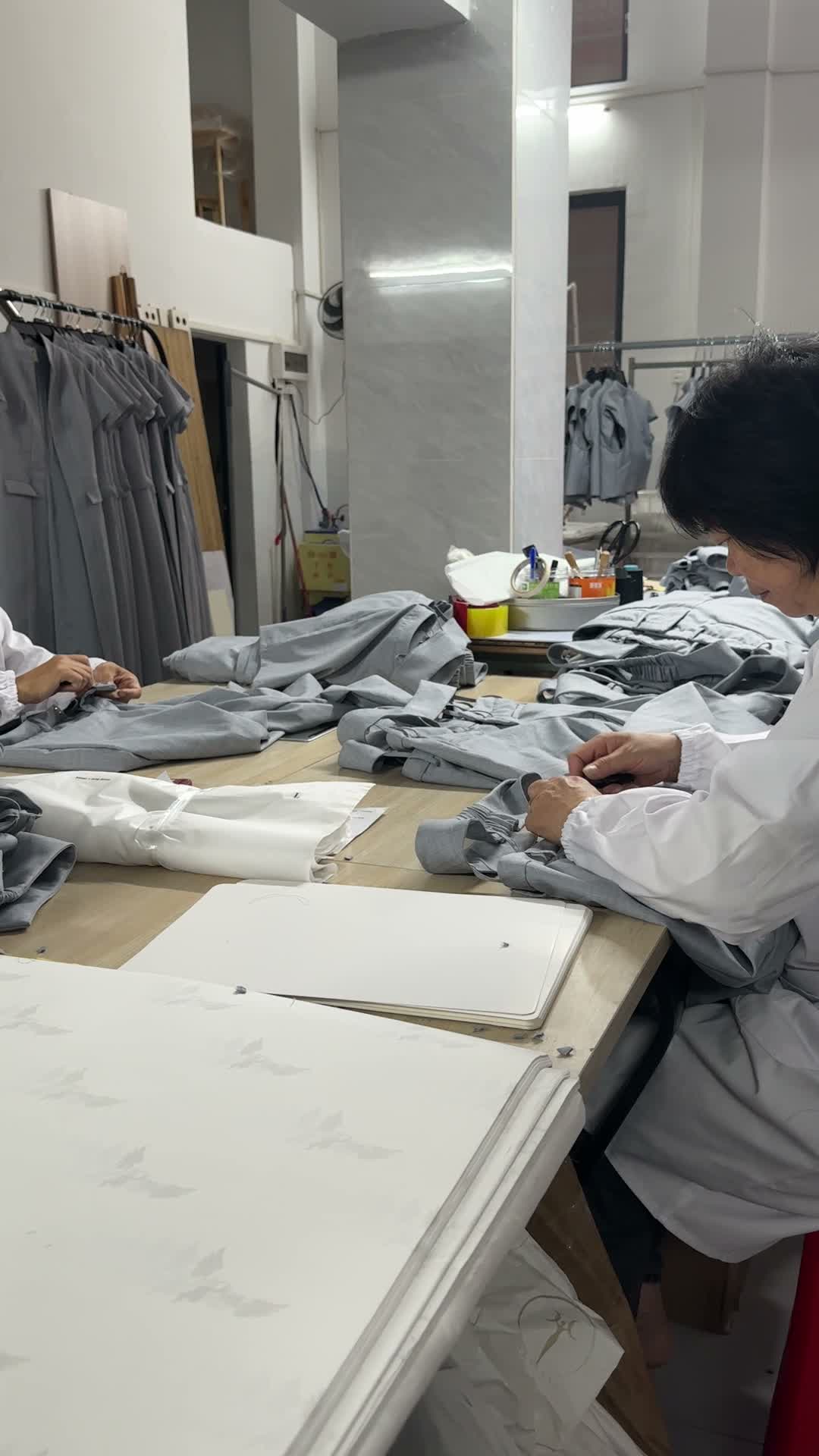
Ask a small batch clothing manufacturer who will sew your 30 pieces and you will usually get a straight answer. Ask a large one and you may get a tour of a floor your order never touches. Subcontracting is normal in Guangzhou. Being told nothing about it is not.
The short answer: most factories here cut and sew the body in-house and send out pleating, embroidery, printing and sometimes whole simple styles. What matters is whether the piece that comes back matches the sample you approved. That is a question about control, not ethics.
We keep cutting, sewing, pressing and final inspection under one roof. We send pleating and embroidery out. Here is how to ask, what the answers mean, and what to write down.
Why a factory will not always sew your order itself
Capacity is lumpy. A line committed to a 3,000-piece run has no room for 30 pieces next Tuesday, and a pleated skirt needs a machine nobody buys for a single order.
Sending work out is how a factory stays on schedule. Hiding it is how a brand discovers the problem at delivery.
Roughly a third of the factories we have visited in the past two years subcontract at least one operation. Most will tell you if you ask a direct question.
The other reason is skill. A bias-cut panel needs an operator who has done it for years, and that operator may sit in a workshop three streets away.
How to ask without insulting the person quoting you
Frame it as planning, not suspicion. "Which operations stay in your building, and which go out? I need it for my inspection plan."
That sentence is normal in a factory conversation. Anyone who treats it as an accusation has a reason to.
Ask before the deposit, in writing, and keep the reply in the order file.
The three answers and what each one means
Answer one: everything in-house, and they can name the machines. Good. Answer two: core in-house, named specialists for two or three operations. Also good, and the most common honest answer.
Answer three: "we handle everything" with no detail. That is not an answer, and it is the one that ends badly.
Ask for the names of the two subcontractors either way. A factory that cannot name them does not control them.
Ask a fourth question while you are there: who signs the inspection report when the subcontracted pieces come back. If the answer is the factory, the factory owns the fit.
What breaks when a style moves workshops mid-run
Split a 30-piece order across two tables and you get two cutting tensions, two operators and two hem settings. The gap shows as 4 mm at the side seam and 1 cm at the hem.
We split once on a satin slip in 2024. Six of 30 came back 1 cm short because the second workshop used a different hem folder.
No inspection catches that unless someone measures every piece. At 30 pieces that is affordable. At 3,000 it is not.
Two tables also means two cut tickets, and two cut tickets means two chances to misread the same spec. We now issue one ticket per style even when two tables work on it.
Which operations are safe to send out
Batch-level work is safe: pleating, embroidery, printing, laser cutting, washing, buttonholes. One operator handles the whole lot, so variation is consistent across all 30.
Piece-level work is not: cutting, body sewing, final press, final inspection. Variation there is per garment, and per garment is what a customer sees on a hanger.
Our rule is simple. Anything that touches every piece individually stays in the building.
What to put in writing before the deposit
One clause: no subcontracting of cutting, sewing, pressing or final inspection without written approval. Named subcontractors listed with the operation each one covers.
Add a right to inspect the subcontractor's floor, and a liability line for fit drift measured against the approved sample.
We write this into every order confirmation, including the 30-piece ones. It costs one paragraph and one argument avoided.
We also name the contact at the subcontractor and put their number on the order sheet. A named person answers for the pleating, not a company.
How to verify it without flying to Guangzhou
Ask for a live video call at the line and have the operator hold up today's cut ticket with your style number on it. A recorded tour proves nothing.
Ask for a photo of the bundle ticket at three points: after cutting, after sewing, before packing. Same handwriting, same table, same bundle number.
Then book an inspection you do not announce. Our small batch program builds three unannounced checks into every order by default.
What we get wrong on subcontracting
We once took a rush order and sent the hem to a second workshop without telling the brand. Eight pieces came back 2 mm narrow.
We re-hemmed all 30, missed the ship date by four days and lost the margin on the order. That brand stayed. Most would not.
Now the brand hears about any outside operation before the cut ticket opens, even a 40-piece pleating run.
The one question that settles it
"If I asked to see my order on the floor tomorrow, which table would it be on?" A factory with control answers in one sentence.
A factory without control answers with a schedule. Both answers are useful, and you only need one of them.
Our FAQ covers lead times and what we hold in-house. Two of the case studies describe orders we split, one of them badly.
Our A1 assistant is coming online later this year. It will read an order confirmation and flag any operation with no named owner.
Go deeper: where fabric handoff goes wrong on a small run · what a third-party inspection actually covers · A, B and C grades and what a claim needs
Questions we get about this
Is subcontracting a sign of a bad factory?
No. Pleating, embroidery and printing are almost always outsourced, even by factories that sew everything themselves. The problem is unmanaged subcontracting, where nobody owns the fit after the pieces leave the building.
Should I refuse a factory that outsources sewing?
Only if your style is fitted or the order is split across two workshops. A simple A-line skirt sewn in one partner workshop can be fine. A bias-cut slip split across two cannot.
Quick Take
1 cm. Hem drift on six of 30 satin slips when one style moved to a second workshop.
Batch vs piece. Pleating, printing and washing are safe to send out. Cutting, sewing and pressing are not.
One sentence. The answer to "which table would my order be on tomorrow?" tells you who has control.
About UP Fashion
UP Fashion is a Guangzhou garment manufacturer founded in 2016, run by a team with 20+ years of OEM experience in silk, viscose and tailoring. We quote from 30 pieces, show the rate we used, and inspect three times before shipping.