A cut and sew manufacturer prices the seam finish on the same line as the fabric, and almost no brand reads that line until the first wash.
What does an edge finish cost? Between $0.30 and $3.10 a garment, and the spread is not about quality. It is about what the inside of the garment has to survive: a 40°C wash, a week on a rail, a customer who turns it inside out in a fitting room.
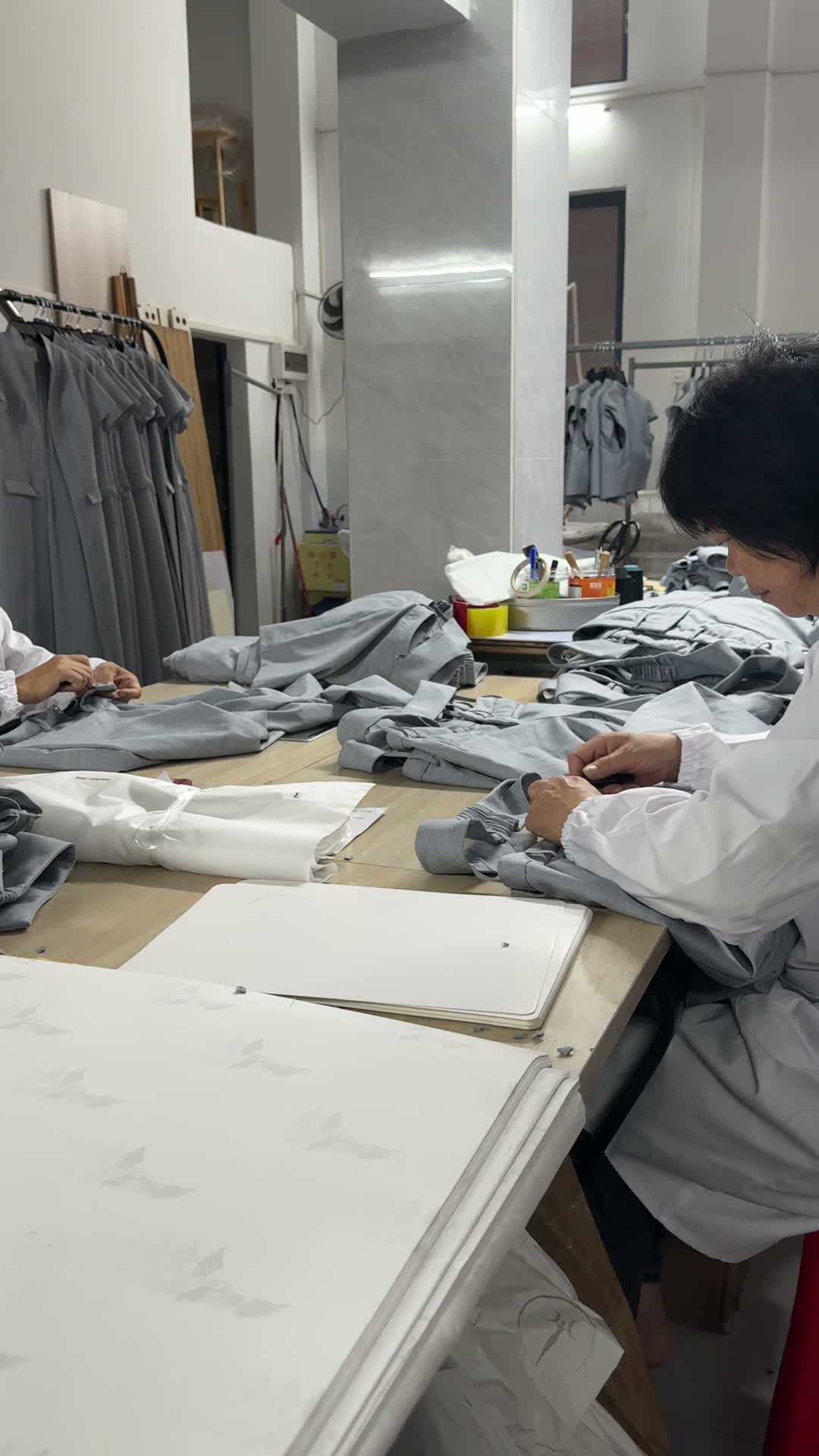
We sew all four finishes in the same building, so the numbers below are ours rather than a range copied from a supplier brochure. One of them cost us 18 reworked dresses, and that is in here too.
What each edge finish costs at 30 pieces
Four-thread overlock on a side seam takes 1.4 minutes and costs about $0.38 a garment at our rate. Three-thread overlock at 6 mm is $0.30, and it is what most factories quote by default.
Bias binding takes 3.2 m of tape at $0.16 a metre plus 3.1 minutes of sewing. That lands at $1.35, and it is the finish that makes an unlined dress look deliberate inside.
A French seam is two passes on the same seam, 4.2 minutes, about $1.15. A flat-fell is 5.8 minutes and $1.60, and it is the only one of the four that gets stronger as the seam is pulled.
Hong Kong finish, the bound and folded edge luxury houses use on an unlined jacket, takes 4.6 m of tape at $0.22 and 8.9 minutes. We charge $2.60 to $3.10.
On 30 pieces the whole spread is $11 against $90. That is $2.62 a piece, or roughly the cost of your buttons.
The finish nobody puts on the quote
Armhole and hem. A bound armhole on a sleeveless dress adds 2.4 minutes and $0.72, and it is the first thing a buyer sees when she lifts the shoulder.
A 3 mm rolled hem on a viscose slip takes 2.1 minutes and $0.55. A 1 cm double-fold hem takes 1.3 minutes and $0.31, and it hangs heavier, which some styles want.
Why a French seam needs 1.5 cm of seam allowance
A French seam folds the raw edge inside itself, so the allowance has to be wider than the seam you are closing. We cut 1.5 cm where a plain seam would be 1 cm.
That half centimetre is not free. Across six seams on a dress it adds about 8 per cent to the marker, and on a 30-piece run that is roughly 5 m of cloth.
It also changes the pattern. Hand a factory a tech pack drawn at 1 cm and ask for French seams, and someone has to re-draft the allowance. That someone may be a pattern cutter with three other jobs that week.
Ask for it in writing before the pattern is graded, not after the marker is made.
When overlock is the wrong answer on a light viscose
An 85 gsm ivory viscose is the case we see most. The overlock loop sits 6 mm wide on the inside, and on a pale face fabric that loop reads through after two washes as a grey shadow along the seam.
The fix is not a better operator. It is a 3-thread narrow overlock at 4 mm, or a binding on the seams that face the light. Both cost more, and neither is in a standard quote.
Our rule: below 100 gsm on a light colour, we bind the side seams and the armhole. Above 130 gsm, overlock is invisible and we say so instead of upselling.
This is also where fabric choice meets price. A 110 gsm viscose at $4.20 a metre with a $0.30 overlock can cost more than a 145 gsm crepe at $4.80 with a clean 3-thread edge, once you count the rework.
Binding tape: bought or made in the building
We buy most tape. A 20 mm viscose binding at $0.16 a metre in 500 m rolls is cheaper than cutting and folding our own at 30 pieces.
Above about 400 pieces we cut our own from the shell fabric, because a self-fabric binding reads as one garment and a bought tape reads as a trim.
That switch is worth knowing about if you plan to reorder. The same dress can look more expensive at 500 pieces than at 30, and it is not the sewing, it is the tape.
Where our own finish failed
In 2021 we ran 30 ivory viscose slip dresses with a 4-thread overlock in a matched thread. The samples looked correct under our lamp, and the client approved them on a screen.
She washed one before her shoot. The loop edge shadowed through the face fabric and read as a stain down both side seams.
We reworked 18 of the 30 at $5.40 a garment, because a seam finish cannot be corrected without opening the seam. The other 12 had already shipped and came back at our freight cost.
What changed: the finish is now chosen at the fabric stage, not the sewing stage. If the cloth is under 100 gsm and light, the quote carries a binding line whether the brand asked for one or not.
What to write in the tech pack about seam finish
Four lines end the argument. Name the finish per seam, give the width in millimetres, name the thread ticket, and say whether the finish must survive a 40°C wash.
If you leave it blank you get the factory default: a 6 mm overlock in whatever thread is on the machine. That is not a shortcut, it is an empty instruction.
Ask for a 10 cm seam sample with the counter sample. Ten centimetres of the actual finish tells you more than a paragraph of description, and it costs nothing.
Check it inside out, at 40 cm
Our inspection turns every garment inside out and holds the seam at 40 cm under a 5000K lamp. Closer and you are inspecting thread. Further and you are inspecting hope.
We also pull one seam per bundle at a 2.5 cm grab. If the overlock chain runs, the tension is wrong, and it will run on all 30.
If you are still deciding what to hand a factory, our cut and sew program page lists what we supply and what you supply. The FAQ covers seam allowances, and the case studies include the 2021 rework.
Go deeper: overlock tension at 30 pieces · why seams split · fabric per garment, by style
Questions we get about this
Is a French seam better than an overlock?
Better looking inside and stronger in sheer fabrics, but it costs 8 per cent more cloth and cannot be used on a curve that will not fold flat. On a side seam of a slip dress it is worth it.
Can I mix finishes on one garment?
Yes, and most good garments do. French seam on the side seams, overlock at the armhole, binding at the hem. Ask for it per seam rather than per style.
Quick Take
$0.30 to $3.10 a garment. The finish is a decision, not a default.
French seam costs 8 per cent of cloth. Half a centimetre, six seams, 5 m at 30 pieces.
Under 100 gsm, bind it. The overlock loop shows through ivory after two washes.
About UP Fashion
UP Fashion is a Guangzhou garment manufacturer founded in 2016, run by a team with 20+ years of OEM experience in silk, viscose and embroidery. We quote from 30 pieces, show the rate we used, and inspect three times before shipping.





