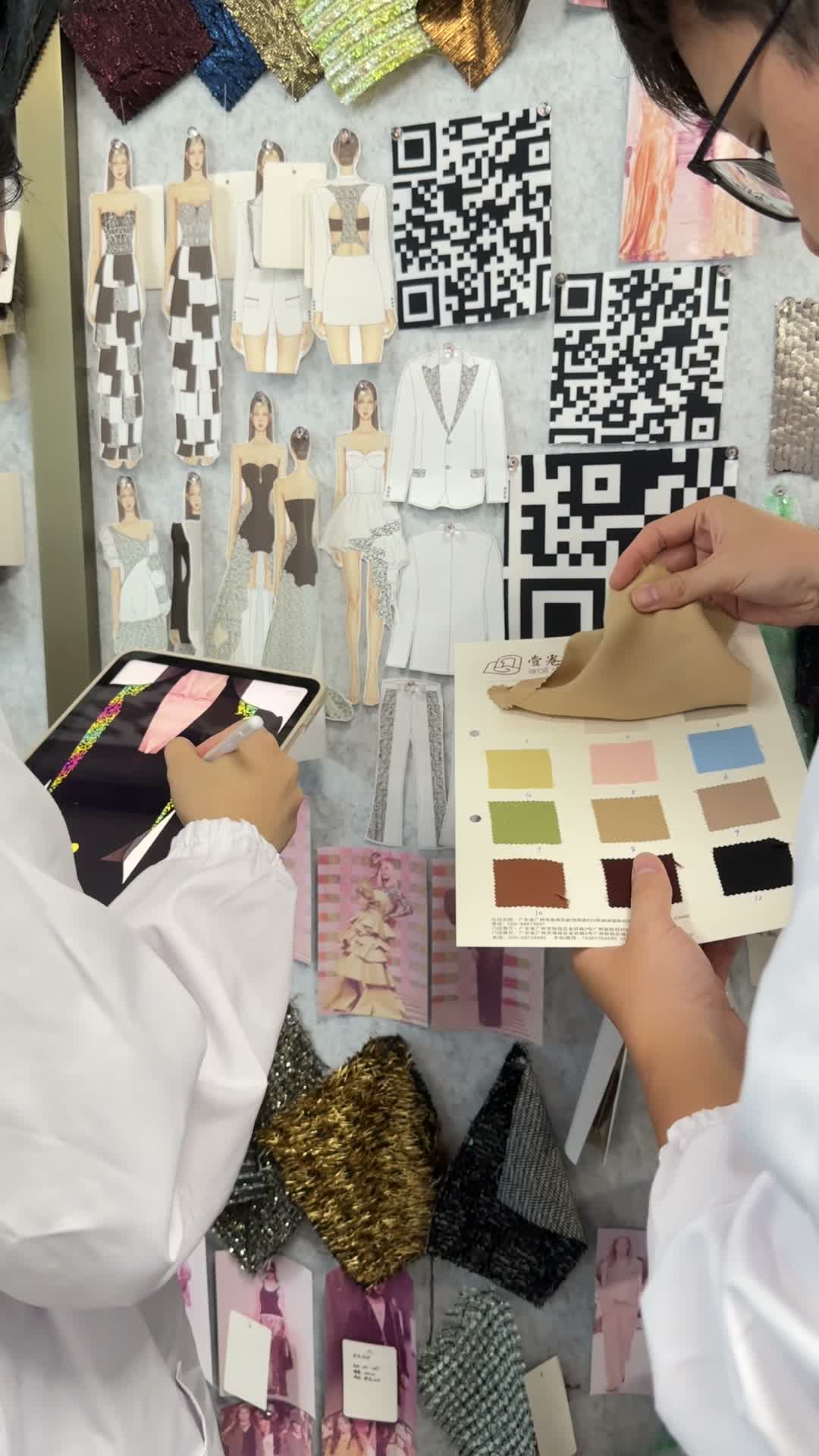
As a small batch clothing manufacturer we can put your colour on cloth two ways, and at 30 pieces the two are not interchangeable. One is dyed at the mill, in the roll, before anything is cut. The other is sewn first in greige and dyed as finished garments.
Which one you need comes down to three numbers: the mill's minimum in metres, the shrinkage your fit can absorb, and whether your trims take the same dye. Get any of the three wrong and you own 30 garments in a colour nobody ordered.
Piece dye vs garment dye: what each route actually involves
Piece dye means the mill dyes a roll of greige fabric to your lab dip, then we cut. Colour is locked before cutting, the hand is set, and every garment in the run matches because they came off the same roll.
Garment dye means we cut and sew in undyed greige, then dye the finished pieces in a bath. The colour goes on last. That single change moves the minimum from metres to pieces.
Both are normal production. Neither is the premium option. The mistake is assuming one is the real way and the other is a shortcut.
Why the mill minimum decides how many colours you can sell
A piece-dye minimum is usually 300 metres per colour, sometimes 200 for a stock shade and 500 for a custom one. At 1.4 metres a dress that is 214 pieces in a single colour.
Three colours becomes 900 metres and 640 pieces. That is not a 30-piece conversation, and no amount of negotiating changes it, because the mill has to run a dye bath either way.
Garment dye runs per bath, not per roll. Thirty to fifty pieces is a viable bath at the dyehouses we use, so three colours at 30 pieces each is 90 garments and three baths instead of 900 metres.
What garment dye does to shrinkage and fit
Dyeing after construction shrinks the garment, and it shrinks it unevenly. On viscose we plan 4 to 6% on length and 2 to 3% on width. Linen moves 3 to 4%. Polyester moves under 2%, which is the first reason garment dye is pointless on a poly dress.
You compensate by cutting longer, not wider, and by leaving the grade alone. Cut 4% oversize in every direction and you hand back a garment that fits one size up.
In 2021 we ran 30 viscose dresses through garment dye without adjusting the length. They came back 3.5 cm short, the hem had to drop and the armhole pulled. We re-cut 30 bodies and ate the fabric.
Thread, zip, buttons and labels: the parts that refuse to dye
Cotton-reactive dye bonds to cellulose. It does not bond to polyester thread, nylon zip tape or plastic buttons, so those leave the bath the colour they went in.
On a navy garment-dyed dress with cream polyester thread the seam reads as a pinstripe from two metres. We now specify dyeable cotton-wrapped thread on any garment-dyed order, or we match the thread to the finished shade and say so in writing.
Metal zips survive the bath but the tape does not match the teeth. Woven labels have to go in after dyeing, and a printed care label that goes through the bath comes out unreadable, which is a labelling problem you cannot fix at the border.
Cost per piece: the premium and what it buys
Garment dye adds $1.60 to $2.40 per piece at our dyehouse, and 8 to 12 days on the calendar. On 30 pieces that is $48 to $72 and a week and a half.
Compare it with the alternative: 300 metres of fabric you cannot use for anything else, at $6 to $9 a metre, is $1,800 to $2,700 sitting in a store room.
Piece dye stays cheaper per piece at volume. Below 100 pieces per colour it usually is not cheaper at all, once you count the cloth you bought and never sewed.
When we say no to garment dye
Structured garments are out. A blazer with a chest canvas, a shoulder pad or a bonded interlining will not survive a dye bath, and the canvas prints through the cloth as a shadow.
Blends with elastane are out for a different reason. The elastane takes the dye at a different rate and you get a heathered look nobody asked for.
Anything over two colours at 30 pieces is out as well. Each colour is a separate bath with its own minimum charge, so the third colour costs more than the first two together.
How to specify a dye method on a tech pack
One line is enough, as long as it is the right line. "Piece dyed, 300 m minimum per colour, lab dip approved before cutting" tells a factory everything it needs.
"Garment dyed after make, 4% length allowance, dyeable thread, labels applied after dye" does the same for the other route.
What causes trouble is the third version, where the tech pack says navy and nothing else. That is how a brand ends up with garment dye when it wanted piece dye, three weeks after the deposit.
Questions to ask before you approve a lab dip
Which dye method is this dip for? A dip done on greige for garment dye reads slightly different on a finished garment, because the garment has been through heat and tension the flat cloth has not.
Is the dip on the actual bulk fabric, or on a stock sample the mill keeps for enquiries? Ask for the mill name and the batch number.
And what is the tolerance. We work to 0.8 Delta E within a dye lot and 1.5 between lots. If a factory cannot give you a number, the number is whatever they can get away with.
Our small batch program runs garment dye from 30 pieces per colour and piece dye from 300 metres. The FAQ covers minimums, and the case studies include the run where we re-cut 30 bodies.
Go deeper: lab dips and why your navy is not our navy · what viscose does after one wash · shrinkage and colourfastness tests before cutting
Questions we get about this
Can I garment dye just 30 pieces in three colours?
Yes, and it is the one route that makes three colours possible at that quantity. Each colour is a separate bath with its own minimum charge, so budget the third colour as the expensive one rather than dividing the total by three.
Does garment dye change the size I should grade?
No. The grade stays as approved and you add length allowance before cutting, typically 4% on viscose. Adding width as well is what turns a size 10 into a size 12.
Quick Take
300 metres. The usual piece-dye minimum per colour, which is 214 dresses you did not plan to make.
30 to 50 pieces. A viable garment-dye bath, at $1.60 to $2.40 a piece and 8 to 12 extra days.
4% on length. The allowance viscose needs. We skipped it once and re-cut 30 bodies.
About UP Fashion
UP Fashion is a Guangzhou garment manufacturer founded in 2016, run by a team with 20+ years of OEM experience in silk, viscose and embroidery. We quote from 30 pieces, show the rate we used, and inspect three times before shipping.





