A private label clothing manufacturer cannot quote from a photo and a paragraph, and that is what most first emails contain. What comes back is a guess wearing a price. Then you spend three weeks correcting it, and the factory spends three weeks guessing again.
Nine lines fix it: style count, fabric with a weight, size run, colour count, ship date, target price, who supplies labels, how it packs, and who owns the pattern. Send all nine and a real number comes back in a day. Leave one out and the reply is "please advise", which is not stalling. It is arithmetic.
Here is the email we wish every new brand sent, line by line, with what each line moves in the price.
The 9 lines a Guangzhou clothing factory needs to quote
Line 1 is style count, and whether the styles share fabric. Six styles in two fabrics is a different order from six styles in six fabrics, even though the sample room does the same work.
Line 2 is fabric: composition, weight in GSM, and width. "Poly satin" is a family, not a fabric. 110 GSM and 160 GSM satin differ by roughly $1.40 a metre and by whether the dress hangs or clings.
Line 3 is the size run. Thirty pieces across S-M-L is ten each. Thirty across XS-XL is six each, and grading costs the same either way, so the per-piece number rises about 9%.
Line 4 is colour count. One colour per style is the cheap case. Three colours at ten pieces each means three dye lots, three lays, and a minimum you may not clear.
Line 5 is the ship date, in its honest form. We work back 18 to 24 days for bulk after approval, plus two mock-up rounds at 9 to 12 days each. A date you cannot move is worth more to us than a price you like.
Line 6 is your target FOB, and what it includes. FOB Guangzhou with your label inside and a polybag outside is not the same as DDP to a warehouse in New Jersey. Say which one you are comparing.
Line 7 is labels and trims: who supplies, who sews. A woven main label is 6 to 9 weeks from artwork at 500 pieces, so at 30 we print on stock blanks and tell you that on the quote.
Line 8 is packing. Flat-fold in a polybag is $0.35 a piece. A hanger, a tissue wrap and a printed carton is $1.60, and it changes the carton count, which changes the freight.
Line 9 is pattern ownership. If a freelance pattern maker drew it, we need the file, not a scan. A PDF is a picture of a pattern.
Why a photo and a size chart produce a $9 and a $14 quote
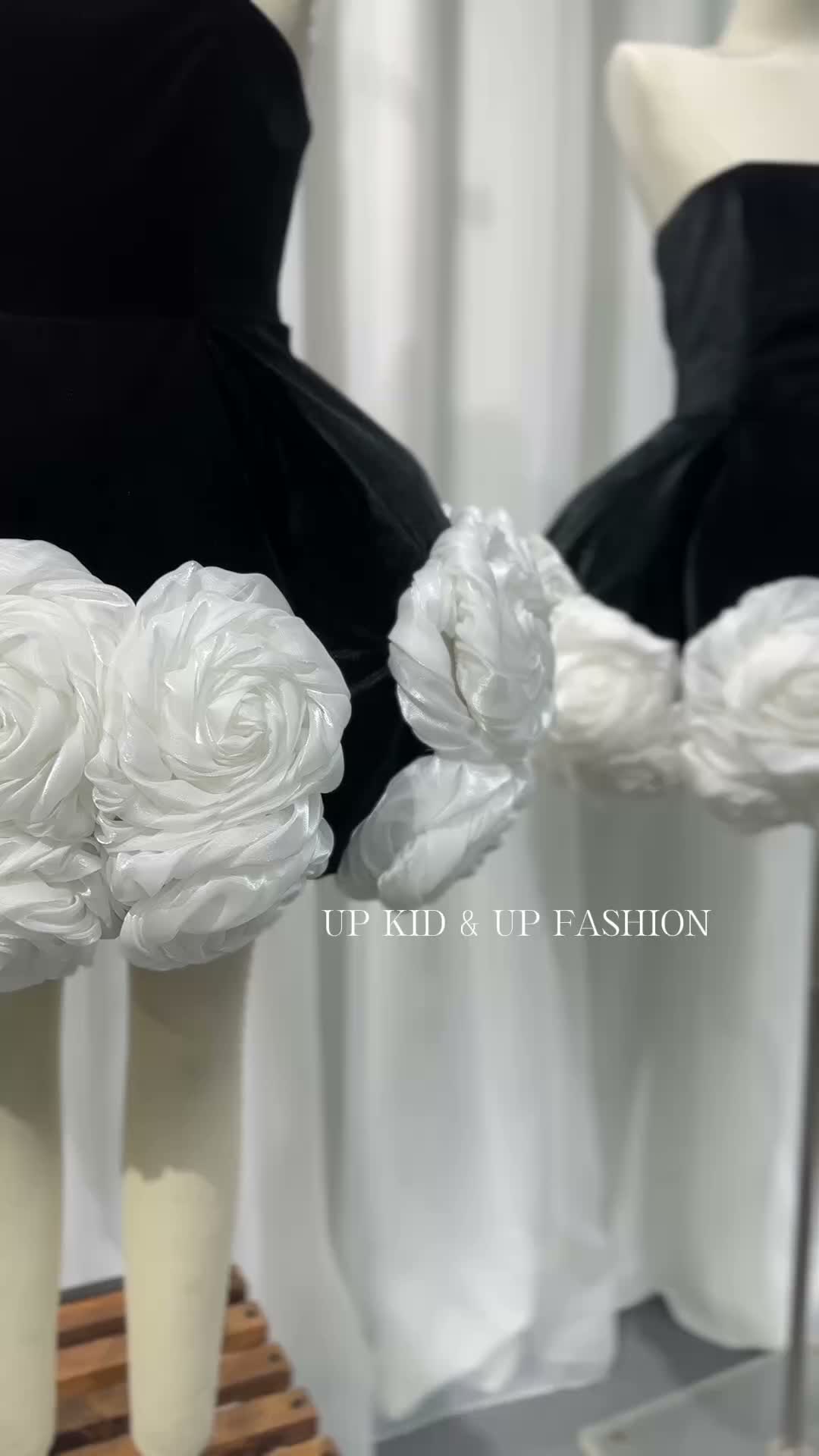
Two factories, one photo, quotes of $9 and $14. Neither is lying. One costed a 110 GSM plain weave with a single-layer bodice. The other read the drape in the photo and costed 140 GSM, cut on the bias, with a lining.
Bias cut adds about 30% fabric. A lining adds $2 a metre and 12 minutes of sewing. That is the whole gap, and it was decided by a sentence nobody wrote.
Photos also hide the back. We have quoted the same slip dress three times before anyone mentioned it was open-backed with a concealed zip, which moved the price 18%.
Fabric choice decides half the quote before you ask
Inside the fabrics we run, viscose, polyester, linen, cotton-linen, satin, rayon, TR suiting, the spread is wide. A 30-piece run in 145 GSM TR suiting costs more per piece than the same run in 110 GSM polyester. It also sews about 9 minutes faster, because it does not slip.
At this size, mill minimums matter more than price per metre. Many mills sell 100 metres minimum. A 30-piece dress at 2.4 metres a garment needs 72 metres plus 12% cutting loss, so you buy 100 and store 19.
Say which side you want: we buy the roll and invoice it at the rate we paid, or you send your own and we cut it. The second is cheaper on paper and slower in practice, because your roll waits in customs while your line waits for your roll.
What we ask that most buyers have never been asked
Who approves the lab dip. If the answer is "the factory", you have handed away your colour, and navy is the shade where that shows.
What happens if the fabric arrives short. We photograph the roll end and count before cutting, and we tell you the same day rather than at packing, when nothing can be fixed.
Whether the sample fabric is the bulk fabric. If it is not, the quote describes a garment you will not receive, and the difference usually appears as a 3% shrinkage you did not budget.
And which of the two matters more, price or date. Buyers hate this question. It changes everything, because air freight in week nine costs more than the $1.20 you saved on fabric in week one.
A 24-hour quote, hour by hour
Hours 1 to 3: we read the brief and pull two comparable styles from the pattern archive. Hour 4: the mill confirms the fabric price in writing, not by phone.
Hours 5 and 6: an SMV estimate per style, in minutes, taken from the closest style we already run. Hour 7: trims, labels and packing costed.
Hour 8: the quote is written on 12 lines, each with the rate we used. Where a line is unknown it says "to confirm" and gives a range. A quote with no ranges is a quote with hidden ones.
The four questions that stall a quote for a week
Do you need the tech pack built. If you have a reference garment and no measurements, that is 6 to 9 hours of pattern work before anyone can quote honestly.
Are you comparing FOB with DDP. Half the quotes that look 20% apart are the same number with different delivery points.
How many colours, really. Buyers often add the third colour after the deposit, and that is a re-quote, not an update.
Is the ship date fixed. A fixed date narrows the fabric list to what a mill can deliver in 15 days, and that is usually the most useful thing you can tell us.
Send this and we will quote the same day
Send the nine lines, three photos, front, back, and one detail, and a ship date you can live with. We reply with a 12-line quote, the SMV we used, and the two lines most likely to move.
Our private label programme quotes from 30 pieces per style, and every quote names the mill and the rate. The FAQ covers deposits and sample fees. The case studies show what a first run looks like when the brief arrived complete.
If your brief is still a mood board, send that instead. We will tell you which nine lines are missing and in what order to fill them, which is a cheaper conversation than a wrong quote.
Go deeper: what a tech pack must contain · ten questions a factory asks before it quotes · why three factories quote three prices
Questions we get about this
How fast can a factory quote 30 pieces properly?
One working day, if the nine lines are complete and the fabric is named with a weight. Three to five days if we have to source the fabric first, because a mill answer is not instant. A quote that arrives in two hours is usually a guess with a rate attached.
Should I tell a factory my target price in the first email?
Yes. It does not weaken your position, because the factory can see the market rate for your garment anyway. What it does is tell us whether to propose 110 GSM or 145 GSM, and that single choice moves the price more than any negotiation later.
Quick Take
9 lines. Styles, fabric with a GSM, size run, colours, date, target FOB, labels, packing, pattern owner.
$9 vs $14. The gap is a bias cut and a lining nobody mentioned, not a dishonest factory.
8 hours. Our real quoting time when the brief is complete. One day, not one week.
About UP Fashion
UP Fashion is a Guangzhou garment manufacturer founded in 2016, run by a team with 20+ years of OEM experience in silk, viscose and embroidery. We quote from 30 pieces, show the rate we used, and inspect three times before shipping.





