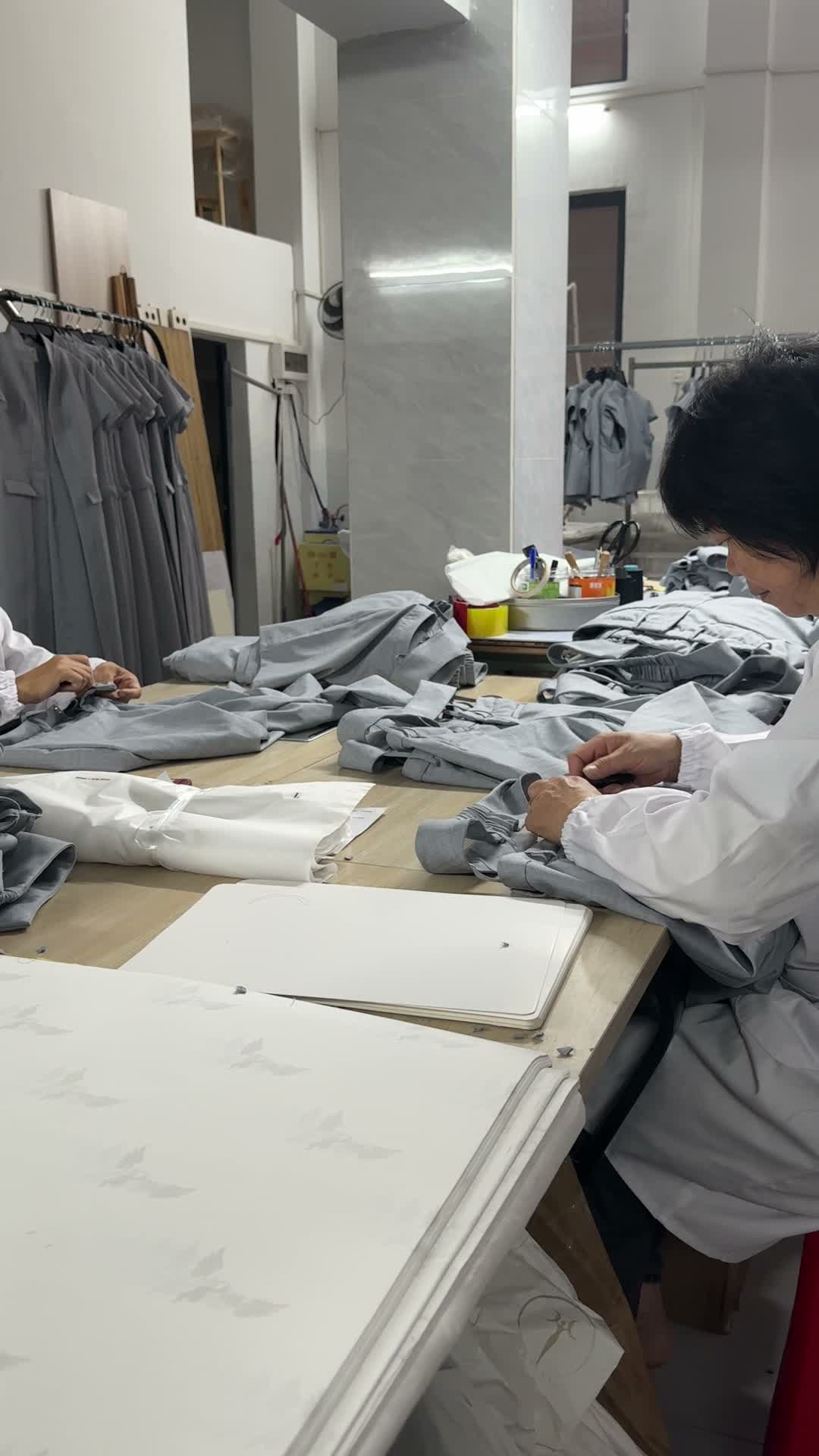
A cut and sew manufacturer that cannot tell you which bundle a panel came from cannot fix a fault. On a thirty-piece run there is nowhere to hide a mistake, so we number every panel before it leaves the cutting table.
How does a factory keep track of thirty or fifty pieces through a sewing line? With a cut ticket and a number on every panel. The ticket records the style, the size, the fabric lot and the count, and the number ties each panel back to that ticket.
Lose the number and you lose the ability to trace.
Here is how the system works, why the numbers matter, and what to ask a factory that says it does not need them.
What a cut ticket actually records
A cut ticket is a single sheet that follows one lay. It lists the style, the size breakdown, the fabric lot, the ply count and the number of pieces cut.
Every bundle carries a copy. When a fault appears on one dress, we read the ticket and know which roll and which lay it came from.
Without the ticket, a fault is just one dress with a problem, and we cannot tell whether it is alone or the first of twelve.
A ticket also carries the date and the cutter's name. If a fault appears three weeks later, those two lines tell us who to ask and when the lay ran.
Why panels are numbered by shade band
Fabric from one dye lot is not always one colour. Mills band it, and we cut within a band so a garment does not mix two shades.
The number on each panel includes the band, so a sleeve and a bodice from the same dress are always from the same shade.
On a deep colour this is the difference between a clean dress and one that looks patchy under shop light.
How bundles move through the line
Panels are bundled by size and by operation, then tied with a ticket. A bundle of thirty fronts moves together, so the sewer never picks up a piece from another order.
At the end of each operation the count is checked against the ticket. If a bundle arrives with nine pieces instead of ten, we stop and find the tenth before it becomes a missing garment.
That check is boring, and it is the reason we rarely lose a piece.
How many bundles a 30-piece run makes
Thirty pieces across five sizes, cut as one lay, becomes roughly thirty to forty bundles once split by size and by operation. Each bundle is small, often five to ten panels.
That sounds like a lot of paper for a small order. It is still less work than hunting for a missing sleeve at packing, and it is why a short run can be traced as tightly as a large one.
On a fifty-piece run the bundle count grows, but the system is identical. Size does not change the method; it only changes how many tickets you print.
What happens when a panel is lost
A panel can be cut wrong, stained, or simply misplaced. Because the ticket knows how much fabric the lay used, we know whether there is enough left to re-cut.
For a thirty-piece run the spare is thin. A re-cut often means buying a metre or two, and if the lot has moved on, the colour may not match.
That is why we tell clients early when a re-cut needs fabric, rather than quietly shipping twenty-nine pieces.
The re-cut rule we hold to
We re-cut from the same roll wherever possible. If the roll is gone, we cut from the nearest band and mark the piece, so you know which garment carries it.
We never swap in a panel from a different lot and hope nobody notices. That is the kind of shortcut that shows up two washes later.
If a re-cut will change the delivery date, we say so the day we find the problem.
We also log every re-cut on the ticket. If a run needs more than two, we tell the client, because a pattern of re-cuts usually points at a fabric or marker problem rather than bad luck.
What to ask a cut and sew partner
Ask four things: does every bundle carry a cut ticket, is the fabric banded before cutting, is the count checked after each operation, and how do you handle a re-cut?
A factory that answers all four in one breath has a system. A factory that says it does not need numbers is telling you it has never had to trace a fault.
You do not need to audit the system yourself. Ask for one cut ticket from your own order and read it. It should name your style and your lot.
If a factory has never shown a client a cut ticket, ask for one now. It is a two-minute request and it tells you more about their floor than a factory tour.
The bundle mix-up we had
In 2018 two fifty-piece orders in similar navy fabric shared a cutting table on the same day. One bundle of fronts was tied into the wrong order, and it was caught only at packing.
We now clear the table between orders and never cut two similar lots back to back. It costs us half a day and it stopped a repeat.
If you are choosing between production models, the cut and sew program explains what we take on and what you supply. The case studies page shows real run sizes and dates, and the FAQ page covers tracking and inspection questions.
The production process page shows where cutting and bundling sit in the timeline.
Go deeper: what a cut and sew service includes · what adds weeks to a small run · what the A, B and C quality grades really mean
Questions we get about this
Do I need to see the cut ticket myself?
Once is enough. Ask for the cut ticket from your own order. If it names your style, size breakdown and fabric lot, the system is real.
What happens if one piece is damaged after cutting?
We re-cut from the same roll if there is enough left. If the roll is finished, we cut from the nearest shade band and mark the piece so you know which garment carries it.
Quick Take
Every panel gets a number. The number ties it to a cut ticket, a size and a fabric lot.
Count after every operation. A missing piece is cheaper to find on the line than at packing.
Ask to read one ticket. It is the fastest proof a factory can trace a fault.
About UP Fashion
UP Fashion is a Guangzhou garment manufacturer founded in 2016, run by a team with 20+ years of OEM experience in silk, viscose and embroidery. We quote from 30 pieces, cut with a ticket on every bundle, and inspect three times before shipping.





