Choosing a kaftan manufacturer for Gulf brands usually starts with fabric and fit. It should start with embroidery. In Kuwait, Saudi Arabia and the UAE, the ornament is what makes a kaftan worth AED 1,400, or what makes it look like a bathrobe with beads.
Buyers ask us one question first: will the embroidery look this good after ten wears and a Gulf summer? The honest answer is that it depends on decisions made before the first motif is stitched, the technique, the backing, the thread, and the anchor behind every stone. We are a Guangzhou garment factory that has run kaftan and abaya ornament work since 2016, and this guide is how we make those decisions at MOQ 30.
Kaftan manufacturer for Gulf brands: why the ornament decides the sale
A Gulf customer does not buy a kaftan for its seams. She buys the collar of embroidery, the beaded cuff, the motif that photographs well and survives the evening. Ornament can be 40 to 60 percent of what a decorated kaftan costs to make, which means the factory's embroidery floor is your real supply chain, not the cutting table.
That is why we check three things before we quote: how the motif is placed on the silhouette, how it is stitched onto the fabric, and how it is anchored so it does not shed. Silhouette comes first because a kaftan is cut floor-length with a clean fall, usually fully lined, with sleeves and side slits that let the fabric move. Placement that ignores the drape will pucker on the body even if the embroidery itself is perfect.
We made that mistake early on. We once sealed a motif on plain cotton sampling cloth because it was cheaper than the real silk. On the silk, the same motif sat stiff and the puckering showed in every photo. Now every placement is sealed on the actual fabric, never on a substitute.
Hand or machine embroidery: how a kaftan manufacturer should choose
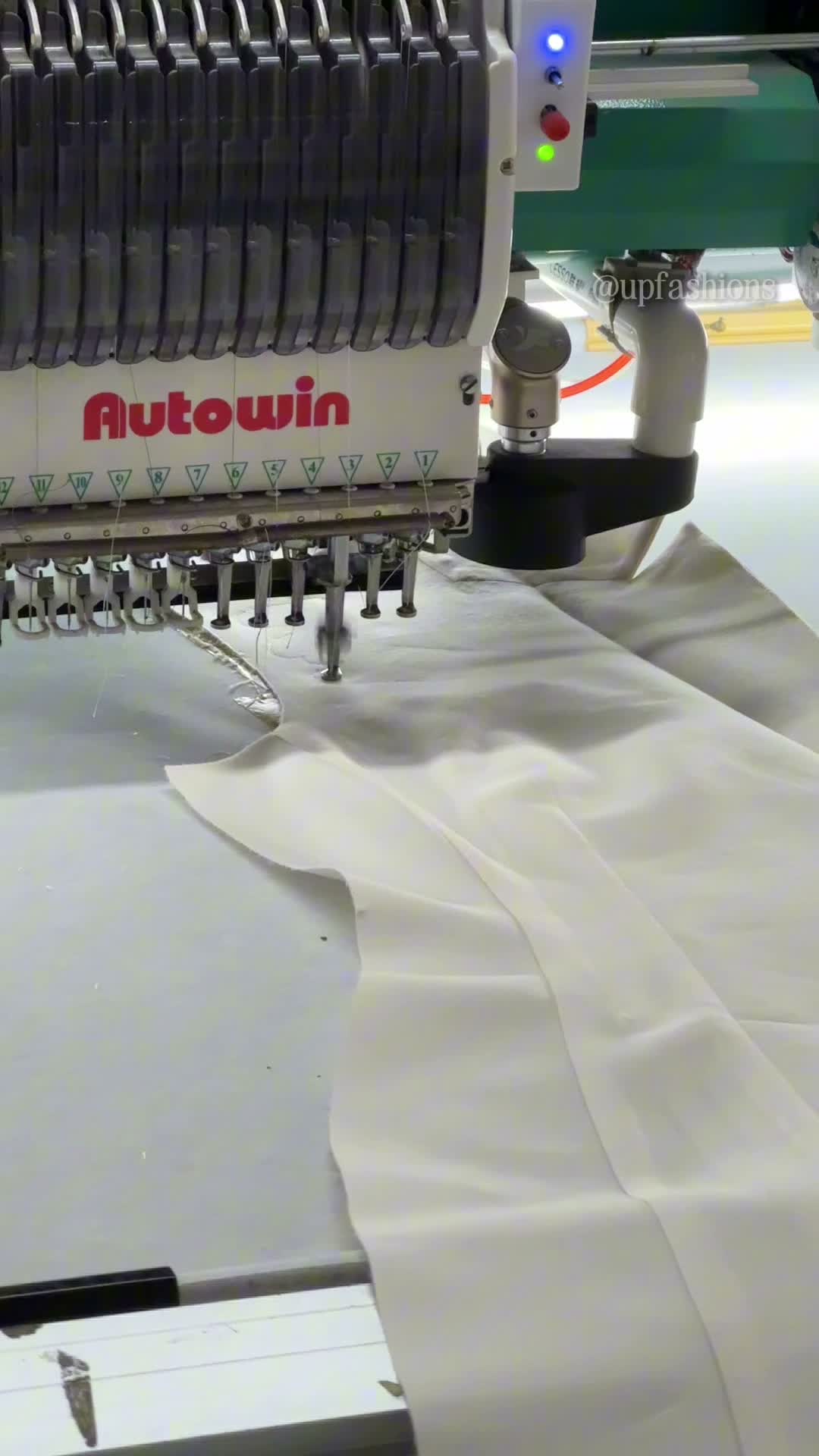
Machine embroidery is the right call for most 30-piece runs. It is repeatable, which matters when every garment must match the sealed sample, and at 12 to 14 stitches per centimetre the work reads as premium on silk and viscose grounds. Digitising a motif costs roughly USD 30 to 80 once per design, and each stitched garment adds USD 6 to 18 depending on the area covered.
Hand work earns its place on accents: a crystal cuff, a couched cord edge, a hem finish that machines cannot copy. It adds roughly USD 25 to 120 per garment on a kaftan, and the cost is stable only if the motif area is fixed in the quote. If a client wants hand accents at MOQ 30, we say yes, the ornament spec just has to be precise, because hand work drifts when the brief is vague.
Ask the factory which technique it is quoting. A price that does not name hand or machine is a price that will change at the sample stage.
Beads and stones that survive Gulf wear
The failure mode Gulf buyers fear most is shedding: stones lost after a season, sequins that dull, thread that snaps under the arm. We anchor every stone with a double-back stitch and pull-test at 8N on 10 percent of the run. Bead weight is checked per square metre so heavy crystal does not stretch a silk ground, and thread colour is sealed against the final fabric under daylight and boutique light.
Fabric and embellishment fail together, which is why we test shade at intake before a single motif is stitched, the same discipline our colour matching guide describes for dye lots. If a motif will not hold on the fabric you chose, we flag it before sampling, not after.
Locking the ornament in the mock-up rounds
Embellished kaftans need their own sampling rhythm. Round one fits the silhouette in muslin. Round two brings the real fabric with the motif stitched in place and a density sample of the beadwork, this is the round that decides everything. Round three is for heavy beading or a second colourway, and it is optional.
Two to three rounds land in 14 to 21 days, and the sealed sample follows by day 42. The seal matters more on decorated work than on plain styles: the signed sample is the reference for bead size, spacing, stitch density and colour, and bulk is measured against it piece by piece. For more on why rounds go wrong, our mock-up guide covers the failure points.
Planning the Gulf calendar: weddings, Ramadan, Eid
Embellished kaftans sell on the occasion calendar, not on a retail season. Winter weddings run from roughly October to February across the Gulf, and Ramadan and Eid shift about 11 days earlier every year, so the buying window never sits still.
We plan beaded drops backwards from the event: two to three mock-up rounds, a sealed sample by week six, then 6 to 10 weeks of bulk after fabric confirmation, plus 5 to 8 days of air freight to Kuwait, Saudi or the UAE. For a Ramadan or Eid drop, start five months out; ornament capacity books early, and a decorated kaftan that lands after the occasion is not late, it is unsellable. Our Gulf timelines guide shows the same maths for plain runs.
What to send a kaftan manufacturer in your first email
Send a reference photo of the drape and ornament you want, a sketch of motif placement, the retail price you are aiming at, and the delivery month. That is enough for a line-by-line quote within 24 hours, including the hand-versus-machine decision with its costs.
For a whole capsule, our first design agent, A1, coming online soon, drafts design images from your brand positioning, the styles you need and a colour theme, so placement arrives as a visual brief instead of a guess. It is still in training, so treat early output as a sketch; we take it from there.
Every decorated order we ship is inspected three times per garment against the sealed sample, and the shipment is video-documented carton by carton. The full sequence is on our production process page, common fit and beading questions are answered on the FAQ page, and you can read decorated kaftan results on our case studies page.
Go deeper: Evening wear manufacturer for Gulf brands: the checklist · Abaya manufacturer: fit, fabric and MOQ 30 · Gulf timelines and the Eid calendar · Case studies: kaftan and gown runs for Saudi, Kuwait and the UAE
Questions we get about this
Can hand beading stay consistent across a 30-piece kaftan order?
Yes, when the ornament is sealed in a density sample before bulk: bead size, spacing, stitch density and anchor are all signed off against the sample. Hand accents on MOQ 30 kaftans are regular work for us; labour is quoted per piece, and every garment is inspected three times against the seal.
How long does an embellished kaftan order take before Eid?
Plan five months out for a decorated Eid drop: two to three mock-up rounds in 14 to 21 days, a sealed sample by day 42, then 6 to 10 weeks of bulk after fabric confirmation. Air freight to Kuwait, Saudi or the UAE runs 5 to 8 days, so a late start rarely survives the calendar.
Quick Take
Embroidery is the supply chain. Ornament is 40 to 60 percent of a decorated kaftan's cost, so choose the factory by its embroidery floor, not its showroom.
Seal the ornament on the real fabric. Machine at 12 to 14 stitches per centimetre for repeatability; hand accents for cuffs and edges, never approve a motif on substitute cloth.
Work backwards from the occasion. Winter weddings, then Ramadan and Eid, which shift 11 days earlier each year, start a beaded drop five months out.
About UP Fashion
UP Fashion is a Guangzhou garment manufacturer founded in 2016, run by a team with 20+ years of OEM experience in silk, wool and embroidery. We produce 30 to 150 pieces per style for labels in the Gulf, the UK, Europe and the US, inspect every piece three times, and hold colour to Delta E under 1.0. Embellished kaftans and abayas for Kuwait, Saudi and the UAE are regular work, this guide is how we run them.





