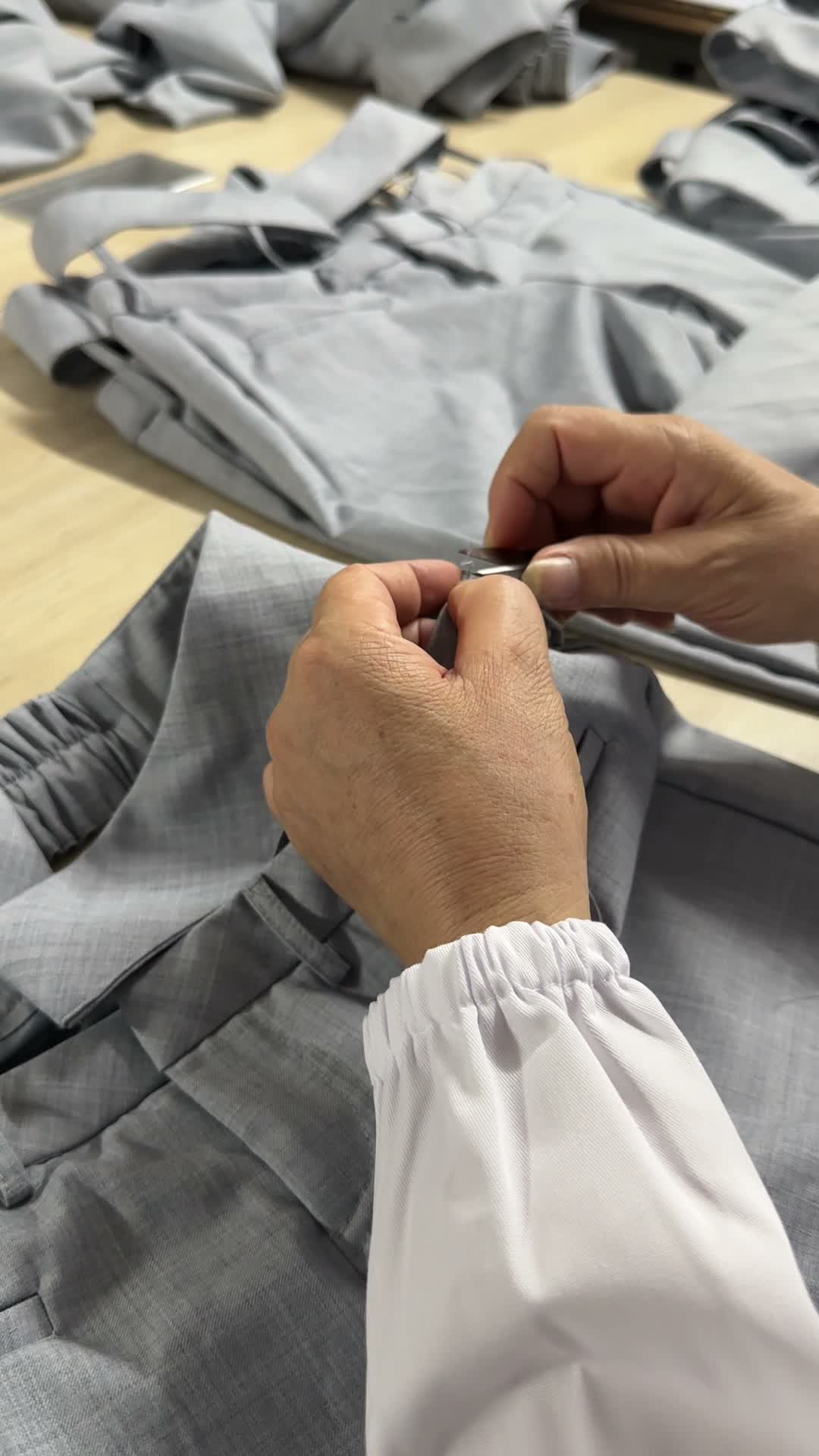
Choosing an abaya manufacturer for Gulf brands comes down to three things before price: the modest fit spec, the fabric, and whether MOQ 30 is a real number or a sales line. We are a Guangzhou garment factory that has run 30-piece abaya and kaftan orders for Kuwait, Saudi and UAE brands since 2016. Most first emails we receive ask one question, can you hold Gulf quality at small volume? Yes, and here is the spec that makes it work.
Send us the lengths you need, the fabric you want and your delivery month, and we quote within 24 hours. The longer version is below, because the details, how a hem falls over a hijab-friendly layer, whether a shoulder seam sits right under a shayla, are what separate a factory that understands modest wear from one that treats it as a long dress.
Abaya manufacturer for Gulf brands: why the fit spec comes first
Most abaya problems start before the fabric is cut, in a pattern graded like Western outerwear. Gulf abayas are bought on length, coverage and fall, not on bust fit. So we put three numbers in every tech pack: front length, back length and sleeve length, measured on the finished garment against your size chart.
Kuwaiti buyers usually want a longer, fuller line; Saudi clients often ask for cleaner tailoring around the shoulder. We do not guess which, we grade from your numbers, and we check both size extremes on a size set, because hem fall is exactly where small-batch grading drifts.
One mistake we admit making early on: shortening the first mock-up to save fabric. That is how length errors happen. Now the first mock-up is always cut at full length, and the hem is reviewed on a live model or mannequin at the height you specify before bulk.
Nida, crepe or silk: what Gulf abaya fabric really needs
For everyday abayas, nida, a matte polyester microfiber, dominates the market for a reason: it drapes, resists creasing and holds colour after years of washing. For evening and occasion pieces, our clients move to silk crepe or crepe de chine, usually 16 to 19 momme, where the matte finish reads expensive and the weight gives the skirt a clean fall.
Two properties decide whether a fabric looks cheap, and both are testable: sheen and weight. A glossy poly that shines under boutique light photographs like costume; nida and silk crepe are chosen partly because they stay matte. We verify weight by grams per metre and fibre by burn test at intake, and we wash-test every new abaya fabric for shrinkage before cutting, a crepe that shrinks 4% after the first wash will pull a hem up an inch.
For summer, breathability matters as much as drape. We will tell you honestly when a beautiful heavy fabric is wrong for a June delivery to Riyadh.
Embroidery and stonework that survive Gulf wear
Abaya and kaftan embroidery is usually the make-or-break detail, and the failure mode is specific: motifs that shift shade between rolls, or stones and sequins that shed after a season. We digitise every motif for the actual fabric, seal the thread colour against it, and anchor stones with a double-back stitch, pull-tested at 8N on 10% of the run.
Machine work at 12 to 14 stitches per centimetre is right for most runs of 30 or more; hand accents, a crystal cuff, a hand-finished hem, go in where the retail price supports them. If a motif will not hold at small volume, we say so before sampling, not after. More on the shade side is in our colour matching guide.
MOQ 30 abaya production and the Eid calendar
MOQ 30 is per style per colour, which is how Gulf boutiques test two or three silhouettes without betting the season. Two styles in compatible fabrics can share one production slot, and that is the trick most new clients miss, a capsule of three styles at 30 each is often cheaper than one style at 90, because setup is spread across the same line time.
The real constraint is the calendar, not the unit price. Sampling runs two to three mock-up rounds in 14 to 21 days, a final sample lands in 28 to 42, and bulk takes 6 to 10 weeks after fabric confirmation, with air freight 5 to 8 days to Kuwait, Saudi or the UAE. For an Eid drop, start four to five months out; a Ramadan capacity is booked early, and an abaya that arrives after Eid is not late, it is unsellable.
What to send an abaya manufacturer in your first email
Reference photos of the drape you want, a length table for front and back, the fabric (or ask us to source), trim preferences and the retail price you are aiming at. We quote line by line and flag when a silhouette fights the fabric or the price point.
For a whole capsule, our first design agent, A1, coming online soon, drafts design images from your brand positioning, the styles you need and a colour theme, so you can brief us with visuals before the first pattern. It is still in training, so treat its early output as a sketch; we take it from there.
Every Gulf order we ship is inspected three times per garment against the sealed sample, and the shipment is video-documented carton by carton. That is the short version of how MOQ 30 modest wear is supposed to work.
Go deeper: Evening wear manufacturer for Gulf brands: the checklist · Gulf timelines and the Eid calendar · Case studies: abaya and kaftan runs for Kuwait, Saudi and the UAE
Questions we get about this
Can you make abayas at MOQ 30 per style per colour?
Yes. Sampling takes two to three mock-up rounds in 14 to 21 days, a final sample in 28 to 42, and bulk runs 6 to 10 weeks after fabric confirmation. Start four to five months before an Eid drop and air freight of 5 to 8 days is comfortable.
How do I know the abaya length will come out right?
Send front and back length numbers, and we cut the first mock-up at full length rather than shortened to save fabric, that is where length errors come from. The hem is reviewed on a live model or mannequin at your specified height before bulk.
Quick Take
Modest fit is a written spec. Front length, back length and sleeve length in the tech pack, graded from your chart, checked at both size extremes.
Fabric is a test, not a guess. Matte nida for everyday, 16 to 19 momme silk crepe for evening; weight and fibre verified at intake, shrinkage wash-tested before cutting.
MOQ 30 works when the calendar is respected. Per style per colour, styles share slots, and an Eid drop starts four to five months out.
About UP Fashion
UP Fashion is a Guangzhou garment manufacturer founded in 2016, run by a team with 20+ years of OEM experience in silk, wool and embroidery. We produce 30 to 150 pieces per style for labels in the Gulf, the UK, Europe and the US, inspect every piece three times, and hold colour to Delta E under 1.0. Modest wear in silk and embroidery is regular work, this guide is how we run it.





