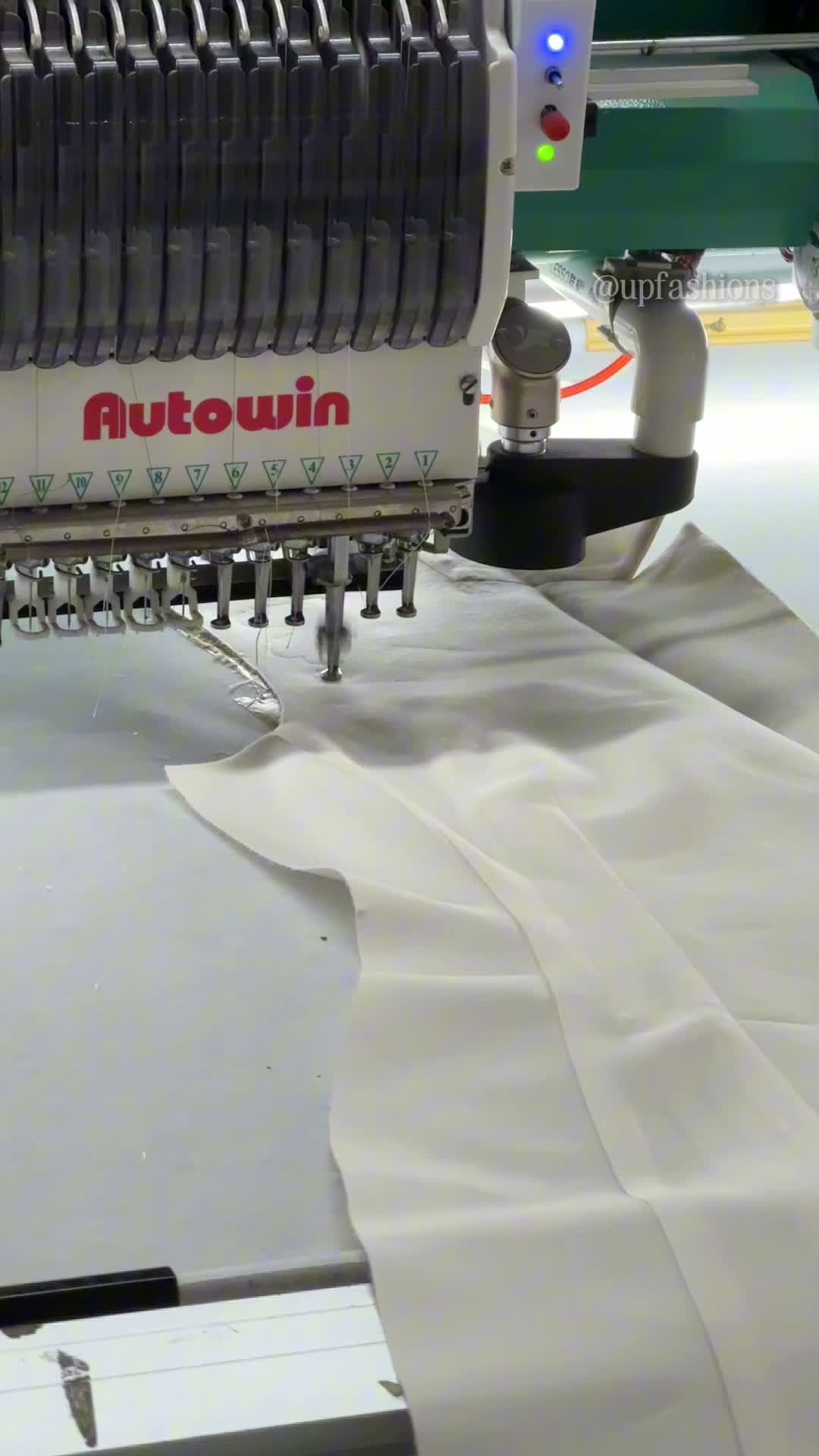
A private label clothing manufacturer buys thread by colour rather than by style, and the seam is where a $600 dress starts to look like a $200 one. Thread is dyed to a shade card, never to your fabric, so a match is a decision somebody has to make on purpose.
The question that arrives most often is why the stitching reads lighter than the cloth. Two reasons: polyester thread reflects light differently from a matte viscose, and the match was approved under a shop light instead of daylight.
Tex numbers: the four weights a small brand actually needs
Tex is the weight of 1,000 metres of thread in grams, and it replaces the ticket numbers that mean different things in different countries. Tex 40 suits silk and lightweight viscose, Tex 60 covers cotton and linen shirting, Tex 80 handles suiting and denim, and Tex 105 is for visible topstitch.
Go one weight too heavy on a fine viscose and the seam puckers before the thread ever breaks. Go too light on a tailored jacket and the seam grins open at the armhole within a month of wear.
Dyed to match: what it costs and when it is worth it
A thread supplier's shade card is free and covers about 400 colours. Dyed to match your fabric is a different purchase: a minimum of 12 to 24 cones, 5,000 metres each, a lot fee of $80 to $160, and seven to ten days.
On a 30-piece run that is 60,000 metres of thread you will not finish, and it is still the right call on a $40 garment where the seam is meant to disappear. On a $12 cotton tee, a shade card match one step darker is the professional answer.
Why the same thread looks darker on satin and lighter on crepe
Light behaves differently on a flat filament surface than on a textured one. A navy polyester thread on navy satin picks up a specular highlight along the stitch line and reads lighter; the same thread on crepe sinks into the texture and reads darker.
Then the lighting changes the verdict. A 3000K shop light pushes everything warm, and a 5000K daylight lamp shows the difference you will see in a client's showroom. We approve thread under both, and photograph the seam.
Thread lot numbers: the banding nobody checks
Two cones of the same colour from different lots can differ enough to see when they sit in one garment. The dye bath changes between runs, and a supplier shipping from stock will not warn you.
In 2023 we finished 60 per cent of a 40-piece run with a second lot of navy that arrived mid-production. Eleven dresses showed a lighter seam under studio light, and we restitched them over four days. Every thread order now carries a lot number on the ticket, and we buy the whole run in one lot or not at all.
Contrast stitching: choose it on purpose
Visible topstitch is a design decision, not a matching failure. When a brand asks for contrast, we ask for a Pantone TCX number rather than a description, and we suggest two shades darker than the fabric for a seam that reads as intentional.
The stitch length matters as much as the colour. A 3.0 to 3.5 millimetre topstitch in Tex 80 reads as tailoring, while the same colour at 2.2 millimetres reads as a repair.
Tension and pucker: the line that looks like a stain
Too much needle tension pulls the fabric into the stitch and creates a puckered line that photographs as a dark stripe. It is not a colour problem at all, and brands regularly send us photographs of it described as a dye fault.
We sew a 30-centimetre test seam on the actual cloth before every run and check both sides. It takes four minutes and it is the only way to set tension on a fabric that has not been on that machine before.
Colourfastness: the wash test before bulk
Thread can bleed even when the fabric does not, particularly on saturated reds and deep indigos. We wash a sewn sample at 40 degrees with a white cotton cloth and check whether the white picks up colour.
If it does, the thread changes, not the washing instruction. A care label that says cold hand wash is a workaround, and a client who ignores it will be the one who finds out.
How many cones a 30-piece run actually needs
A dress uses 90 to 140 metres of thread, so 30 dresses need about 4,000 metres, which is less than a single 5,000-metre cone. Most of the thread cost on a short run is the minimum order, not the sewing.
We still buy two cones, one for the machine and one for the overlocker. A cone that runs out mid-lay is how one seam ends up a shade off the rest of the garment.
Storage: why thread snaps after six months
Thread takes up moisture and loses strength in a hot, dry store, and a cone left on a sunny shelf for a season will break at the needle under normal tension. We keep stock sealed at 20 degrees and use it within 12 months.
Old thread is the quiet cause of seam failures that get blamed on the fabric.
What to send with your artwork
Three things: a Pantone TCX reference for the thread, a fabric swatch from the actual bulk lot, and one sentence on whether you want the seam to disappear or to show. Those three answers remove most of the back-and-forth.
Our private label program keeps the approved thread cone with the sealed sample, the case studies show a lot-change restitch, and the FAQ covers trim minimums on short runs.
Go deeper: which trims survive a small run · how stitch density decides whether a seam holds · why your navy is not our navy
Questions we get about this
Can I supply my own thread?
Yes, if it arrives before the cutting date and the lot number is on the carton. Thread that turns up mid-run is how banding starts.
Is cotton thread better on a luxury garment?
On a garment that will be washed hot, sometimes. On viscose and silk, polyester core-spun holds the seam and takes dye more consistently.
Quick Take
Tex 40 for silk and viscose, Tex 60 for cotton, Tex 80 for suiting. One weight too heavy puckers the seam before it breaks.
Dyed-to-match starts at 12 to 24 cones and $80 to $160 in lot fees. Worth it when the seam should vanish, wasteful when it should not.
Approve thread in daylight, not under a shop light. 3000K and 5000K give two different verdicts on the same cone.
About UP Fashion
UP Fashion is a Guangzhou garment manufacturer founded in 2016, run by a team with 20+ years of OEM experience in silk, viscose and embroidery. We quote from 30 pieces, show the rate we used, and inspect three times before shipping.





