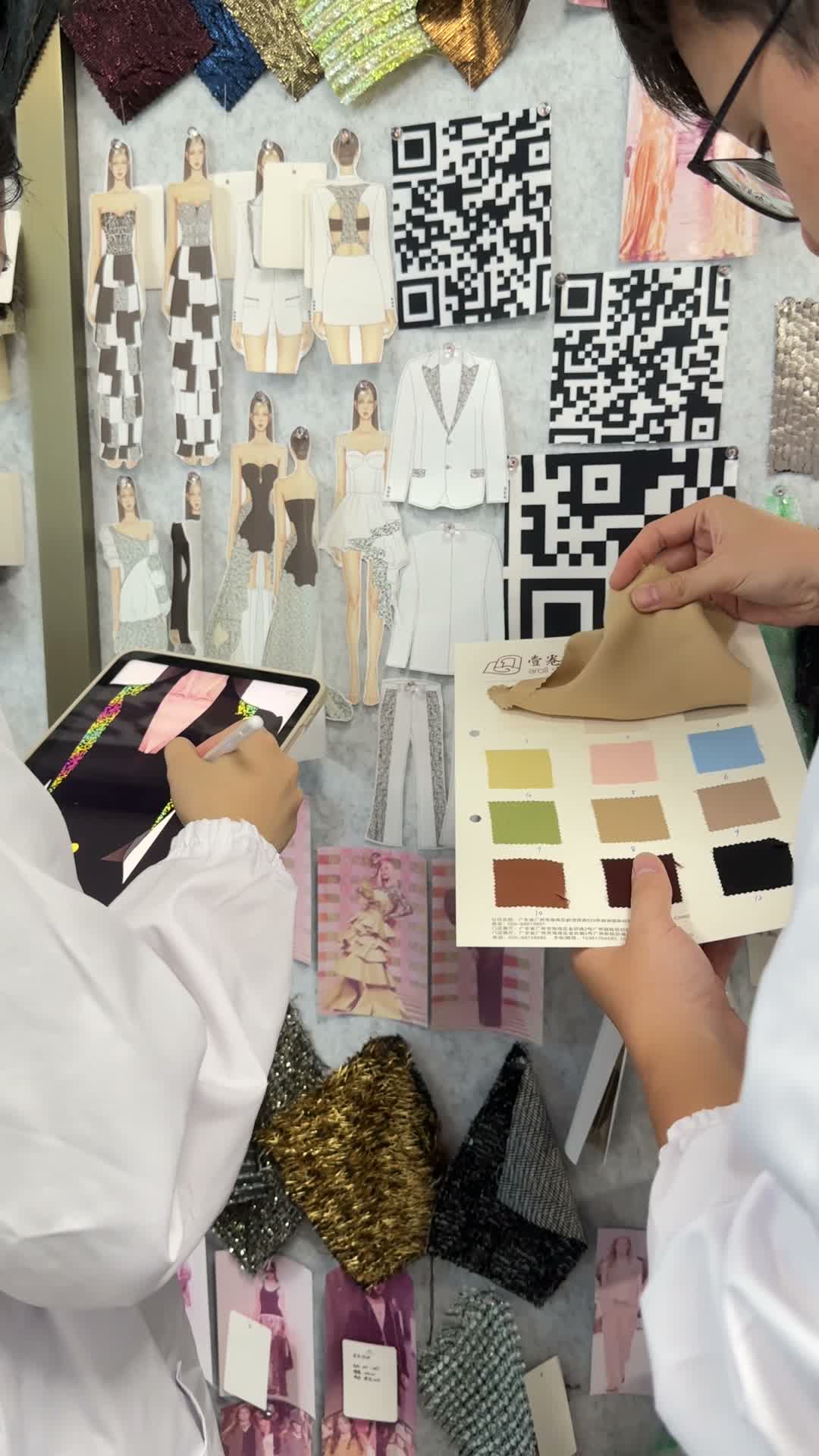
Clothing manufacturer for US designers: the phrase usually comes with one worry, can we work with a Guangzhou factory without ever visiting? Yes, and most of our American clients have never stepped into the workshop. The workflow is built for distance.
Half of our clients are in the US, from New York to LA, and they run first seasons remotely because a visit is not required. What is required is structure: a weekly rhythm, video at every gate, and a sealed sample you approve in writing. Here is how that actually runs.
Working with a clothing manufacturer in Guangzhou from the US
The first difference from a local factory: your project moves in weekly batches instead of daily chatter. Monday you send feedback, Tuesday we pattern, Friday you get mock-up photos and video. One focused round trip beats ten scattered messages, and the time gap works in your favour, you wake up to progress, not to questions.
Every milestone is documented the same way: photos of your actual fabric on the cutting table, video of the first piece off the line, a filmed final inspection before the cartons close. You see the run as it happens, which is more than most in-person visits ever capture.
How the remote workflow actually runs
Step one is a brief, and it does not need to be a tech pack. Reference photos, your measurements, target retail price, we build the tech pack, digital pattern and full grading. Step two is two to three mock-up rounds in 14 to 21 days, reviewed by video and photo. Step three is the final sample in your actual fabric, sealed and signed, shipped to you or kept on file.
Step four is bulk, 6 to 10 weeks after fabric confirmation, with three inspections per garment. Step five is freight: air in 5 to 8 days or sea in 25 to 30. On a 30 to 60 piece order, air almost always wins, because the extra cost buys a whole selling window.
The 12-hour gap and why it helps
New York is 12 hours behind Guangzhou, LA is 15. At first that feels like a delay; in practice it is a handoff. You send notes at the end of your day, the workshop works through its day, and answers are waiting when you open the laptop. Decisions that take a week in a shared office take two days here, because nobody is idle, someone is always working.
The rule that keeps it honest: every comment is answered within 24 hours, in writing, with photos if it touches the garment. If a factory cannot commit to that, remote production will frustrate you no matter how good the sewing is.
What replaces a factory visit
We run live video walkthroughs on request, down the cutting table, across the lines, into finishing. For the visit you would normally make at first-piece, you get video of the first garment measured against the sealed sample. For the final audit, you get the filmed carton-by-carton inspection we send before every shipment.
None of this replaces being there. But for a 30-piece first order, it replaces 90% of the value of a visit at 1% of the cost, and the saved flight money usually funds the sampling round.
The US maths: duties, freight and the season window
Import duties into the US run roughly 5 to 20% depending on the HTS category, and the entry is on your side; we handle export documents, packing lists and certificates of origin. Freight for a small batch runs $3 to $6 per piece by air. Factor both and the landed cost still beats most small batch production USA options by 30 to 50% at the same quality.
Work backwards from your drop date. For a first order, start 5 to 6 months before you want goods in hand; reorders with patterns on file compress to 10 to 12 weeks. The calendar, not the quote, is the real constraint, the same logic we lay out in our lead time breakdown.
What to send in your first email
Send reference photos, a size chart, your target retail price, and the season you are aiming at. We quote line by line within 24 hours and tell you honestly if the silhouette fights the fabric or the price point.
For series planning, our first design agent, A1, coming online soon, takes your brand positioning, the styles you need and a colour theme, and drafts design images so you can brief us with visuals instead of words. It is still in training, so treat its early output as a sketch; we take it from there.
If you are a US designer testing a first run, ask us how the workflow would look for your specific silhouette. The answer is usually the same: send the brief, watch the photos, approve the sample, and the goods arrive in time for the season.
Go deeper: How to audit a Guangzhou garment manufacturer: 7 red flags · Why mock-up rounds keep coming back wrong · Case studies: MOQ 30 runs for US and Gulf brands
Questions we get about this
Can I work with a Guangzhou factory without visiting?
Yes, most of our US clients never visit. The workflow runs on weekly batches, video at every gate, and a sealed sample approved in writing. A live video walkthrough replaces most of the value of a visit at a fraction of the cost.
How long does air freight from Guangzhou to the US take?
Five to eight days door to door, which is why small batches still work for US brands that need stock in season. Sea takes 25 to 30 days and only pays off above roughly 200 pieces.
Quick Take
Remote works if the workflow is structured. Weekly batches, 24-hour written answers, video at every gate, that is the whole system.
A video walkthrough replaces most of a visit. For a 30-piece first order it covers 90% of the value at 1% of the cost.
The calendar is the real constraint. Start 5 to 6 months before drop for a first order; reorders compress to 10 to 12 weeks.
About UP Fashion
UP Fashion is a Guangzhou garment manufacturer founded in 2016, run by a team with 20+ years of OEM experience in silk, wool and embroidery. We produce 30 to 150 pieces per style for labels in the US, Europe, the UK and the Gulf, inspect every piece three times, and hold colour to Delta E under 1.0. Half our clients work with us remotely, this guide is how.





