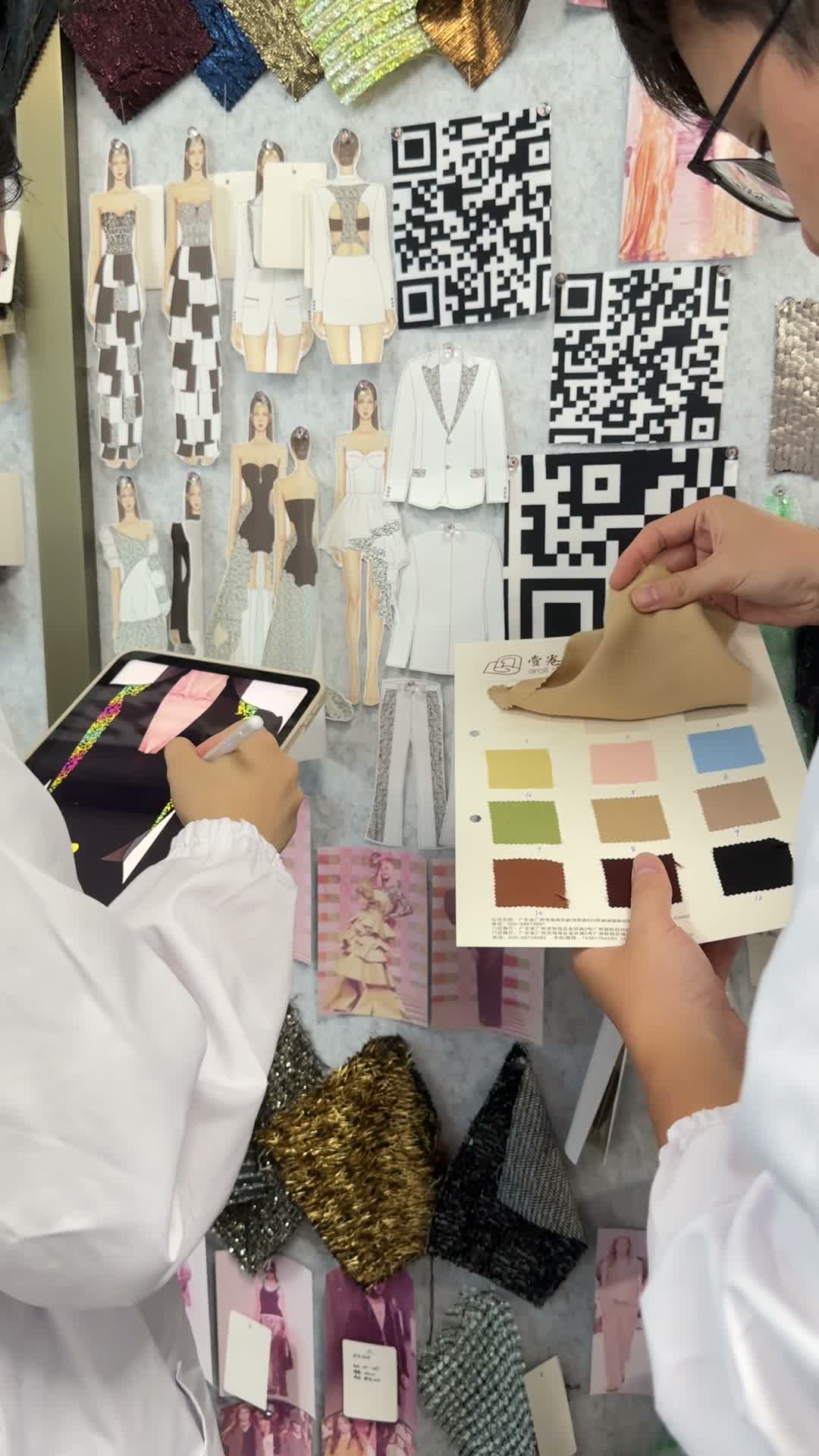
Which designs should a brand avoid on a first 30-piece run? Five, and we name them before you pay. As a cut and sew manufacturer we quote the construction, not the sketch, and some sketches cost twice what they look like.
The five that hurt most: a fully reversible garment, a 2 millimetre hem on unlined satin, an invisible zip through a curved seam, heat-set micro-pleating, and a 12-panel princess dress with piping. Every one is makeable. Every one adds 40 to 110 per cent to the sewing minutes, and at 30 pieces you carry that alone.
None of this is a refusal. It is a price, said early enough to be useful.
Reversible garments: every seam gets sewn twice
A reversible wrap or slip is two garments sharing one cloth. Every seam is finished on both faces, every raw edge is enclosed, every closure has to work from either side.
Our standard dress runs 42 minutes of sewing. The reversible version we sampled ran 78, an 86 per cent increase.
At $0.28 a sewing minute that is $10 a garment before the extra pressing, and pressing a reversible piece takes twice as long because both faces show.
Reversible also removes your tolerance. A 2 millimetre seam that hides inside a lining is visible when both sides are public.
A 2 millimetre hem on unlined satin: the machine decides
Narrow rolled hems need a folder foot, a fine needle and a steady hand, and satin will show every skipped stitch at eye level.
Seven extra minutes a garment is the honest number, plus a 3 millimetre maximum on four layers of cloth.
The bigger problem is failure rate. On our first narrow-hem satin run the reject rate at inspection was 14 per cent, against 3 per cent on a standard 1 centimetre hem.
If the design needs a light hem, a 6 millimetre baby hem with a folded edge reads the same at arm's length and costs a third of the rework.
Invisible zips through a curved waist seam
An invisible zip wants a straight, stable seam. Put it through a curved waist and the teeth pull away at the curve's apex.
Our rework rate on curved invisible zips is about 22 per cent, which means one in five garments comes back to the machine.
You pay for the rework twice: once in the original minutes, once in the fix, plus the pressing and the inspection that caught it.
Move the zip to a straight side seam, or use a centred zip and make it a design feature. Either is cheaper than fighting the curve.
Heat-set pleating: the supplier minimum nobody checks
Micro-pleating is not done in our building. It goes to a pleating house, and pleating houses sell by the metre or by the panel, not by the garment.
The minimum we can usually get is 100 metres of cloth or 60 panels, at about $2.80 a metre on top of your fabric.
On 30 pieces you either pay the minimum and store the surplus, or you accept a pleating house's own colour and weight.
Heat-set pleats also need a synthetic blend to hold. Pure viscose pleats beautifully and relaxes after two washes, which is a return, not a style.
The 12-panel princess dress and its nine extra minutes
Twelve panels means 22 seams, and each one is a place where two curved edges must match without a pucker.
Our measurement: 9 extra sewing minutes a garment, 8 per cent more fabric, and $1.10 a piece for the piping.
Princess seams also punish a grading mistake. A 4 millimetre error at the bust repeats at every one of the 22 seams.
Six panels with a shaped waist gives most of the silhouette and half the risk. We suggest it often, and brands take it about half the time.
Lining and interlining fix two of the five
A lining turns the 2 millimetre hem into a 10 millimetre bagged hem, and hides the inside of a seam that would otherwise be public.
On the princess dress, a fusible front panel holds the curve and removes most of the piping pucker at the bust.
Neither is free. A 65 gsm lining adds $2 to $3 a garment, and a fusible that will not bubble adds $0.40.
Both are cheaper than the rework they prevent, which is why we quote them as options instead of letting a brand meet them at inspection.
What all five have in common
Each one asks a machine to do something at 30 pieces that a factory only gets good at by doing it 300 times.
Repetition is what makes a hard construction cheap. Thirty pieces never reach the point where the operator stops thinking about the seam.
We price the first hundred and hope for the second. That is the honest reason a hard design costs more at 30 than at 300.
The reversible wrap we should have refused
In 2021 a brand asked for a reversible linen-blend wrap at 30 pieces. We said yes because the sketch looked simple.
It was not simple. The belt had to be finished on both faces, the tie sat at a seam junction, and pressing took 11 minutes a piece.
We finished three weeks late and $9 a garment over our own quote. We honoured the price, which is why we now say no earlier.
Ask us what a design really costs before the sample, not after. Our cut and sew program quotes construction minutes line by line, the FAQ covers what we decline and why, and the case studies show a six-panel version of a dress that started at twelve.
Go deeper: the minutes inside a factory quote · why seams split at the curve · what cut and sew includes
Questions we get about this
Will you still make a reversible piece if I accept the price?
Yes, at 30 pieces, with a mock-up before bulk and a written tolerance on the seam. We only refuse when the cloth cannot take the construction.
Is a 2 millimetre hem ever the right call?
On a lined garment with a stable cloth, yes. On unlined satin at 30 pieces, it is the most expensive 5 millimetres in the garment.
Quick Take
Reversible doubles the seams. 42 minutes becomes 78, and both faces are public.
Narrow hems fail at inspection. 14 per cent reject on satin, against 3 per cent on a 1 cm hem.
Pleating has a supplier minimum. 100 metres or 60 panels, whichever the house prefers.
About UP Fashion
UP Fashion is a Guangzhou garment manufacturer founded in 2016, run by a team with 20+ years of OEM experience in silk, viscose and embroidery. We quote from 30 pieces, show the rate we used, and inspect three times before shipping.





