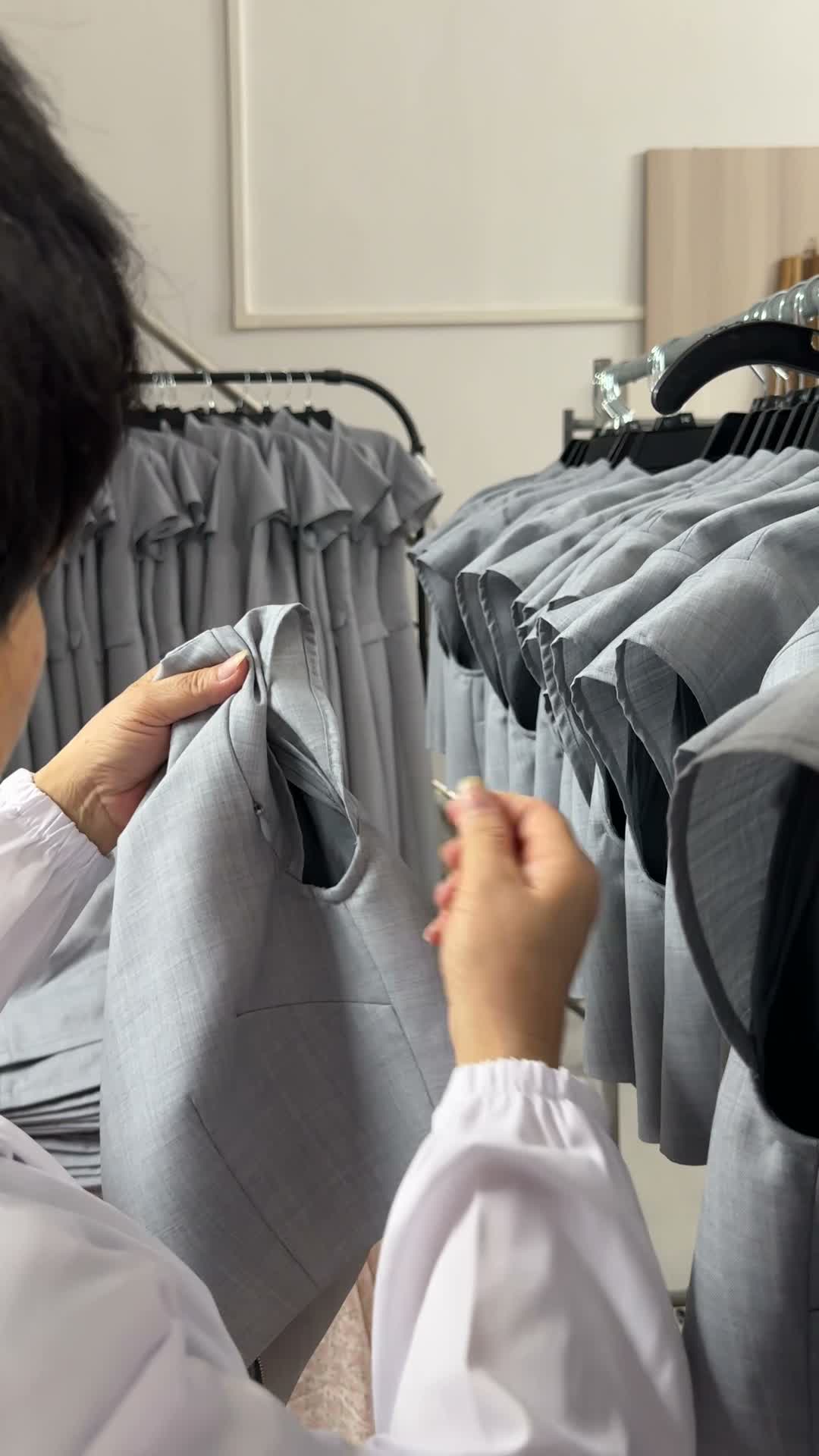
A private label clothing manufacturer wins the order at the sample and loses it in bulk. We have run the same style from sample to shipping hundreds of times, and the failures sit almost always in the gap between an approved sample and a production line that has never seen it.
So what happens after you approve? You pay 30 percent, we buy the fabric and cut, and 70 percent is due against the shipping documents.
Between those two payments sit three inspections, a bulk fabric rest, and one dress-form fitting per size. The sample is a promise. Bulk is where it gets kept or broken.
What happens between sample approval and the cutting table
The approved sample becomes the sealed sample, and it stays in the sample room for the whole run. Every operator works against it, not against a photo.
The sealed sample is signed by both sides before cutting starts. If there is a dispute at the end, the conversation is then about one garment rather than about memory.
Two documents travel with it. The spec sheet, with a tolerance on every point of measure, and the trim card, with the actual labels, zips and thread from the sample. If a point of measure has no tolerance, nobody can fail it, and nobody can fix it either.
The fabric is then rested before cutting. Twenty-four hours minimum for a woven, longer for anything with stretch.
What the 30/70 payment actually buys
The 30 percent covers the fabric and the trims, which have to be paid for before they leave the mill. That is the whole reason the deposit exists, and it is not a trust exercise.
The 70 percent is due against the shipping documents: the commercial invoice, the packing list and the inspection report. Not against a promise, and not before the cartons are counted.
We will not ask for more than 50 percent up front, and we will not take payment into a personal account. Both are worth walking away from.
What we need from you during the four weeks
Three things, and all of them are yours to supply rather than ours to chase.
Final label and care artwork as vector files, not a screenshot. The care text in every language of the market you are selling into, because a French label on a garment sold in Germany is a compliance problem rather than a design choice.
And any change request in writing before cutting starts. After the lay is cut, a change is a re-cut, and a re-cut on 30 pieces is a real cost rather than a small one.
Three inspections, and what each one catches
Inline, during sewing. This is the cheapest place to catch a problem, and it catches tension, seam slippage and the first sign that a size is drifting.
End of line, on the finished garment. Measurements against the spec sheet, symmetry, and the fit on a form.
Pre-shipment, on packed cartons. Piece count, colour consistency across the run, and the label and care text one last time.
We use AQL 2.5 for major defects on bulk, which allows a defined number of minor issues rather than pretending zero is achievable.
The report comes to you with the defect count, not just a pass or fail. If the number is inside the limit we ship and tell you what it was. If it is outside, we fix the run and the schedule moves.
Dress form fitting: the check a tape measure misses
Every size is fitted on a form before packing, with the approved sample fitted beside it. A garment can measure perfectly and still hang wrong.
That is not theory. In 2020 we shipped 40 dresses that all measured inside tolerance and all hung short at the hem, because the sample fabric had been rested and the bulk had not. The measurements passed and the garment failed. Bulk cloth now rests a full day before cutting, and it is written into our process.
Where a bulk run goes wrong after a perfect sample
Three places. A substitute trim that looks identical in a photo. A second dye lot that reads one shade warmer under daylight. And a correction made to the sample after approval that never reached the spec sheet.
All three are avoidable with one habit: put the change in writing on the spec sheet, not in a chat message. We have been on both sides of that mistake, which is why the spec sheet is now the only document that counts.
There is a fourth, less dramatic one: a run that is rushed to catch a date. Compression comes out of the rework window rather than out of the sewing, and a run with no rework window ships whatever it has.
What you get at shipping
Cartons packed by size and colour, a packing list that matches the carton count, the inspection report, and the trim card with supplier reference numbers.
The trim card matters more than it looks. It is the only thing standing between a matching label on your reorder and a 500-piece minimum from a trim supplier who has never heard of you.
The balance falls due when those documents are in your hands, not when the ship leaves. That gives you a clear look at the run before the last payment moves.
Our private label page sets out what we produce under your brand from 30 pieces. The FAQ page answers deposit and inspection questions, and the case studies page lists delivered runs with their inspection outcomes. Our production process page shows where the 30/70 payments and the three inspections sit. The Fashion Pains Solver we are bringing online will compare the approved sample's spec sheet against the bulk inspection log and flag drift before the cartons close.
Go deeper: private label clothing for new brands: one style, 30 pieces · private label quotes: why three factories quote three prices · mock-up rounds: why yours keep coming back wrong
Questions we get about this
What deposit is normal on a first bulk order?
Thirty percent at approval and seventy percent against the shipping documents is standard, and the deposit maps to the fabric and trim bill rather than to trust. Be wary of a request for the full amount up front, or a request to pay an individual rather than a company account.
Do I get to see the garments before I pay the balance?
Yes. The pre-shipment inspection report and photographs of the packed cartons go out with the shipping documents, and you approve them before the balance is due. Ask for the piece count per carton as well, because that is where a shortage shows up first.
Quick Take
The sample is a promise; bulk is where it is kept. The approved sample stays in the sample room and every operator works against it.
30/70 is a cash-flow fact, not a trust test. The deposit buys the fabric and trims. The balance is due against documents, not against a promise.
Three inspections, plus a dress form on every size. A garment can measure inside tolerance and still hang wrong, which is why the form check exists.
About UP Fashion
UP Fashion is a Guangzhou garment manufacturer founded in 2016, run by a team with 20+ years of OEM experience in silk, viscose and embroidery. We quote orders from 30 pieces, publish our tolerances, and inspect three times before shipping.





