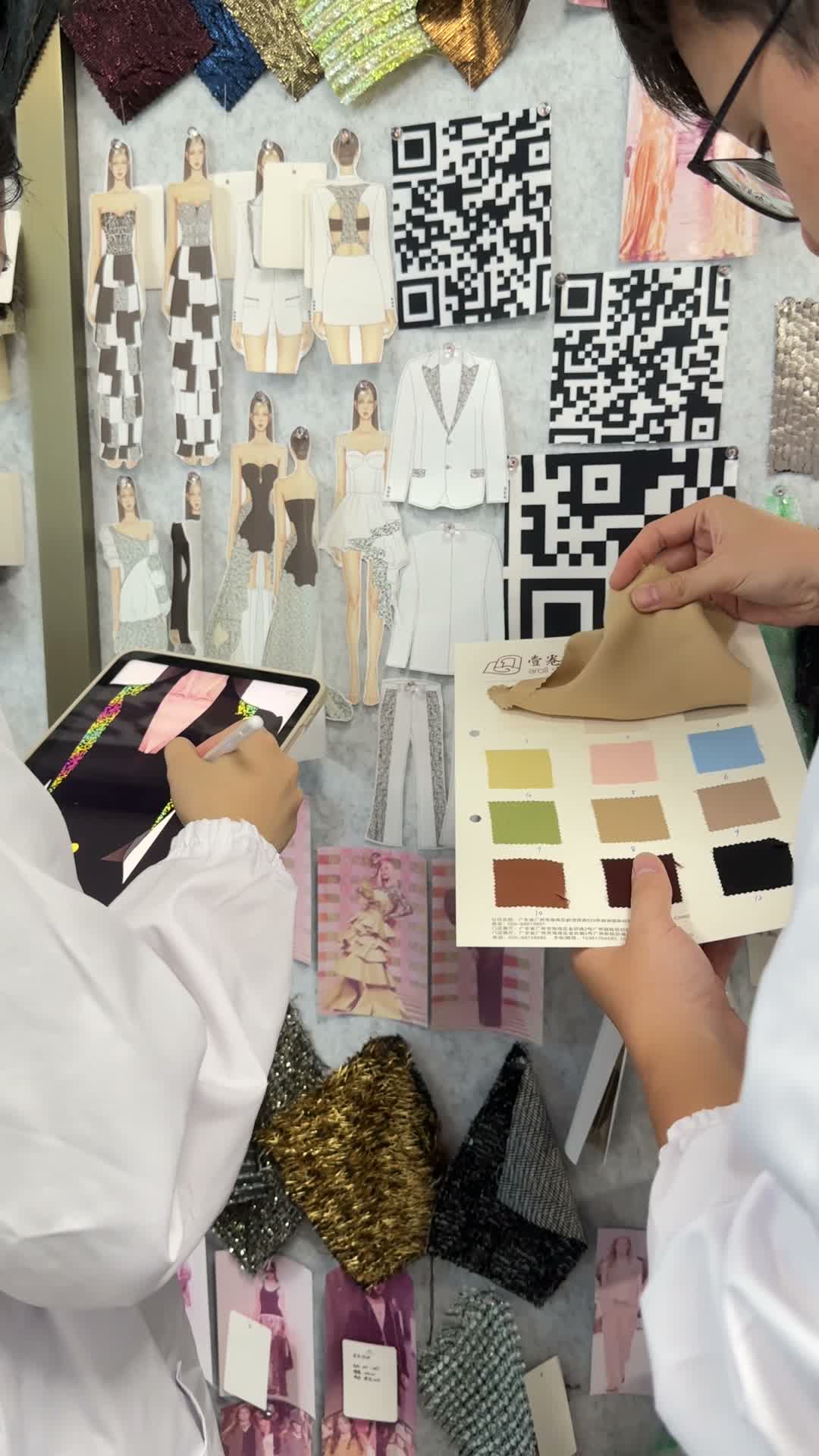
A private label clothing manufacturer sews your label into garments you own the design of, your fit, your fabric, your brand name on the neck tape. What surprises most new founders is how little they need to begin: one style, one fabric, thirty pieces and a date. That is a complete first order, and it is how most of our private label clients started.
Where does a one-person brand begin? Not with a factory visit, and not with ten sketches. Begin with one garment you can defend, a retail price you can hit, and the season you need it for. Send us references plus those two numbers, and we handle the rest of Process 1: technical drawing, fabric sourcing, grading and a line-by-line quotation within 24 hours.
Private label clothing for a new brand starts with three decisions
Every private label project we open reduces to three choices. The silhouette, a shirt, a dress, a blazer, a pair of trousers, sets the pattern work and the machine time. The fabric family decides cost and how the garment behaves on a body. The budget decides both.
We guide new brands toward fabrics we cut weekly and can quote without guesswork: viscose and viscose blends, linen and cotton-linen, satin, polyester suiting and TR suiting. These cover most first collections at retail prices between USD 250 and 1,000. If your dream style needs a custom jacquard weave or a mill minimum of 800 metres, that is a later conversation, not a first order.
One honest note: we do not make categories outside our line, and we say so before you spend a cent on sampling. Say the word and we will tell you plainly whether your first style fits our floor, so the second email you send is to the right factory.
Why 30 pieces is the right first order for an unknown label
A first order exists to answer one question: does this garment sell at this price? Thirty pieces answers it with the smallest possible loss if the answer is no. Thirty pieces also forces honest planning, two to four colours across four sizes, instead of a fantasy of ten styles nobody has tested.
At 30 pieces you pay a fixed-cost premium because pattern making, grading and the first mock-up cost the same whether we cut 30 or 300. That premium is usually smaller than the cost of 300 unsold dresses, which is the trade-off every new label should run before ordering big.
Process 2: two mock-up rounds fix the fit before bulk
Our sampling runs in two rounds. Mock-up one uses a substitute fabric close to your chosen cloth, and it exists to test the silhouette and the proportions, where the waist sits, how the sleeve hangs, how the collar rolls. Most fit problems appear here, in cheap cloth, which is exactly the point.
Mock-up two uses your real fabric and refines the details: seam placement, button spacing, pressing. When it passes, we seal a final sample, photograph it against the spec sheet and send it to you for written approval. Nothing moves to bulk without that signature, because a written approval is what prevents a rework dispute later.
We still mis-read a rushed email sometimes. That is why every mock-up correction is written down and every round has a date, the process is built to survive our mistakes and yours.
Process 3: bulk at 30 pieces still gets three inspections
Small volume does not mean looser checking. After your 30 percent deposit opens the run, the garments pass three inspections: one during cutting and sewing, one mid-production, and one pre-shipment. Every piece is tried on a dress form before packing, measured against the sealed sample and photographed for your review.
The remaining 70 percent is paid only after those photos land in your inbox. The full sequence, Process 1 quotation, Process 2 sampling, Process 3 bulk, is laid out on our production process page, and the whole programme for brands like yours sits on our private label page if you want one place to read it.
What a first private label order really costs
Three numbers give you a realistic envelope. A dress or shirt pattern with full grading runs roughly USD 150 to 400. The two mock-ups and the sealed sample land in the same range again. Bulk for a viscose or linen dress at 30 pieces usually quotes between USD 40 and 75 ex-works before freight, depending on fabric weight and trims.
So a complete first style, pattern, samples and 30 garments, often sits between USD 1,800 and 3,500 at the factory door. That number surprises founders who expected five figures, and it is why private label is a viable route for a one-person brand rather than a corporate decision.
Two habits keep that number honest. Ask for the quote line by line so you can see where the money goes, and read our FAQ page before you compare two factories. A quote that hides its lines is hiding something.
The mistakes we see most in first private label orders
Four mistakes repeat. Ordering too many styles at once divides your attention and your quality control. Choosing a factory on sample price alone usually means the bulk will cut corners.
Changing the design after bulk starts burns money on both sides. And skipping the written approval turns small misunderstandings into expensive ones.
Founders who avoid those four move fast. Most first orders run 12 to 14 weeks door to door, and when a style sells out, the reorder is cheaper and faster because your pattern, blocks and fabric records stay on file with us.
When your first order sells through, the natural next questions are about reorders and sizing depth. Our design agent A1, in training and coming online soon, will help you explore silhouettes before you commit to a sample round. Until then, the fastest way to test an idea is still a 30-piece order, and our case studies page shows how other new labels ran theirs.
Go deeper: cost per garment: the lines your quote won't show · CMT or full package for a first order · why mock-up rounds come back wrong · planning production around a target price
Questions we get about this
Can one person really launch a private label brand without a team?
Yes, and 30 to 50 pieces per style is exactly the scale built for it. Your job is three approvals, spec and price, the sealed sample, the finished goods, and our floor handles the pattern, fabric, sewing and three inspections in between. Most first-time founders spend three to five focused hours a week on production.
Do I need a registered trademark before placing an order?
Not for the first run. We sew any label you provide, including woven neck tapes and hang tags, from your artwork or even a photo of your current branding. Register the trademark while the samples are in progress, it takes months in most markets, so starting production does not have to wait for it.
Quick Take
Start with one style, not ten. One garment, one fabric family, 30 pieces and a delivery date is a complete private label first order.
Expect USD 1,800 to 3,500 all-in. Pattern, two mock-ups, sealed sample and 30 bulk pieces usually land in that range at the factory door for a dress or shirt.
Two mock-ups, three inspections, written approvals. Fit is fixed in cheap cloth first, bulk is checked three times, and nothing moves without your signature.
About UP Fashion
UP Fashion is a Guangzhou garment manufacturer founded in 2016, run by a team with 20+ years of OEM experience in silk, wool and embroidery. We built our private label workflow, Process 1 quotation, Process 2 two mock-up rounds, Process 3 bulk with three inspections, for one-person brands, with MOQ 30, fabric guidance on viscose, linen, satin and suiting, and free AI model photos with every bulk order. This guide is how we start new labels the honest way.





