A production quote usually arrives after the design is finished. Ours often starts the other way round: you name the price you need to hit, and we plan the garment backwards, choosing fabric, lining, construction and trims against your target before a single sample is cut. Budget-based production is how a growing share of our quotes now begin, because it answers the only question that matters early, is this garment buildable at your number?
So yes: tell us your target price per piece and we work from there. Send a sketch, a reference garment or a rough spec with a number attached, and we come back with options, what the price buys in silk, what it buys in cupro, and where the design itself has to change to stay honest. What we will not do is quote one quality and quietly deliver another.
Step 1, Decide which number: FOB price or landed cost
First, name which number you mean. FOB at our Guangzhou door is not the same as landed in New York or London: freight, duty and VAT sit between them, and a USD 100 landed target usually leaves only USD 85 to 90 for the factory once those are stripped out. We plan against the number that protects your margin, and we write the border into the quote so the target cannot be quoted against the wrong one.
Second, say whether the target is fixed or a range. A USD 60 to 70 range lets us return two honest specifications, one at the bottom of the range, one at the top, instead of one stretched plan. A fixed number is fine too; it just shortens the fabric list faster.
Step 2, Choose the fabric weight the target price can carry
Fabric is 30 to 45 percent of most small-batch quotes, so it is the first lever we pull. A USD 60 dress target points to a silk twill or cupro at 12 to 16 mm rather than a heavier charmeuse; at USD 90 we can keep the charmeuse and add a lining. Two cloths that look alike can sit USD 4 to 8 per metre apart, and a dress needs 1.3 to 1.6 metres of body fabric before the lining is counted.
We quote against a named mill and a named weight, never the word "silk" on its own. That keeps the number from drifting when the cloth is bought, and it is the same discipline described in our fabric sourcing guide. If a lot runs heavier than planned, the difference appears in the quote before cutting, not in a surprise on the invoice.
Step 3, Spend the construction budget where customers look
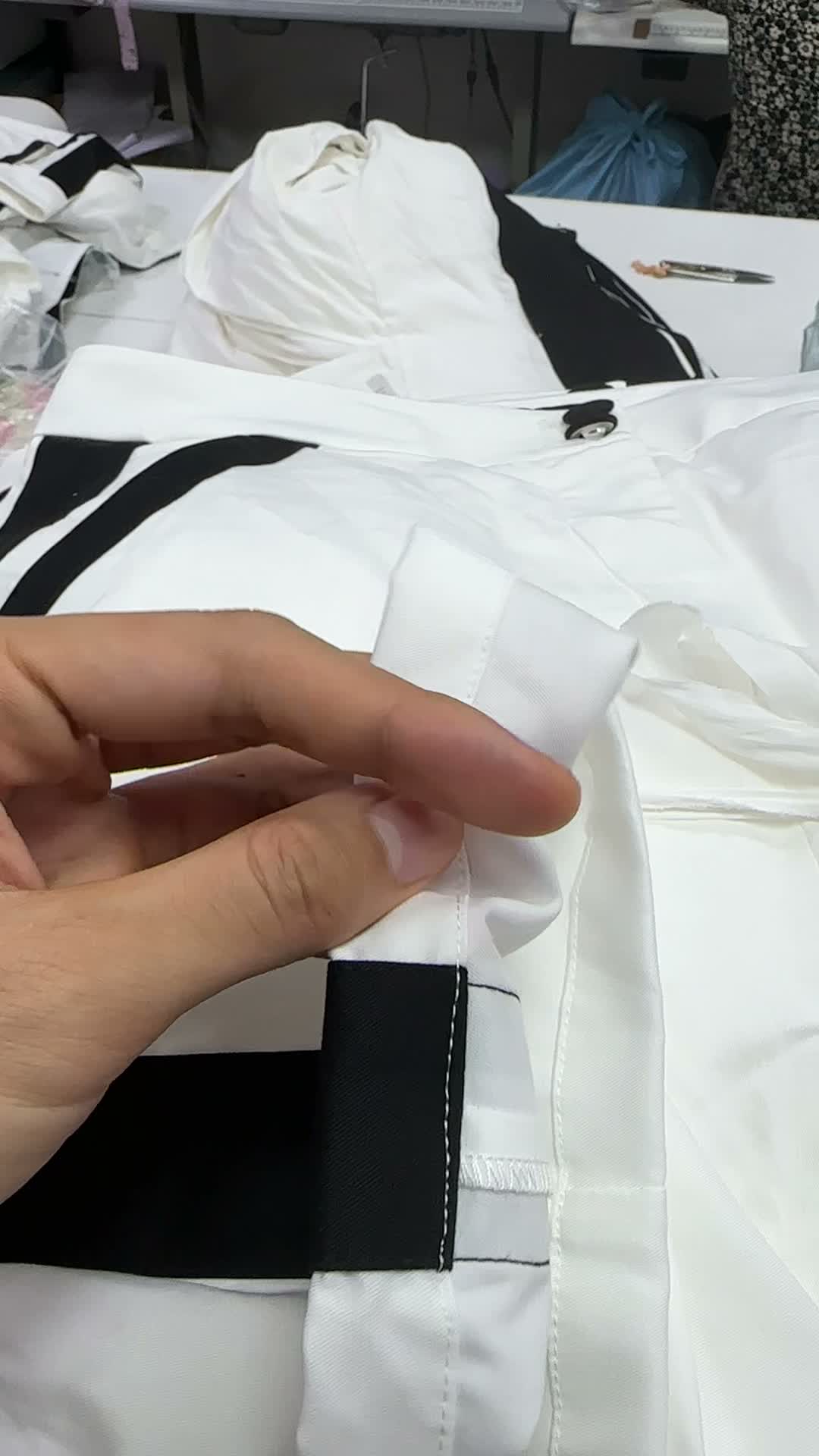
A blazer at USD 110 and a blazer at USD 160 can share the same wool. The gap is structure: a half-canvas front, a shaped sleeve head, under-collar work and lined pockets. We spend where a customer looks and feels, lapel roll, shoulder line, pocket mouth, and save where they never look.
Dresses and jumpsuits follow the same rule. An invisible zip and a bound seam earn their cost; an extra internal frill does not. Tell us which details your customer touches, and we protect those lines first and trim the rest.
Step 4, Count trims before they eat the unit price
Trims carry fixed costs that a 30-piece run cannot spread. Custom metal buttons start around 1,000 pieces, a bespoke woven label rarely makes sense below 300, and printed main labels cost a fraction of both. When a target price is tight, we move those decisions to stock options and write the saving on the quote.
Zips, elastics and hanging loops look small on a spec and add up fast. The only quote we trust names every trim line by line, which is why our cost per garment guide exists. If a line is missing, the cost has not gone away, it has just moved somewhere you will not see until later.
Step 5, Lock the spec, the price and the calendar in one pass
Once the choices are made, we write them into one document: fabric with mill and weight, every trim, the construction notes, the FOB price, and dates for mock-up, sealing, bulk and shipment. Nothing moves after that without a written change order, because a drifting spec is how target prices quietly become overruns.
Sampling at MOQ 30 is a real cost, usually USD 150 to 400 per style, credited when you confirm. Two focused mock-up rounds beat five drifting ones, and our mock-up guide explains why that first round decides the whole project.
Step 6, If the number will not work, we say so before sampling
Sometimes a target is not reachable at the quality a garment needs, and we say so before sampling. A fully canvassed wool blazer at USD 55 FOB is not something we will promise, and neither is a beaded silk gown at USD 40. We show the arithmetic, the cloth alone at the right weight costs more, and offer the next honest option: a lighter fabric, a simpler construction, or a corrected number.
That honesty costs us a few jobs and keeps the ones that matter. A brand that knows its real floor price can plan a whole season around it, and that is exactly what budget-based production is for.
When the design itself is still loose, the method works one step earlier. Our first designer agent, A1, is in training and coming online soon: you give it your brand positioning, the silhouettes you want and a colour story, and it returns design drawings, so a budget conversation can start from a visual brief instead of a guess. The agent shortlists; our floor still decides what is sewable through sealed mock-ups.
The full sequence behind a price-locked order, mock-up rounds, a sealed sample, three inspections per garment and export packing, is documented on our production process page, and the budget, deposit and fit questions buyers ask most are answered on our FAQ page. How MOQ 30 keeps unit costs down is explained on our low MOQ landing page, and orders we planned this way, from silk dresses to wool blazers, are on our case studies page.
Go deeper: cost per garment: the lines your quote won't show · small MOQ production: what 30 pieces can and can't do · mock-up rounds: why yours keep coming back wrong · Case studies: price-locked runs
Questions we get about this
How is budget-based production different from just asking for the cheapest quote?
A cheap quote starts from a spec and trims it until the number fits. Budget-based production starts from your number and builds the honest spec that fits it, the best fabric and construction your target can carry, chosen openly instead of stripped silently. The difference shows up in the sample, where nothing has been swapped.
What happens if my target price is too low for the design?
We tell you before sampling, with the arithmetic. You then choose from three options: a lighter fabric, a simpler construction, or a corrected target. We never quietly downgrade the cloth to make the number work, because a garment that fails at retail costs far more than the saving.
Quick Take
Plan from the number, not the sketch. Fabric, lining, construction and trims are chosen against your target FOB or landed price before sampling, that is where the real saving is found.
Fabric is the first lever. It runs 30 to 45 percent of a small-batch quote, and two similar cloths can sit USD 4 to 8 per metre apart.
Unrealistic targets get an honest no. We show the arithmetic and offer a lighter spec, a simpler build or a corrected number, never a silent downgrade.
About UP Fashion
UP Fashion is a Guangzhou garment manufacturer founded in 2016, run by a team with 20+ years of OEM experience in silk, wool and embroidery. We produce 30 to 150 pieces per style on our own floor, inspect every piece three times, and hold colour to Delta E under 1.0. Budget-based production planning is the first conversation we have with most clients, this guide is how it works.





