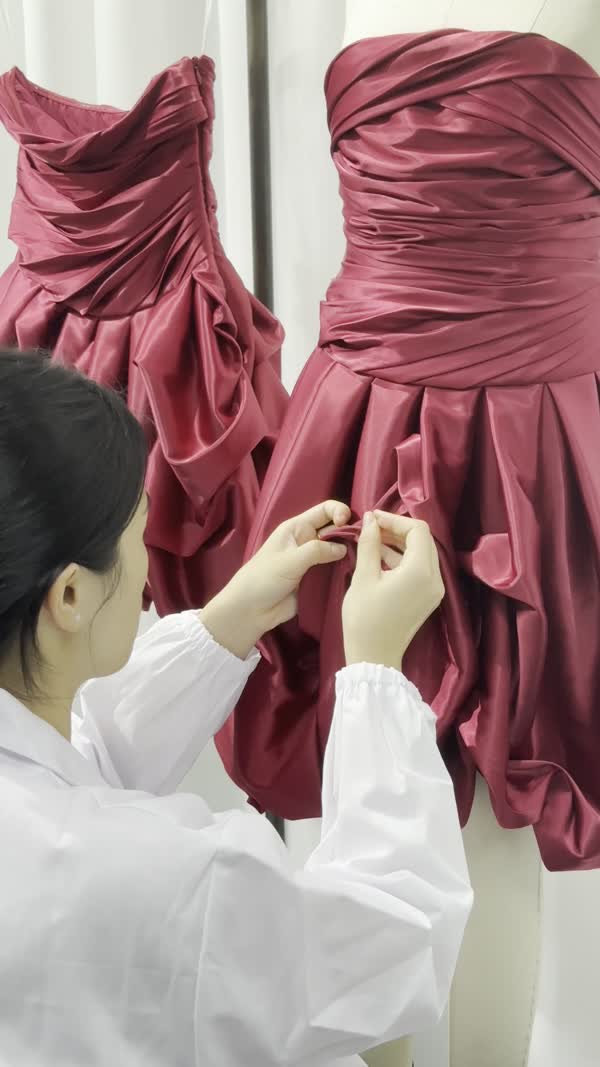
You run the brand alone, and a small MOQ clothing manufacturer does the making, that split is what makes a one-person fashion label workable at all. We have built our workflow around founders who are not production people, and this guide is the honest version of how one person moves a style from a folder of references to delivered stock without a team.
The short answer first: yes, one person can run production alone, but not by doing more, by deciding fewer things. Our three-process system exists to shrink your job to three decisions: approve the specification and price, approve the sealed sample, and approve the finished goods. Everything else is our floor's job. Here is how the split works week by week.
What solo founders actually struggle with in clothing production
Four problems repeat in every one-person brand we take on. Too many parallel tracks: design, social media, sales and production all scream at once, and production loses because its feedback has no deadline. Unclear specs: a reference photo without measurements produces a sample that is "not quite right" in ways nobody can fix.
No one to check quality, so defects travel to the customer instead of the inspection table. And cash timing: bulk money leaves months before sales come back. The fix is not more hours, it is a partner who owns the making end to end, plus gates that force decisions at the right moment, early, when a change costs nothing.
How the three processes divide the work for one person
Process 1 is specification and quotation. You send references, your target price and your season date. We draft the technical drawing if there is no tech pack, mail a fabric sample card so you can feel the cloth, and quote line by line against your number. Your job: say yes, or say what to cut.
Process 2 is sampling. We run two mock-up rounds, fix the fit and the details, and seal a final sample. Your job: one honest feedback round per mock-up, in writing, on time. This is the process where solo projects die, because the founder disappears for three weeks and the sampling clock keeps running.
Process 3 is bulk. Thirty percent deposit, cutting, sewing, finishing, three inspections, and every piece tried on a dress form before packing. Your job: pay the deposit, review the inspection photos, pay the balance. We have shipped 30-piece first runs to founders who have never visited Guangzhou and never will.
The solo calendar from kickoff to delivery
With feedback arriving on time, a 30-to-150-piece order runs about 12 to 14 weeks door to door.
Weeks one and two: drawing, quotation, fabric card. Weeks three to six: mock-up one, your corrections, mock-up two, final sample. Weeks seven to fourteen: bulk, with inspections around week eight, week eleven and the pre-shipment check. Then five to seven days in the air.
Your real workload is lighter than it sounds: three to five focused hours most weeks, with two peaks, sample approval and pre-shipment review. What stretches the calendar is almost never the factory. It is feedback latency, so we set written deadlines at every gate and nudge when a decision is due.
We still mis-read a rushed email now and then. That is exactly why every approval is written down and every gate has a named date, the process survives our mistakes and yours.
What to automate and what to keep human when you work alone
Automate the parts that repeat: our quotation and specification forms become your checklist, shipping documents are prepared here, and reminders carry each gate to your inbox. For early design, our first designer agent A1 is in training and coming online soon, give it your brand positioning and the silhouettes you are considering, and it returns drawings so you can see the shape before spending a mock-up round. When bulk finishes, free AI on-model photos of your garments come with the run, a trade-off we compare honestly in our AI photos guide.
Keep human the three approvals that money cannot undo. Feel and approve the final sample yourself, in your hands.
Check colours against the sealed swatch in daylight. Read the pre-shipment report and zoom into the photos. Those fifteen minutes per gate are the whole quality system of a one-person brand.
When a solo founder should not go it alone
Three situations call for slowing down rather than pushing through. Launching more than two or three styles in your first season while holding a day job, start with one hero style and prove the loop. Needing cash back within sixty days of paying a deposit, because bulk money is tied up for the full 12 to 14 weeks. And choosing a factory on price alone, skipping the checks in our audit guide, because the cheapest quote is how solo brands learn what rework costs.
A typical first project looks like this: one style, 30 pieces, two to four colours, aimed at a stockist or a pre-order window. If it sells, the reorder is faster and cheaper, because your blocks, sample and fabric standards stay on file. If it does not sell, you are out 30 dresses, not 300. The runs behind this workflow, from first orders to reorders from one-person brands, are on our case studies page.
The minimum a solo founder needs before the first email
Five things: reference photos or rough sketches, the price you can pay at the factory door, the market and its sizes, the date the clothes must arrive, and the quantity you can afford, 30 is a real starting number, and our low MOQ page explains why. If you do not have a tech pack, say so; we draw from references, and our tech pack guide shows what a full spec contains if you want to build one later.
If a production pain is still unnamed, our Fashion Pains Solver maps the five brand pains to real fixes before you commit money to a sample. When you are ready, the first email takes ten minutes and the quotation phase is free. More of the questions solo founders ask, sampling, sizing, QC, are answered on our FAQ page, and the whole three-process sequence is on our production process page.
Go deeper: AI on-model photos vs real shoots · what a tech pack must contain · why mock-up rounds come back wrong · planning production around a target price
Questions we get about this
Can I really run production while keeping my day job?
Yes, if one factory owns the making end to end and you protect two approval windows: sample feedback and pre-shipment review. Expect three to five focused hours most weeks, peaks at those two gates, and a 12-to-14-week calendar. What breaks the plan is silence, not busyness, so we agree written deadlines for every decision.
What is the first decision a solo founder should make?
Your finished price and your delivery date. Everything else, fabric, trims, construction, reverses from those two numbers, which is the same logic as our target-price planning guide. Send those numbers with your references and the quotation phase starts from a real target instead of a wish.
Quick Take
Your job is three approvals. Approve the specification and price, approve the sealed sample, approve the finished goods, everything else belongs to the factory floor.
12 to 14 weeks, three to five hours a week. The calendar stretches on feedback latency, so every gate gets a written deadline.
Automate the paperwork, keep the sample human. Templates, reminders and our coming design agent carry the admin; your hands, your daylight and your eyes carry the final approvals.
About UP Fashion
UP Fashion is a Guangzhou garment manufacturer founded in 2016, run by a team with 20+ years of OEM experience in silk, wool and embroidery. We built our three-process workflow, specification and quotation, sample making, bulk production, around founders who run their brands alone, with MOQ 30, three inspections per garment and written deadlines at every gate. This guide is how we work with solo founders.





