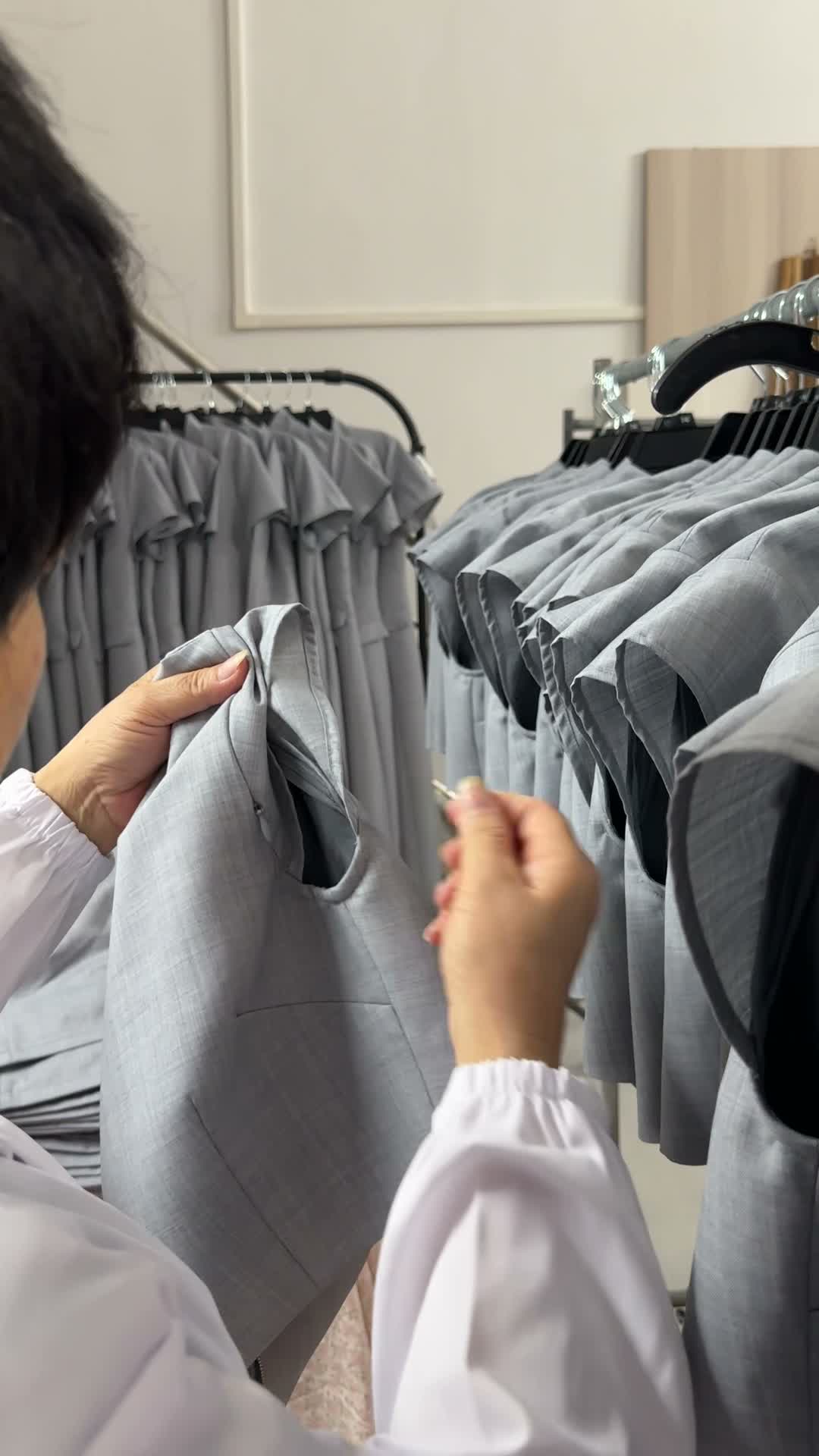
UK import duty on clothing from China is 12% for most garments under the UK Global Tariff, and import VAT adds 20% on top of the duty and the freight. We are a Guangzhou garment factory that ships small batches to London and Manchester every month, and UK brands are usually surprised by the border bill, not by its size, but by how predictable it is when someone writes the numbers down.
What does a 30-piece order actually cost at the border? Take the ex-works price, add roughly 12% duty, then add 20% VAT on the goods plus duty plus freight. Stacked, that is about 34% on top of the factory price before shipping, and most of it is reclaimable if you are VAT registered. Here are the three numbers that decide the real bill.
UK import duty on clothing from China: the 12% default
Most apparel sits in chapters 61 and 62 of the tariff, and under the UK Global Tariff most of it carries 12% duty. Some categories differ, certain silks and knitwear fall lower, a few synthetics run higher, which is why the commodity code for each style matters more than a rule of thumb.
China has not had developing-country preference on this route since 2021, so the full rate applies; there is no workaround in how we invoice, and we would not pretend otherwise. What we do is check the commodity code for every style before shipping and write it into the export documents, so the number your customs broker quotes matches the goods in the carton.
UK VAT at 20%: who pays and when it hurts
Import VAT is charged on the goods, the duty and the freight together, that is the stacking that surprises people. A VAT-registered UK business reclaims it on the next return, so the real cost is the cashflow gap, not the tax. A non-registered startup or a private buyer pays it and cannot reclaim.
The old low-value relief below £15 disappeared in 2021, so there is no small-consignment exemption to plan around, VAT applies from the first carton. We flag this before you commit because it changes the retail maths on a first 30-piece order.
What freight adds per piece
Air freight from Guangzhou to the UK runs 5 to 8 days and adds roughly $3 to $6 per piece on a small batch, depending on weight and volume. Sea takes 25 to 30 days and only pays off above roughly 200 pieces. On a 30-piece order, air wins, because the extra cost buys a selling window, and the duty and VAT are charged on a lower freight figure than you might expect, since we ship at commercial weight, not inflated volumetric guesses.
A worked example: what a 30-piece order actually pays
Take a silk evening dress quoted ex-works at $45 per piece, FOB Guangzhou. Thirty pieces is $1,350. Duty at 12% adds $162. Air freight at $4 per piece adds $120. Import VAT at 20% is charged on the goods plus the duty plus the freight, $1,350 plus $162 plus $120 is $1,632, and 20% of that is $326.
The full landed bill is about $1,958, or $65 per dress before any UK margin. If you are VAT registered, the $326 comes back on your next return, which brings the real cost to about $54 per dress. If you are not registered, the $326 is part of your true cost, so it belongs in the retail price before you commit, not discovered after the invoice lands.
Two details we always write down in the quote: the duty is not reclaimable, and it is calculated on the commodity code we verify against the UK tariff for that exact style. When a client wants a fixed landed number instead of managing the border themselves, we can quote DDP through a UK customs partner, the price includes duty and VAT, and there are no surprises at delivery.
Documents that stop customs delays
Border holds on small shipments are almost always paperwork problems: a commercial invoice that does not match the packing list, a missing certificate of origin, or a commodity code that describes a dress as a blanket. We prepare the export side, commercial invoice, packing list, certificate of origin and verified commodity codes, before the cartons close.
One honest caveat: we are a factory, not a customs broker. For complicated entries, use one; for a standard 30-piece garment shipment, our documents plus your broker's code check is normally enough. That combination is why our UK clients rarely see a hold longer than a day.
Why the maths still favours Guangzhou for a small run
Add the duty, the VAT and the air freight, and a 30-piece order from Guangzhou still lands well below UK small-batch production at the same quality, for embellished silk and evening work, the saving is usually 30% or more. The trade-off is lead time and planning, which is why we ask UK clients to start first orders four to five months ahead of the season, as set out in our lead time breakdown and the UK brand guide.
The border is not where small-batch sourcing fails. It fails when the numbers are hidden until the invoice arrives. Ask for the commodity code, the duty rate and the VAT treatment in writing before you commit, and the bill at the border becomes a line you planned for, not a surprise.
Go deeper: Small batch from Guangzhou for UK brands · Why your clothing order is always late · FAQ: shipping, payments and customs
Questions we get about this
Do you charge the import duty, or do I pay it?
You pay it, on your side of the border. We prepare the export documents, commercial invoice, packing list, certificate of origin and verified commodity codes, so your customs broker can calculate the exact duty and VAT before the shipment lands.
Is the 12% duty the same for a silk evening dress?
Not always, silk and some knitwear categories carry lower rates, and a few synthetics run higher. We check the commodity code for each style against the UK tariff before shipping and state it in writing, so you are never quoted the wrong number.
Quick Take
The default duty is 12%. Most clothing in chapters 61 and 62 sits there, and China has had no preference since 2021, plan for the full rate.
VAT stacks, but it is reclaimable. 20% on goods plus duty plus freight; registered UK businesses reclaim it, so the real cost is cashflow, not tax.
Budget about 34% on top, then freight. Air adds $3 to $6 per piece on a small batch and buys a selling window that sea cannot.
About UP Fashion
UP Fashion is a Guangzhou garment manufacturer founded in 2016, run by a team with 20+ years of OEM experience in silk, wool and embroidery. We produce 30 to 150 pieces per style for labels in the UK, Europe, the US and the Gulf, inspect every piece three times, and hold colour to Delta E under 1.0. UK clients ship with us monthly, this guide is the border maths we walk them through before the first order.





