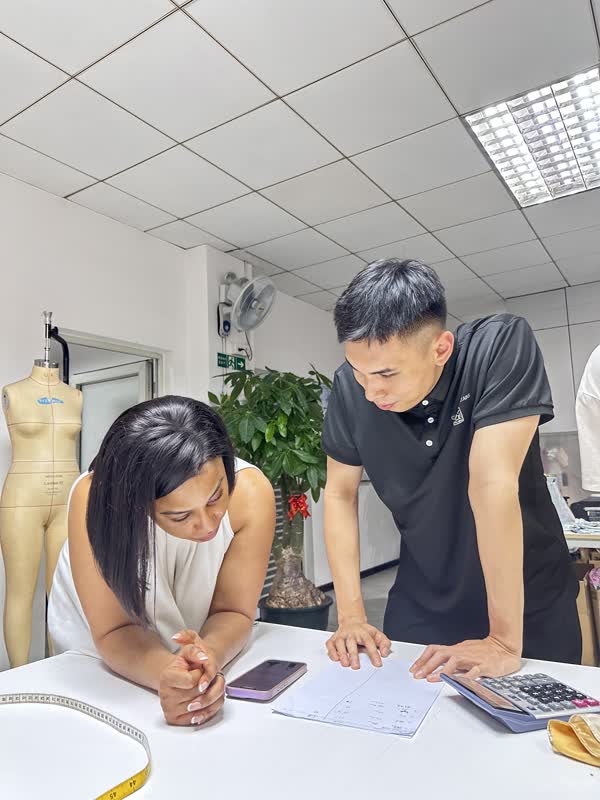
You approved the sample, and the clothing manufacturer asks for 30 percent before the first cut. That request is normal, and it is not a margin grab. This article explains what the money actually covers, the order of payment in a small run, and the three moments when you should say no.
Here is the direct answer to the question behind the question: the deposit usually buys the fabric, and on a small order the cloth bill can be bigger than the deposit. A 30-piece run of wool blazers at FOB USD 110 each totals USD 3,300, and the wool for it costs roughly USD 1,100 to 1,400, paid to the mill in cash before cutting starts. A factory that took no money up front would be financing your fabric with money it does not have.
Why a clothing manufacturer needs money before production
Fabric mills and trim suppliers in Guangzhou do not sell on 60-day terms to a factory that orders 90 metres of cloth. They take payment with the order. So the moment your bulk is confirmed, your deposit is converted into something physical in your name: the cloth, the lining, the buttons and the zips.
The rest of your money follows the work, not the calendar. The standard sequence in our own workflow is a 30 percent deposit to open the bulk, three inspections while the garments move through cutting, sewing and finishing, and the remaining 70 percent only after the pre-shipment check passes and you have seen the photos.
What the 30 percent covers, and what it does not
The deposit covers the fabric and trims buy, plus the cutting setup, which is the moment a factory commits machines and time to your style. It does not cover sampling, that is billed separately in the sample phase and stays billed whether or not you go to bulk. It does not cover freight, and a fair factory never asks for the full balance before you have seen the finished goods.
On a dress, the fabric bill usually runs 30 to 45 percent of the ex-works price, which is why 30 percent is the industry default rather than a number pulled from the air. Some factories quote 50 percent when the cloth is expensive silk or a custom weave. Some quote 20 for repeat orders where the fabric is already in stock. Ask what the deposit covers, not just how big it is.
The order of money in a small MOQ project
Money moves in five steps in our process. First, the quotation phase is free and line by line. Second, sample making is paid up front, roughly USD 150 to 400 per style for a dress or blazer. Third, the final sample is sealed in writing, which is the gate that triggers the deposit.
Fourth, the 30 percent deposit arrives and cutting starts within days; we send photos of the lay and the cut so you see your money become cloth. Fifth, after the three inspections pass, the 70 percent balance is paid and the goods ship. Notice what is missing: no full payment before production, and no payment before proof.
Deposit red flags: slow down before you pay
Five patterns should slow anyone down: a deposit above 50 percent without a written reason, payment to a personal account instead of a company account, or money asked before the sample stage, before any specification exists.
Pressure language, "today only", "promotion ends tonight", and a refusal to put dates, sizes and unit prices in a signed document are the last two. Each of the five is a reason to pause before transferring.
The checks that belong before the money, not after, are the same ones we list in our factory audit guide: a verifiable workshop address, a company bank account in the factory's legal name, a signed quotation, an inspection process you can call on, and samples that came from the factory that will cut your bulk. Platforms offer escrow as an alternative, and we work with them too. Whatever the route, vet first, then transfer.
What a factory should send before you transfer a deposit
Before any transfer, you should hold four documents: a signed proforma invoice with the deposit and balance terms, a line-by-line quotation showing fabric, trims, cutting, sewing and finishing separately, the delivery date in writing, and the size ratio and colour quantities confirmed. On our side, we add a fabric sourcing note with the mill and the shade standard, so the cloth you are paying for has a name.
We also put the sample approval in an email you can point to later. Written approvals are what make a deposit dispute rare instead of messy. If a factory cannot produce these four documents, that is the answer about whether to pay.
If you cancel: what happens to a 30 percent deposit
Honest answer: it depends on how far the money has travelled. If the fabric is already cut, the deposit has become cloth and labour, and most factories, us included, keep it, because the cloth is yours and the cutting was done for your order alone. We will show you the fabric bill and, if you want, ship the unused cloth to you.
If the cancellation comes before the fabric is bought, a fair factory refunds the deposit minus the development costs actually spent. If you cancel after cutting but before sewing, the bill is the cloth plus the cut work. None of this is pleasant, which is why the written approval gates exist: cancel early, cancel cheaply.
Deposit maths on a 30-piece run: a worked example
Take the silk dress example from our pricing guide: 30 dresses at FOB USD 62.50 gives a total of USD 1,875. The 30 percent deposit is USD 562, which sits very close to the real silk bill for 30 dresses, roughly USD 500 to 600 at current crepe de chine prices. That is the whole point: the deposit is the cloth.
The balance of USD 1,312 is paid after the pre-shipment inspection, when the dresses are finished, checked against the sealed sample and photographed for you. Between deposit and balance you should receive at least one inline inspection report, not silence. We send three.
The full payment sequence sits on our production process page, deposit and refund questions on our FAQ page, and 30-piece projects we have run, from first deposit to delivered stock, on our case studies page. If you are deciding whether 30 pieces is enough to start at all, our low MOQ landing page gives the straight answer.
Go deeper: auditing a Guangzhou manufacturer: 7 red flags · cost per garment: the lines your quote won't show · planning production around a target price · our process: where the money moves
Questions we get about this
Is 30 percent standard, or should I negotiate less?
Thirty percent is the industry norm because the cloth bill lands at 30 to 45 percent of the ex-works price, and the deposit buys it in your name. Repeat orders with fabric already in stock can run at 20 percent. Below about 10 percent, ask what the deposit could possibly cover, a serious factory cannot cut cloth it has not paid for.
What if I pay the deposit and the factory disappears?
Prevention beats recovery across borders, which is why the checks come before the transfer: a company account in the factory's legal name, a signed proforma, a verifiable workshop, a small first order and an inspection process you can call on. Platforms add escrow as another layer. We cannot promise the whole industry is honest, that is exactly why the vetting exists.
Quick Take
The deposit is the cloth. It buys the fabric and trims in your name, which is why 30 percent tracks the 30 to 45 percent of the ex-works price that fabric occupies.
The order of money. Sample fee first, sealed sample second, 30 percent deposit, three inspections, 70 percent balance only after you have seen the finished goods.
Slow down on four patterns. A deposit over 50 percent, a personal account, money asked before any specification, and pressure language, each one is a reason to pause before transferring.
About UP Fashion
UP Fashion is a Guangzhou garment manufacturer founded in 2016, run by a team with 20+ years of OEM experience in silk, wool and embroidery. We take a 30 percent deposit because the cloth bill demands it, then hold the remaining 70 percent until three inspections pass and the finished garments are photographed for the client. This guide is how we explain deposits honestly.





