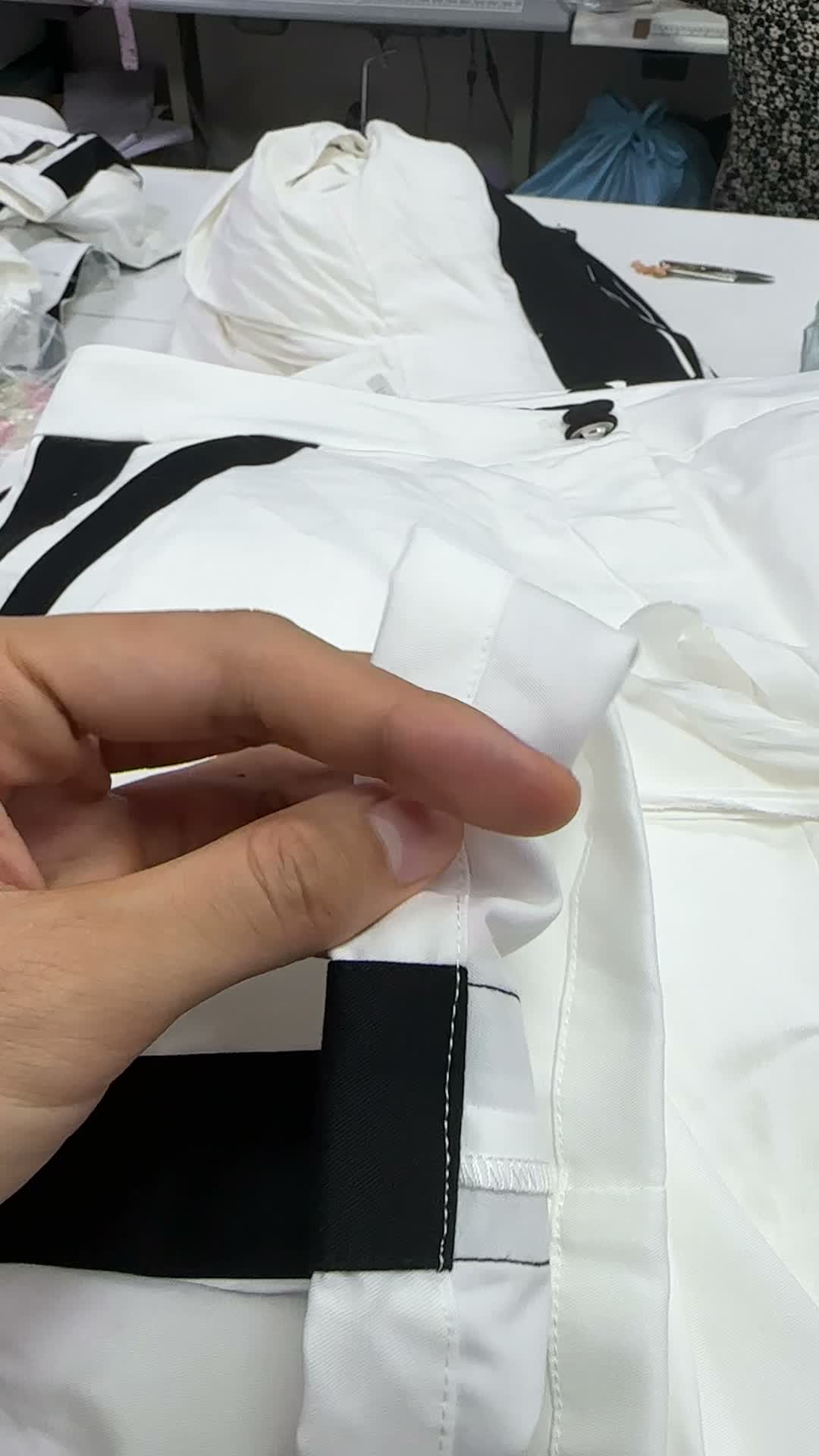
As a small batch clothing manufacturer, we hold a pre-production meeting before every cut. What happens in those 45 minutes, and does the brand need to be there? Six documents go on the table, one page gets signed, and three failures get caught here or nowhere.
The three are cloth substitution, spec drift and trim shortage. Each is cheap to fix before the lay is spread and expensive after it. A substituted lining becomes a colour argument at delivery, a drifted neckline becomes a re-cut, and a short trim becomes an air freight bill.
What goes on the table in a pre-production meeting
Everything physical comes out of the cupboard. The signed sample, the roll end of the bulk cloth, the trim bag, the cut ticket, the measurement chart and the packing list sit on one table under one lamp.
The lamp matters. We check the bulk cloth against the approved sample under the same 3000K light the brand's stockist uses, not under the daylight tubes over the cutting table.
Then we open the trim bag and count. Labels, care labels, main zips, buttons, hook and eye, interlining, thread. If a trim is missing we find out in four minutes instead of four weeks.
Each side brings its own half. We bring the sample, the cloth and the trims. The brand brings the approved size chart and the care label wording, and those two are the documents most often still sitting in someone's inbox.
The six documents a pre-production meeting checks
First, the tech pack revision number and its date, because two brands in five send an updated pack and forget to say so. Second, the approved sample with the date it was signed and who signed it.
Third, the bill of materials with the mill name and lot for every fabric. Fourth, the 4-point fabric inspection report on the bulk roll, which is where a 30 metre defect gets caught before it is cut into panels.
Fifth, the cut plan with the marker and the size ratio. Sixth, the packing list and carton marks, which is the document most often still unwritten at this stage.
One page summarises all six. The brand signs that page, and it becomes the reference for every argument until delivery.
Who should attend from the brand side
One person who can approve a 2 mm change on the spot. A committee cannot decide in 45 minutes, and we have watched a three-person call spend 20 minutes on a button colour.
If the designer is remote, ten minutes of video is enough for the front and the neckline. We hold the sample to the camera and photograph the seam at 3x before the call ends.
When nobody on the call can say yes, we stop and book a second meeting. That has cost us two days on three orders and has never cost us a run.
Bring the person who pays, too, if a change carries a price. A $60 re-cut approved in the room is a $60 invoice, and nobody argues about it six weeks later.
The three numbers we confirm before the knife
Pieces per size, in writing. A 30-piece order in five sizes is usually 6/8/8/6/2, and that ratio decides the marker more than the total does.
Metres issued against metres needed. A 30-piece viscose dress needs about 63 metres with an 8 per cent marker allowance, and we issue 68 so a defect in the roll does not stop the lay.
Trim counts with 5 per cent spare. On 30 pieces that is 32 buttons, 32 care labels and one spare zip, and the spare is not generosity, it is what the mending table needs.
What skipping it cost us in 2020
An 80-piece viscose order with custom 18 mm horn-look buttons. The supplier shipped 720 against 800 ordered and told nobody, and we did not count the bag because the sample had gone straight to the line.
We found the gap at packing, three days before the brand's launch. Air freight for the balance came to $380 and 12 pieces shipped short.
The brand sold out of size M in nine days and had no reorder ready. We paid the freight and the goodwill, and we have counted trims on the table ever since.
What the meeting costs, and what it prevents
Forty-five minutes of two staff, no line on the quote. Against that, rework on a caught issue averages $4.80 a piece, and a caught trim shortage averages nothing at all.
We book it five to seven days before cutting, after the bulk cloth lands and before the marker is final. Earlier than that the cloth is not there. Later than that the lay is already planned.
A meeting that runs long is usually a spec problem, not a scheduling one. When two documents disagree, we stop and fix the document instead of pushing the order through.
Our Fashion Pains Solver, still in training, is being built to run this same checklist before a brand ever books a call. Until it is online, the checklist below is what we walk through by hand.
How to prepare for a small batch production meeting in 15 minutes
Answer three questions before the meeting. What changed since the sample was approved? Who signs for the brand? What ships first if the order splits?
Write the answers in the email thread, not in a call. A written answer becomes part of the record, and the record is what settles a claim six weeks later.
Print the six documents and put them in one folder. A folder on the table beats eleven attachments nobody opened.
Our small batch production page shows what we run at what size, the case studies include orders that went through this meeting, and the FAQ answers what we need from a brand before the first call.
Go deeper: why the approved sample is the archive · the BOM that stops a fabric swap · how 30 pieces become four lays
Questions we get about this
Do I have to attend the pre-production meeting?
No, but someone with approval authority should. If nobody can decide, we book a second call rather than start cutting on an assumption.
When does it happen in the schedule?
Five to seven days before cutting, once the bulk cloth has landed. It takes 45 minutes and it sits after fabric inspection, before the marker is final.
Quick Take
Six documents, one page. Tech pack, sample, BOM, fabric report, cut plan, packing list.
Count the trim bag. 720 buttons against 800 ordered cost us $380 in air freight.
Book it 5 to 7 days out. After the cloth lands, before the marker is fixed.
About UP Fashion
UP Fashion is a Guangzhou garment manufacturer founded in 2016, run by a team with 20+ years of OEM experience in silk, viscose and embroidery. We quote from 30 pieces, show the rate we used, and inspect three times before shipping.





